Badi Elaichi Recipes from Hill Kitchens in Uttarakhand
By My Quick Trippers · 12 Nov 2026
8 min read · Food & Cuisine
Badi elaichi is the spice hill kitchens reach for when a dish needs depth, not heat. The large dark-brown pods, with their black seeds and smoky aroma, go into pulao, rajma, curries and chai — always whole, always sparingly, and always early, so the flavour has time to spread through the pot. This post is about how hill kitchens actually cook with black cardamom: the pulao that carries one pod, the rajma that needs it, the chai that takes it, and the mistakes that make a dish taste of the spice instead of the food.
Badi elaichi is black cardamom, Amomum subulatum — a different spice from chhoti elaichi, the small green cardamom used in sweets. The pods are large and dark, and the smoky aroma comes from the traditional open-fire drying. It is a savoury spice, not a sweet one: it belongs in curries, stews, dals, pulao and garam masala, and it is used whole and sparingly. One pod flavours a pot; two pods can take it over. That restraint is the whole skill of cooking with it.
How badi elaichi works in a dish
A badi elaichi pod works slowly. The flavour sits inside the pod, in the seeds and the husk, and it comes out into hot fat and hot liquid over time. That is why hill cooks put the pod in early — into the oil with the other whole spices at the start of a tadka, or into the pot with the rice or the dal while it cooks. A pod dropped in at the end does almost nothing; a pod cooked from the start perfumes the whole dish. The rule is the same for every recipe in this post: the pod goes in early, and it stays in until serving.
The other rule is quantity. Badi elaichi is strong, smoky and slightly camphorous, and it does not fade with cooking the way some spices do. One pod is enough for a family pot of rice or dal; two pods are enough for a large gathering pot. More than that, and the dish starts to taste of cardamom rather than of itself — the rice tastes like the spice, the dal tastes like the spice, and the meal is out of balance. Hill cooks count pods the way they count chillies: one, and then think before adding another.
Pulao with badi elaichi
Pulao is the dish where badi elaichi is most at home. Heat ghee or oil in the pot, and when it is hot, add one badi elaichi pod — lightly crushed, so the husk cracks and the seeds are exposed — along with a bay leaf and a few cloves if you use them. Let the pod sizzle for a few seconds until the smoky smell rises, then add the washed rice and stir it through the spiced fat before the water goes in. The pod cooks with the rice from the start, and by the time the pulao is done the whole pot carries its warmth.
Serve the pulao with the pod still in it, and take it out at the table — nobody wants to bite into a whole pod. A plain pulao made this way needs little else: a raita or a simple dal is enough beside it, because the rice already carries the flavour. If you are making a vegetable pulao, the same single pod does the work; do not add more spice to match the vegetables, or the cardamom will drown them. One pod, one bay leaf, and the rice does the rest. Our guide to tej patta beyond tadka covers the bay leaf that usually cooks beside it.
Rajma with badi elaichi
Rajma is the second hill-kitchen classic for badi elaichi. The beans cook long and slow, and the pod has hours to give up its flavour — which is exactly what it needs. Add one pod to the pot when the soaked rajma goes on to boil, or into the onion-tomato base when you build the gravy. Either way, the pod should be in the pot for the long cook, not added at the end. The smoky note suits the earthy beans in a way that green cardamom never would, and it is the reason rajma made with badi elaichi tastes deeper than rajma made without it.
The same pod does double work in a pressure cooker: it survives the pressure, and the flavour spreads further because the cooking is sealed. One pod per pot still holds — the pressure does not make the spice weaker, it makes it spread further, so a second pod is even less needed. Fish the pod out before serving, or leave it in and warn the table. Rajma with rice, a spoon of ghee and the single pod is the hill meal this spice was made for.
Chai with badi elaichi
Chai is the third use, and the one where restraint matters most. A single badi elaichi pod, lightly crushed, goes into the pot with the water and the tea leaves — not into the cup, and not more than one pod for a pot of four cups. It brews with the tea for a few minutes, and the milk goes in after. The result is a chai with a smoky, warm back note, very different from the sweet green-cardamom chai most people know. It suits cold mornings and long evenings, and it suits the hills, where the tea is strong and the spice is stronger.
Do not confuse this with the everyday masala chai that takes ginger and green cardamom. Badi elaichi chai is its own drink, and it does not want the full masala mix — ginger and green cardamom together with black cardamom crowd the cup, and the smoke gets lost. One pod, tea, milk, and sugar if you take it. If the chai tastes too smoky, the pod was too big or it brewed too long; next time use a smaller pod, or take it out after two or three minutes instead of leaving it in the pot.
Curries, garam masala and storing the pods
Beyond pulao, rajma and chai, badi elaichi belongs in slow curries and stews, where it cooks for a long time with the meat or the vegetables. It is also one of the spices in garam masala, where it is ground with the other whole spices — but ground badi elaichi is far stronger than whole, so a masala that includes it needs less of it, not more. If you grind your own garam masala, use one pod for a small batch and taste before adding another. Bought garam masala already contains it, so there is no need to add a whole pod to a dish that already has garam masala in it.
Store the pods the way hill households store all their whole spices: whole, dry, and in a closed jar away from sunlight. Do not grind them in advance — ground black cardamom loses its smoky aroma quickly, and a jar of ground spice a month old is a shadow of the pods it came from. Buy the pods whole, keep them whole, and crush one only when the pot is ready. A 100 g pack lasts a household a long while when it is used one pod at a time.
One honest note about the photograph
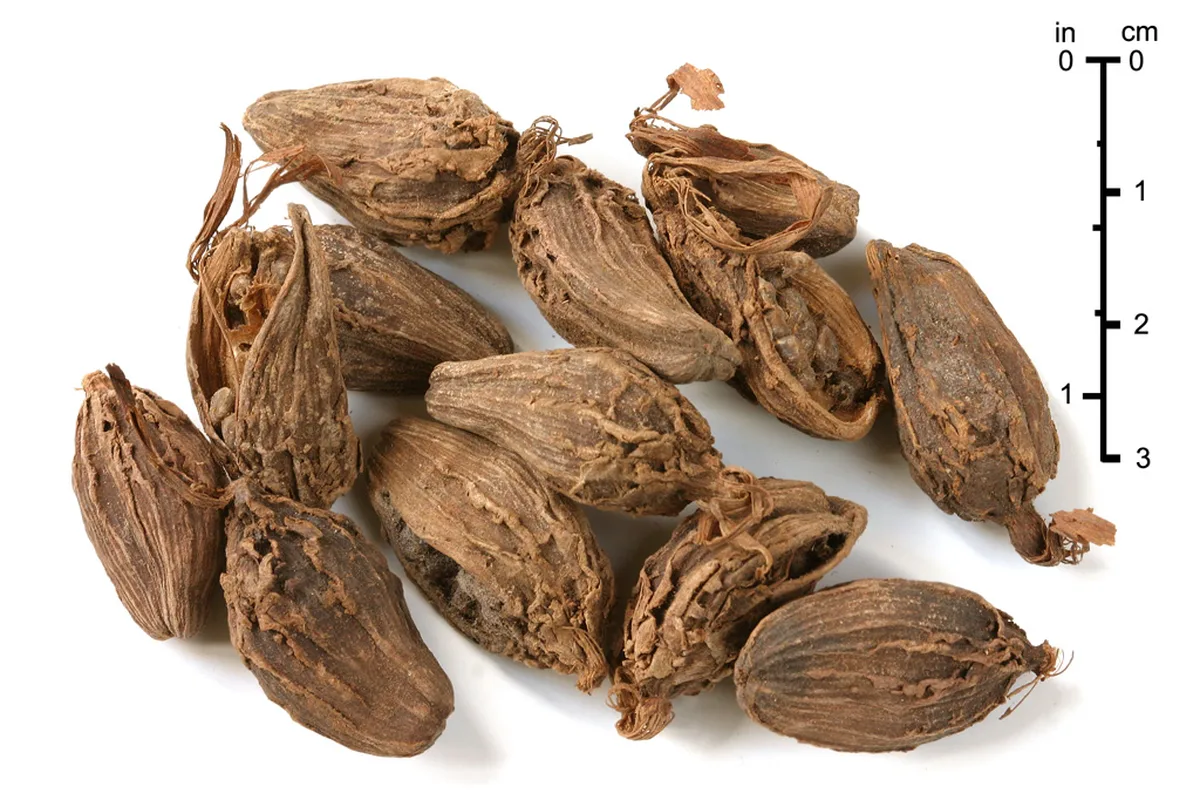
The photograph at the top of this post shows black cardamom pods, from Wikimedia Commons. It is a representative photograph of the pods as sold — the pods pictured are not the store pack. The store pack is 100 g of badi elaichi; the photograph shows what the pods look like, nothing more.
Where to buy badi elaichi
Badi Elaichi is sold in our Pahadi Store at an indicative ₹380 for 100 g, from Pahad Ki Dukaan, checked 12 Nov 2026. The price is indicative, not fixed: it comes from that seller's live listing, not from our own supplier list, so check the store page for the current figure before ordering. One pod per pot is the rule — buy the 100 g pack, store it whole in a closed jar, and use it in pulao, rajma and chai.
Frequently Asked Questions
Is badi elaichi the same as chhoti elaichi?
No. Badi elaichi is black cardamom, Amomum subulatum — large dark pods with a smoky aroma, used in savoury dishes. Chhoti elaichi is green cardamom, a different species, used mostly in sweets and in chai. They are not interchangeable: black cardamom in a sweet, or green cardamom in a rajma, will taste wrong.
How many badi elaichi pods should I use?
One pod for a family pot of rice, dal or chai. Two pods at most for a large gathering pot. Badi elaichi is strong and smoky and does not fade with cooking, so more than that makes the dish taste of the spice instead of the food.
When do I add badi elaichi while cooking?
Early. The flavour comes out slowly into hot fat and liquid, so the pod goes in at the start — into the tadka oil, or into the pot with the rice or dal while it cooks. A pod added at the end does almost nothing.
Can I use badi elaichi in chai?
Yes — one lightly crushed pod in the pot with the water and tea leaves, for a pot of about four cups. It gives a smoky, warm chai, different from green-cardamom chai. Do not add the full masala mix with it; ginger and green cardamom together with black cardamom crowd the cup.
Where does badi elaichi come from?
It is native to the eastern Himalayas, and modern cultivation is concentrated in Sikkim, Darjeeling, eastern Nepal and Bhutan. Uttarakhand is a secondary source — not the main origin. Buy it for what it is, wherever it was grown, and do not expect a Uttarakhand-only story from it.
Sources
- My Quick Trippers — Pahadi Store
- My Quick Trippers — Badi elaichi, black cardamom uses
- My Quick Trippers — Tej patta beyond tadka
- Wikipedia — Black cardamom
Share this article