Baneshwar Fair 2027: Dates, the Bhil Tribal Fair & Visiting Guide
By My Quick Trippers · 20 Nov 2026
6 min read · Culture & Heritage
The Baneshwar Fair 2027 runs 16–20 February 2027 at the confluence of the Som and Mahi rivers near Dungarpur, in southern Rajasthan. It is one of India's great tribal fairs: the Bhil people gather in their thousands at the Shiva temple on the river island, with folk music, dance, local crafts and a riverside campsite atmosphere that feels a world away from Rajasthan's palace circuit. If the Bikaner Camel Festival is the desert's showpiece, Baneshwar is its hidden counterpart — smaller, older, and entirely its own.
The dates are on the Rajasthan Tourism calendar: 16–20 February 2027. The fair is a niche event — there is no big-city marketing, no headline act, no package-tour circuit — which is precisely its appeal. This guide covers the dates, what the fair is, how to reach Dungarpur, and how to visit a tribal gathering respectfully.
Baneshwar Fair 2027: the dates
- Dates: Tuesday 16 – Saturday 20 February 2027 (five days)
- Venue: Baneshwar, at the confluence of the Som and Mahi rivers, Dungarpur district, Rajasthan
- What it is: a Bhil tribal fair centred on the Shiva temple on the river island — bathing, worship, folk music and dance, local crafts
- Organiser: Rajasthan Tourism — the fair is on the state's official fairs calendar
- Gateway city: Udaipur — the nearest major city and airport, a few hours by road
What is Baneshwar?
Baneshwar means 'master of the delta' — the Shiva temple stands on a small island where the Som meets the Mahi, and the fair is the annual gathering of the Bhil tribal communities of southern Rajasthan and northern Gujarat. Families arrive, camp on the riverbanks, bathe at the confluence, worship at the temple, and spend the days in music, dance and trade. The fair's centre is religious; its edges are social — a reunion of villages that otherwise meet rarely, with the river as the meeting point.
For a visitor, the fair's texture is the point: the Bhil folk dances in traditional dress, the music of the region's instruments, the craft stalls selling tribal art and everyday goods, and the riverside camps that turn the confluence into a temporary town. It is not staged for tourists — there is no grandstand, no schedule board, no curated 'experience'. The fair happens whether or not you are there, and that is what makes it worth the journey.
Dungarpur town itself is worth a day beyond the fair. The Udai Bilas Palace, on the edge of Gaib Sagar lake, and the old Juna Mahal, the 13th-century palace-fort on the hill above the town, carry the history of the Vagad kingdom that ruled this corner of Rajasthan — a quieter, older Rajasthan than the Jaipur–Jodhpur circuit, and all the more rewarding for it. The lake at dawn, with the town waking around it, is the fair week's calm counterpoint.
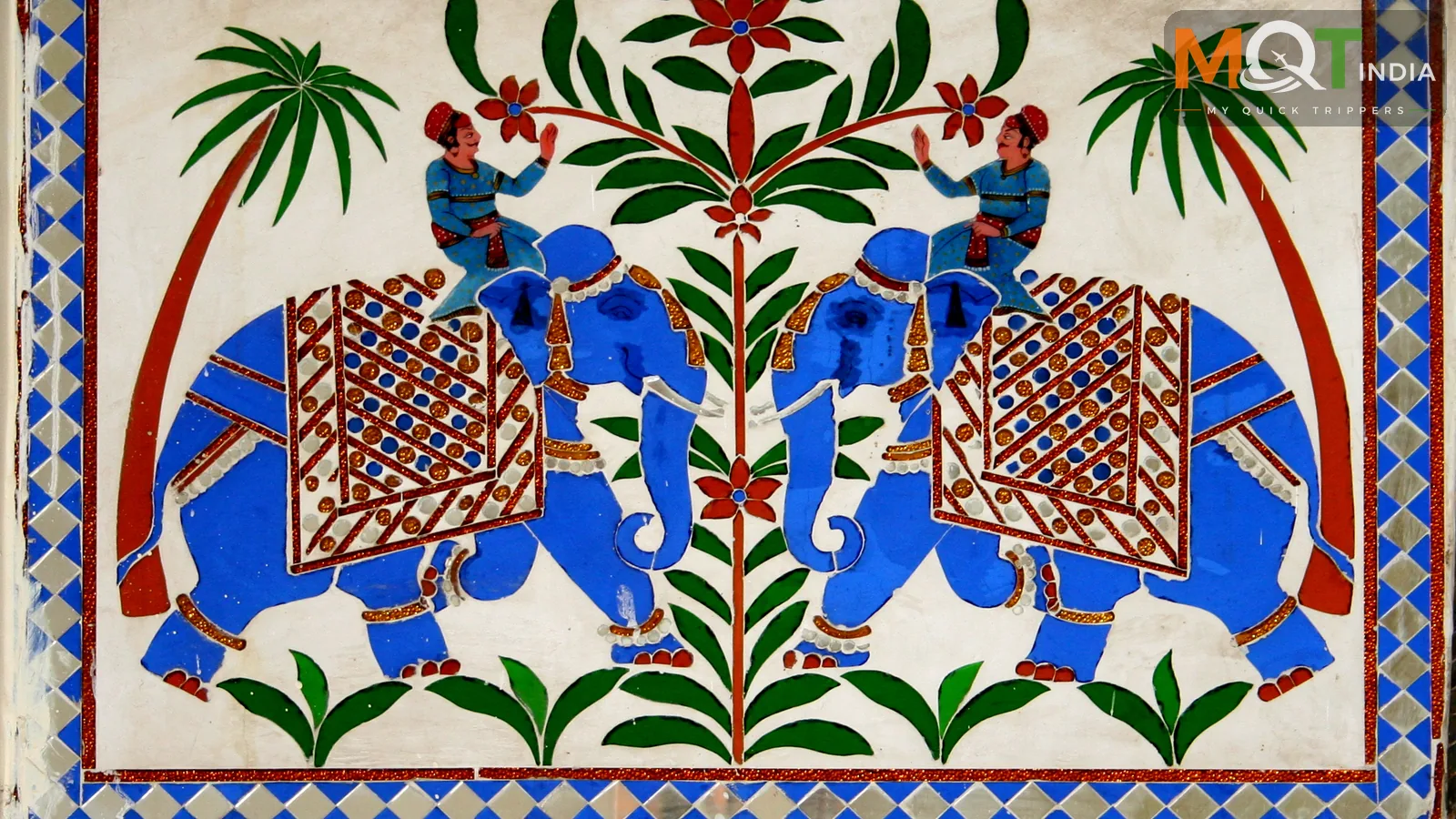
The fair's craft stalls are worth a slow walk on their own. The Bhil art of the region — Pithora painting, with its rows of figures and sun-and-moon motifs telling the community's stories — is sold alongside beadwork, textiles and everyday goods made in the villages. Buy directly from the makers where you can: the fair is one of the few places where the craft is sold by the people who made it, at village prices, without a middleman's markup. The bathing itself happens at the confluence, where the two rivers meet below the temple island — the dip is the fair's ritual heart, and the ghats are busiest at dawn.
How to reach Dungarpur
Dungarpur has a railway station on the Ahmedabad–Udaipur line, with trains from Ahmedabad, Udaipur and beyond, and is well connected by road across southern Rajasthan. Most visitors come via Udaipur — fly into Udaipur, spend a day at the lakes and palaces, then drive the few hours south to Dungarpur for the fair. The fairground itself is reached by local transport from Dungarpur town; expect the last stretch to be slow and crowded during the fair days.
Where to stay
Dungarpur town has guesthouses and small hotels, and the fair week fills them — book ahead, and expect simple rooms rather than luxury. The practical alternative is to base in Udaipur, with its far wider range of stays, and visit the fair as a long day trip — you lose the dawn and dusk atmosphere of the riverside camps, but you keep the comfort. Either way, book by January: the fair is small, the town is smaller, and the rooms go first to the families who come every year.
Planning tips
- Come as a guest, not an audience: this is a tribal religious gathering, not a staged festival — ask before photographing people, and do not enter the temple's inner spaces uninvited.
- The middle days are the fair's heart: the opening day is for arrivals, the closing day for departures.
- Carry cash: the fairgrounds run on it, and the craft stalls and food sellers may not take cards.
- Wear comfortable walking shoes — the grounds are riverside, uneven and dusty — and carry water and sun protection.
- Pair the trip: Udaipur's lakes and palaces are the natural bookend, and the [desert festival calendar 2027](/blog/desert-festival-calendar-2027-india) covers Rajasthan's wider winter season.
- February in southern Rajasthan is warm by day and cool by night — pack a layer for the evenings by the river.
Frequently Asked Questions
When is the Baneshwar Fair 2027?
16–20 February 2027, at Baneshwar near Dungarpur in southern Rajasthan. The dates are on the Rajasthan Tourism fairs calendar.
What is the Baneshwar Fair?
A Bhil tribal fair at the confluence of the Som and Mahi rivers, centred on the Shiva temple on the river island — bathing, worship, folk music and dance, crafts and a riverside gathering of tribal communities.
How do I reach Baneshwar?
Via Dungarpur town (rail and road) or via Udaipur, the nearest major city and airport, a few hours by road. Local transport runs from Dungarpur to the fairground.
Is Baneshwar suitable for first-time visitors to a tribal fair?
Yes, with the right attitude: come as a respectful guest, ask before photographing people, and do not treat the gathering as a show. The fair is welcoming to visitors who behave as guests.
Can I combine Baneshwar with Udaipur?
Easily — Udaipur is the gateway city, and a day at the lakes and palaces before or after the fair is the natural pairing. Base in Udaipur and day-trip to the fair, or stay in Dungarpur for the full riverside experience.
Share this article