
Cold Moon December 2026: The Christmas Eve Supermoon — Date, Time and Where to Watch It
By MyQuickTrippers Editorial Team · 26 Nov 2026
9 min read · Travel Planning
December 2026 ends with the biggest full moon of the year. The Cold Moon peaks at 8:28 p.m. EST on Wednesday 23 December — the night before Christmas Eve — and it is a supermoon: the closest full moon of 2026, and the closest since 2018. It is the third supermoon of the year, after the Wolf Moon in January and the Beaver Moon on 24 November, and it arrives in the longest nights of the northern winter. This guide has the exact date and time in the US, UK, Canada and Australia, why this one counts as a supermoon, where the name comes from, and how to watch it at its best.
The Moon reaches its full phase at 8:28 p.m. EST on Wednesday 23 December 2026 — the moment of peak illumination, confirmed by Astronomy magazine's 2026 full-moon calendar and by the Farmer's Almanac. In other time zones the same moment falls at 5:28 p.m. PST on Wednesday 23 December, 1:28 a.m. GMT on Thursday 24 December in the UK, 2:28 a.m. CET on Thursday 24 December in most of western Europe, and 12:28 p.m. AEDT on Thursday 24 December in Sydney. The date is 23 December in the Americas and 24 December in Europe, Australia and New Zealand — the same Moon, the same moment, a different date on the calendar depending on where you stand.
The exact minute matters less than most people think. A full moon looks full to the unaided eye for around two to three nights either side of the peak, so the evenings of 22, 23 and 24 December will all show a nearly full Moon, with the 23rd and 24th the best of them. LunarPlanner's fact sheet puts moonrise at about 3:58 p.m. on the day, looking toward the north-east — local moonrise times vary by a few minutes with latitude, so check your own. The shape of the evening is the same everywhere: the Moon rises in the late afternoon, around sunset, and climbs through the night.
A supermoon is a full moon that coincides with perigee, the closest point of the Moon's orbit to Earth. The December supermoon reaches perigee at 3:30 a.m. EST on Christmas Eve, about seven hours after the full phase peaks — close enough that the two events effectively overlap. At perigee the Moon will be 221,667 miles away, or about 356,729 km. The Moon's average distance from Earth is 384,400 km, so this full moon is roughly 27,671 km closer than average. That is what makes it the biggest and brightest full moon of 2026 — and, per Fred Espenak's table of lunar perigees, the closest full moon since 2018.
How much bigger will it actually look? Noticeably, but not dramatically. A supermoon appears up to about 14% larger and 30% brighter than a full moon at its farthest, and the difference is easiest to feel rather than measure — the Moon looks genuinely large and bright when it clears the horizon, especially against trees, rooftops or a skyline. The 'huge moon on the horizon' is partly an illusion: the Moon is the same size in the sky at any height, but low against familiar landmarks it reads as enormous — which is why the best views come at moonrise, not at midnight.
The name is the season. December's full moon takes its traditional name from the arrival of winter weather in the Northern Hemisphere: temperatures falling below freezing, daylight at its shortest, and snow settling across northern landscapes. Like the Harvest Moon and the Beaver Moon, the Cold Moon is a seasonal name popularised in almanacs, tracing back to a blend of Native American, colonial American and other North American traditions — there is no actual change to the Moon itself, only to the year around it.
Other cultures kept their own names for the same Moon. The Anishinaabe name Little Spirit Moon (Minado Giisoonhs) is recorded in the moon cycle adopted by Northern Michigan University's Center for Native American Studies. The W̱SÁNEĆ name Elder Moon (SIS,ET) is associated with short winter days, seasonal ceremonies and storytelling. The Secwépemc names for the period translate as Stay-at-Home Month, reflecting a time when people lived on stored provisions and did much of their work inside. Two more names are widely used: Long Night Moon, for the long nights near the solstice, and Moon Before Yule, for the midwinter festival.
You need no equipment at all for the Cold Moon — it is the brightest object in the night sky after the Sun, and it is visible from anywhere with a clear sky. But a little planning turns a glance into a proper sighting. The Moon rises in the east, in the late afternoon around sunset, and the first hour after moonrise is the one to be outside for: that is when it looks largest and takes on a golden colour near the horizon. The 23rd is the peak; the 24th is the supermoon at its closest.
- Find a clear eastern horizon. A hilltop, a beach, an open field or a rooftop beats a street between buildings.
- Go out at moonrise, around sunset, not at midnight. The low Moon is the dramatic one; by midnight it is high, white and small against an empty sky.
- Get away from bright lights if you can: dark skies make the surrounding stars — and the Moon's own detail — far easier to enjoy.
- Bring binoculars if you have them. Even ordinary binoculars show the dark lunar seas and bright craters that the naked eye only hints at.
- Photographing it on a phone? Tap the Moon on screen to focus, then drag the exposure down. Left to itself, a phone will overexpose the bright disc into a white blob.
The Cold Moon is the headline, but December 2026 is a strong month for the night sky around it. The Geminid meteor shower — the year's most reliable shower — peaks overnight on 13–14 December, with more than 100 meteors an hour under dark skies. The new moon falls on 8–9 December, giving the darkest nights of the month and the best conditions for deep-sky objects such as the Orion Nebula and the Pleiades. The winter solstice arrives on Monday 21 December, the shortest day of the year in the Northern Hemisphere, and the Ursid meteor shower peaks on 21–22 December. This December sky section follows National Geographic's December 2026 night-sky guide.
Search for the Cold Moon today and a surprising number of results will tell you it falls on 4 December. Those results are about 2025, when the Cold Moon — also a supermoon — peaked on Thursday 4 December 2025. The date moves every year because the lunar cycle is about 29.5 days, not a calendar month: the 2024 Cold Moon was 15 December, 2025 was 4 December, and 2026 is 23 December. The same trap applies to photos: several of the most-shared Cold Moon images show the supermoon rising behind holiday lights in San Diego on 5 December 2025, or behind the Manhattan skyline on 4 December 2025 — last year's moon, not this year's. If a page or a photo says 4 December, check the year before you plan around it.
The Cold Moon peaks on the night before Christmas Eve. If December's cold has you dreaming of actual snow rather than just a cold moon, our Gulmarg snow watch for December 2026 tracks the first snow in the Himalayas. And if your Christmas Eve will be spent in Europe, the best Christmas markets in Europe for 2026 are at their best in the same week — a market evening under a supermoon is about as Christmassy as December gets.
When is the Cold Moon in December 2026?
The full Cold Moon peaks at 8:28 p.m. EST on Wednesday 23 December 2026 — 1:28 a.m. on Thursday 24 December in the UK, and 12:28 p.m. on Thursday 24 December in Sydney. It will look full on the evenings of 22, 23 and 24 December.
Is the December 2026 Cold Moon a supermoon?
Yes. It reaches perigee, its closest point to Earth, at 3:30 a.m. EST on Christmas Eve, about 356,729 km away — roughly 27,671 km closer than the Moon's average distance. It is the biggest and brightest full moon of 2026 and the closest since 2018.
What is the best time to see the Cold Moon?
Moonrise on the evenings of 23 and 24 December, around sunset, looking east. The Moon looks largest and golden near the horizon, so the first hour after it rises is the best time to watch.
Why is it called the Cold Moon?
It is December's traditional full-moon name, marking the arrival of winter weather in the Northern Hemisphere — freezing temperatures, short days and snow. It is also called the Long Night Moon, for the long nights near the solstice, and the Moon Before Yule.
- Astronomy Magazine — 2026 Full Moon calendar: dates, times, types
- LunarPlanner — Cold Moon: December's Full Moon Explained
- SpaceWeatherTracker — Supermoon
- Starlust — December, January and February will bring 3 consecutive Supermoons
- National Geographic — December 2026 night-sky events
- The Magic Elf — Cold Moon 2026: Christmas Eve Supermoon
- RNZ — Spectacular showing may linger for Beaver Supermoon
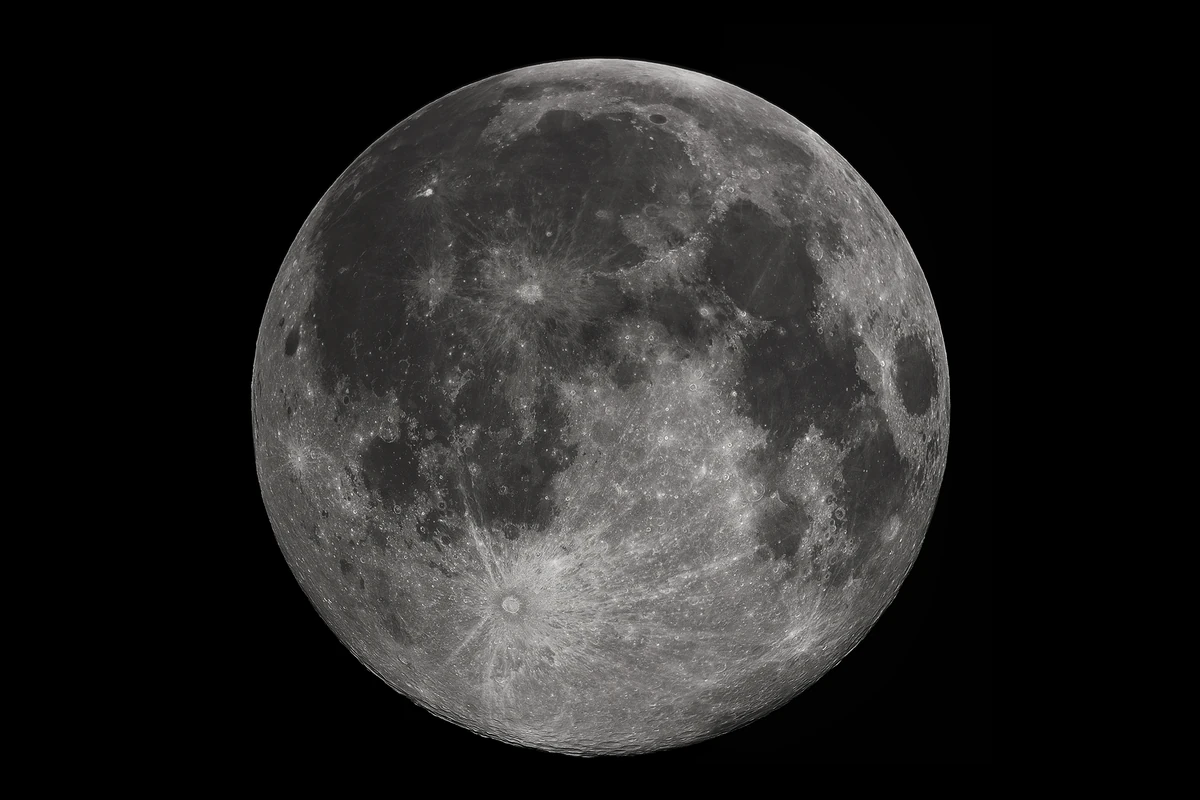
Hero photo: a full moon photographed on 22 October 2010 from Madison, Alabama, USA, by Gregory H. Revera, CC BY-SA 3.0 (via Wikimedia Commons), shown uncropped, letterboxed. Source: https://commons.wikimedia.org/wiki/File:FullMoon2010.jpg — no logos or watermarks. Updated 26 November 2026.
Share this article