Dev Deepawali 2026 Recap: 11 Lakh Diyas, 2,100 Drones and a Laser Show Over the Ganga
By My Quick Trippers · 25 Nov 2026
8 min read · Culture & Heritage
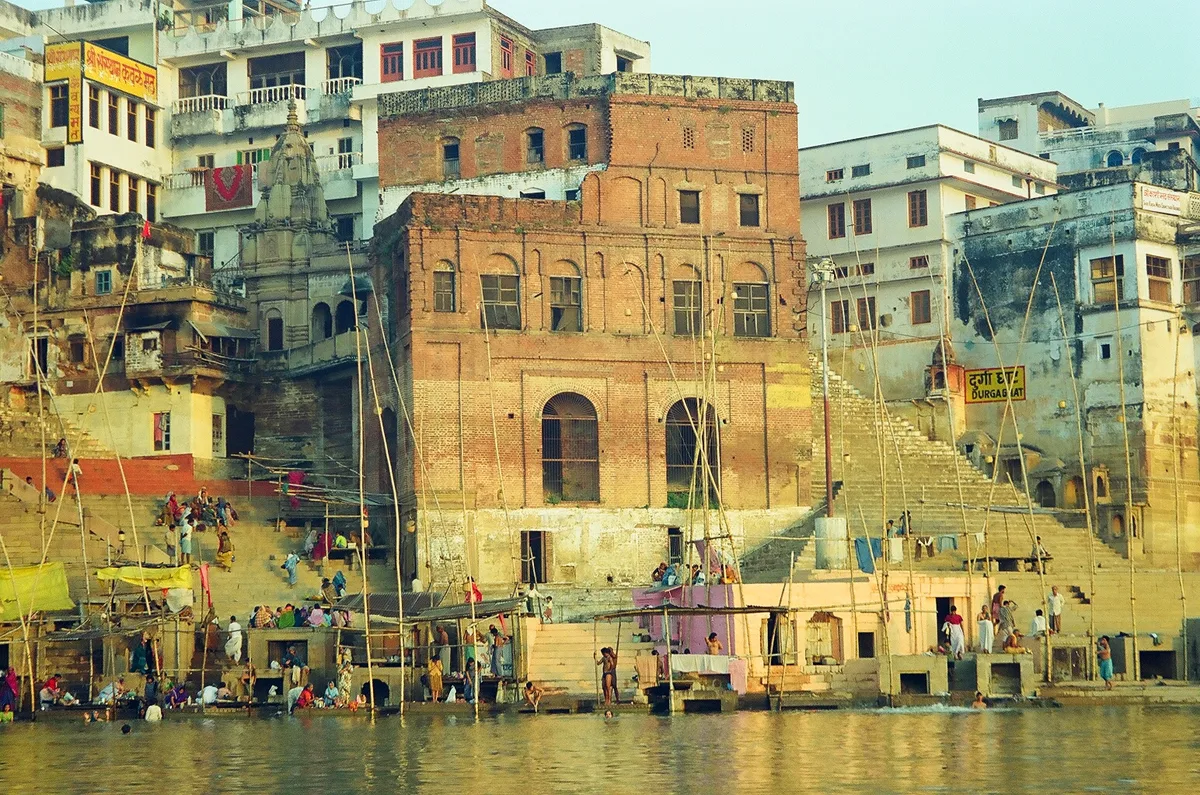
On Tuesday evening, 24 November 2026, Varanasi did what it does once a year: it turned the Ganga into a river of light. Dev Deepawali, celebrated on Kartik Purnima — the full-moon tithi ran from 11:42 pm on 23 November to 8:23 pm on 24 November — saw more than 11 lakh diyas lit across the city's ghats, kunds and the sandbank across the river, 2,100 indigenous drones painting the night sky above the Ganga, and a 3D projection mapping and laser show at Chet Singh Ghat. This is the morning-after record: the night in numbers, the evening as it ran, the one figure the newspapers disagree on, and the date to plan around for 2027. (Photo: the bathing ghats of Varanasi in October 2000 — not the 2026 event.)
Facts verified on the morning of 25 November 2026. No official attendance figure had been published by that morning.
The headline number is 11 lakh diyas — more than 1.1 million lamps. Nearly five lakh were lit along the ghats, with the support of around 83 committees and public participation; more than 3.5 lakh illuminated the sandbank across the Ganga, and over 2.5 lakh lit up 103 kunds. Around 10 lakh of the lamps were earthen, and about 1 lakh were cow-dung lamps. The drone show matched the scale: 2,100 indigenous drones, flying for ten minutes from 8:00 to 8:10 pm, depicting Lord Shiva, the Maheshwar Sutras, Shiv Tandav and the descent of Ganga. At Dashashwamedh Ghat, the Maha Aarti was performed by 21 priests and 42 girls, with 51,000 diyas and 21 quintals of flowers, organised by the Ganga Seva Nidhi. At Pushkar Talab, 2,100 lamps were lit in tribute to Kashi's illustrious personalities — Pandit Madan Mohan Malaviya, Girija Devi, Veer Bhadra Mishra, Kishan Maharaj, Bismillah Khan and Pandit Chhannulal Mishra. Prominent buildings wore tricolour spiral lighting, Kashi Vishwanath Dham was adorned with flowers, rangolis and lights, and the UP tourism and culture minister, Jaiveer Singh, attended as chief guest.
The evening ran to a published schedule, and it is worth recording because it is the template for next year. The main lighting ceremony ran from 5:15 to 5:45 pm, when the diyas were lit across the ghats, the sandbank and the kunds. The grand Ganga Aarti followed at the prominent ghats from 6:00 to 7:00 pm. The 3D projection mapping and laser show at Chet Singh Ghat began at 7:20 pm — the Times of India reports it in three 25-minute sessions — and the 2,100 drones took to the skies over the Ganga from 8:00 to 8:10 pm. The night closed with green fireworks, synchronised with devotional songs dedicated to Lord Shiva, opposite Lalita Ghat from 8:30 to 8:40 pm. The timings matter for anyone planning to attend in future years: the diya lighting is the moment to be on the ghats, the aarti is the hour after it, and the drones and fireworks are the finale — the whole evening, from first lamp to last firework, runs just over three hours.
Here is the one figure we will not settle for you, because the newspapers themselves do not agree. The Times of India reports 88 ghats — 'nearly five lakh diyas were lit along the 88 ghats' — and the Free Press Journal and The Hans India agree, with the Hans India specifying '88 permanent ghats'. The New Indian Express and NDTV report 84: 'The city's 84 ghats, arranged in a crescent along the river, transformed into a breathtaking sea of golden light.' Both numbers are plausible: the main, named, permanent ghats number around 84, while the total including smaller landings runs higher. The honest answer is a range, and this post uses it throughout: the diyas burned across 84–88 ghats. The discrepancy does not change the scale — five lakh diyas on the ghats either way — but it is a useful reminder that even the simplest number in a festival report deserves a second source. If you see a single ghat count stated as settled fact in coverage of the night, that coverage has picked a side without telling you.
Two things about the night are worth recording precisely because they did not happen as planned. First, Chief Minister Yogi Adityanath was scheduled to light the first diya, but his programme was cancelled due to other engagements, according to the New Indian Express — the first lamp was lit without him, and the celebrations went ahead under the tourism and culture minister as chief guest. Second, the attendance figure. You will have seen a number circulating before the event: 10 to 15 lakh devotees and tourists expected, reported by the Free Press Journal on 23 November and by Punjab Kesari the same day. That was a pre-event estimate, not a count, and no official attendance figure had been published by the morning after the festival.
We are not quoting 10–15 lakh as the attendance, because it is not one — it is the number the administration prepared for, and preparation is not the same as presence. The Times of India's morning-after report says only that 'lakhs of devotees and tourists from India and abroad witnessed' the celebrations, which is honest and vague in exactly the right way. If an official figure is published later, it will belong in an update to this post, not in a headline written before it existed.
If the 2026 photographs have put Varanasi on your list, the date to hold is already known: the next Dev Deepawali falls on Kartik Purnima, 14 November 2027. That is a Saturday, which means the weekend will be the busiest of the year in the city — plan on booking stays months ahead, and expect the ghats, the boats and the roads around them to be full. The festival marks the occasion when the deities are believed to descend to bathe in the Ganga, and it is the culmination of the Diwali festivities, fifteen days after Diwali — which is why the night is structured as it is: lamps first as an offering, the aarti second as worship, and only then the drones, lasers and fireworks.
The same night also carried another festival: Guru Nanak Jayanti fell on 24 November 2026 as well, and our Guru Nanak Jayanti 2026 Amritsar guide covers the celebrations at the Golden Temple. Our Dev Deepawali 2027 guide carries the forward date and the planning detail, our pre-event Dev Deepawali Varanasi 2026 guide is the record of how this year's night was planned, and our Varanasi destination page covers the ghats, the temples and the practicalities of visiting. The lesson of 2026 for a 2027 trip is in the evening's own schedule: be on the ghats by 5:15 pm for the lighting, stay for the 6:00 pm aarti, and watch the drones from the river if you can.
How many diyas were lit in Varanasi?
Over 11 lakh: about 5 lakh on the ghats, 3.5 lakh on the sandbank across the Ganga and 2.5 lakh at 103 kunds — around 10 lakh earthen lamps and 1 lakh cow-dung lamps.
How many ghats were lit — 84 or 88?
Sources disagree: the Times of India reports 88 ghats, while NDTV and the New Indian Express report 84. The honest figure is a range — 84–88 ghats — because the count depends on whether smaller landings are included.
When is Dev Deepawali 2027?
Kartik Purnima, 14 November 2027 — a Saturday. Expect the busiest weekend of the year in Varanasi and book stays well ahead.
How many people attended Dev Deepawali 2026?
No official attendance figure had been published by the morning after the festival. The 10–15 lakh figure circulating beforehand was a pre-event estimate of expected visitors, not a count of who attended.
- The Times of India — 11 lakh diyas illuminate Varanasi's ghats as 2,100 drones, laser shows and green fireworks light up Dev Deepawali
- NDTV — Varanasi Ghats Glow With 11 Lakh Diyas During Dev Deepawali Celebration
- The New Indian Express — Kashi immerses in divine radiance on Dev Deepawali
- Free Press Journal — UP's Varanasi Dev Deepawali 2026: 11 Lakh Diyas, 2,100 Drones, Laser Shows & Grand Ganga Aarti
- Punjab Kesari — CM Yogi extends Dev Deepawali greetings, Varanasi set to glow with over 11 lakh diyas
- Sangri Today — Dev Deepawali 2026 schedule and Kartik Purnima tithi (sangritoday.com)
Share this article