Dharamshala–Dalhousie School Circuit Guide from Chandigarh: A 5-Day Kangra–Chamba Journey
By My Quick Trippers · 22 Oct 2026
11 min read · Destination Guides
A circuit is not two single-destination trips stapled together. A Dharamshala-only trip teaches one place deeply; a Dalhousie-only trip teaches another. A five-day circuit from Chandigarh through Dharamshala, McLeodganj, Dalhousie and Khajjiar teaches something neither single trip can: how two neighbouring districts of Himachal Pradesh — Kangra and Chamba — differ in landscape, culture, forest and daily life, and how a journey itself becomes a lesson when pupils watch the country change between stops. This guide describes that circuit for a private school group of 10 students or more, over four nights and five days, and it is written to read as a circuit guide, not as a copy of either single-destination guide.
The circuit works because its stops are close enough to connect without exhausting the group, and different enough that each day feels like a new chapter rather than a repeat. Dharamshala and McLeodganj sit against the Dhauladhar range and carry a living Tibetan cultural presence alongside Kangra's own heritage. Dalhousie, further north in Chamba district, is a quieter hill town of heritage walks and deodar forest. Khajjiar, its meadow satellite, changes the scale completely: open grass, wide sky and a landscape pupils can read at a glance. Travel between them is part of the teaching, provided the pacing stays honest and the winter road plan is agreed before departure.
Why a circuit teaches what two single trips cannot
Single-destination guides rightly go deep: one town, its streets, its viewpoints, its stories. A circuit guide has a different job, which is comparison. Pupils on this route can compare a busy cultural centre with a quiet hill town, a steep mountain backdrop with a gentle meadow, a monastery town with a colonial-era hill station, and a forest walk with an open-grassland visit. Those comparisons are where geography and cultural learning stick, because pupils are not memorising facts about one place — they are noticing differences and asking why they exist. Why is one town's architecture different from another's? Why does forest give way to meadow? Why do two districts a few hours apart feel so distinct?
The circuit also teaches journey skills that a single-base trip cannot. Pupils learn to pack and repack, to settle into a new base quickly, to keep a travel journal that links days together, and to cope when a plan changes — a skill this route deliberately practises, because its Khajjiar day carries a genuine weather and road contingency. A group that has handled one changed plan well has learned something no worksheet can teach, and teachers can build that learning into the trip's review session on the final day.
The five-day shape, day by day
- Day 1 — Depart Chandigarh and travel to Dharamshala, with planned rest stops and an early finish. The afternoon is for settling in, an orientation walk near the base, and a first look at the Dhauladhar range that will frame the next two days.
- Day 2 — McLeodganj: cultural learning at walking pace, including monastery etiquette, local crafts and the story of a community living far from its homeland, all in supervised subgroups with agreed regroup points.
- Day 3 — Travel to Dalhousie. The journey itself is a field lesson in changing landscape, from Kangra's valleys towards Chamba's higher, quieter hills. The afternoon is a gentle heritage walk and an introduction to Dalhousie's forest setting.
- Day 4 — Khajjiar, if the winter road is safe, for meadow-ecosystem learning: open grassland, surrounding forest, and a comparison with the denser forest around Dalhousie. If the road is not safe, the Dalhousie-based contingency day applies instead (see below).
- Day 5 — A morning review session in Dalhousie, in which pupils compare their Kangra and Chamba notes, then the return journey to Chandigarh with planned rest stops.
Five days is the honest minimum for this circuit. Four days would force either a rushed transfer or a dropped stop, and dropping a stop silently turns a circuit into a single-destination trip with a long drive attached. Schools with an extra night should use it where it helps most: either a second, slower day in McLeodganj, which rewards unhurried cultural learning, or a spare day in Dalhousie that absorbs a weather delay without losing Khajjiar. The spare day is the circuit's insurance policy, and it is worth more than any additional sightseeing stop.
Dharamshala and McLeodganj: geography meets living culture
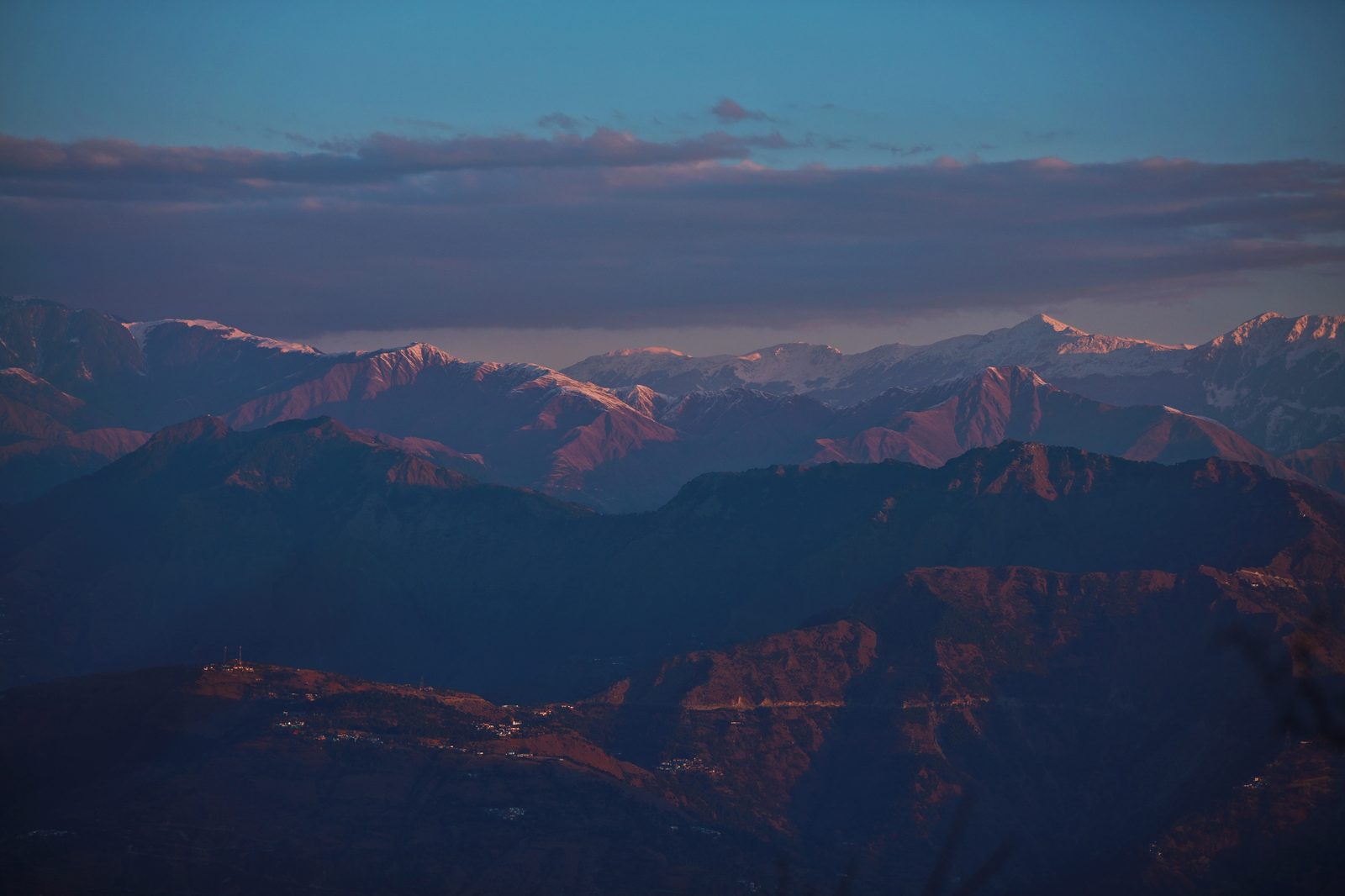
The first two days belong to Kangra district and to the Dhauladhar range, which dominates every view and every geography discussion. Pupils can observe how a great mountain wall shapes weather, settlement and farming in the valleys below it, and how a town grows along ridges and roads rather than across flat land. That observation is best made slowly, from viewpoints and walks, with pupils sketching the range and noting where cloud, snow and shadow fall — snow on distant peaks in winter is something pupils may observe, but snowfall at road level is never promised, and no snow activity is built into this itinerary as a certainty.
McLeodganj adds the cultural half of the lesson. This is a living community, not a museum, and the learning depends on good manners: quiet behaviour in places of worship, permission before photographing people, respectful questions, and an understanding that pupils are guests. Local crafts — weaving, painting, cooking — can be observed where a visit is genuinely available and confirmed in advance, and teachers should frame each visit as a meeting with working people, not as a display. Institutional and community visits are never guaranteed; they depend on appointment, opening days and the hosts' own plans, and an unconfirmed visit should never be promised to parents.
High walking routes need the same honesty. This circuit does not offer long high treks in winter conditions, and Triund treks are not offered in heavy snow. The walking on this itinerary is heritage walking, viewpoint walking and supervised nature walking at town and valley level, matched to the group's age and fitness and to conditions on the day. A walk that is enjoyable and safe in clear weather is dropped or shortened in poor weather without apology — flexibility is part of the plan, not a failure of it.
Dalhousie and Khajjiar: forest, heritage and meadow ecosystems
Dalhousie changes the tempo. After McLeodganj's busy streets, pupils arrive in a quieter hill town where the learning slows down to the pace of a heritage walk: older buildings, quiet lanes, viewpoints and the deodar and pine forest that surrounds the town. Forest ecology here can be taught on foot, in a supervised walk, with pupils identifying trees, listening for birds and comparing dense forest shade with open viewpoints. The town's heritage is best taught the same way — by walking, looking and asking why a hill town was built here, on these ridges, in this pattern, rather than by rushing between viewpoints by coach.
Khajjiar, when the road allows, teaches the contrasting ecosystem. A meadow is a landscape pupils can read in one look: grass, grazing, surrounding forest, water and sky, all visible together. That openness makes it an ideal field site for comparing ecosystems — pupils can stand in the meadow and describe, in their own words, how it differs from the forest walk they did the day before, and why both habitats matter. Supervised scenic visits, sketching and group discussion suit this site far better than any high-energy activity, and pupils should stay with their subgroups, away from water and livestock, with a named meeting point agreed before anyone disperses.
The Khajjiar contingency: the plan for an unsafe road
Khajjiar is reached by a hill road that winter weather can make unsafe, and this guide treats that as a normal planning fact, not as an emergency. Before departure, the school and the operator should agree in writing who makes the call on the day, what information the call is based on, and what replaces the Khajjiar visit if the road is not safe. The replacement is a full Dalhousie-based day, not an empty day: a longer forest-ecology walk, a heritage and mapping exercise in town, a meadow-ecosystem discussion using the group's own notes and photographs from Dalhousie's viewpoints, and a structured comparison task that keeps the circuit's learning intact.
Two rules make the contingency work. First, the decision is made on safety, not on disappointment: no group should pressure a driver or a coordinator to attempt a road that local advice says is unsafe, and pupils should be told in advance that the contingency day is a real part of the trip, not a consolation prize. Second, the contingency day is planned before departure, with its own meeting points, timings and learning tasks, so that a changed morning does not become an improvised morning. A circuit that can lose one stop gracefully is a well-planned circuit; a circuit that falls apart when one road closes was never planned at all.
Winter on a two-district circuit: cold, light and pacing
Winter shapes this circuit more than any other season. Days are short, mornings are cold, hill roads can be icy, and a viewpoint that is clear at noon may be clouded by mid-afternoon. The itinerary answers that with early starts, generous buffers between stops, and regroup times set well before dusk. Warm clothing, sturdy footwear and a slower walking pace are not optional extras on a winter circuit; they are the conditions that make the walking enjoyable at all. Teachers should also plan for the simple fact that pupils tire faster in cold air, and that a day with one good field session and a proper rest is worth more than a day with three rushed stops.
Weather also affects the return journey, and the final day should never be planned so tightly that a delay strands the group. The return to Chandigarh should be planned in daylight with rest stops, and with a fallback — an earlier departure or a nearer overnight arrangement — agreed in advance if conditions deteriorate. Parents should hear this plan before departure, not after a delay, because a parent who understands the fallback trusts the trip far more than a parent who only hears that everything will be fine.
Supervision across two bases
A circuit needs tighter supervision than a single-base trip, because the group changes base, and every change of base is a chance to miscount. The planned standard is one accompanying teacher per 10 students, worked out on the final confirmed headcount, for groups of 10, 20, 50 or more students. Subgroups of up to 10 pupils stay fixed for the whole circuit, under one named accompanying teacher each, and a headcount happens at every transition: leaving each base, boarding and leaving the coach, entering and leaving every site, and before lights-out each night. The school appoints the accompanying teachers; My Quick Trippers does not employ or supply qualified schoolteachers, and the operator's role is ground transport, accommodation, coordination and local operators.
Boys and girls are accommodated separately at each base, under the school's safeguarding policy, with the rooming plan re-agreed at each new base rather than assumed to carry over. Teachers' rooms should sit close to the subgroups they supervise, and the rooming list should be held only by the accompanying teachers and the coordinator. Two bases also mean two sets of meeting points, two evening routines and two hospital and contact checks — the lead teacher should confirm the local details at each base on arrival, not rely on notes made for the previous one.
That is the circuit in full: two districts, four stops, one comparison running through all five days, and a contingency plan that keeps the learning intact when a winter road says no. For a wider sense of the state this route travels through, see our Himachal Pradesh destination guide. If you are planning a school group from Chandigarh for 10, 20, 50 or more students, request a school quote and share your group size, class bands and preferred window: the quote is prepared for your school's numbers and is subject to confirmation.
Share this article