
Dog Travel Anxiety: Help Your Dog Sleep Anywhere
By MyQuickTrippers Editorial Team · 27 Nov 2026
6 min read · Travel Planning
Dog travel anxiety is the stress a dog feels when everything familiar disappears at once: smells, sounds, sleeping corner, routine. It shows up most clearly at night, when a dog that was fine all day suddenly paces, pants, barks at the hallway, or will not lie down. The dog is not being difficult — it is trying to sleep in a place that tells it nothing about whether it is safe. This guide covers the first night: the room, the evening, and the 2 a.m. plan.
Dogs map the world by smell first and sight second. A hotel room smells of cleaning products and the last few guests, and no corner belongs to your dog. Add hallway sounds, and the dog cannot tell a normal noise from a threat — so it stays on alert instead of sleeping, because sleeping is when a dog is most vulnerable. The signs are easy to miss: restlessness, lip licking, yawning, following you around — or heavy panting at rest, drooling, trembling, refusing food or water. One warning from PetSmart: a dog that vomits on every car ride may have motion sickness.
Recommended gear
PawHaven Calming Donut Bed

PawHaven is our own pet-supplies store — this link goes to our store, and we don't earn an affiliate commission on it. Use code PAW10 for 10% off your order. Prices checked 27 Nov 2026.
Pick the room, not just the hotel. A ground-floor room near an exit makes the 2 a.m. bathroom trip a two-minute walk instead of an elevator ride, and a room at the end of a hallway gets less foot traffic past the door. Ask when you book about a weight limit, a pet fee, or rooms where dogs are not allowed, and confirm it again at check-in. If your dog is reactive to noise, a vacation rental with a private entrance can be calmer than a busy hotel.
Do not bring the dog into the room first. Walk the dog around the block or the hotel grounds and let it sniff and relieve itself. Then check the room without the dog for hazards at dog height: pills or food left behind, gaps under furniture, wide balcony railings, cords or cleaning products within reach. Only then bring the dog in and set up its corner: the bed it sleeps on at home, unwashed, in the quietest corner, away from the door.
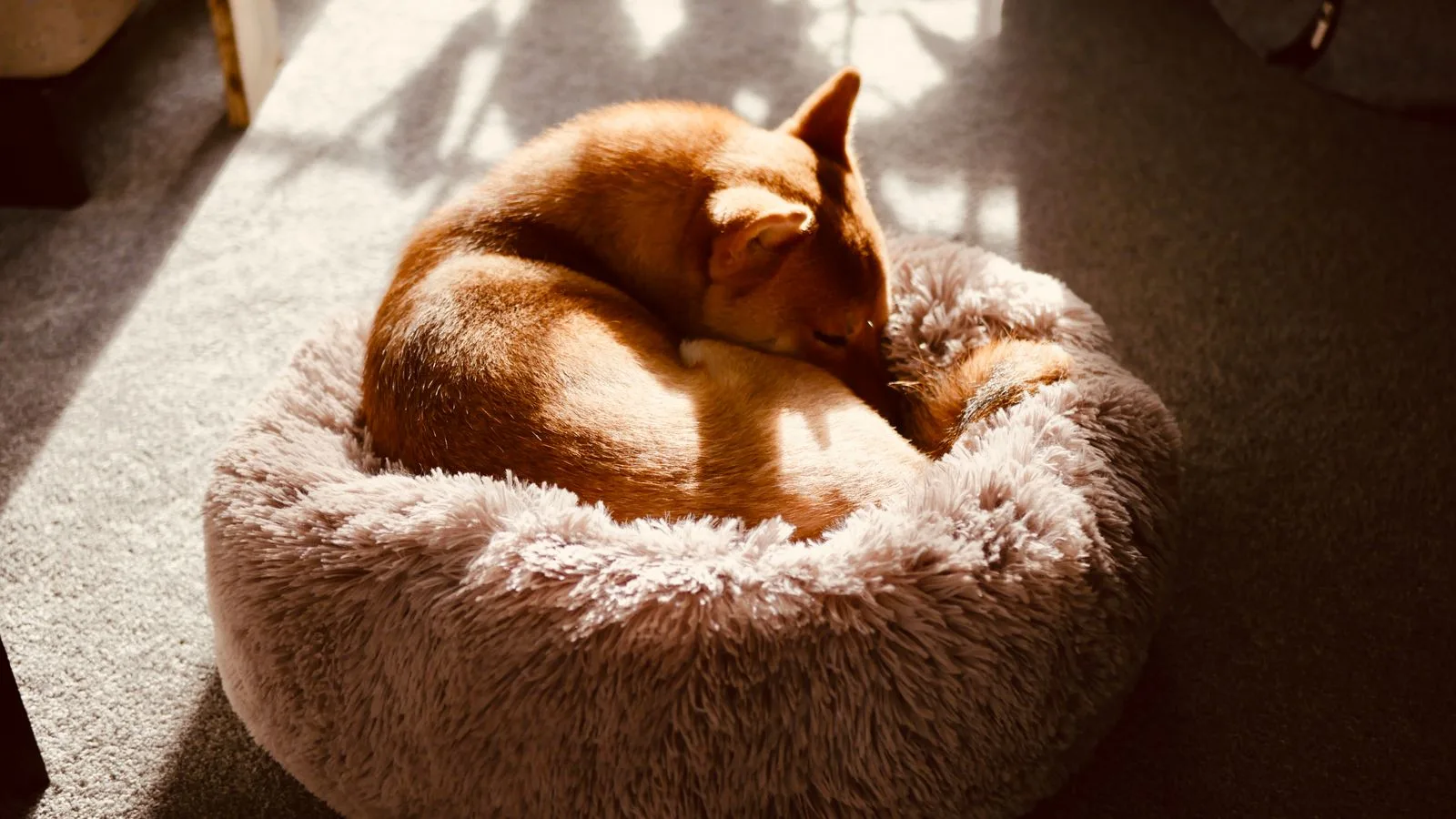
The bed is the most important thing you pack. PawHaven's 20-inch calming donut bed is a round plush bed with raised edges that give a small dog head and neck support while it curls up. At 20 by 20 by 8 inches and $152.97, it is sized for a small dog or a cat of around 10 lbs — measure your dog first, because a bed that is too small is no comfort at all. If you are buying one for travel, let your dog sleep on it at home first. Check the size and price on the PawHaven donut bed page.
Keep the first evening small. Skip the restaurant, the lobby, and the long sightseeing walk, and eat in or near the hotel. VCA Hospitals notes that keeping feeding, water, and exercise routines steady while traveling may help support normal digestion and behavior — so feed and walk at the usual times. A tired dog sleeps better than a wired one.
Sound is the hardest part of a hotel night. A white-noise app, a fan, or the television on low covers the hallway sounds that make a dog sit up and bark. Decide the 2 a.m. plan before bed: leash and shoes by the door, a known potty spot, a calm, boring trip out and back. The dog learns that a night wake is a quick errand, not the start of the day.
Watch for rest rather than a perfect pose. A dog that lies down, sighs, and lets its breathing slow is settling, even if it is not curled in the bed. A dog still pacing after an hour, panting at rest, or barking at every sound needs you to sit with it quietly — your calm is the strongest calming tool in the room. A pheromone spray 15–20 minutes before travel helps some dogs — try it at home first.
Do not leave your dog alone in a hotel room to see whether it settles — that is how a nervous dog learns the strange room is also where it gets abandoned. For barking at hallway noise: white noise, the bed in the far corner, a chew or a lick mat. Never reach for medication on your own — Benadryl and sedation are questions for a vet. If your dog vomits repeatedly, pants heavily at rest, or cannot settle after two nights, call a vet. For the drive, our road trip with a dog checklist covers the stops and packing, and our hiking with a dog essentials guide covers winding down after a trail day.
How do I help my dog settle in a hotel room?
Bring the bed your dog sleeps on at home, unwashed, and set it in the quietest corner. Check the room for hazards first, keep feeding and walk times on home time, and use white noise to cover hallway sounds. Arrive calm — your dog reads your mood.
Why won't my dog sleep in a hotel?
Nothing smells, sounds, or feels like home, so your dog stays on alert instead of sleeping. A familiar-smelling bed, a calm arrival routine, and a quiet corner give the dog the information it needs to feel safe enough to rest.
Can I leave my dog alone in a hotel room?
It is best not to, especially on the first night. An anxious dog left alone in a strange room can panic, bark for hours, and damage the room. Take the dog with you, or use the hotel's pet services if they exist.
How do I stop my dog barking at hotel hallway noise?
Use white noise or a fan to cover hallway sounds, put the bed in the corner farthest from the door, and give the dog a chew or lick mat. Do not scold — the dog is reacting to sounds it cannot identify.
Can I give my dog Benadryl for travel anxiety?
Ask your vet first. Benadryl and any sedative are medical decisions, not travel tips, and the right answer depends on your dog's health, size, and history. Never dose a dog on the advice of a blog post.
- PetSmart — How to Manage Dog Anxiety While Traveling
- Spirit Dog Training — Staying in a Hotel With Your Dog
- Dog Breed Guide — How to Help a Dog Settle in a Hotel Room
- Dog Train Club — Dog Won't Settle in a Hotel?
Share this article