Kiwi in Winter: The Hill Fruit in the Tiffin Box
By My Quick Trippers · 13 Nov 2026
10 min read · Food & Cuisine
Kiwi is an autumn fruit that is eaten in winter. It is picked hard in October and early November, ripened at home over ten to fifteen days, and then it waits — in the fridge, for weeks — for the cold months, when a firm, bright fruit in a tiffin box is worth more than it is in any other season. Our first post told the story of the fruit itself in Himalayan kiwi, Uttarakhand's coming-soon hill fruit, our orchards post told where hill kiwi grows, our guide covered how to pick, store and eat it, and our recipes post gave jam, chutney and salad. This post is about the winter use that ties them together: the kiwi in the tiffin box.
The facts first, reused from our orchards post and not re-invented here. Six varieties were first planted in Uttarakhand at the National Bureau of Plant Genetic Resources station in Bhowali, Nainital, in 1990. The best-documented orchards are in Bageshwar, in the Kapkot block, where kiwi arrived in 2004. Cultivation stood at 682.66 hectares and 381.80 metric tonnes in 2022–23, and the state horticulture department's Kiwi Policy, introduced in May 2025, aims to take it to 3,500 hectares and more than 33,000 metric tonnes by 2031. The fruit is harvested from October into early November, picked hard and ripened off the vine. One thing has not changed: there is no price yet. The store lists kiwi as coming soon, with 350 kg in stock and the price to be announced, and this post invents none.
Why kiwi fits the winter tiffin
A tiffin fruit has a short list of jobs: it must travel without bruising, it must be eaten without cooking, it must keep until lunchtime, and it must be worth opening the box for. Kiwi does all four, and it does them best in winter. A firm kiwi travels well in a box, where a soft fruit would crush. It is eaten cold, straight from the box, with no heating and no preparation at the other end. It keeps for weeks in the fridge at home, so a week's tiffins can be planned from one buy. And in the cold months, when the fruit on the shelf is mostly stored and quiet, a bright green kiwi is the liveliest thing in the box.
It is also a fruit that suits the winter appetite. Winter food is heavy — slow dals, thick rotis, hot rice — and a tiffin of heavy food wants a bright end to it. A few slices of kiwi after a hot lunch do what a sweet cannot: they are tart first, then sweet, and they leave the mouth fresh. That is the kiwi's job in the tiffin, and it is the same job it does at the breakfast table, sliced over curd: the bright note after the heavy food.
Packing it: the morning routine
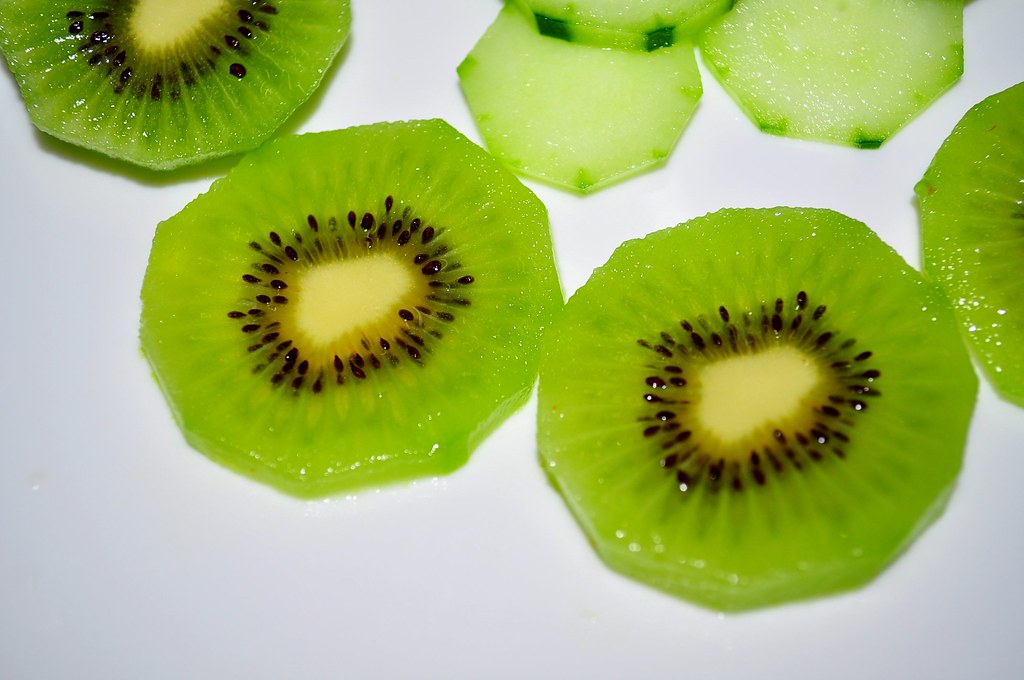
Pack it in the morning, not the night before. A ripe kiwi gives slightly when you press it gently with your thumb, the way a ripe avocado does — firm, but with a little give. If it is rock hard, it needs a few more days at room temperature; a paper bag with a banana ripens it faster. If it is soft and wrinkled, it has gone past its best, and it should not go in the tiffin at all. Pick the fruit that gives slightly, peel it, slice it, and pack the slices in a small box with a lid that shuts tight. A small fork or a spoon in the box means the fruit is eaten cleanly, without fingers in the slices.
Or pack it whole, and peel it at the other end. A whole kiwi, unpeeled, travels better than sliced fruit — the skin protects it, and it needs no box at all, just a corner of the bag. The eater peels it with a small knife, or cuts it in half and scoops the flesh with a spoon. The skin is edible but fuzzy, and most people peel it. Whole is the better choice for a long journey or a rough bag; sliced is the better choice for a short one, or for a child who will eat what is ready and leave what is not.
Which fruit to pack
The variety matters, if you know which one you are buying. Five female varieties grow in the hills — Hayward, Allison, Bruno, Monty and Abbott — with Tomuri as the male polliniser, first planted at Bhowali, Nainital, in 1990. Hayward is the large, flat-oval fruit with the best keeping quality, suited to the higher hills where the winter chilling is longest. Allison is the medium fruit, a heavy bearer, sweet and low in acid, suited to the mid-hills, and it is the variety most often named by Uttarakhand's growers. For the tiffin, Hayward is the one that waits best, and Allison is the one that tastes sweetest — pack Hayward when the fruit must keep, and Allison when it will be eaten today.
The size matters too. The harvest is graded by weight: Grade A fruit weighs 80 to 100 grams, Grade B 60 to 80 grams, and Grade C below 60 grams. A Grade A fruit is a generous tiffin on its own; a Grade B fruit is the right size for a child, or for a tiffin that already has another fruit in it. Grade C fruit is small, and it is better used at home — sliced over curd, or in a fruit salad — than packed for a journey, where it is easily lost in the box.
With curd, and in a salad
The simplest winter tiffin is kiwi over curd: slices of kiwi on a small box of curd, packed separately and put together at lunchtime, or packed together if the journey is short. The curd is the mild base, the kiwi is the bright top, and the two together are a breakfast or a light lunch on their own. It is not a cooking fruit: heat takes the colour and the freshness out of it, so it belongs in cold dishes, not in the kadhai. Serve it cold, and keep it cold — a tiffin that sits in the sun is a tiffin that spoils.
In a fruit salad, kiwi is the fruit that holds the box together. Slice it with malta, the hill orange — the winter citrus of the hills, seasonal, fragrant, eaten fresh and juiced — and the two winter fruits carry each other: the malta is sweet and fragrant, the kiwi is tart and bright. Our guide to malta covers the orange in full. Keep the salad simple — two fruits, not five — and pack the pieces large enough to pick up with a fork, not so small that they turn to juice in the box.
When the fruit has gone soft
Do not pack a soft kiwi. A fruit that is soft and wrinkled has gone past its best for eating fresh, and it will not survive a journey in a box — it will crush, leak, and spoil the rest of the tiffin. Use it at home instead, the way our recipes post describes: jam, chutney and salad are the uses for fruit that is too soft to pack, and a soft kiwi makes a better jam than a firm one does. The rule is simple: firm fruit travels, soft fruit stays home and gets cooked into something else.
Storing the week's fruit
Fresh kiwi keeps for a few weeks in the fridge, but it is best eaten within days of ripening, while the flesh is still bright and the flavour is still tart-sweet rather than soft and dull. Ripen the fruit at room temperature — ten to fifteen days from picking — and move it to the fridge once it gives slightly under the thumb. Take out each morning only what the day's tiffin needs, and leave the rest cold. A fruit left on the counter all week ripens past its best before the week is out, and a fruit kept cold waits its turn.
When kiwi goes on sale
Kiwi is listed in our Pahadi Store as coming soon, with 350 kg in stock and the price to be announced. There is no price in this post because there is no price on the listing yet — check the store page for the announcement, and do not pay any price quoted anywhere else until the store lists it. Fresh fruit is perishable, so when it does go on sale it will be sold in season, while the stock lasts — picked hard in October and ripened at home, ready for the winter tiffin.
Frequently Asked Questions
Can I pack kiwi for a school tiffin?
Yes. Pick a fruit that gives slightly under the thumb, peel and slice it in the morning, and pack the slices in a small lidded box with a fork or a spoon. A Grade B fruit, 60 to 80 grams, is the right size for a child.
Whole or sliced — which travels better?
Whole travels better: the skin protects the fruit, and it needs no box. Sliced is better for a short journey, or for a child who will eat what is ready. Either way, pack it in the morning, not the night before.
Which kiwi variety keeps best?
Hayward, the large flat-oval fruit, has the best keeping quality and suits the higher hills. Allison is the sweetest and the variety most often named by Uttarakhand's growers. Pack Hayward when the fruit must keep, and Allison when it will be eaten today.
When will the store sell kiwi?
It is listed as coming soon, with 350 kg in stock and the price to be announced. There is no price yet, and this post invents none — check the Pahadi Store for the announcement.
- My Quick Trippers — Pahadi Store
- My Quick Trippers — Himalayan kiwi: Uttarakhand's coming-soon hill fruit
- My Quick Trippers — Himalayan kiwi orchards in Uttarakhand: where hill kiwi grows
- My Quick Trippers — Himalayan kiwi: how to pick, store and eat the hill fruit
- My Quick Trippers — Kiwi recipes: jam, chutney and salad from the Uttarakhand hills
- My Quick Trippers — Malta, the hill orange of Uttarakhand
Share this article