Fort Kochi Heritage Walk: Chinese Fishing Nets, Mattancherry & Art
By My Quick Trippers · 21 Oct 2026
7 min read · Culture & Heritage
Fort Kochi is the walkable heart of Kochi, a small peninsula where five centuries of trade, colonisation and migration are packed into a few lanes of Portuguese houses, Dutch-era warehouses, Chinese fishing nets and spice godowns. It is one of the best heritage walks in India precisely because it is compact: in a single unhurried day on foot, you can stand under the fishing nets at dawn, visit the oldest European church in India, wander through Jew Town's antique shops, and finish with a Kathakali performance and a seafood dinner by the water. This guide walks the route in the order that works best, with the practical details that make the difference between a good walk and a great one.
Start at dawn: the Chinese fishing nets
Begin at the Chinese fishing nets on the Fort Kochi beachfront, ideally early in the morning when the fishermen are working the nets and the light is soft. The nets — huge cantilevered structures said to have been introduced by Chinese traders centuries ago — are still worked by local fishing teams, and watching a team haul a net is a small piece of living history rather than a museum exhibit. Walk the beachfront promenade from the nets towards the town, stopping at the stalls selling fresh catch and fried fish, and note the Vasco da Gama Square area, where the town's layered history is visible in a single view: the sea, the nets, and the colonial buildings behind them. Early morning also spares you the midday heat, which is the walk's main enemy.
The churches, the palace and the lanes
From the waterfront, head inland to St. Francis Church, the oldest European church in India, built in the early 1500s and famously the original burial place of Vasco da Gama. It is a plain, moving building — whitewashed walls, wooden pews, and gravestones that read like a roll call of Kochi's colonial centuries. Nearby, the Santa Cruz Basilica offers the opposite register: soaring, colourful, and richly decorated. Between the two, wander the lanes of Fort Kochi itself, where Portuguese, Dutch and British-era houses sit beside art cafes, homestays and galleries, and where the Kochi-Muziris Biennale, when it is running, turns whole warehouses into exhibition spaces. The lanes reward wandering without a strict plan, but keep an eye out for the old spice warehouses and the distinctive Dutch-style gabled buildings.
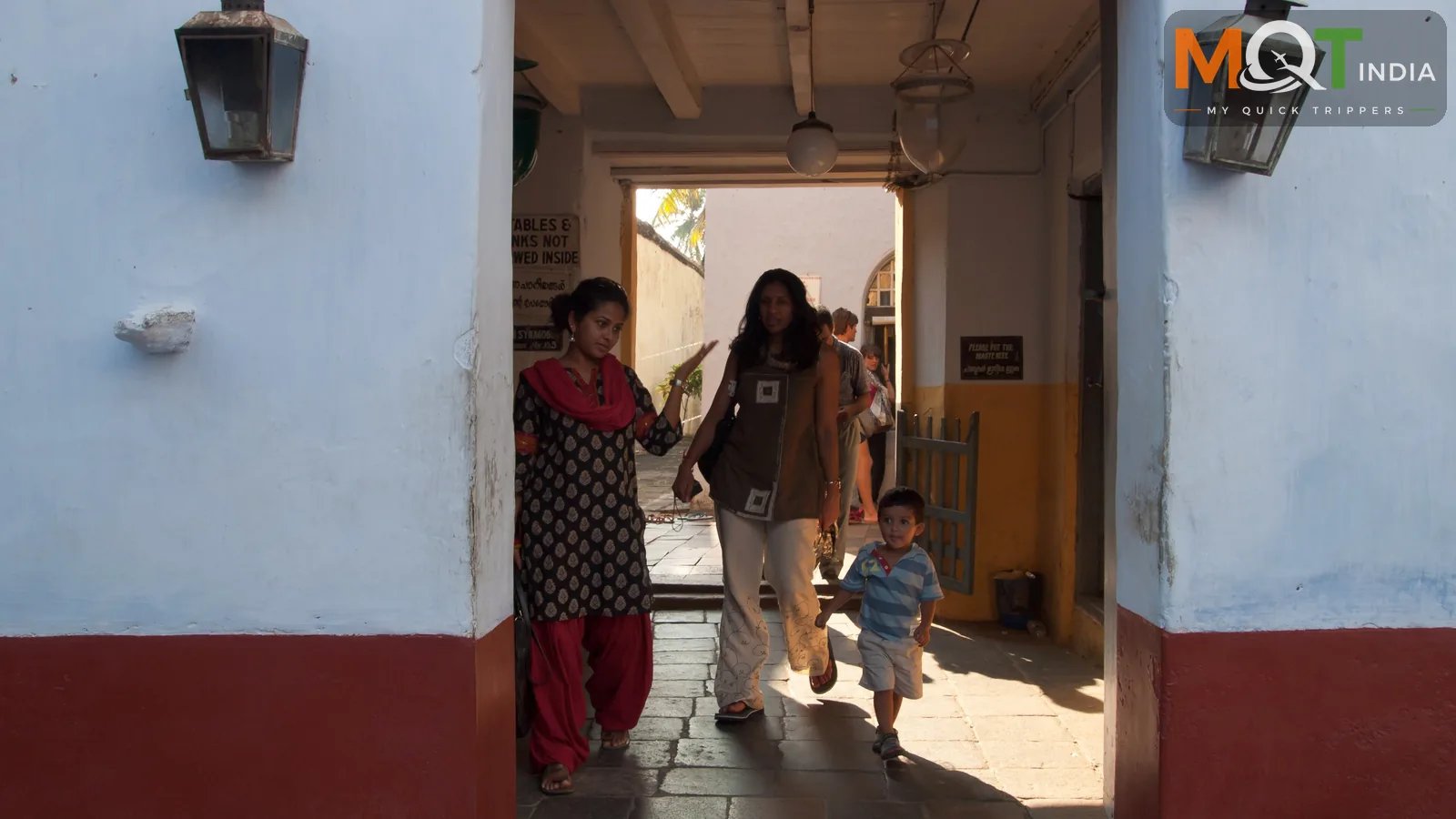
Continue to Mattancherry, the neighbouring quarter that holds the other half of the story. The Mattancherry Palace, often called the Dutch Palace, is a Kerala-style palace with remarkable murals depicting the Ramayana and the stories of Kerala's rulers, and it is the single most rewarding indoor stop on the walk. From there, Jew Town's narrow lane leads to the Paradesi Synagogue, one of the oldest active synagogues in the Commonwealth, with its Chinese tiles and Belgian chandeliers, surrounded by antique and spice shops that are worth browsing even if you buy nothing. The walk from Fort Kochi to Mattancherry takes roughly 20 to 30 minutes on foot, and an auto-rickshaw is an easy fallback in the heat — agree the fare before you get in.
Art, food and the evening performance
Fort Kochi's art scene is one of its great pleasures. Small galleries, street art and the Biennale venues (in Biennale years) sit alongside cafes serving Kerala coffee, appam and seafood, and the town's homestays and boutique hotels are among the most characterful places to stay in Kerala. For food, the rule is simple: eat seafood near the water, where the catch is freshest, and try the Kerala classics — karimeen pollichathu, prawn curry, appam with stew — at a local restaurant rather than a tourist-facing one. The Kochi day-trip guide to Athirappilly waterfalls is the natural extension if you have a second day, and the best time to visit Kerala month by month will help you pick a season — the cooler months from October to March are generally the most comfortable for walking.
End the day with a Kathakali performance. The Kerala Kathakali Centre and similar venues in Fort Kochi run evening shows, often with a make-up demonstration beforehand that is fascinating in its own right — watching the elaborate chutti make-up applied is half the experience. Book tickets in advance in peak season, arrive early for the demonstration, and stay for the full performance if you can; even a single scene gives you a sense of an art form that is unlike anything else in world theatre. After the show, a walk back along the waterfront, with the fishing nets silhouetted against the evening sky, is the perfect close to the day.
If you have a second morning, take a ferry. The short ferry rides between Fort Kochi, Mattancherry, Willingdon Island and Ernakulam are among the cheapest and most enjoyable experiences in Kochi, giving you the harbour from the water — the nets, the ships, the old warehouses — in a way no road journey can. Marine Drive in Ernakulam, across the water, is the place for an evening stroll and a very different, modern Kochi skyline, and the contrast between the two sides of the harbour tells you more about the city than any single museum. Back in Fort Kochi, the homestay culture is part of the experience: many of the old houses are run by families who have lived in the town for generations, and a conversation over breakfast about the house's history is often the most memorable part of the stay. Take time to simply sit on a veranda in the late afternoon, when the heat softens and the lanes fill with the smell of rain or frying fish, and watch the town go about its ordinary evening business.
Fort Kochi is best taken on foot and at dawn — the nets working, the lanes quiet, and five centuries of history within a single morning's walk.
Practicalities: a one-day walking route
- Early morning: Chinese fishing nets and the beachfront promenade, then breakfast at a Fort Kochi cafe
- Mid-morning: St. Francis Church, Santa Cruz Basilica, and a wander through the Fort Kochi lanes and galleries
- Late morning: walk or auto to Mattancherry Palace, then Jew Town and the Paradesi Synagogue
- Afternoon: rest from the heat, a spice-market browse, and coffee in a heritage homestay cafe
- Evening: Kathakali make-up demonstration and performance, then seafood dinner near the waterfront
- Wear: comfortable walking shoes, a hat, sunscreen and water — the lanes are flat but the sun is strong
Getting to Fort Kochi is straightforward: Kochi's airport at Nedumbassery connects to major Indian cities, Ernakulam Junction is the main railhead, and local buses, autos and ferries connect Ernakulam with Fort Kochi and Mattancherry. Staying in Fort Kochi itself, in a heritage homestay or boutique hotel, puts the whole walk on your doorstep and is worth the small premium over staying in Ernakulam. If you are building a wider Kerala trip, our Kerala itinerary shows how Kochi fits with the backwaters and the hills, and an Ayurveda guide is worth reading if you plan to add a treatment or retreat to the trip. For an organised version, compare a best of Kerala tour or an enchanting Kerala package against your self-planned walk. Fort Kochi rewards the slow walker, and a single day there will leave you planning the next one.
And if the walk leaves you wanting more of Kerala, Kochi is the ideal base for it. The backwaters of Alleppey, the hill station of Munnar, and the beaches further south are all within reach, and the contrast between Fort Kochi's colonial lanes and Kerala's green interior is one of the great pleasures of a Kerala trip. But do not rush away: Fort Kochi's real gift is its slowness, and a second unplanned morning in its lanes, with no destination beyond a good coffee and a good view, is often the part of the trip travellers remember most clearly when they are home again.
Share this article