Malta Marmalade and Winter Desserts from Uttarakhand's Hill Orange
By My Quick Trippers · 12 Nov 2026
9 min read · Food & Cuisine
Malta season is short — November to January, while the hill harvest lasts — and a household that loves the fruit has to decide what to do with the glut. Eating it fresh is the first answer, and our post on malta, the hill orange of Uttarakhand covers that, and our post on malta juice and recipes covers fresh juice, rock-salt salad and squash. This post is about the third answer: the preserving pan. Marmalade, candied peel and winter desserts are how a hill kitchen stretches malta past January, and they are all made from the same fruit, in the same week, with the same pot.
Marmalade is a preserve made from citrus fruit, peel and all, cooked with sugar and water until it sets. It is not jam: jam is made from the pulp of a fruit, while marmalade keeps the sliced peel in the jar, and the peel is the point — bitter, fragrant, chewy, the part that makes marmalade taste like marmalade and not like orange jam. The classic marmalade orange is the bitter Seville, which is high in pectin and bitterness and sets firmly. Malta is a sweet orange, Citrus sinensis, so a malta marmalade is gentler and sweeter than a Seville one, and it needs a little help to set: lemon juice for acid, and a long, slow cook to draw the pectin out of the peel and pith. What you get is a golden, soft-set preserve with ribbons of peel in it, sweet first and bitter second, made for toast, for yogurt, and for the winter breakfast table.
Marmalade: the winter pot
Start with a kilogram of malta, firm and heavy for their size, and two lemons. Wash the fruit well and scrub the skins, because the peel goes into the jar. Cut the maltas in half, squeeze out the juice and keep it, then slice the peel as thin as you can — half-moons, as thin as a coin — and pick out the pips. Put the sliced peel and the juice into a large pot, add water to cover, and leave it overnight. The soak is not optional: it softens the peel and starts drawing out the pectin, and peel that has not soaked will stay tough in the finished marmalade no matter how long you boil it.
The next day, simmer the peel in its soaking water until it is completely soft — press a piece between your fingers and it should give without resistance, usually after forty minutes to an hour of gentle simmering. Then add the sugar and the lemon juice: roughly the same weight of sugar as the prepared fruit, so about a kilogram of sugar for a kilogram of maltas, and the juice of the two lemons. Stir until the sugar dissolves, then bring the pot to a rolling boil and keep it there, stirring now and then so it does not catch. The marmalade is ready when it reaches its setting point, 104 to 105 degrees Celsius, which is the temperature at which the fruit's natural pectin and the sugar combine into a gel. Without a thermometer, use the cold-plate test: put a spoonful on a cold saucer, wait a minute, and push it with a fingertip — if the surface wrinkles, it is done.
Take the pot off the heat and let it rest for ten minutes, so the peel spreads evenly through the jar instead of floating to the top. Ladle it into clean, warm jars, seal them while hot, and leave them to cool. A sealed jar keeps for months in a cool cupboard; an opened jar keeps for weeks in the fridge, eaten a spoonful at a time. If a batch does not set, it is not wasted: pour it back into the pot, add a little more lemon juice, bring it back to a rolling boil for a few minutes, and test it again. Marmalade forgives a second boil. What it does not forgive is impatience at the start — peel that went in tough comes out tough, and no amount of boiling at the end will fix it.
Candied peel: the second jar from the same fruit
The same pot makes a second preserve from the part most kitchens throw away. Candied peel is malta peel simmered in sugar syrup until it turns translucent, then dried and rolled in sugar, and it is the cook's reward for buying the fruit whole. Cut the peel into strips, simmer them in plain water for a few minutes and drain them — that first simmer takes the edge off the bitterness — then simmer them again in a syrup of equal parts sugar and water until the strips turn glossy and almost see-through. Lift them out, let them dry on a rack until they are no longer sticky, and roll them in a little sugar. They keep for weeks in a jar, and they go everywhere: chopped into cakes and kheer, stirred into yogurt, eaten with evening tea. A malta that gives you juice, marmalade and candied peel from the same kilo is a fruit that has been properly used.
Winter desserts: malta in kheer, phirni and jelly
The desserts start where the marmalade ends, with the same rule: malta is a citrus fruit, and citrus and hot milk do not mix. The acid in the fruit curdles milk, so malta segments never go into a kheer while it is cooking. The kheer is cooked first — rice or jhangora simmered in milk until thick, sweetened and cooled a little — and the segments go in at the end, folded through the cooled pudding with a spoonful of marmalade stirred in for the peel's bitterness. The same goes for phirni, the set milk pudding: cook it plain, chill it, and spoon the segments over the top with a little of their juice. The fruit stays bright because it was never boiled, and the milk stays smooth because the fruit never met it hot.
A malta jelly is the simplest dessert of the three, and the one children ask for first. Warm the juice of four or five maltas with a little sugar and the juice of half a lemon, stir in agar — the vegetarian setting agent sold in most Indian grocery shops — following the packet's quantity, and pour the mixture into small bowls. Chill it until set, and serve it with segments on top. It is a clear, bright jelly, and it tastes of the fruit rather than of the sugar, because the juice does the work and the sugar only sweetens it. An even simpler dessert needs no cooking at all: segments of malta over hung curd, with a spoonful of honey and a few chopped walnuts, is a winter dessert bowl that takes five minutes and uses the fruit exactly as it is.
What not to do with malta in desserts
Three mistakes cover almost every failed malta dessert. The first is boiling the segments in milk, which curdles it — add citrus to milk puddings only after they have cooled. The second is using unripe fruit: a malta picked too early is sour and dry, and no amount of sugar fixes it, so buy fruit that is heavy, fragrant and deep orange, and eat the season while it lasts. The third is treating marmalade like juice — watering it down for a drink, or using it as a squash. Marmalade is a preserve, thick with peel and sugar, and its place is on toast, in yogurt, or folded through a dessert, not in a glass. Keep each preparation in its own place and all three of them work.
One honest note about the photograph
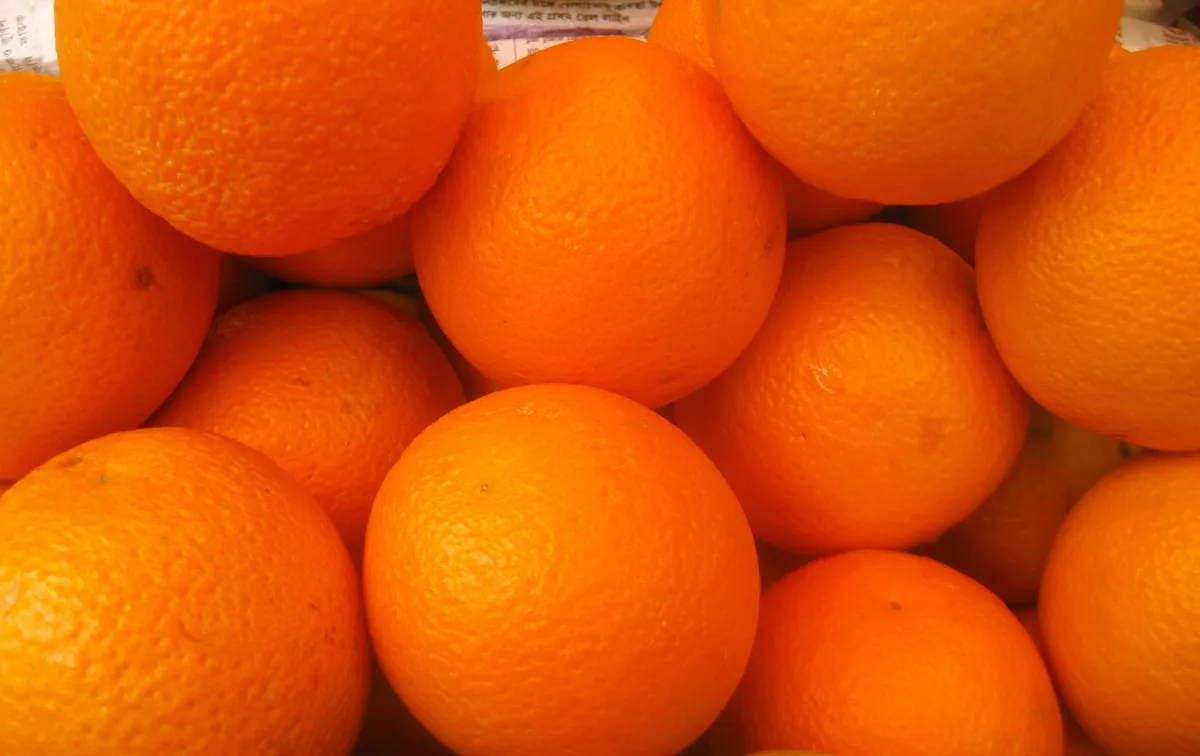
The photograph at the top of this post is a pile of malta oranges, Citrus sinensis — “Malta orange (Citrus sinensis).jpg” by Salil Kumar Mukherjee, CC BY-SA 4.0 (via Wikimedia Commons). It shows the fruit as sold — round, deep orange, and piled high in the season — the fruit the juice and the recipes in this post start from.
Where to buy malta
Malta is sold in our Pahadi Store at an indicative ₹219 for 1 kg, from Healthy Buddha, checked 12 Nov 2026. The price is indicative, not fixed: it comes from that seller's live listing, not from our own supplier list, so check the store page for the current figure before ordering. Malta is seasonal — sold fresh in season only, November to January, while the hill harvest lasts — so buy it in the season and preserve what you cannot eat fresh.
Frequently Asked Questions
What is the difference between marmalade and jam?
Jam is made from the pulp of a fruit. Marmalade is made from citrus fruit with the peel kept in — sliced peel is the point of it, bitter, fragrant and chewy. A malta marmalade is a sweet-orange marmalade, gentler than a bitter Seville one, and it needs lemon juice and a long cook to set.
How much sugar does malta marmalade need?
Roughly the same weight of sugar as the prepared fruit — about a kilogram of sugar for a kilogram of maltas — plus the juice of two lemons. The sugar preserves the fruit and helps the natural pectin set; less sugar needs added pectin to set properly.
How do I know when marmalade is set?
At 104 to 105 degrees Celsius, or by the cold-plate test: a spoonful on a cold saucer, left for a minute, should wrinkle when you push it with a fingertip. If it does not wrinkle, boil it a few minutes more and test again.
Can I put malta segments in kheer while it cooks?
No — the acid in the fruit curdles hot milk. Cook the kheer first, let it cool a little, and fold the segments in at the end, with a spoonful of marmalade stirred through for the peel's bitterness.
When is malta in season?
November to January, while the hill harvest lasts. Malta is sold fresh in season only, so the preserving recipes in this post — marmalade, candied peel — are how a household stretches the fruit past January.
Where can I buy malta?
In the Pahadi Store, at an indicative ₹219 for 1 kg (Healthy Buddha, checked 12 Nov 2026). Check the store page for the current price before ordering — and buy in season, while the harvest lasts.
Sources
- My Quick Trippers — Pahadi Store
- My Quick Trippers — Malta: the hill orange of Uttarakhand
- My Quick Trippers — Malta hill orange: juice and recipes
- Healthy Buddha — Malta orange
- Wikipedia — Citrus sinensis
- Wikipedia — Marmalade
Share this article