Masoor Dal Khichdi: The Winter One-Pot of the Hills
By My Quick Trippers · 13 Nov 2026
10 min read · Food & Cuisine
Winter in the hills has a smell, and it is the smell of a pot that has been on the fire for an hour: rice and dal cooking together, ghee melting on top, the steam fogging the kitchen window. That pot is khichdi, and when the dal in it is masoor, it is the winter one-pot of the hills — one pot, one fire, one meal that feeds a family and warms the house. Our post on sabut masoor, the whole red lentil explains the lentil itself, and our hill-kitchen masoor recipes post covers the other ways the hills cook it. This post is about the khichdi: the one-pot, the winter pot, the pot that is dinner when the cold has settled in and nobody wants to cook two dishes.
One promise first, the same one this series makes for every pulse. There are no health claims here: this post does not say masoor khichdi cures or prevents anything, and there are no nutrition numbers, because none have been verified for this dish. What follows is about the lentil, the rice and the pot — the things a hill kitchen actually does with a cup of whole masoor on a winter evening.
Why masoor, why khichdi, why winter
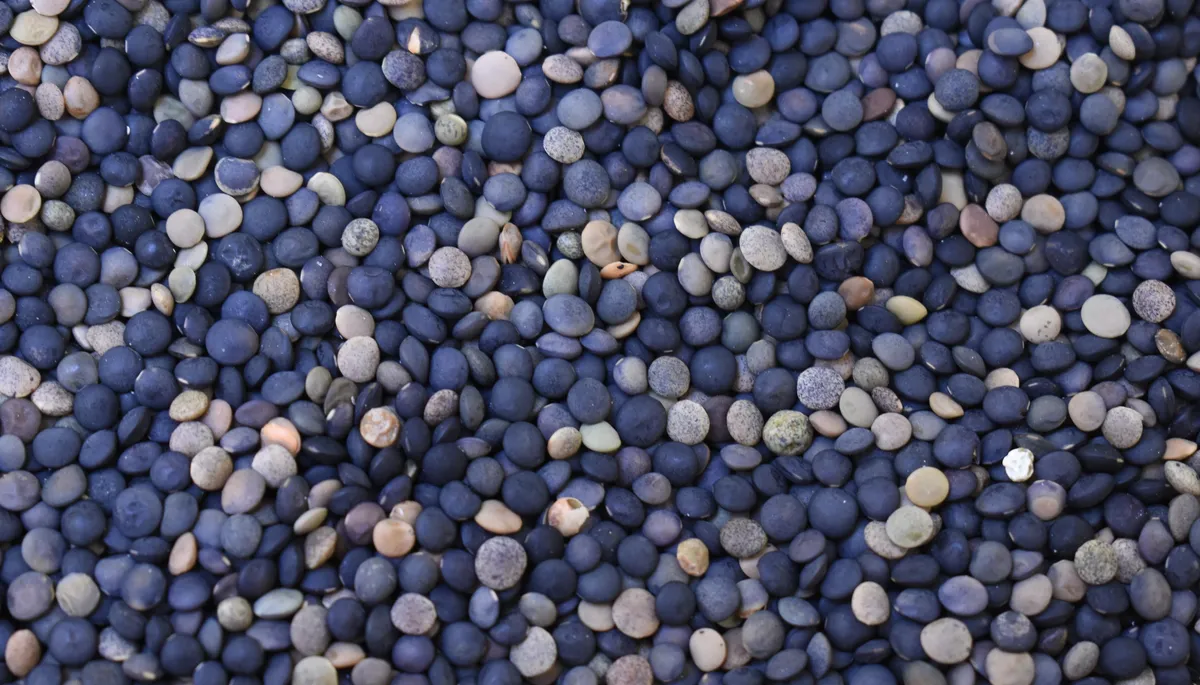
Masoor is whole red lentil, the small, round, reddish-brown lentil that cooks faster than any other pulse in the hills. It needs no overnight soak — a rinse and half an hour in water is enough — and it softens in twenty minutes on a low fire, which is why it is the lentil of the one-pot: it keeps pace with the rice, and the two finish together instead of one waiting for the other. The whole lentil holds its shape a little longer than the split red lentil, so the khichdi has texture — the rice soft, the lentils tender but present, the pot neither a soup nor a dry pulao, but the soft, spoonable middle that khichdi is meant to be.
Winter is the season for it, and the reason is not only the cold. In winter the hills cook slow food — the pots that sit on the fire while the house is shut against the wind — and the khichdi is the slowest of the fast dishes: an hour on a low fire, the pot covered, the kitchen warm from the stove. It is also the season when the fresh greens of summer are gone and the meal is built from the store cupboard — rice, dal, ghee, a few spices — and the khichdi is the dish that makes a store-cupboard meal feel like a cooked meal rather than a makeshift one. A family that has rice and masoor in the house has dinner, whatever the weather is doing outside.
The pot, step by step
The khichdi starts with the rinse. A cup of whole masoor and a cup of rice — the usual measure is equal parts, though households that like it softer use a little more dal, and households that like it firmer use a little more rice — rinsed together until the water runs clear, then left to soak for half an hour while the pot is prepared. The pot is a heavy one, iron or thick-bottomed, because the khichdi cooks low and long and a thin pot will catch at the bottom. Ghee goes in first, then cumin, then ginger and a green chilli, and the tempering is kept short and gentle — the khichdi is not a dish of fierce frying, and the spices are there to warm the pot rather than to dominate it.
The soaked rice and dal go in next, with water — about three cups of water for each cup of the rice-and-dal mix, more if the household likes it soft — and salt, and the pot is brought to a boil, skimmed once, then covered and turned down to the lowest fire. From here the cooking is waiting: forty minutes or so, the lid kept on, the pot stirred once or twice so nothing sticks, until the rice has broken down and the lentils have gone soft and the whole pot has turned into a single, porridge-like mass. The test is the spoon: it should stand in the pot for a moment before falling, and the khichdi should be soft enough to eat with a spoon and thick enough to hold its shape on the plate.
The finish is the ghee. A spoonful of melted ghee poured over the top, a pinch of roasted cumin scattered over it, and the pot is left covered for five minutes so the ghee melts through. Some households add a second tempering at the end — ghee heated with a dried red chilli and a pinch of asafoetida, poured sizzling over the pot — and that is the version for a cold night, the extra warmth on top of the warmth. The khichdi is served hot, in a bowl, with nothing else needed, though a spoonful of curd and a piece of pickle on the side are the usual companions, and a papad if the house has one.
What goes in, and what stays out
The hill khichdi is a plain dish, and its plainness is deliberate. The usual pot has rice, masoor, ghee, cumin, ginger, green chilli, salt and water — nothing else. There is no onion, no tomato, no garam masala, and the reason is the same as in the other hill dals: the flavour is the lentil and the rice and the ghee, and the spices are there to warm the pot rather than to cover it. A khichdi with a dozen spices is a different dish — a pulao, or a plains khichdi — and the hill version is the one that trusts the lentil to taste of itself.
That said, the pot takes to winter vegetables, and hill households add what they have. A handful of chopped cauliflower, a few cubes of potato, a handful of peas, a chopped carrot — stirred in with the rice and dal, they cook in the same time and become part of the pot rather than a side dish. The vegetables are the cook's choice, not the recipe's demand, and the rule is that they go in at the start, with the rice and dal, so they soften into the khichdi rather than sitting on top of it. A khichdi with vegetables is the same dish, fed a little better — the pot doing the work of the whole meal.
What stays out is as telling as what goes in. There is no turmeric in the classic hill khichdi — the pot is pale, the colour of rice and lentil and ghee, and the cook who adds turmeric is making a yellow khichdi, which is a fine dish but not this one. There is no fried onion on top, no tomato, no heavy masala. The khichdi is a dish of restraint, and its restraint is what makes it a winter dish: the pot is warm, the flavour is quiet, and the meal is the kind that lets you go to sleep full rather than the kind that keeps you up with spice.
Khichdi beyond the winter evening
The khichdi is not only a winter dinner. It is the dish of the sickroom — the soft, plain food given to someone recovering, because it is easy to eat and easy to digest, and because a sick person needs a meal that asks nothing of them. It is the dish of the first solid food, the one given to a child when the family starts feeding them from the pot rather than from a separate pan. And it is the dish of the journey — cooked in the morning, packed in a tiffin, eaten cold or reheated at a roadside stop, because a one-pot meal travels better than a meal of three dishes. The khichdi is the pot that turns up wherever a meal needs to be simple, soft and complete.
The khichdi also marks the week. In many hill households it is the Saturday dish, or the dish of the day when the cook is tired — the meal that is cooked when there is no time or energy for a dal and a sabzi and a rice, because the khichdi is all three in one pot. It is the dish that lets the kitchen rest, and the family still eats well. A cook who knows khichdi has a meal in reserve for every tired evening, and that is why the recipe is one of the first a young cook learns: not because it is impressive, but because it is reliable.
Buying masoor
Masoor is in the Pahadi Store at an indicative ₹240 for 1 kg, sold by Hillsome, checked 13 Nov 2026. The price is indicative, not fixed: it comes from the seller's listing, so the figure on the store page is the current indication rather than a fixed store price. Buy the whole lentil — small, round, reddish-brown, whole and clean — and look for lentils that are uniform in colour and free of stones, because the khichdi is a dish of one lentil and one rice, and a mixed, dusty kilo will show in the pot. One kilo is many pots of khichdi: a cup of dry masoor cooks into a pot that feeds a family, and the kilo lasts a household through the winter.
Frequently Asked Questions
Do I need to soak masoor for khichdi?
Not overnight. Whole masoor needs only a rinse and half an hour in water before it goes into the pot — it cooks in about twenty minutes, which is why it keeps pace with the rice. A longer soak is fine but not needed, and the split red lentil needs no soak at all, though it cooks softer and the khichdi loses the texture the whole lentil gives.
How much water does khichdi need?
About three cups of water for each cup of the rice-and-dal mix, for a soft, spoonable khichdi. Use a little less for a firmer pot and a little more for a softer one, and remember that khichdi thickens as it cools — a pot that looks right when it comes off the fire will be thicker by the time it reaches the table, so err on the side of more water.
Can I add vegetables to masoor khichdi?
Yes — cauliflower, potato, peas, carrot, whatever the season offers. Add them at the start, with the rice and dal, so they soften into the pot rather than sitting on top of it. The classic hill khichdi is plain, with no vegetables at all, but the pot takes them gladly and the meal is the better for it.
What do I serve with khichdi?
A spoonful of curd, a piece of pickle, a papad if the house has one — and a spoonful of melted ghee over the top. The khichdi is a complete meal on its own, so the sides are companions rather than requirements: the curd cools it, the pickle sharpens it, and the ghee is the finish that makes it a winter dish.
Sources
- My Quick Trippers — Pahadi Store
- My Quick Trippers — Sabut masoor: whole red lentil of the hills
- My Quick Trippers — Sabut masoor recipes from the hill kitchen
- My Quick Trippers — Types of pulses in India
Share this article