Noise 65W GaN Charger India Review: Worth the Brand Premium?
By My Quick Trippers · 21 Oct 2026
8 min read · Travel Gear
Recommended gear
Noise 65W GaN Charger — Worth It?
Noise GaN Charger 65W, 3 ports (2 USB-C + 1 USB-A), PD 3.0 (Model AD102, Black)
Brand-safe 65W pick; confirm AD102 model and port power split
As an Amazon Associate, we earn from qualifying purchases. We may earn a commission if you buy through these links, at no extra cost to you.
Honest verdict
buy it if you would rather pay more for a known brand and a support network; skip it if you want the cheapest 65W charger.
Check Price on AmazonNoise is a name most Indian buyers already trust for earbuds, and its 65W GaN charger asks whether that trust is worth a premium in a category where cheaper options exist. In the same teckAtlas five-charger comparison from October 2026 that rated the AILKIN charger highest, the Noise 65W GaN charger — model AD102 — was the most expensive of the five, priced at around ₹1,500, with a 4.3-star rating from around 1,250 reviews in that comparison. My verdict: this is the buy-it-for-the-brand option in the 65W class. The watts are the same as the cheaper picks, but the service network, the familiar name and the easier replacement make it the right choice for buyers who value peace of mind over the lowest price.
What you are actually paying for
A 65W GaN charger from any competent brand does the same core job: it charges a USB-C laptop and a phone from one small brick, splitting its 65W total across ports when several devices are connected. Noise does not sell more watts than the competition, and buyers should not expect it to. What the extra money buys is everything around the watts. Noise has a real Indian presence, with service channels and a replacement process that a buyer can actually use, and its products are sold through established channels rather than only through marketplace sellers. For a charger — a product that lives plugged into a wall socket and handles mains electricity — that surrounding infrastructure is not a luxury. It is the difference between a quick replacement and a long argument if something goes wrong.
Pros
What it does well
The first win is brand familiarity. Noise is already in millions of Indian homes through its earbuds and wearables, so buyers know what to expect from its packaging, warranty process and support. The second win is the comparison rating: 4.3 stars from around 1,250 reviews in the teckAtlas set is a solid, believable figure for a charger in this class, and it suggests the product has survived real daily use rather than launch-week enthusiasm. The third win is the GaN compactness itself — a 65W brick that fits a pocket or a small bag compartment, replacing both a laptop charger and a phone charger on a trip. The fourth win is ecosystem convenience for existing Noise users: one brand for earbuds, watch and charger means one support relationship, which matters more than it sounds when something needs replacing.
Cons
Where it falls short — the honest cons
First, the price. At around ₹1,500, it costs roughly half as much again as the cheapest credible 65W GaN charger in its own comparison, and the extra money buys no extra watts. Value-first buyers will rightly ask what the premium is for, and the honest answer is brand and service, not performance. Second, the same multi-port sharing rule applies: 65W is a total, not a per-port promise, so check how power splits when two or three devices are connected. Third, Noise is a wearables and audio brand first, and a charger buyer should check the listing for the same safety certifications they would demand from any charger brand, rather than assuming the audio reputation transfers automatically. Fourth, like all compact GaN bricks, it runs warm under full load, and it deserves the same care as any charger: a ventilated socket, no covering it with cloth, and no use with a damaged cable.
Noise vs the cheaper 65W picks
The honest comparison is with the AILKIN 65W GaN charger from the same comparison, which was both cheaper and higher-rated in that test. On pure value, the cheaper pick wins. On brand comfort, Noise wins. The deciding question is personal: if this charger fails in six months, which outcome do you want — a return process with a seller you have never heard of, or a support channel from a brand whose products you already own? Students and budget buyers will mostly choose value, and they are right to. Buyers purchasing for parents, for an office, or for someone who cannot troubleshoot a faulty charger should choose the brand, and they are right too. The worst choice is paying the premium while expecting extra performance, because the watts are the same either way.
Who should buy it — and who should skip it
Buy it if you already trust Noise, if you want a service network behind a mains-powered product, or if you are buying a charger for someone else and want the safest brand choice. It is also a good pick for office desks and family charging stations, where one brick serves several people and reliability matters more than price. Skip it if you are buying purely on value and are comfortable with online returns, or if your devices all charge at low wattages and a smaller charger would do. Skip it too if you need more than 65W total; a gaming laptop or a two-laptop setup needs a bigger brick, and no 65W charger of any brand changes that.
Buying checklist before you order
Confirm your laptop's required wattage and the charger's power split across ports. Check that the listing names the AD102 model and a proper cable rating if a cable is included, and read reviews for heat and port-sharing complaints. Check Noise's warranty terms for chargers specifically, since they can differ from its audio products. Treat the price band of around ₹1,500 as approximate: it was the most expensive of its comparison set, and festival pricing moves it in both directions. If you want to compare the commute side of the same setup, our boAt Airdopes 141 Elite ANC review covers the earbuds most buyers pair with a one-brick charger.
Why brand chargers cost more: the service math
The price gap between a known-brand charger and a budget charger is not really about watts, and understanding what it buys helps make the decision without regret. Part of the premium pays for testing and certification processes that are invisible to the buyer but show up in reliability over years. Part pays for the service network: staffed support, replacement stock, and a warranty process that does not depend on a single marketplace seller staying in business. Part pays for consistency: a brand that sells the same model for a year has a track record you can read in reviews, while a no-name listing can change suppliers without changing its name. None of that makes a budget charger bad, and none of it makes a brand charger faster. It means the premium is insurance, and insurance is worth buying when the cost of failure is high.
A charger failure at home is an annoyance; a charger failure on a work trip, or a charger bought for a parent who cannot troubleshoot, is a bigger problem. That is the real calculation behind the Noise price: not whether it charges faster, but whether the buyer sleeps better knowing who to call if it stops. For a product that handles mains electricity daily, that sleep is worth something, and buyers who feel it should not apologise for paying for it.
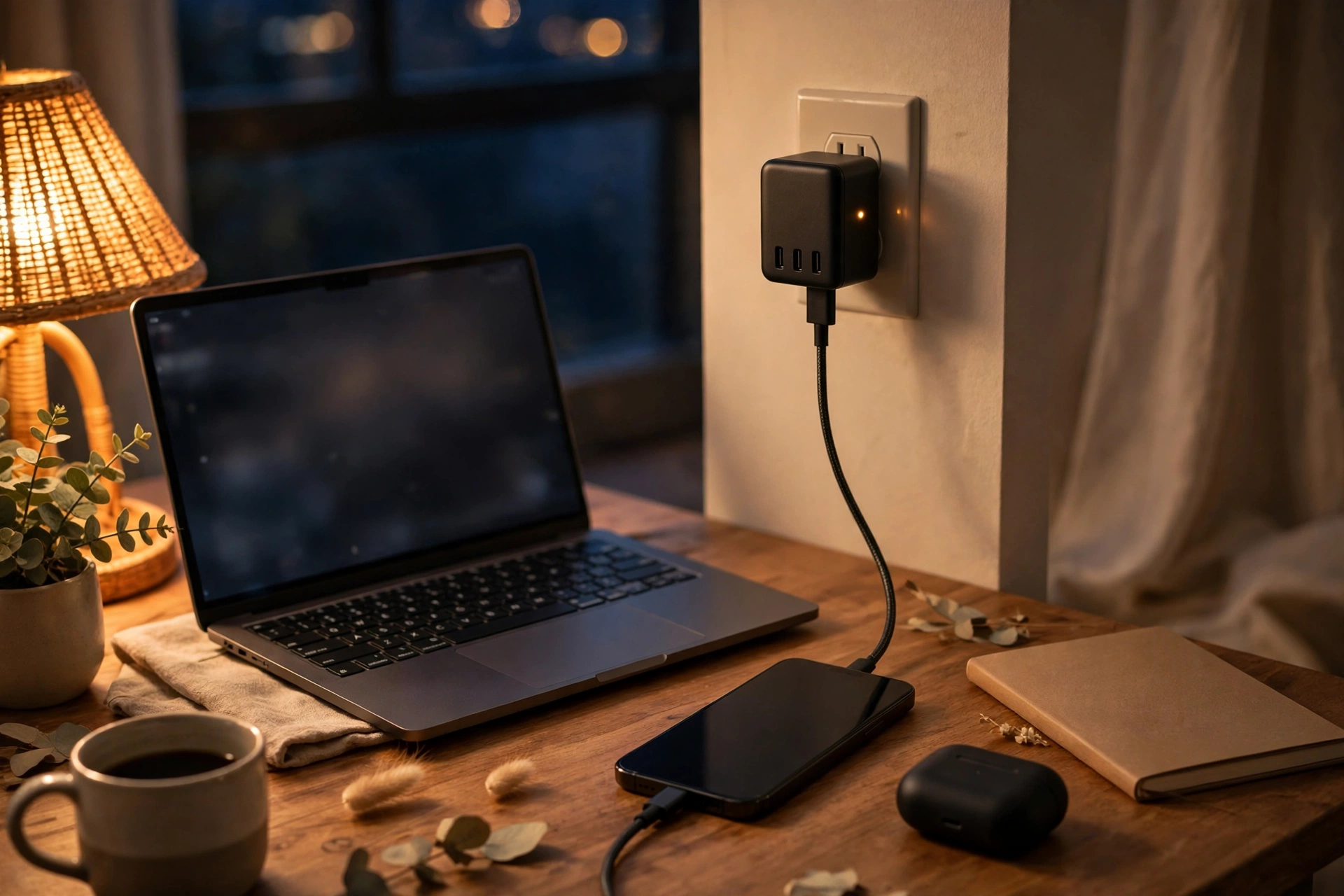
The desk placement of a charger matters more than buyers expect, and it is worth a minute of thought. A brick plugged into a power strip under a desk stays cooler and safer than one buried behind furniture, because airflow carries heat away, and a strip with individual switches lets you cut power without unplugging. A brick hanging from a loose wall socket, by contrast, strains both the socket and the charger's prongs, and over time that strain loosens the connection and causes the intermittent charging that buyers blame on the charger. Place the brick where it sits firmly, where air moves around it, and where the cable does not pull sideways on the port, and it will last longer and charge more steadily. These are small habits, but for a product that runs daily for years, they are the difference between a charger that quietly does its job and one that slowly fails.
The bottom line
Verdict: buy it if you would rather pay more for a known brand and a support network; skip it if you want the cheapest 65W charger. The Noise 65W GaN charger earns its place as the brand-safe pick in the 65W class: same watts as the cheaper options, a solid comparison rating, and a support network that makes a mains-powered purchase feel safe. It is not the value pick, and it does not pretend to be. For buyers who would rather pay more and worry less, that is exactly the point.
Decided? Check the live price before you order.
Check Price on AmazonAs an Amazon Associate, we earn from qualifying purchases. Prices change often — check the live price on Amazon before ordering.
Share this article