
Nvidia Reinstates Jensen Huang as CEO After 11 Days: What Happened, and Why the Stock Jumped 30%
By My Quick Trippers · 25 Nov 2026
8 min read · Tech
Nvidia's board voted unanimously on Monday 23 November 2026 to reinstate Jensen Huang as president, chief executive and board director, effective immediately — eleven days after he resigned. It is the fastest chief-executive U-turn in big-tech memory, and it followed a weekend in which the White House leaned directly on the board, the board reversed a public statement it had made four days earlier, and the stock soared more than 30% in a single day, its third-best day on record. Huang, 63, co-founded Nvidia three decades ago and has run it ever since; the eleven days without him cost the company dearly, and the market's verdict on his return was immediate. This is what happened, in order, and what is still unresolved.
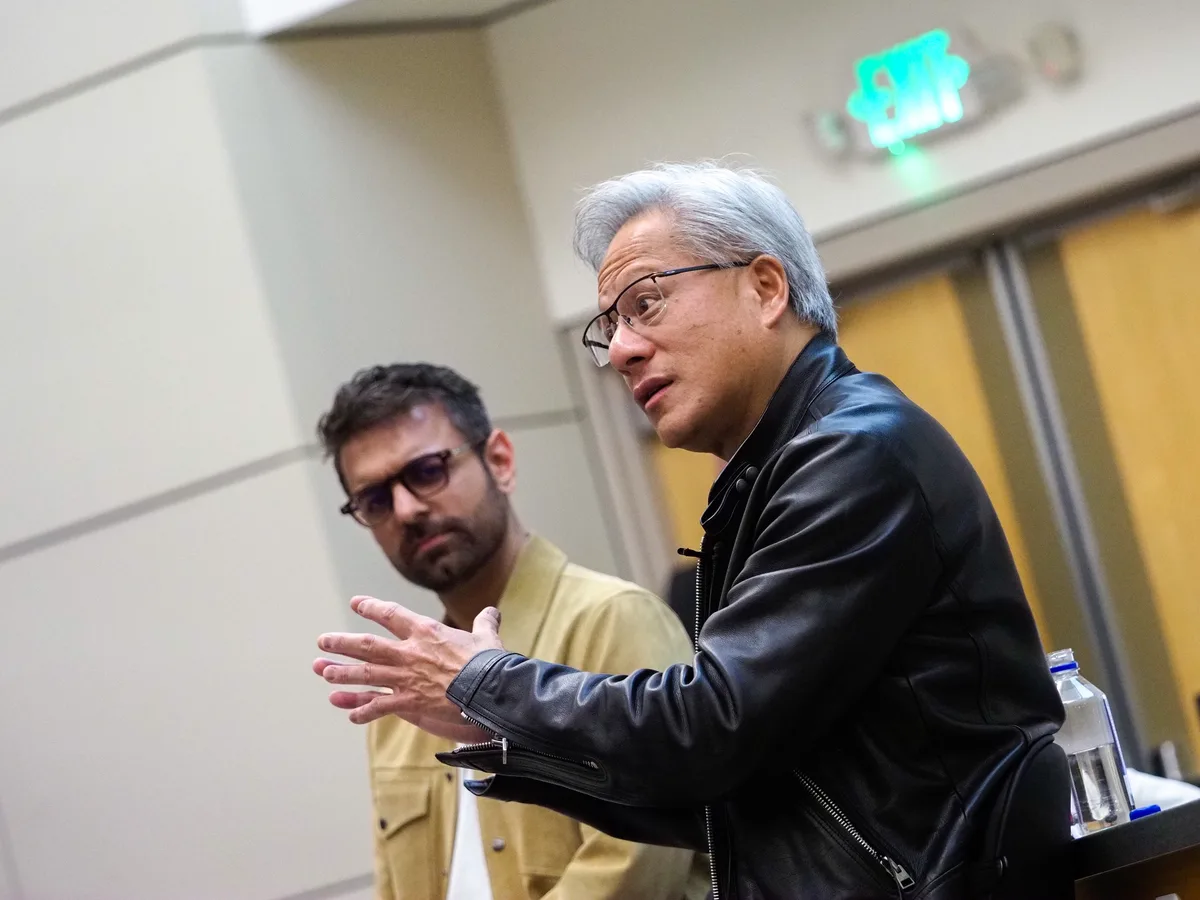
This explainer was written on 25 November 2026 from reporting by CNN, MacRumors, CNBC-TV18, the Deccan Herald, People and Hypebeast. The reasons for Huang's resignation are reported as reported: the underlying allegations have not been established as facts, and this article does not present them as such. The photograph at the top shows Huang speaking at a fireside chat at Stanford University on 30 April 2026.
The timeline is short enough to set out in full. Huang resigned on 12 November 2026, with reports dated 12–13 November, following reports of extramarital affairs. The board installed Colette Kress, the chief financial officer, as interim chief executive and began the process of finding a successor. Four days later, on the 17 November earnings call, the board said publicly that it did not intend to reinstate him, calling his behaviour inconsistent with the company's code of conduct. That statement looked final. It lasted six days. On Monday 23 November the board voted unanimously to reinstate Huang as president, chief executive and board director, effective immediately — eleven days after the resignation. Kress resumes her role as chief financial officer. The reversal was total, and it was public: the same board that had unanimously accepted the resignation, and then publicly ruled out a return, unanimously voted him back.
The resignation followed reports of extramarital affairs, including one with a woman US officials feared was a Chinese intelligence asset, and one with a subordinate. That is how CNN, People and Hypebeast reported it, and it is how this article reports it: as reported, not as established fact. The distinction matters, because the board's own handling of the matter is part of the story. The board ordered an independent investigation, and that investigation continues — Huang was brought back before it was completed. CNN's corporate-governance coverage makes the point bluntly: the directors are bringing Huang back before the completion of a board-ordered investigation that was supposed to get to the bottom of allegations over whether he had been the target of a foreign intelligence effort. Whatever the investigation eventually finds, the board has already decided it does not change its view of his return.
The reversal did not happen in a vacuum. According to CNN's reporting on 23 November, it followed a White House pressure campaign: President Trump called Nvidia's board directly, Vice President JD Vance led administration officials leaning on the board over the weekend of 21–22 November, and Trump said on CNBC that he had spoken to the board directly and indirectly. Trump welcomed the decision on Truth Social the same day, writing that the board had made the correct and proper decision to return Huang to the position of chief executive. The reporting frames the intervention as driven by concern about momentum in the artificial-intelligence sector: Nvidia sits at the centre of the AI build-out, its stock had fallen sharply after the resignation, and the administration treated Huang's return as a necessity to halt the slide. Le Monde's account adds that several members of the administration worked through the weekend to persuade the board to reconsider, and that members of Congress — Democrats and Republicans — reacted with a mixture of enthusiasm and outrage.
Four days earlier the board said it did not intend to reinstate him. Then the White House called.
Shares soared more than 30% on Monday 23 November — their third-best day on record — lifting US futures with them. The scale of the move tells you what the market thought of the eleven days without Huang: the stock had fallen sharply after his resignation, and the reinstatement was priced as the removal of an existential risk to the company rather than as ordinary good news. Huang co-founded Nvidia three decades ago and is, in the market's judgement, inseparable from it; the board's own chair, Harvey C. Jones, said the board believes Huang's return is in the best interests of stockholders, employees, partners and customers. The 30% jump is a market verdict on one man, not on a strategy — no new product, no new earnings and no new guidance accompanied the announcement. It is also worth noting what the jump does not settle: whether the governance questions raised by the episode — a board reversing itself in six days under political pressure, before its own investigation finished — will cost the company later.
On Tuesday 24 November, Huang apologised to employees in an hour-long company-wide meeting and said he is in therapy, according to a source familiar with the matter cited by CNN. He said he accepted the responsibility with the utmost humility and a renewed commitment, in the company's announcement. What stays open is considerable. The board's independent investigation continues. Congressional inquiries on chip exports to Southeast Asia and China remain open, and Huang is scheduled to testify before Congress in early December regarding the espionage questions that may have been used to circumvent US restrictions on sales of advanced chips to China, according to Le Monde. Kress is back as chief financial officer, the search for a successor is over, and the man who built Nvidia is running it again — eleven days after the board accepted his resignation, six days after it said he would not return, and one phone call from the White House later.
Why did Jensen Huang resign from Nvidia?
He resigned on 12 November 2026 following reports of extramarital affairs, including one with a woman US officials feared was a Chinese intelligence asset, and one with a subordinate. These are reported facts, not established findings, and the board's independent investigation continues.
How long was Huang out as CEO?
Eleven days. He resigned on 12 November and was reinstated on 23 November 2026, by a unanimous board vote effective immediately.
Why did Nvidia's board change its mind?
The board has not given a detailed public explanation beyond saying the return is in the best interests of stockholders, employees, partners and customers. Reporting by CNN attributes the reversal to a White House pressure campaign, with President Trump calling the board directly and Vice President JD Vance leading officials who leaned on the board over the weekend.
How much did Nvidia's stock rise on the news?
More than 30% on Monday 23 November 2026 — the stock's third-best day on record — after falling sharply following the resignation.
Share this article