Pahari Toor Dal (Tor): The Barahnaja Pulse of Uttarakhand
By My Quick Trippers · 12 Nov 2026
8 min read · Food & Cuisine
Ask an Indian cook what dal they reach for first, and the answer is usually toor — arhar, red gram, the split yellow dal at the base of dal tadka, dal fry and sambar. Ask the same question in a hill kitchen in Uttarakhand, and the answer is tor: the same plant, the pigeon pea, grown as Pahari Toor Dal on the terraces of the hills, as part of a farming system the plains forgot. This post is about that hill form — what tor is, how it is grown, and why it tastes different from the toor in a city packet.
Our guide to the types of pulses in India gave tor one short section, among the pulses of the hills. Here it gets a post of its own, because tor's real story is not in the pot — it is in the field, in the Barahnaja system of mixed cropping that has fed the hills for generations.
Tor and toor: the same plant, two worlds
Tor is the pigeon pea, the plant behind toor dal (also called arhar dal or red gram). In the plains, it is grown as a field crop and sold split and husked, a yellow dal that cooks soft and takes a tadka well. In the hills, it is grown as tor — Pahari Toor Dal — on small terraces, in small lots, as part of a mixed system rather than a single-crop field. The store lists it as GI-tagged Uttarakhand Pahari Toor Dal, and describes it as quick-cooking with a distinct taste.
The difference is not in the species — it is in the growing. Plains toor comes from large single-crop fields, bred and grown for yield. Hill tor comes from terraces where a dozen crops share the same slope, grown slowly on rain and mountain soil, harvested in small quantities. That is why the taste is distinct and why the quantity is small: tor is not a commodity crop in the hills, it is one crop among many in a system built for a household, not a market.
Barahnaja: the twelve-crop system
Barahnaja — the name means twelve grains, or twelve crops — is the traditional mixed cropping system of the Uttarakhand hills. Instead of planting one crop across a whole field, hill farmers plant many crops together on the same terraces: millets like mandua and jhangora, pulses like tor, bhatt, gahat and urad, and other grains and oilseeds, all sharing the slope. Each crop does a different job: some feed the family, some feed the soil, some ripen early and some late, so that the harvest is spread across the season rather than arriving all at once.
Tor's job in that system is the pulse's job: as a legume, it fixes nitrogen in the soil, feeding the ground it grows in as well as the family that eats it. That is why pulses are grown in rotation and in mixture with cereals across India — the pulse gives back to the soil what the cereal takes out. In Barahnaja, tor does that work alongside the millets: mandua, the finger millet of the hills, covered in our guide to mandua, and jhangora, the barnyard millet, covered in our guide to jhangora. The system is the point, and tor is one thread in it.
Barahnaja is also a safety system. When a dozen crops share a terrace, the failure of one does not mean the failure of the meal: if the rain is short, the hardy millets still come in; if one pulse fails, another is still standing. That is why hill farmers have kept the system for generations, and why tor has survived as a hill crop rather than being replaced by a single high-yield variety. It is not the most productive way to farm a flat field. It is the most reliable way to farm a steep one.
How hill kitchens cook tor
Tor is cooked as a dal, and the method is the familiar one: rinse the dal, cook it with water and salt until soft — the store describes it as quick-cooking — and temper it with cumin, garlic and green chilli in ghee or mustard oil. It is served with rice, and with mandua roti, the finger millet roti of the hills, whose method is in our guide to mandua rotis. The flavour is the point: hill tor tastes distinct from plains toor, in the way that a small-lot, terrace-grown pulse tastes different from a commodity one — the same plant, a different field, a different taste.
Tor also sits on the shelf with the other hill pulses, and it helps to know the neighbours. Gahat, horse gram, is the warming winter dal, covered in our post on what gahat is. Bhatt, black soybean, is the Kumaoni pulse behind bhatt ki churkani. Urad, black gram, is the pulse behind chainsoo — our post on chainsoo, the Garhwali urad dish covers it. Masoor, the red lentil, is the everyday dal — our post on sabut masoor covers it. Tor belongs in that company: not the most famous pulse on the shelf, but the one that holds the farming system together.
One honest note about the photograph
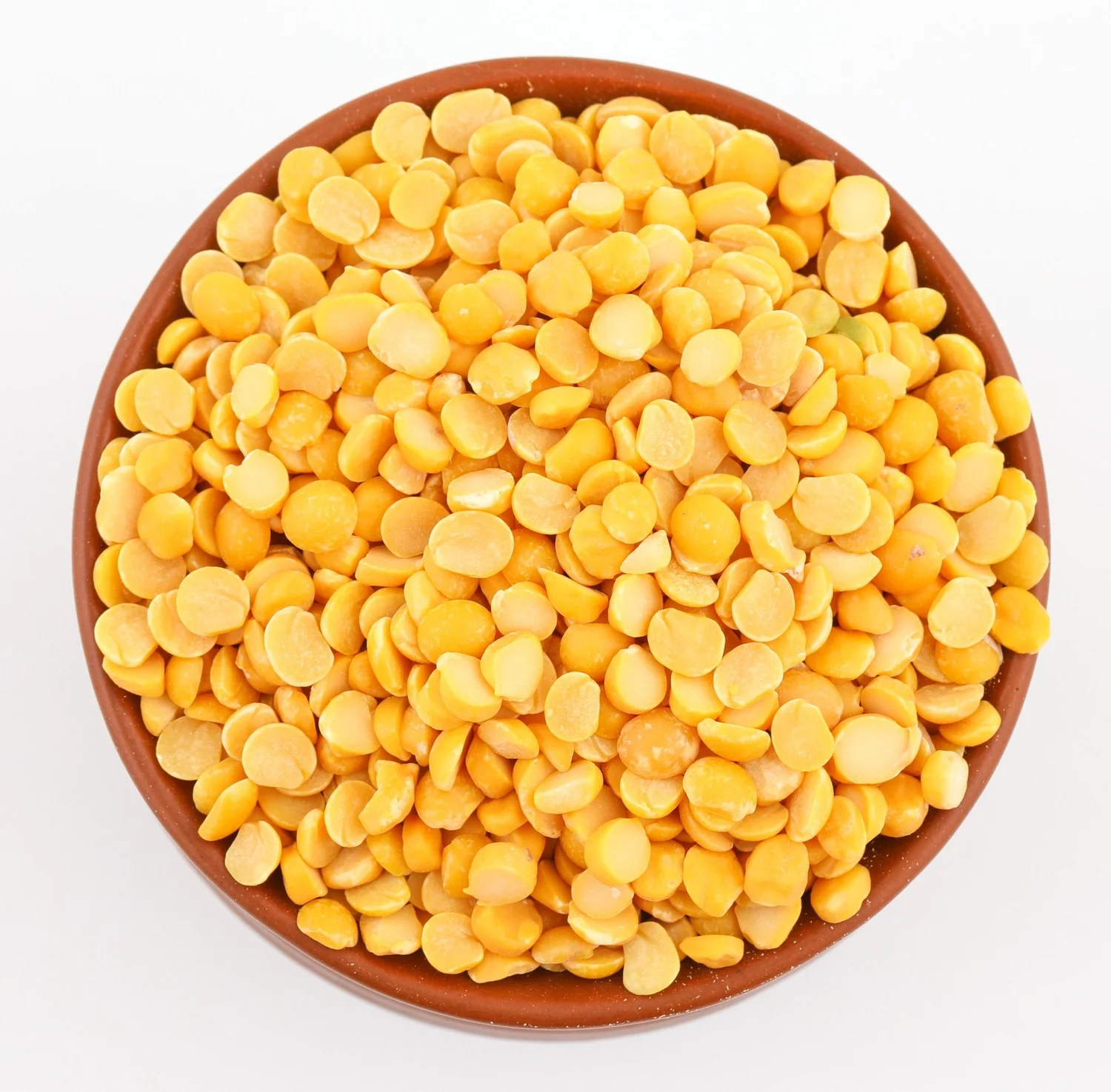
The photograph at the top of this post is the store's own photograph of tor dal — the pigeon pea as sold, in a 1 kg pack. It shows the pulse itself, not a cooked dal and not a terrace field, and that is the honest caption: this is what you buy, before it meets water and heat.
Where to buy tor
Tor (Pahari Toor Dal) is sold in our Pahadi Store at a fixed ₹300 for 1 kg (MRP ₹350), sold by My Quick Trippers from its own supply. The price is fixed, not indicative — it comes from the store's own supplier list — but check the store page for the current figure before ordering. Store the dal in a cool, dry place in a closed jar, and wash it before cooking, the way you would wash any whole pulse.
Frequently Asked Questions
What is tor?
Tor is Pahari Toor Dal — the pigeon pea, the same plant behind toor dal (arhar dal, red gram), grown in the hills of Uttarakhand. The store lists it as GI-tagged Uttarakhand Pahari Toor Dal, quick-cooking with a distinct taste.
What is Barahnaja?
Barahnaja is the traditional mixed cropping system of the Uttarakhand hills — twelve crops grown together on the same terraces, including millets like mandua and jhangora and pulses like tor, bhatt, gahat and urad. Each crop does a different job, and the mixture spreads the harvest and protects the household if one crop fails.
How is tor different from ordinary toor dal?
It is the same plant, grown differently: plains toor comes from large single-crop fields, while hill tor comes from small terraces as part of the Barahnaja mixed system, in small lots. The store describes hill tor as quick-cooking with a distinct taste — the same plant, a different field, a different taste.
How do you cook tor?
Like toor dal: rinse it, cook it with water and salt until soft, and temper it with cumin, garlic and green chilli in ghee or mustard oil. Serve it with rice or with mandua roti.
Does this post make any health claims for tor?
No. This post describes tor as a hill pulse and Barahnaja as a farming system. There are no nutrition numbers here and no claim that tor treats or prevents any condition.
Sources
- My Quick Trippers — Pahadi Store
- My Quick Trippers — Types of pulses in India
- My Quick Trippers — Mandua (finger millet): the ancient grain of the Himalayas
Share this article