Post-Monsoon Hill Driving: A Safety Guide for October-November Road Trips
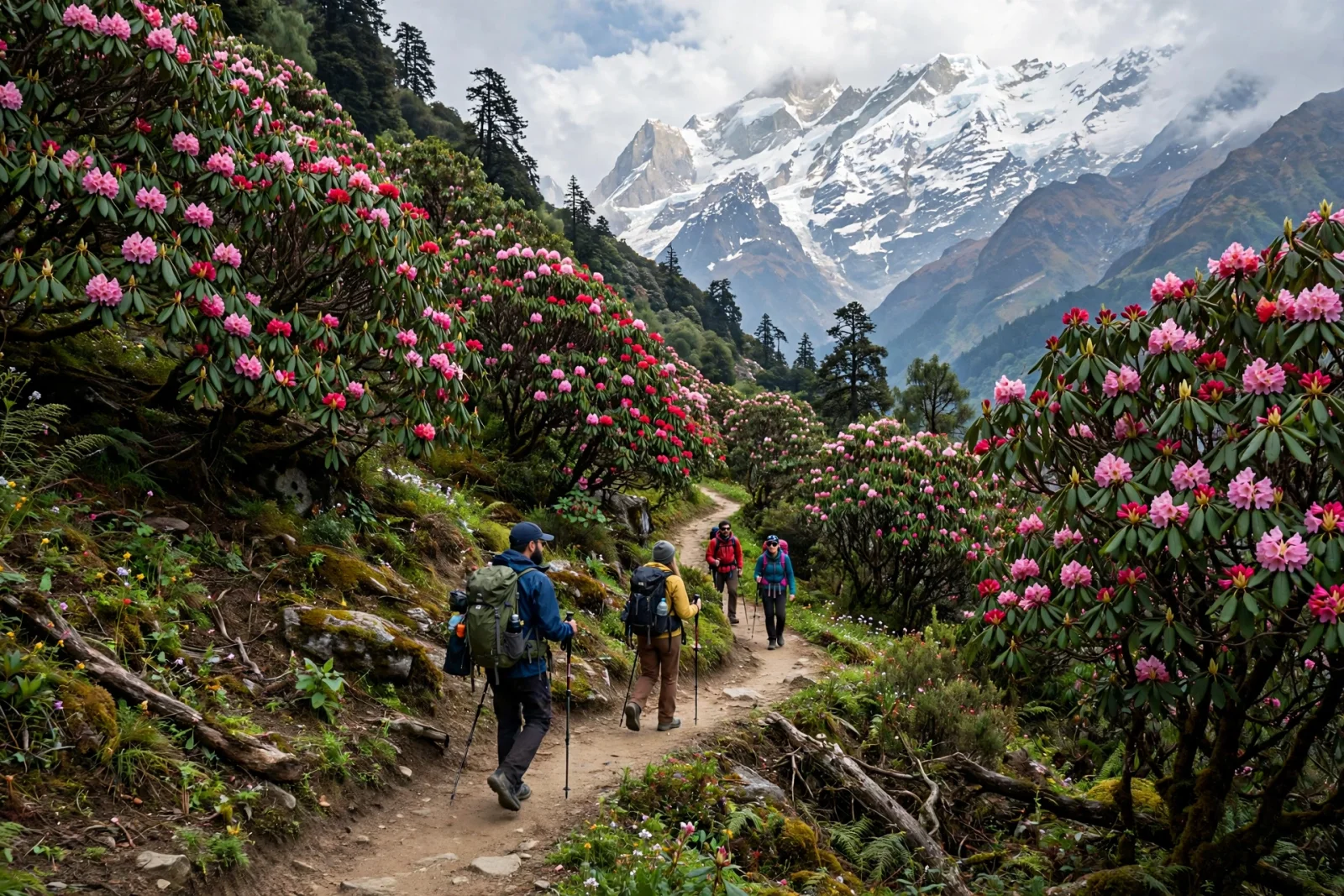
October and November are the two sweetest driving months in the Indian hills — clear skies, thin crowds, mountains at their sharpest. They are also the two months when the roads are at their most dishonest. The monsoon has just spent four months battering Himalayan and Western Ghats highways; the damage it leaves behind — fresh potholes, loose gravel on hairpins, undercut shoulders, unstable slopes — is at its worst exactly when the post-monsoon road-trip rush begins.
Add valley fog that rolls in without warning, wet fallen leaves on shaded corners, and brakes that work harder than they have all year, and you get the season with the highest anxiety per kilometre of any family driving calendar. This guide is a season-specific checklist: what the October-November hills do to your car and your visibility, the stretches that deserve respect, and when the right call is to hand the wheel to a local driver.
What post-monsoon does to hill roads
A hill road in October is not a repaired road; it is a road that has stopped deteriorating. Monsoon runoff widens existing cracks, washouts leave gravel and slush across the carriageway, and subsidence leaves lips and dips at culvert crossings that bottom out a loaded sedan at speed. Landslide scars stay unstable for weeks after the rain stops — fresh scars shed stones without rain, and the monsoon-soaked slope above them can fail on a dry sunny day.
On the visibility side, October-November brings temperature inversions: cold valley fog before 9 AM, mist at river crossings all day, and low sun angles that blind you on east-west stretches at dawn and dusk. The practical consequence is simple: your summer driving habits — the speeds, the overtaking confidence, the late starts — are calibrated for a road that no longer exists.
The stretches that deserve respect this season
In Himachal, the chronic slide zones on the Kiratpur–Manali highway, the Kinnaur road beyond Rampur, and the steep inner-valley roads around Chitkul and Barot need daylight and patience; Mandi–Palampur and the roads around Dharamshala hold fog in the mornings. In Uttarakhand, the Char Dham approaches — Rishikesh–Rudraprayag–Badrinath, the Yamunotri and Gangotri roads — are freshly cut each monsoon and freshly repaired each October, which means loose material and one-lane diversions are normal. The Almora–Munsiyari and Nainital–Ranikhet roads in Kumaon combine fog with narrow, unguarded edges.
In the Western Ghats, the ghat passes — Amboli, Chorla, the Charmadi and Shiradi ghats, Munnar's Gap Road — get dense fog and slippery laterite. The universal rule from experienced hill drivers: drive only between roughly 8 AM and 5 PM on slide-prone stretches, because that is when the road crews (Border Roads Organisation and state PWD teams) are working and can clear a fresh slide; outside those hours you may wait hours for help.
“drive only between roughly 8 AM and 5 PM on slide-prone stretches, because that is when the road crews (Border Roads Organisation and state PWD teams) are working and can clear a fresh slide”
The pre-trip vehicle checklist
- Tyres: tread depth and correct cold pressure — under-inflated tyres wallow on slush, over-inflated ones skate. Include a serviceable spare and a jack you have actually used once.
- Brakes: pads, fluid and the handbrake. Hill driving is engine braking; if your handbrake is weak, fix it before the hills.
- Wipers and washers: replace worn blades at the start of the monsoon, and top up washer fluid — a dirty windscreen in low sun is more dangerous than fog.
- Lights: low beam and fog lamps working; do not plan to use high beam in fog — it reflects off the mist and blinds you.
- Coolant, belts and battery: the engine works harder climbing; a weak battery strands you at the worst possible place.
- Kit: reflective triangle, torch, 20 litres of drinking water, warm layer, basic tools, tow rope, offline maps downloaded, and the local police/traffic helpline numbers saved.
Fog and landslide discipline on the road
In fog: low beam plus fog lamps, clean glass inside and out, AC on fresh-air with defog mode (not recirculation, which fogs the glass again), hold your lane, downshift early and use engine braking on descents, keep a four-to-six-second gap, and never overtake. Use hazard lights only when stopped or obstructing — cruising with hazards on is illegal and confusing. For a full treatment of ghats fog technique, this Western Ghats fog-driving guide is worth reading before you go.
At a fresh landslide or rockfall zone: obey the supervisor or crew on site, switch off the AC and electricals for maximum acceleration, keep windows rolled up with a passenger watching the slope, cross steadily without stopping in the middle, and do not stop on the carriageway at a bend — pull fully off at a wide spot and place your reflective triangle 50 to 100 metres behind the car. Through waterlogged stretches: never enter a flooded road if you can avoid it; if there is no alternative, keep steady RPM above 1200 and do not lift your foot mid-crossing, then dry the brakes with light applications afterwards. And never park near cliff edges or under fresh scarps — a parked car is the most common landslide casualty.
When to abandon the self-drive and hire a local driver
Honesty beats pride here. Hire a local driver if you have never driven hills before, if your route crosses high passes after mid-November (black ice changes everything), if the vehicle is unfamiliar or underpowered for the grade, or if you will be driving after dark on unfamiliar roads — which you should not do anyway. Local drivers read slide scars, know which dhaba stretch has phone signal, and can judge a water crossing you would misread.
It is also the right call when the family car is a low-clearance sedan on a route like Spiti or upper Kinnaur, where ground clearance matters more than courage. A good rule: if you are anxious before you leave, that anxiety is data. See the IMD alerts and local advisories guidance in this road-trip safety checklist before every hill departure, and re-check them the morning you leave — October weather in the hills changes plans, not the other way round.
Planning the actual trip around the drive? Our Manali itineraries and Kashmir tour (₹61,000) include private cabs with hill-experienced drivers so you never have to white-knuckle a hairpin yourself — and our Rajasthan package (₹58,500) covers the desert highways where the only hazard is speed. A quick WhatsApp to +91 81711 58569 sorts the whole plan.
Frequently Asked Questions
Is it safe to drive to hill stations in October-November?
Yes — it is peak driving season — but roads are freshly damaged from the monsoon. Drive in daylight, check IMD and local advisories before leaving, and expect loose gravel, one-lane diversions and fog.
What is the most dangerous part of post-monsoon hill driving?
Fresh landslide scars and fog. Slides can shed stones days after rain stops, so cross slide zones in daylight and quickly; in fog, use low beam and fog lamps, never high beam, and never overtake.
Should I use hazard lights in fog?
Only when stopped or obstructing the road. Cruising with hazard lights on is unsafe and misleading to drivers behind you.
How do I cross a landslide zone safely?
Obey the crew on site, switch off AC/electricals for power, keep windows up, cross steadily without stopping, and never halt in the middle of the zone. If rocks are actively falling, wait it out at a safe distance.
When should I hire a local driver instead of self-driving?
If you are new to hill driving, crossing high passes after mid-November (black ice), driving an unfamiliar or low-clearance car, or planning any night driving on unknown roads.
Sources
- Visit South — Western Ghats fog-driving guide
- Bhaskar English — IMD alerts and local advisories guidance in this road-trip safety checklist
- StayVista — 14 Landslide-Prone Hill Stations to Avoid in Monsoon 2026
Share this article