Rann Utsav 2026–27: Dates, Tent City, Full Moon Nights and How to Reach the White Desert
By MyQuickTrippers Editorial Team · 27 Nov 2026
10 min read · Destination Guides
The white desert is waiting, and the full moon is the thing to plan around. Rann Utsav, Gujarat's winter festival on the edge of the Great Rann of Kutch, is running now — 1 November 2026 to 7 March 2027 — with its Tent City at Dhordo village and four full-moon weekends when the salt flats turn silver under the moon. The November full moon, on 24 November, has just passed. Three remain: 23 December, 22 January and 20 February. This guide has the season dates, the full-moon calendar, the Tent City packages and prices, the permit you need, and how to reach Dhordo from Bhuj.
Rann Utsav is an annual cultural festival hosted on the edge of the Great Rann of Kutch, the vast white salt desert in Gujarat's far west. For the winter it transforms the salt flats beside Dhordo village into a temporary tent city, with folk music and dance, craft bazaars, camel safaris and nights under some of the country's clearest skies. The 2026–27 season runs for 127 days straight, from 1 November 2026 to 7 March 2027, and the Tent City at Dhordo is open for the whole of it. The festival is run by Gujarat Tourism, and the official Tent City website is rannutsav.net — the site Gujarat Tourism names as the festival's official site — where packages are sold. Bookings go through booking.rannutsav.net.
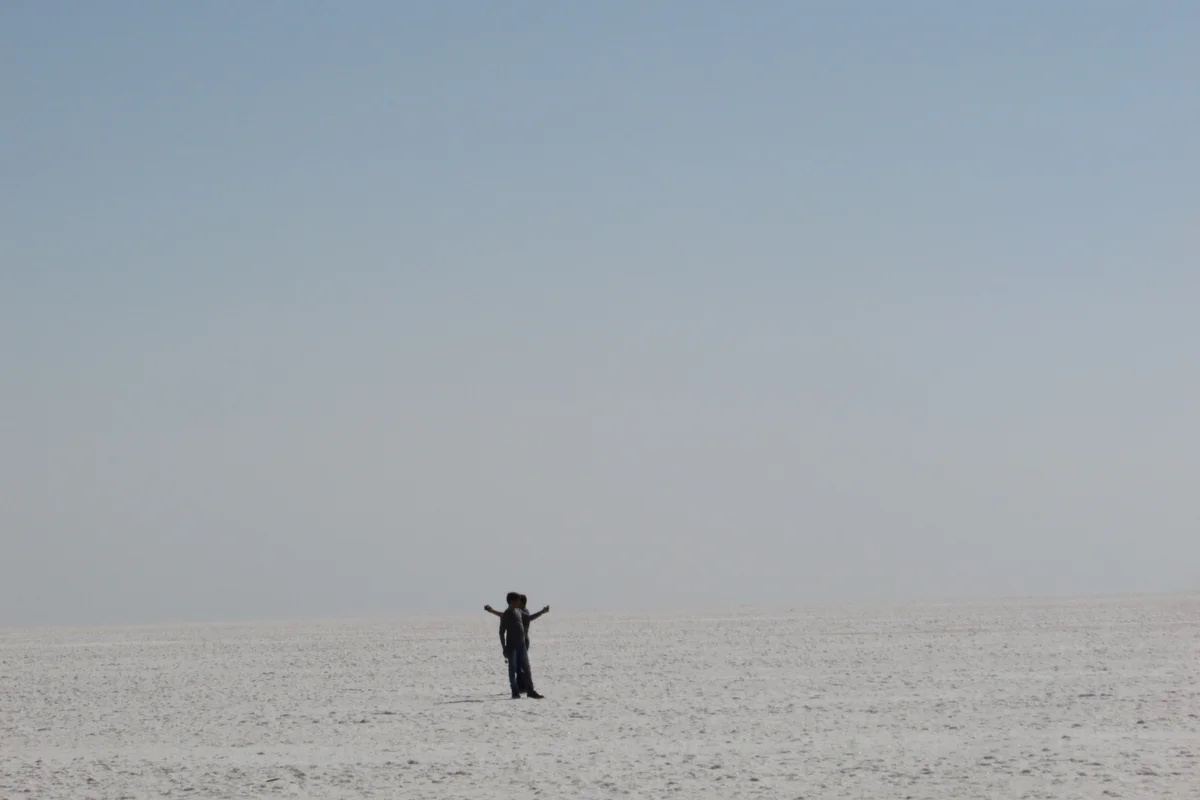
The Rann itself is a seasonal salt marsh: for part of the year it is flooded by the sea and the monsoon, and when the water dries, from about November, it becomes a white plain to the horizon, crusted with salt that crackles underfoot. The Great Rann is one of the largest salt deserts in the world. That is the setting for the whole festival — and the reason the full moon matters so much. Under a full moon the salt flats glow, and the Tent City prices those nights higher.
The full moon is the heart of Rann Utsav, and the festival lists three full-moon nights each month, with the higher rate starting the day before. When the moon peaks before dawn, the night before is the one to be out on the salt. The four full moons of the season, with their peak times in Indian Standard Time from the US Naval Observatory, are:
- 24 November 2026 — Tuesday night, peak 8:23 p.m. IST. Already passed. The full-moon window was 22–25 November, and it coincided with Kartik Purnima.
- 23 December 2026 — Wednesday night, peak 24 December at 6:58 a.m. IST. The full-moon window is 21–24 December. This is also the Cold Moon — the closest full moon of 2026 — and our [Cold Moon guide](/blog/cold-moon-december-2026-supermoon) has the viewing times. Peak pricing applies.
- 22 January 2027 — Friday night, peak 5:47 p.m. IST. The full-moon window is 20–23 January. A weekend full moon, and the most expensive of the season after December.
- 20 February 2027 — Saturday night, peak 21 February at 4:53 a.m. IST. The full-moon window is 18–21 February. A Saturday-night full moon at the busy rate — ₹2,000 less per person than January.
If the moon is not your priority, the dark-moon dates — 9 November, 8 December, 7 January and 6 February — offer the clearest night skies instead, and the best stargazing of the season. The December full moon falls in the peak window, 18 December to 2 January, which is also Christmas and New Year — so it is the hardest full moon to book and the most expensive. February's is the value pick: a Saturday night, a full moon, and the busy rate rather than the peak rate.
The official Tent City sits right next to the salt flats at Dhordo, with more than 1,000 tents planned for the 2026–27 season (All India Radio, 13 October 2026) across categories from non-AC tents to premium Swiss cottages and luxury tented suites — Darbari and Rajwadi suites with private living rooms at the top end. Packages are priced in three bands, depending on your dates, and the prices below are the official package prices, checked against the official Rann Utsav website on 30 September 2026. Every package covers your tent, all meals — morning tea, breakfast, lunch, hi-tea and dinner — and shared AC coach transfers from Bhuj Airport and Bhuj Railway Station, plus sightseeing to the White Rann, Kala Dungar and Gandhi nu Gaam, and the evening cultural programmes.
- Regular dates — from ₹6,300 per person before GST. Most of November and February, plus 1 to 7 March. One night for two in a non-AC Swiss Cottage works out to ₹14,868 with GST included.
- Busy dates — from ₹8,300 per person. Diwali week (8 to 14 November), the November and February full moons, and December and January outside the peak dates.
- Peak dates — from ₹10,300 per person. 18 December to 2 January, which includes the December full moon, and the January full moon (20 to 23 January).
Packages are structured around three durations: 1 night and 2 days, 2 nights and 3 days, and 3 nights and 4 days — starting from ₹6,300, ₹12,600 and ₹18,900 respectively. Book on the official Rann Utsav website, rannutsav.net (bookings at booking.rannutsav.net). Two warnings: check the price for your exact dates on the official site before you pay, because the band changes with the date, and check whether the White Rann entry permit is included in your package — the official site says it may not be, so confirm before you travel.
Every traveller needs an official Rann of Kutch permit to enter the salt fields. The fee is ₹100 per adult and ₹50 for children aged 6 to 12, with children under 5 free. Cars and two-wheelers pay nothing — the portal lists no vehicle fee, though older guides still quote the old ₹25/₹50 vehicle charge. You can buy it online at the official Rann Permit Portal, rannpermit.gujarat.gov.in, or at the Bhirandiyara check post on State Highway 45, about 55 km from Bhuj, where you will be stopped and asked for it. Buy it online before you go: the check post is a queue you do not need.
Bhuj is the gateway to Rann Utsav. Its airport and railway station are where the Tent City coaches pick you up for the last 80 to 85 km to Dhordo — a 1.5 to 2 hour drive by road. By air, Bhuj airport is the nearest, with flights connecting through Mumbai. By train, Bhuj is the railhead, connected to Mumbai, Ahmedabad and Delhi by direct trains. If you are driving yourself, the route is Bhuj to Dhordo via the Bhirandiyara check post on State Highway 45 — the same road where the permit is checked. A return taxi from Bhuj to Dhordo costs roughly ₹1,500 to ₹3,500 depending on the car — confirm the fare with the driver before you set off — but the free package coach is included in Tent City bookings, so most visitors never need one.
The festival is built around the Tent City's open stage, where free cultural shows run from 8:30 p.m. — Kutchi folk music and dance, and performances from across Gujarat. By day, the programme is the desert itself: camel safaris out onto the salt, the handicraft bazaars where Kutch's embroidery, block printing and mirror work are sold by the artisans who make them, and the sightseeing trips included in the packages — the White Rann at sunset, Kala Dungar (the Black Hill, at 458 metres the highest point in Kutch, with views across the whole Rann), and Gandhi nu Gaam village. Yoga and meditation sessions run inside the Tent City, and guided stargazing sessions are often included in packages, especially around the dark-moon dates.
Beyond Dhordo, Kutch rewards a longer stay. Bhuj itself is worth a day: the Prag Mahal and the Kutch Museum, and the Smritivan earthquake memorial. Dholavira, one of the five largest Harappan sites in the Indian subcontinent, is a day trip from the Rann. And the craft villages around Bhuj — Ajrakhpur for block printing, the embroidery villages of Banni — are where the textiles in the Tent City bazaars actually come from. If the desert has you dreaming of snow instead, our Gulmarg snow watch for December 2026 tracks the first snow in the Himalayas — and our Christmas and New Year trips guide covers the wider India festive season.
- Book the full moon first, the tent second. The December and January full moons are the peak dates and the first to sell out; February's Saturday full moon is the value alternative.
- Go for sunset and stay for moonrise. The salt flats change colour three times in an evening — white in the afternoon, gold at sunset, silver under the moon — and the walk out onto the flats after dark, under a full moon, needs no torch.
- Carry the permit and a printout of your booking. The Bhirandiyara check post will ask for the permit, and the Tent City will ask for the booking.
- Dress for a cold desert night. Days are warm and the sun is strong; nights on the salt, especially in January, are cold, and the wind has nothing to stop it.
- The budget alternative is Bhuj. Stay in the city, where hotels cost a fraction of a tent package, and drive out to the Rann for sunset and the evening — you miss the night on the salt, but you keep the best two hours of it.
When is Rann Utsav 2026–27?
1 November 2026 to 7 March 2027 — 127 days — at the Tent City in Dhordo, Kutch district, Gujarat. The festival runs the whole winter season.
Which full moon should I plan around?
Three remain: 23 December 2026, 22 January 2027 and 20 February 2027. December is the peak-priced Christmas full moon; January is a weekend full moon at peak prices; February's Saturday full moon is the value pick at the busy rate.
How much does Rann Utsav cost?
Tent City packages start from ₹6,300 per person before GST on regular dates, ₹8,300 on busy dates and ₹10,300 on peak dates, including tent, meals and transfers from Bhuj. The White Rann permit is separate: ₹100 per adult, ₹50 for children 6–12.
How do I reach Rann Utsav?
Fly or take the train to Bhuj, the nearest airport and railhead, 80–85 km from Dhordo. Tent City packages include a shared coach from Bhuj; otherwise it is a 1.5 to 2 hour drive, via the Bhirandiyara permit check post.
- Wego Travel Blog — Rann Utsav 2026-27: Dates, Tent City Prices and How to Plan Your Trip
- News18 — Rann Utsav 2026–2027: When To Go, What To See And Where To Stay
- Incredible Asia — Rann Utsav 2026–2027: Dates, Tent City & Kutch Guide
- RedBus — Rann Utsav 2026-2027 Guide: Dates, Tickets, Stay & Things to Do
- India Imagine — Rann Utsav 2026-27: Best Guide to Dates, Tent Prices & Booking
- Gujarat Tourism — Rann Utsav
- All About Gujarat — Rann Utsav
Hero photo: the White Rann of Kutch — Ranjith Kumar Inbasekaran, CC BY-SA 4.0 (via Wikimedia Commons). Updated 27 November 2026.
Share this article