Rann Utsav Tent City or Bhuj Hotel: Which Stay Suits You?
By My Quick Trippers · 24 Oct 2026
12 min read · Travel Planning
Neither stay suits every traveller. Tent City at Dhordo puts you beside the White Rann for sunset, sunrise and the evening programme, with meals and scheduled sightseeing bundled into a tent package. Bhuj keeps you in a town with hotels, markets and transport choices, and turns the White Rann into a day trip of about 85 kilometres each way. Choose by how much you value dawn and dusk on site, flexibility, and how your group travels. What each base does to the bill is the subject of the Rann Utsav cost guide for 2026-27.
Last verified: 24 October 2026. Season window for Rann Utsav Tent City, Dhordo, in 2026-27 is 1 November 2026 to 7 March 2027, from the official operator site rannutsav.net. Bhuj to Dhordo is approximately 85 kilometres and about 1 hour 45 minutes by the operator's published transfer note. No hotel price, saving or availability figure is stated in this post, because none was verified for this comparison.
Quick facts
- Tent City location: Dhordo, in the Great Rann of Kutch, a seasonal salt marsh and salt flat, not sand dunes.
- Bhuj to Dhordo: approximately 85 kilometres, about 1 hour 45 minutes each way on the operator's published transfer note, so a day trip is roughly 3 hours 30 minutes of road travel before any time at the White Rann.
- Tent City season 2026-27: 1 November 2026 to 7 March 2027, per the official operator site.
- Tent City packages are sold by nights: 1 night, 2 nights or 3 nights, with scheduled sightseeing that changes with duration.
- Bhuj is also the gateway town: airport and railway station, craft villages nearby, and Mandvi as a separate coastal excursion, not a desert site.
What staying at Tent City actually buys you
A Tent City stay is a contained experience. You sleep at Dhordo, so the White Rann is not a journey you have to make twice in a day. The operator's published sightseeing timings show why that matters: on a one-night package the first day includes a late-afternoon departure for the sunset point at the White Desert, and on a two-night package the second day adds an early-morning sunrise visit. You are already there when the light changes, and you return to the Tent City rather than starting a long drive back to town in the dark. For photographers, families with small children who tire on long drives, and anyone whose main reason for coming is the salt flat itself, that proximity is the core benefit, and it is worth weighing more heavily than any single line item.
Tent culture is part of the stay, not just a bed. The Tent City is a temporary seasonal settlement with tents in several categories, dining arrangements, stages for cultural programmes and craft stalls, and that shared, festival-like atmosphere is what many visitors remember as much as the salt itself. Evenings at the Tent City include cultural programmes, according to the operator's package summary, and the settlement is designed so that guests eat, gather and set out for sightseeing from one place. If you enjoy a sociable, programmed evening and do not mind a tent rather than a conventional hotel room, that atmosphere counts as a genuine plus. If you prefer quiet, privacy and a room you can retreat to at any hour, the same atmosphere can feel busy, and a Bhuj hotel may suit you better.
Be careful with what a tent price is said to cover. The operator's inclusions wording is generic: it says inclusions depend on duration and may cover confirmed Tent City accommodation, specified meals, scheduled transfers, cultural programmes and sightseeing listed in the itinerary. That is not a guaranteed per-package list, and this post does not present it as one. Before you book, ask for the exact package in writing: which meals, which transfers, which sightseeing days, what is chargeable on top, and what the cancellation terms are. The same discipline applies to any Bhuj hotel: ask what breakfast, parking, driver stay and early check-in actually cost, rather than assuming a room rate covers them.
What staying in Bhuj actually buys you
Bhuj is a working town, not a festival site, and that is its strength. You get a wider choice of hotels and room types, restaurants and markets within walking or short-drive distance, and the ability to change plans without being tied to a fixed Tent City package. You can spend a day in Bhuj itself, visiting its old city, palace museums and the Kutch Museum, and you can add craft villages such as Bhujodi on a separate day. For travellers who want Kutch as a whole rather than only the White Rann, Bhuj is the better base, because Dhordo is a single-purpose destination while Bhuj opens in several directions at once.
Flexibility is the Bhuj advantage that matters most on a tight or uncertain schedule. A Tent City package runs on fixed dates, fixed transfer departures and a set sightseeing pattern, while a Bhuj stay lets you pick your White Rann day after you arrive, wait out a tired day, or shorten the trip without losing a whole package. That flexibility also helps if your train or flight timing is uncertain: the operator's published arrival transfers from Bhuj run at fixed times, and no complimentary transfer is available after those times, so a late arrival can complicate a Tent City start in a way that a Bhuj hotel night simply absorbs. If your arrival time is not yet fixed, that alone can tip the decision toward Bhuj for the first night.
The cost question needs honesty, not a slogan. This post does not claim that Bhuj is cheaper, because a fair comparison is not one room rate against one tent rate. A Bhuj-based trip adds a return road journey for every White Rann visit, and possibly a driver waiting charge, while a Tent City package bundles stay, specified meals and scheduled sightseeing for its nights. A Bhuj trip can also add a second White Rann day at the cost of another return journey, while a Tent City guest gets sunrise and sunset from the same base. To compare fairly, price the whole trip both ways for your exact dates and group size: Bhuj hotel plus transport plus meals plus any entry or permit cost, against the Tent City package plus your travel to Bhuj plus taxes, which the operator states are excluded from its published rates. Only that like-for-like total, for your dates, answers the cheaper question, and it will differ by season, group size and how many White Rann visits you plan.
The comparison, traveller by traveller
Choose Tent City if
- The White Rann at sunrise and sunset is the main reason for your trip, and you want both without two long drives in one day.
- You want a programmed stay: scheduled sightseeing, evening cultural programmes and meals arranged from one base.
- You are travelling in the 2026-27 season window and can match your dates to a fixed package and its fixed transfer departures.
- Your group enjoys a sociable, tented, festival-like atmosphere and is comfortable with tent accommodation rather than a conventional hotel room.
Choose Bhuj if
- You want Kutch beyond Dhordo: Bhuj old city, museums, craft villages, and Mandvi as a separate coastal excursion.
- Your arrival time is uncertain, or you want to choose your White Rann day after arriving rather than fixing it in advance.
- You prefer a conventional hotel room, quieter evenings, and restaurants and markets you can walk to.
- You are combining the Rann with other Gujarat travel and need a town base with onward transport choices.
Choose a split stay if
- You have three or more nights: one or two nights at Tent City for the salt flat, plus Bhuj nights for town and crafts, gives you both without forcing either base to do everything.
- Your group is mixed: photographers and early risers get their sunrise from Dhordo, while slower travellers get comfortable town days in Bhuj.
- You arrive late: a first night in Bhuj removes the fixed-transfer pressure, and you can move to Dhordo the next day on a departure you can actually meet.
Transport, timing and the sunset question
Transport is where the two options diverge most sharply. From Bhuj, Dhordo is approximately 85 kilometres and about 1 hour 45 minutes each way, so plan on roughly 3 hours 30 minutes of road time for a return day trip, plus time at the White Rann itself. A sunset visit from Bhuj is therefore a long afternoon and an evening return, and you should check before you set out how your return transport is arranged, what happens if you are delayed, and whether your driver waits or makes a separate return trip. Do not assume a day trip automatically reaches sunset and returns comfortably: the arithmetic of distance, sunset timing and road conditions on your day decides that, and it is worth confirming with your hotel or driver in advance rather than discovering it at dusk.
Tent City transfers work differently, and that difference cuts both ways. The operator publishes fixed shared-transfer departures from Bhuj railway station and airport, and states that timings are for fixed departures and subject to change, with no complimentary transfers after those times and individual transfers available on request at a charge. That structure is convenient when your arrival matches a departure, and it is a constraint when it does not. A Bhuj hotel, by contrast, lets you hire transport at a time you choose, subject to driver availability and price on the day. Neither system is universally better; the question is which one fits your actual arrival time, and that is a question to answer before you pay for either.
Family and accessibility: questions to ask, not assumptions to make
Families often ask which base is easier with children, and the honest answer is that it depends on your children's ages and stamina, and on facilities that this post has not verified. A Tent City stay removes repeated long drives, which helps younger children, but it also means tent accommodation, shared programme timings and a fixed schedule that may not suit nap times or early bedtimes. A Bhuj hotel gives you a conventional room, more food choices and an easier retreat if a child is tired or unwell, but it adds a long return drive after a White Rann visit. Ask both the Tent City operator and any Bhuj hotel directly about ground-floor or step-free access, cot or extra-bed arrangements, meal timings for children, and what happens if you need to rest mid-day, and do not treat any accessibility claim in a blog post as a substitute for that direct answer.
Older travellers and anyone with limited mobility should apply the same test. The White Rann itself is a vast, open salt flat with bright reflected sunlight and little shade, so footwear, water, sun protection and rest planning matter whichever base you choose. At Tent City, ask about distances within the settlement, from tent to dining and programme areas, and about transport to the sunset and sunrise points. In Bhuj, ask about lift access, bathroom fittings and how far the hotel is from where your White Rann vehicle picks you up. The base that is easier is the one whose concrete answers match your needs, not the one a comparison article labels accessible in general terms.
Itinerary flexibility in practice
A two-night Tent City package has a clear shape: a sunset visit on the first day, a sunrise visit and an afternoon Kala Dungar and Gandhi Nu Gaam visit on the second day, and checkout sightseeing on the final morning. That shape is efficient, and it is also fixed. A Bhuj-based trip of the same length can be shaped differently: a White Rann sunset on one day, Bhuj and craft villages on another, and Mandvi as a coastal excursion on a third, if time allows. Neither shape is wrong. The Tent City shape maximises the salt flat; the Bhuj shape maximises variety. If you only have two days in total and the White Rann is the priority, the Tent City shape is hard to beat. If you have four days and want Kutch in the round, Bhuj earns its place as the base, with Tent City as one part of the trip rather than the whole of it.
One more flexibility point is worth stating plainly. Tent City only exists in season, from 1 November 2026 to 7 March 2027 for this season, while Bhuj hotels operate year-round. Outside the Tent City season, Bhuj is not the alternative to Tent City, it is the only base, and the White Rann visit itself depends on seasonal access and local conditions at the time. Inside the season, the choice is real. Outside it, do not let a Tent City package description mislead you into planning a Dhordo stay that does not exist on your dates.
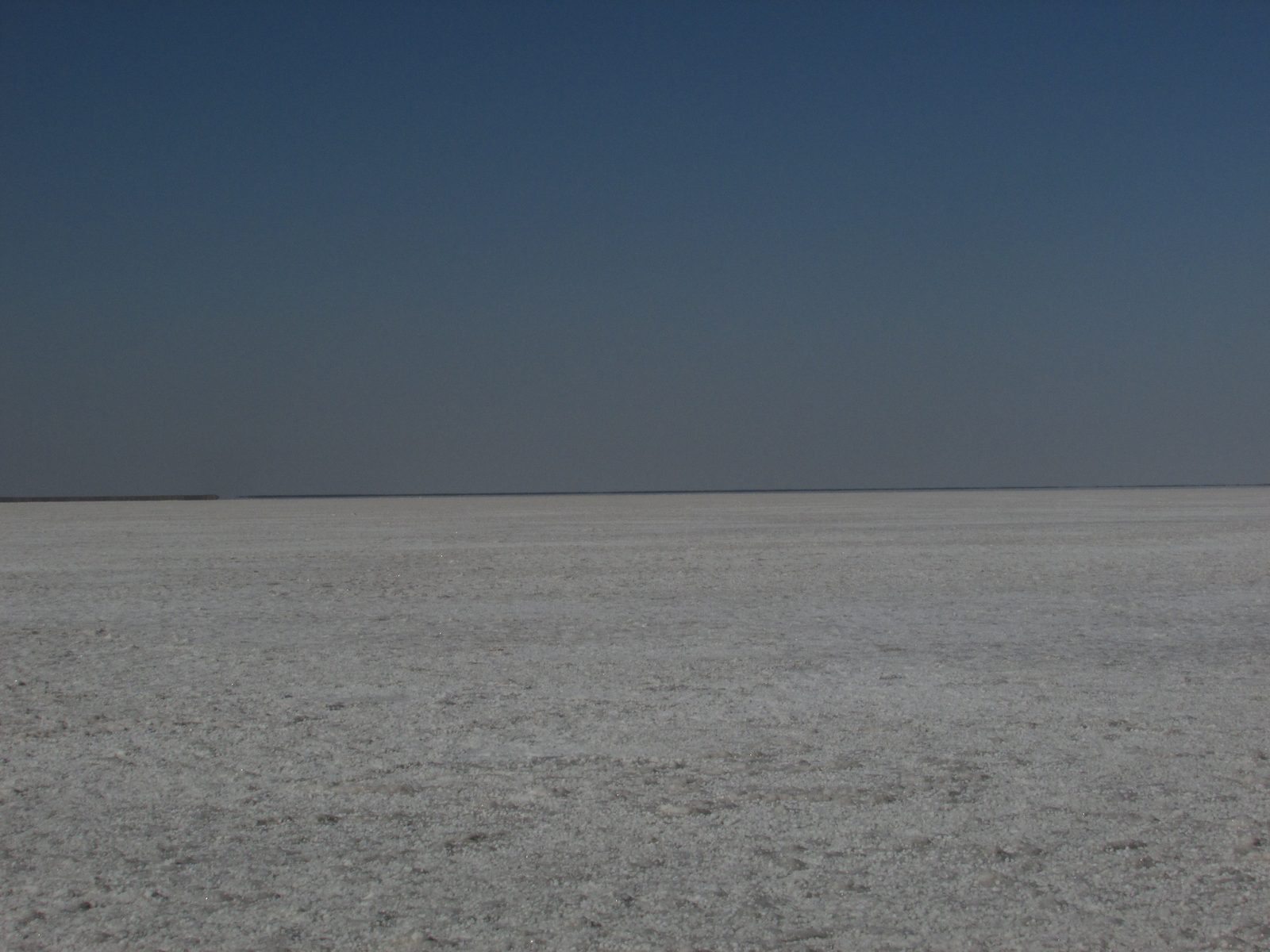
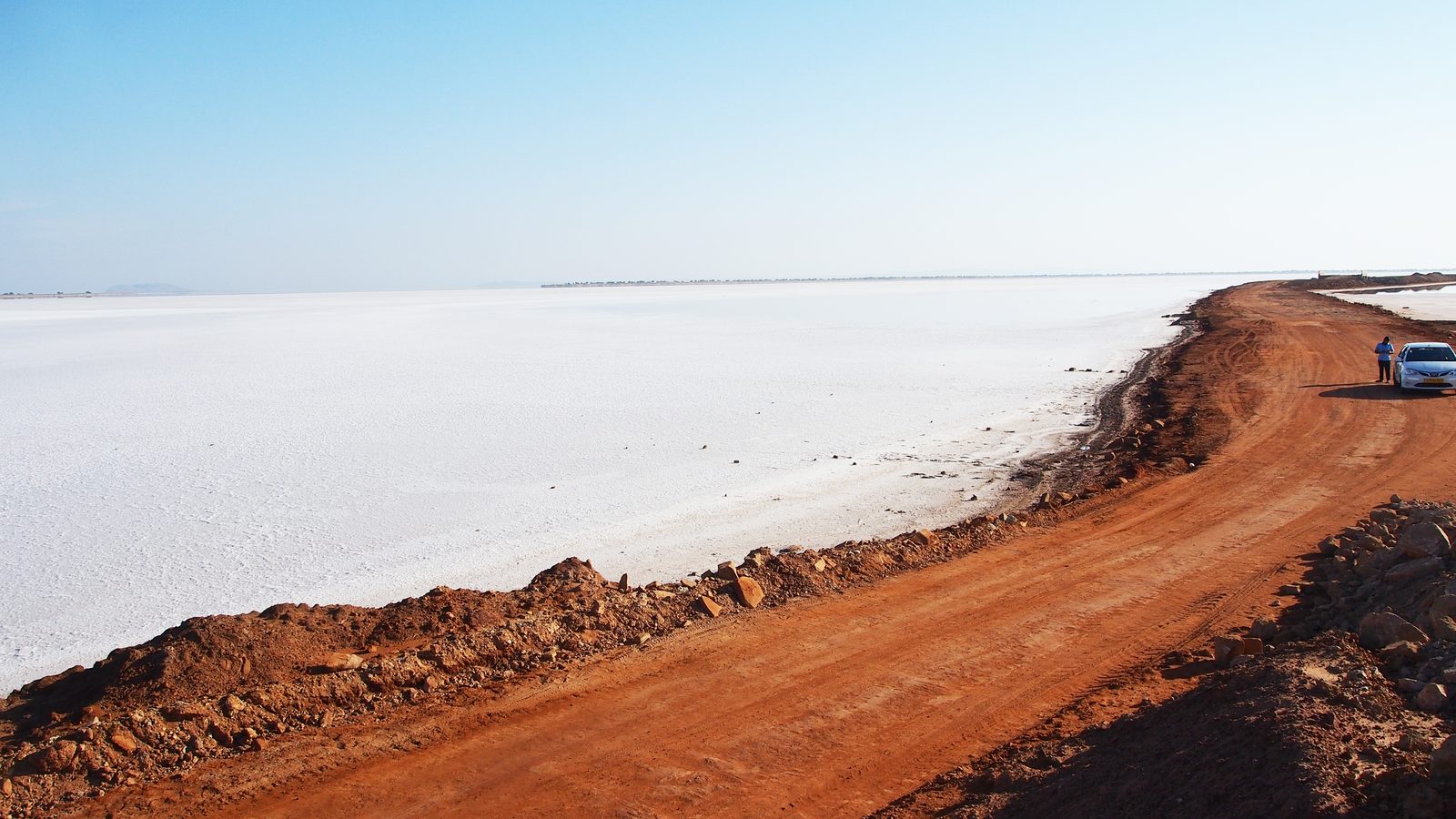
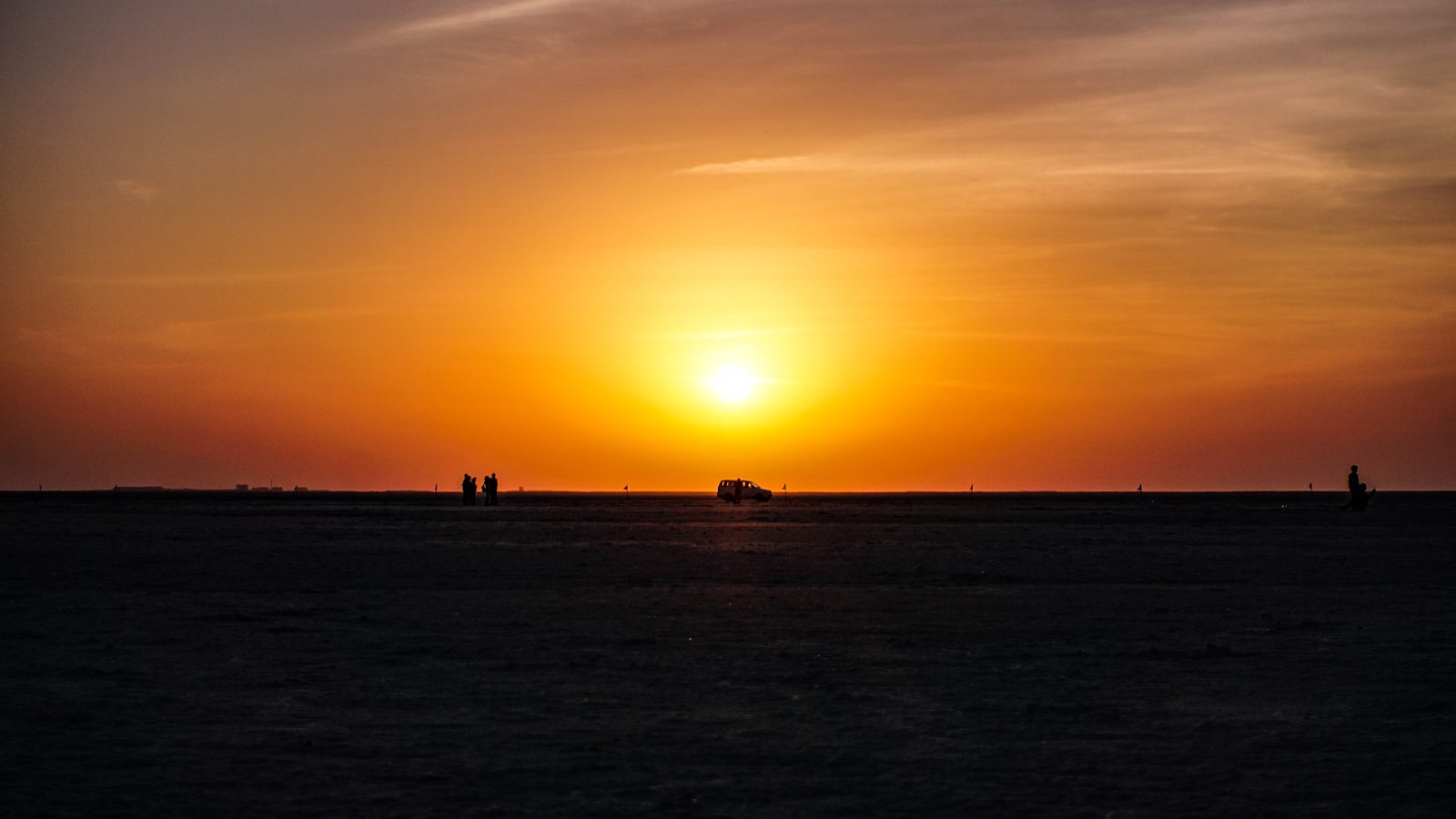
Photos above: White salt desert road at the Rann of Kutch, Prof Ranga Sai, CC BY-SA 4.0 (via Wikimedia Commons); Sunset at Rann of Kutch, Dhordo, Gujarat, NandaMunish, CC BY-SA 4.0 (via Wikimedia Commons). The photos show the White Rann landscape and a Dhordo sunset; they are not photos of a specific tent, hotel room or package, and they do not show current conditions on any particular date.
Frequently asked questions
Can I visit the White Rann without staying at Tent City?
Yes. Bhuj-based day trips to the White Rann are the standard alternative, and the evergreen guide to the Rann covers the Bhuj-base option alongside the Dhordo stay. You will need to arrange return transport for the approximately 85-kilometre journey each way, and you will need to check entry-permit requirements on the live Gujarat government portal before travel, because this post does not state a fee or application step that was not verified. Staying at Tent City is a convenience and an experience choice, not the only way to reach the White Rann. For the broader Kutch picture, start with the Rann of Kutch and Rann Utsav travel guide, and for season dates and booking mechanics see the Rann Utsav 2026-27 guide.
Is Bhuj cheaper than Tent City?
Not as a blanket fact, and this post does not claim it. A Bhuj hotel room alone may look cheaper than a Tent City package, but the Bhuj trip adds return transport for every White Rann visit, meals bought separately, and any permit or entry cost, while a Tent City package bundles stay with specified meals and scheduled sightseeing for its nights, with taxes excluded from its published rates. The only honest comparison is a like-for-like total for your exact dates, group size and number of White Rann visits. Price both options in full, ask what each price excludes, and then decide. For the Tent City tariff itself, with its season supplements and tax caveat, see the Rann Utsav 2026-27 booking guide and the operator's packages page, checked 24 October 2026.
Can a day trip from Bhuj reach sunset at the White Rann?
It can, but it is a long day and it needs planning rather than assumption. Allow about 1 hour 45 minutes each way, plus time at the White Rann, so a sunset visit means a late-afternoon departure from Bhuj and an evening return. Confirm your return transport in advance, including what happens if you are delayed, and check sunset timing for your date. A Tent City guest avoids that return journey entirely, which is the strongest practical argument for staying at Dhordo if sunset is your priority. If you do day-trip, build in a buffer and do not plan a tight onward connection for the same evening.
If you want help turning this comparison into a dated plan for your group, request an itinerary with your dates, group size and arrival time, and ask for a confirmed quote that prices the Tent City and Bhuj options side by side. My Quick Trippers does not own or operate Rann Utsav Tent City; any Tent City booking is with the operator, and its current tariff and availability should be confirmed on the official operator site before booking.
Share this article