Adi Kailash Yatra: Route, Permits & Best Time
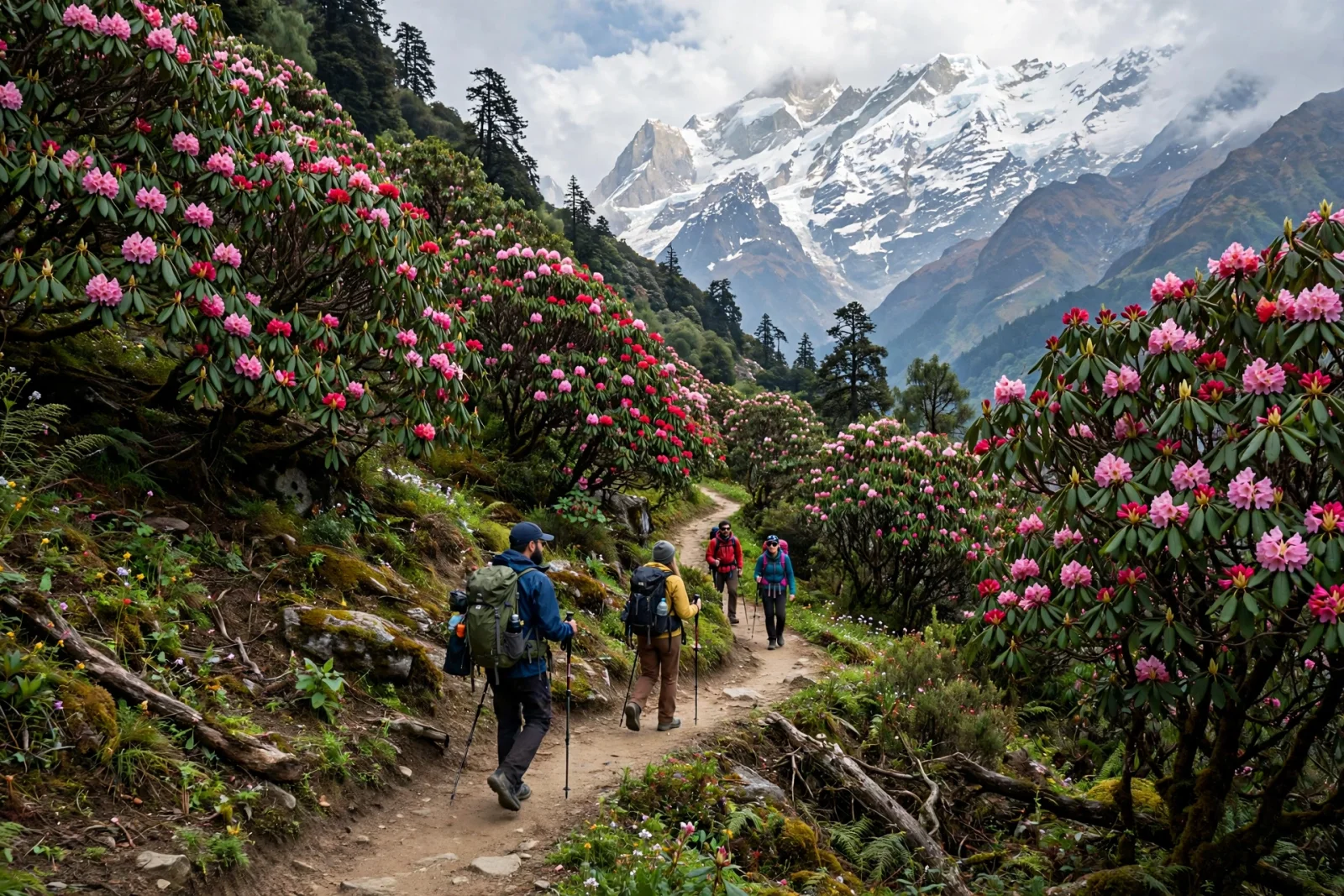
The Adi Kailash Yatra takes pilgrims to a stunning 5,945-metre peak in the Kumaon Himalayas of Uttarakhand — a mountain so perfectly pyramid-shaped, and so uncannily like Mount Kailash, that it has been worshipped as Shiva's abode for centuries. For decades it was barely accessible; improved roads and the resumption of organised yatras have now opened it to determined pilgrims.
This guide covers the Adi Kailash route via Dharchula and Gunji, the permits you need, the best time to go, the mystical Om Parvat, fitness and preparation, and how this yatra compares to the Kailash Mansarovar Yatra. If the great Kailash feels out of reach, Adi Kailash is its most soulful alternative on Indian soil.
Adi Kailash and Om Parvat: What Makes This Yatra Special
Adi Kailash (also called Chhota Kailash) rises near the Indo-Tibet border in Pithoragarh district, its pyramid form mirrored in the Parvati Sarovar lake at its base. Pilgrims perform parikrama of the lake and meditate facing the peak — on clear mornings the mountain glows gold, an experience devotees describe as life-altering. The region is deeply tied to the ancient trade routes to Tibet and to legends of the Pandavas.
Nearby stands Om Parvat (around 6,191 metres), the mountain famous for the naturally occurring snow formation shaped like the sacred syllable 'Om' on its face — visible from the viewpoint near Gunji. Seeing the Om appear as morning clouds lift is the second great moment of the yatra. Together, the two peaks make this one of the most spiritually charged landscapes in the Himalayas.
The Route: How the Yatra Unfolds
The standard organised yatra runs roughly 7-8 days from Kathgodam or Pithoragarh: Kathgodam – Pithoragarh – Dharchula – Gunji – (Adi Kailash and Om Parvat darshan) – return. Dharchula, the last major town, sits on the Kali river across from Nepal; beyond it, the road climbs through the stunning Darma valley to Gunji, the base for both darshans. The final approaches involve short treks and vehicle transfers depending on road conditions — the route has improved dramatically with border road construction, but it remains a true mountain journey.
Most pilgrims join organised batches run by the Kumaon Mandal Vikas Nigam (KMVN) or registered private operators, which handle the permits, stays, meals and medical support. Independent travel is possible but the permit process and remote logistics make organised batches far more practical for first-timers.
Permits and Eligibility
Inner Line Permit
The Adi Kailash region lies in a restricted border zone, and Indian citizens need an Inner Line Permit issued by the SDM at Dharchula. Organised yatra batches arrange this collectively — you submit your ID documents, photographs and medical fitness certificate in advance, and the operator processes the permits. Apply well ahead of your batch date; permits are issued for specific travel windows.
Medical fitness
A medical fitness certificate is mandatory, and a health screening is conducted before the high-altitude sectors. The route crosses 3,500-4,000 metres, so anyone with cardiac, respiratory or blood pressure conditions needs explicit medical clearance. The yatra is not recommended for very young children, and elderly pilgrims should discuss the altitude honestly with their doctor.
Documents to carry
Government photo ID (Aadhaar, passport or voter ID), multiple photocopies, passport-size photographs, the medical certificate and your permit papers. Foreign nationals face additional restrictions in this border zone — check current regulations well in advance, as access rules for non-Indians have varied.
Best Time for Adi Kailash Yatra
The yatra season is short: roughly May-June and September-October, when the high passes are clear and the weather is stable. May-June offers the longest days and the full organised batch schedule. September-October brings post-monsoon clarity — the sharpest views of both peaks — and thinner batches. The monsoon months of July-August bring landslide risk on the Dharchula–Gunji road and are avoided for organised batches; winter buries the region in snow.
Book your batch 2-3 months ahead for the peak windows. Weather in this region is genuinely unpredictable — build a buffer day into your plans and carry full winter clothing regardless of the month; nights at Gunji are cold even in June.
How Adi Kailash Compares to Kailash Mansarovar
- Location: Adi Kailash is entirely within India (Uttarakhand); Kailash Mansarovar requires travel into Tibet with Chinese permits and visas.
- Access: Adi Kailash needs only the Inner Line Permit and runs 7-8 days from Kathgodam; Kailash Mansarovar is a 2-3 week expedition with far more complex logistics.
- Cost and complexity: Adi Kailash is a fraction of the cost and paperwork of the Tibet yatra.
- Experience: Both offer the parikrama-of-a-sacred-peak experience; Adi Kailash adds Om Parvat, which Kailash Mansarovar does not have.
- For those who cannot attempt Tibet: Adi Kailash is the traditional alternative — and the Kailash Mansarovar aerial darshan by flight from Nepal offers another way to see Mount Kailash for those who cannot trek it.
The Darma Valley: Villages and Culture En Route
The road to Adi Kailash passes through the Darma valley — one of the Himalayas' most culturally rich corridors, home to the Rang (Bhotia) community whose ancestors traded across the Tibet border for centuries. Villages like Dharchula, Tawaghat and Gunji blend Kumaoni and Tibetan influences: stone-and-wood houses, woollen weaving, and a cuisine shaped by high-altitude life. The Kali river runs alongside much of the route, marking the India–Nepal border — you will see Nepalese villages across the water.
Take time to absorb this cultural layer rather than treating the drive as dead time between darshans. The Tribal Heritage Museum at Munsiyari (a possible extension) documents the Johari trade culture beautifully, and local guides along the route are repositories of stories — about the old trade caravans, the border's history, and the mountains' moods. The yatra is as much about this living Himalayan culture as about the peaks.
Is there mobile network on the Adi Kailash route?
Patchy — BSNL works best, with signal in Dharchula and intermittent coverage beyond. Gunji and the darshan points have limited to no connectivity. Download offline maps, inform family of your schedule, and treat the disconnection as part of the pilgrimage.
Frequently Asked Questions
How difficult is the Adi Kailash Yatra?
Moderately challenging. The vehicle does most of the distance now, but you will be at 3,500-4,000 metres with short treks at altitude. Reasonable fitness, a month of walking preparation, and respect for altitude protocols (hydration, slow pace, no alcohol) are enough for most healthy adults.
Can senior citizens do the Adi Kailash Yatra?
Fit seniors in their 60s complete it regularly, but the altitude is the real filter — more than age. Get a thorough cardiac and pulmonary check-up, carry all medication with spares, travel in an organised batch with medical support, and consider travel insurance covering high-altitude evacuation.
Is the Om Parvat visible on every trip?
The Om formation is a natural snow pattern, and its visibility depends on snow conditions and weather — morning viewings from the Gunji viewpoint are usually arranged, but clouds can obscure it. Most batches get at least one clear viewing; buffer days improve your odds.
What should I pack for Adi Kailash?
Full winter layering (thermals, fleece, down or heavy jacket, cap, gloves), trekking shoes, rain protection, sunglasses, sunscreen, personal medication, power bank and cash. Baggage space in mountain vehicles is limited — pack compactly. Our Char Dham packing checklist covers the same mountain essentials.
How do I book the Adi Kailash Yatra?
Through KMVN's scheduled batches or registered private operators running the Dharchula–Gunji circuit. Compare inclusions — permits, stays, meals, medical support, transport from Kathgodam — and book 2-3 months ahead for peak season. We can connect you with verified operators for your dates.
Adi Kailash is the Himalayas at their most mythic — a perfect pyramid of a peak, a lake that mirrors it, and an Om written in snow on a neighbouring giant. It asks for permits, fitness and patience, and repays all three many times over. To join a verified batch with permits and logistics handled, chat with our travel experts on WhatsApp to plan this trip.
Share this article