Badrinath Temple: How to Reach, Best Time & Yatra Tips
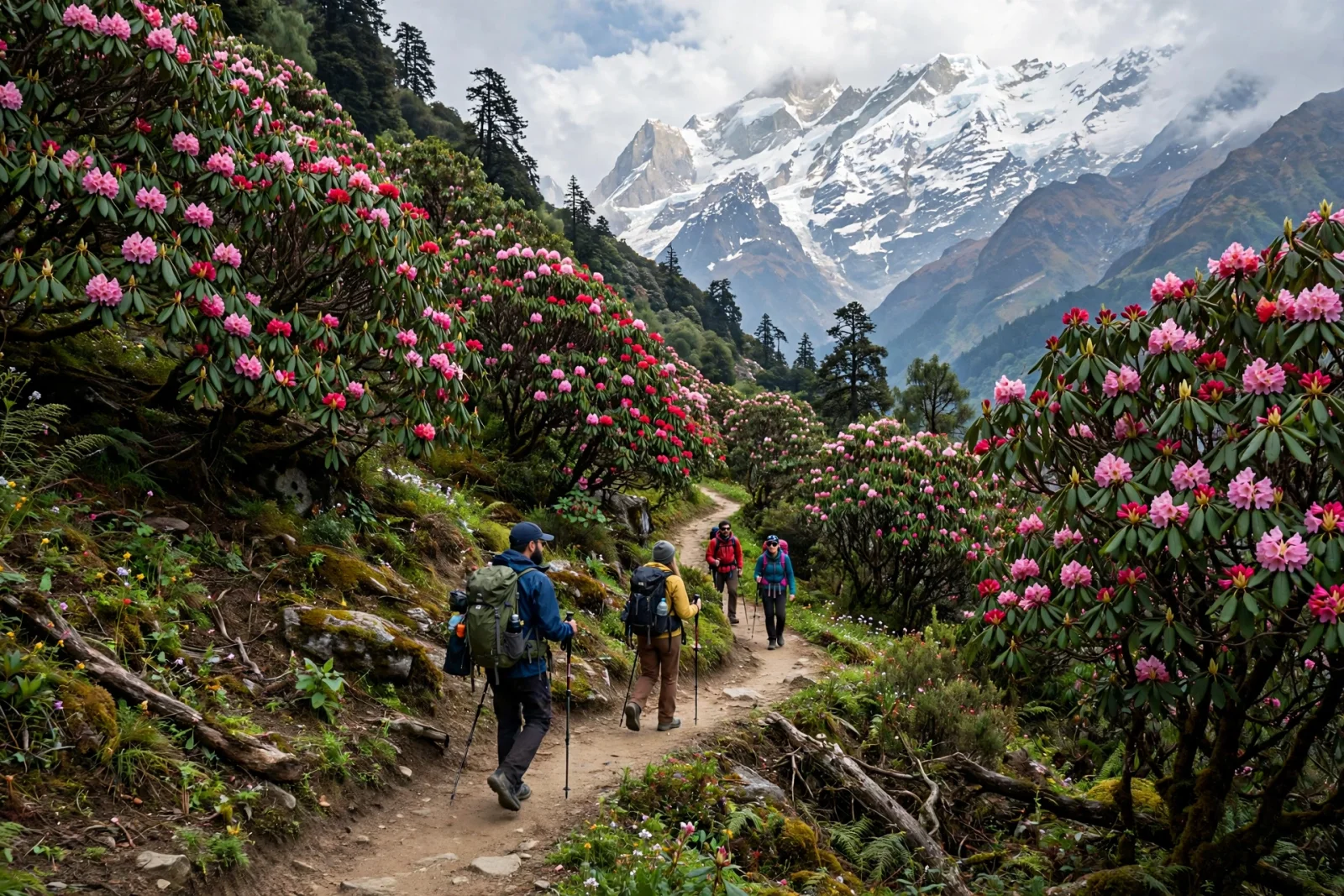
The Badrinath temple sits at about 3,130 metres in the Chamoli district of Uttarakhand, on the banks of the Alaknanda river with the snow-capped Neelkanth peak rising behind it. Dedicated to Lord Vishnu, it is the most easily reached of the Char Dham shrines — motorable roads go all the way to the temple town — and it draws the largest crowds of the four dhams every season.
This guide covers how to reach Badrinath from Delhi, Haridwar, Rishikesh and Joshimath, the best months to visit, darshan timings and tips, what to see around the temple town including Mana village, and how to combine it with Kedarnath as the Do Dham Yatra. Bookmark it before you plan.
About the Badrinath Temple
Badrinath is one of the four sites of the all-India Char Dham established by Adi Shankaracharya in the 8th century, and the only one of the Uttarakhand Char Dham dedicated to Vishnu rather than Shiva. The temple's brightly painted facade, with its conical shikhara, is among the most recognisable sights in Himalayan pilgrimage. The presiding deity, Badrinarayan, is worshipped as a meditating Vishnu carved in black stone.
The temple opens in late April or May and closes around Diwali, when the deity is moved to Joshimath for winter worship. The hot springs of Tapt Kund, right beside the temple, are where pilgrims take the customary holy dip before darshan — the water stays warm even when the air is near freezing. The evening aarti, with the temple lit against the dark mountains, is an experience pilgrims plan their whole itinerary around.
Best Time to Visit Badrinath
May to June and September to October are the ideal windows. May and June offer long days and the full yatra atmosphere; September and October bring post-monsoon clarity, when Neelkanth and the surrounding peaks appear razor-sharp, and the crowds thin noticeably. The temple town is at its most pleasant in these months, with daytime temperatures comfortable and nights cold.
July and August see heavy monsoon rain and the Rishikesh–Badrinath highway is prone to landslides, particularly on the stretches beyond Joshimath. The road usually reopens within hours or a day, but build buffer time into any monsoon itinerary. Winter, from November to April, closes the temple entirely — though Joshimath, where the winter worship happens, remains accessible.
How to Reach Badrinath
By air
Jolly Grant Airport near Dehradun is the nearest airport, roughly 310 kilometres from Badrinath. From there, the road journey via Rishikesh, Devprayag, Srinagar, Rudraprayag, Chamoli and Joshimath takes a full day and is best split with a night halt. Helicopter services to Badrinath operate as part of the Badrinath Yatra by Helicopter and the combined Badri-Kedar helicopter circuits from Dehradun.
By train
Haridwar and Rishikesh are the nearest major railheads, both connected to Delhi by frequent trains. From either station, taxis and buses run the mountain route to Badrinath — the drive from Haridwar takes around 10 to 12 hours, so most travellers halt at Srinagar, Rudraprayag or Joshimath en route. Our Badrinath Kedarnath Yatra from Haridwar package handles this routing end to end.
By road
Badrinath is the only Char Dham shrine with a motorable road to the temple itself — no trek required, just a short walk from the parking area. The route from Delhi runs Delhi – Haridwar – Rishikesh – Devprayag – Srinagar – Rudraprayag – Chamoli – Joshimath – Badrinath, roughly 520 kilometres. Start early, avoid night driving in the hills, and note that the final stretch from Joshimath climbs steeply with several landslide-prone zones.
Things to See Around Badrinath
Mana village — the last village of India
Four kilometres beyond Badrinath lies Mana, celebrated as the last inhabited village before the Tibet border. Walk to Bhim Pul, the natural rock bridge over the Saraswati river, and to Vyas Gufa and Ganesh Gufa, the caves where the Mahabharata is traditionally believed to have been composed. The village's stone houses, woollen handicrafts and mountain backdrop make it far more than a checkbox stop.
Tapt Kund and the temple precinct
Before darshan, pilgrims bathe in Tapt Kund's steaming sulphur springs beside the temple — separate sections serve men and women. Within the precinct, visit the temples of Adi Shankaracharya, Lakshmi Narayan and the historic Narad Kund. Arrive early morning for the shortest darshan queues, or time your visit for the evening aarti when the temple glows against Neelkanth.
Vasudhara Falls and Charanpaduka
If you have an extra day and reasonable fitness, the 6-kilometre trail from Mana to Vasudhara Falls passes through stark, beautiful high-altitude terrain to a 120-metre waterfall. Charanpaduka, a rock bearing what devotees believe are Lord Vishnu's footprints, sits on a shorter trail above the town. Both are best attempted in the morning with a local guide.
Darshan Tips for First-Time Visitors
- Register for the Char Dham Yatra online before travelling and carry the slip with a photo ID — checks are routine at Badrinath.
- Visit at dawn for the shortest queues; the temple opens early and the first darshan of the day is the calmest.
- Bathe at Tapt Kund before darshan if you wish to follow the traditional sequence; carry a change of clothes.
- Dress in layers — Badrinath stays cold even in May, and evenings near the river are biting.
- Book accommodation in advance for May, June and long weekends; the temple town fills completely in peak season.
- Carry cash: ATMs exist in town but can run dry during peak rush.
- Combine with Mana village the same day — it needs only 3 to 4 hours including the walks to Bhim Pul and the caves.
What is the story of the Badrinath temple's discovery?
Tradition holds that Adi Shankaracharya discovered the black stone idol of Badrinarayan in the Alaknanda river in the 8th century and installed it in a cave near Tapt Kund; the present temple structure was built later and expanded over centuries. The Rawal (chief priest) tradition — Kerala Namboodiri Brahmins serving as head priests — dates to Shankaracharya's time and continues unbroken, a living link across twelve centuries.
Frequently Asked Questions
How many days are enough for Badrinath?
Two days in Badrinath itself are ideal — one for darshan and the temple precinct, one for Mana village and nearby walks. From Haridwar, budget 4 to 5 days round trip by road including halts, or combine it with Kedarnath as a 6 to 7-day Do Dham Yatra.
Is there really no trek to Badrinath?
Correct — unlike Kedarnath's 16-kilometre trek, the road reaches Badrinath town and the temple is a short walk from the parking area. This makes Badrinath the most accessible Char Dham shrine and the best choice for pilgrims with limited mobility.
What is the winter seat of Badrinath?
When the temple closes around Diwali, the deity is ceremonially moved to the Narasimha temple at Joshimath, where winter worship continues. Joshimath is also the base for Auli, so many travellers combine a winter Badrinath darshan at Joshimath with a ski trip to Auli.
Can I visit Badrinath in December?
The main temple is closed and the town is snowbound, but you can have darshan of the winter deity at Joshimath. For the full Badrinath experience with Mana village and the mountain views, visit between May and October.
Is Badrinath suitable for senior citizens?
Yes — it is the most senior-friendly of the Char Dham shrines thanks to road access. Keep the driving days short with halts at Rudraprayag or Joshimath, carry warm clothing and medication, and consider the Badrinath Yatra by Helicopter for a same-day darshan without the long drive.
Badrinath rewards the unhurried traveller: a dawn darshan, a slow walk through Mana, an evening aarti under Neelkanth. Pair it with Kedarnath for the classic Do Dham circuit, or fold it into the full Char Dham Yatra for the complete Himalayan pilgrimage. To have the route, halts and darshan logistics arranged around your dates, chat with our travel experts on WhatsApp to plan this trip.
Share this article