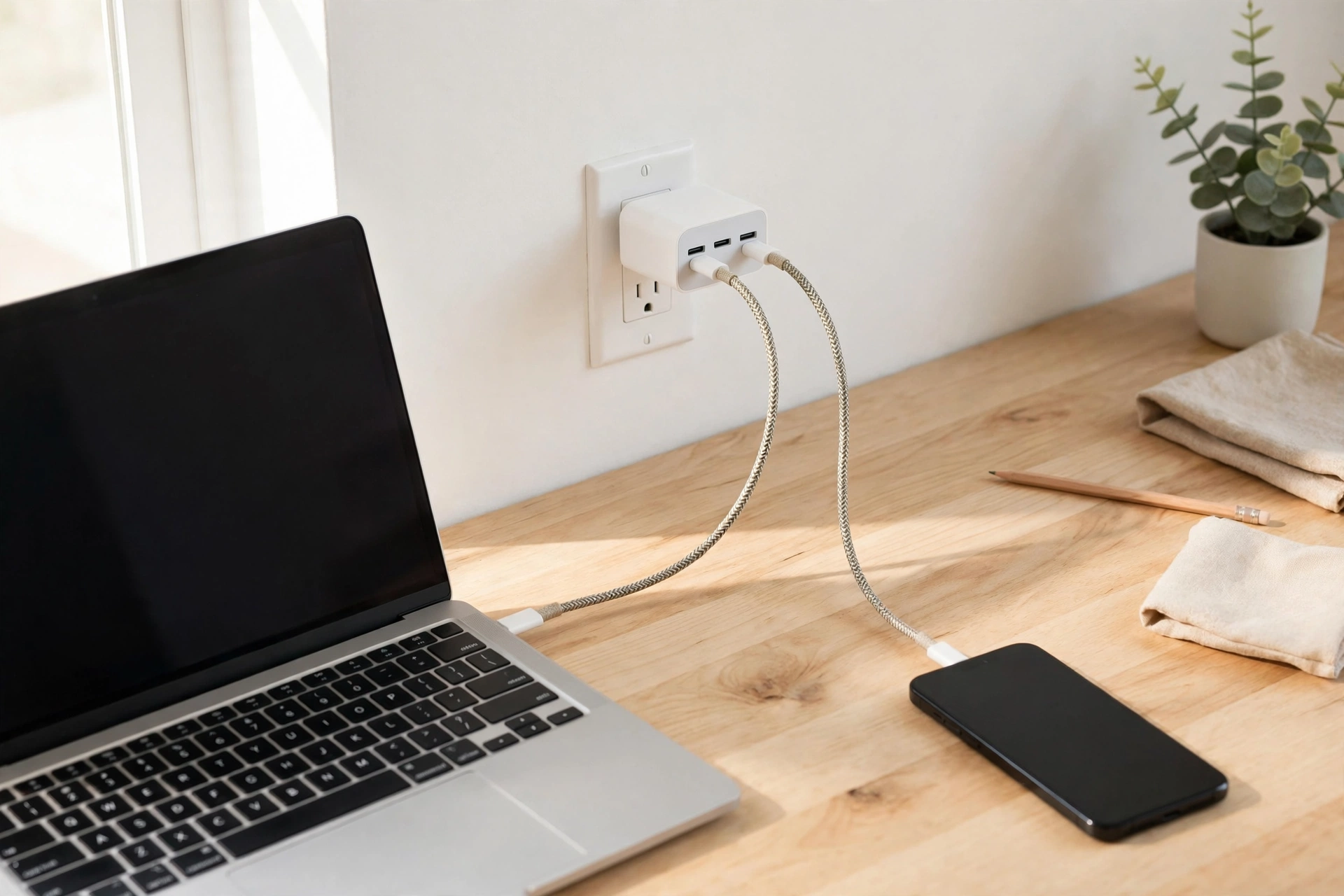
AILKIN 65W GaN Charger India Review: The Laptop Brick?
By My Quick Trippers · 21 Oct 2026
8 min read · Tech
A 65W charger for under ₹1,000 sounds like a listing error, which is exactly why the AILKIN 65W GaN charger is worth a careful look. In a five-charger India comparison by teckAtlas in October 2026, it came out as both the lowest-priced and the highest-rated of the five, at ₹994, with two USB-C ports, one USB-A port, and PD 3.0 with PPS support. My verdict: on paper, this is the value pick of the 65W GaN class, and for a buyer who wants one brick for a laptop and a phone without paying a brand premium, it is hard to beat. The honest caveat is the brand itself: AILKIN is far less known in India than the big names, so the buying decision is really about whether you trust a comparison win more than a familiar logo.
What GaN changes, and what 65W means
GaN, or gallium nitride, is the reason a 65W charger is now pocket-sized instead of brick-sized. GaN components run cooler and more efficiently than the older silicon parts, so manufacturers can pack laptop-grade power into a small body. The 65W figure is the total the charger can deliver, and it is laptop territory: it covers most thin-and-light laptops that charge over USB-C, plus a phone at the same time when the power is split. That split is the detail buyers miss. A three-port charger does not give 65W to every port simultaneously; when you plug in a second or third device, the total is shared, and the laptop's share drops. For most real use — laptop plus phone overnight, or phone plus earbuds on a desk — that is fine. For two laptops at once, it is not the right tool, and no charger in this class claims otherwise.
Pros
What it does well
The first win is price. At ₹994, it undercuts every known-brand 65W GaN charger in its comparison by a wide margin, and the gap is large enough to matter for students and first-job buyers. The second win is the port set: two USB-C ports plus a USB-A port covers the modern laptop-and-phone combination and one legacy device — earbuds, a fitness band, an older cable — without a second brick. The third win is PPS support, which matters specifically for Samsung phones: PPS is part of how Samsung's super-fast charging negotiates power, so a charger without it may charge a Galaxy phone more slowly even at the same wattage. The fourth win is the comparison result itself: in the teckAtlas five-charger test, it was rated 4.4 stars from around 2,700 reviews, the highest rating in that set. That is a comparison figure, not a lifetime guarantee, but it is a better signal than an unreviewed listing with a low price and no history.
Cons
Where it falls short — the honest cons
First, the brand risk is real. AILKIN does not have the service network of a Noise, boAt or Anker in India, so if the unit fails after the return window, getting help may be slower and harder. Second, multi-port sharing means the headline 65W is not per-port; check the listing's power-split table before assuming your laptop gets the full 65W while your phone charges. Third, compact GaN chargers run warm under full load, and a no-name brick that runs hot deserves more suspicion than a branded one — look for safety certifications mentioned in the listing and in reviews, and do not buy from a seller with no track record. Fourth, the included cable situation matters: many budget chargers ship without a cable, or with a cable that cannot carry 65W, so budget for a proper 100W-rated USB-C cable if you do not already own one. Finally, PPS helps Samsung phones specifically; for other brands it is a nice-to-have rather than a deciding feature, so do not overpay for it if your phone does not use it.
AILKIN vs known-brand 65W chargers
The honest comparison is with the known-brand 65W GaN chargers in the same comparison, including the Noise 65W GaN charger, which the same comparison called the most expensive of the five. What the brand premium buys is not more watts — it is service access, longer track record, and easier replacement. What the AILKIN buys is the same core capability for roughly two-thirds less money, or less. If you are comfortable with online returns and you check the seller carefully, the value case is strong. If you want walk-in service or you are buying for someone who cannot troubleshoot a faulty charger, the brand premium is money well spent. There is no wrong answer here, only a trade between price and peace of mind, and buyers should make it consciously rather than discovering it after a failure.
Who should buy it — and who should skip it
Buy it if you want one brick for a laptop and a phone, if you are a student or young professional on a tight budget, or if you own a Samsung phone and want PPS without paying a premium. It is also a good second charger for a desk or a travel bag. Skip it if you need a service network you can walk into, if you charge two laptops at once, or if the listing you find has no reviews and an unknown seller — in that case the low price is a warning, not a bargain. Skip it too if your devices all charge at 20W or less; a 65W GaN brick is wasted on them, and a smaller charger costs less and takes less space.
Buying checklist before you order
Confirm the power split across ports in the listing, and confirm your laptop's required wattage. Check that the seller is rated and that the listing mentions safety certifications, and read reviews specifically for heat and failure complaints rather than overall stars. Confirm whether a cable is included and whether it is rated for the wattage you need; if not, add a proper cable to the budget. Check the return window, and treat the price band of around ₹994 as approximate: sale prices move, and the cheapest listing from an unknown seller is not the same purchase as the reviewed one. Used with those checks, the AILKIN 65W GaN charger is the rare budget pick where the comparison data, not just the price tag, does the persuading.
The safety checks that matter for a budget charger
A charger is a mains-powered device, and a budget charger deserves more scrutiny than a budget cable, because the failure modes are worse. Start with the listing: look for safety certifications and standards mentioned by name, and be wary of listings that mention none at all. Then look at the seller: a rated seller with a history of electronics sales is a better bet than a new seller with a single cheap listing, and the return window is your real warranty for the first weeks. In use, give the charger air: do not cover it with cloth, do not plug it into a loose socket where it hangs by its own weight, and do not use it with a frayed or damaged cable, since a damaged cable can damage the charger and the device together. Heat is the signal to watch.
A GaN charger runs warm under full load, and that is expected, but a charger that becomes too hot to touch, smells of burning plastic, or makes buzzing sounds should be unplugged and returned immediately, not given a second chance. These checks take ten minutes before ordering and a few seconds of attention in use, and they are the difference between a bargain and a risk. The AILKIN's comparison rating suggests most buyers had a good experience, but a rating is an average, and your unit is the one you live with — so check it properly on arrival, run it under full load once, and confirm it behaves before the return window closes.
The bottom line
The AILKIN 65W GaN charger earns its place on value alone: laptop-grade power, three useful ports, PPS for Samsung phones, and a comparison win at a price the big brands do not match. The brand risk is the real cost, and buyers who need a service network should pay the premium elsewhere. For everyone else, it is the one-brick answer to the laptop-and-phone charging problem, at a price that leaves money for the cable it deserves.
Buying note: we have not pinned down the exact Amazon.in listing for the AILKIN Conquerer 65W GaN charger from the comparison this review cites, so there is no buy link on this page. If you buy one, confirm the listing is the three-port 65W GaN model with PD 3.0 and PPS, from a rated seller, before ordering.
Share this article