ASIAN Everest-21 Trekking Shoes India Review: Rs1,499 for First Himalayan Treks?
By My Quick Trippers · 2 Nov 2026
7 min read · Travel Gear
Recommended gear
ASIAN Everest-21 Trekking Shoes
ASIAN Everest-21 trekking shoes
Price checked 2 Nov 2026; verify live price before buying. Hi-neck lace-up shoe with rubber outsole and memory foam insole, per the listing.
As an Amazon Associate, we earn from qualifying purchases. We may earn a commission if you buy through these links, at no extra cost to you.
Every November the same question lands in trekking groups: do you really need to spend five figures on shoes for your first Himalayan trek, or will a budget hi-neck pair get you up and down safely? The ASIAN Everest-21 sits right in that argument. I checked the price on 2 November 2026 and found it listed at Rs1,499 on Amazon.in, down from a stated MRP of Rs2,999, and that price is the whole reason this shoe keeps coming up in first-timer conversations. Prices change, so verify the live price on Amazon before buying, because a festival-week discount can vanish between the day you read this and the day you check out.
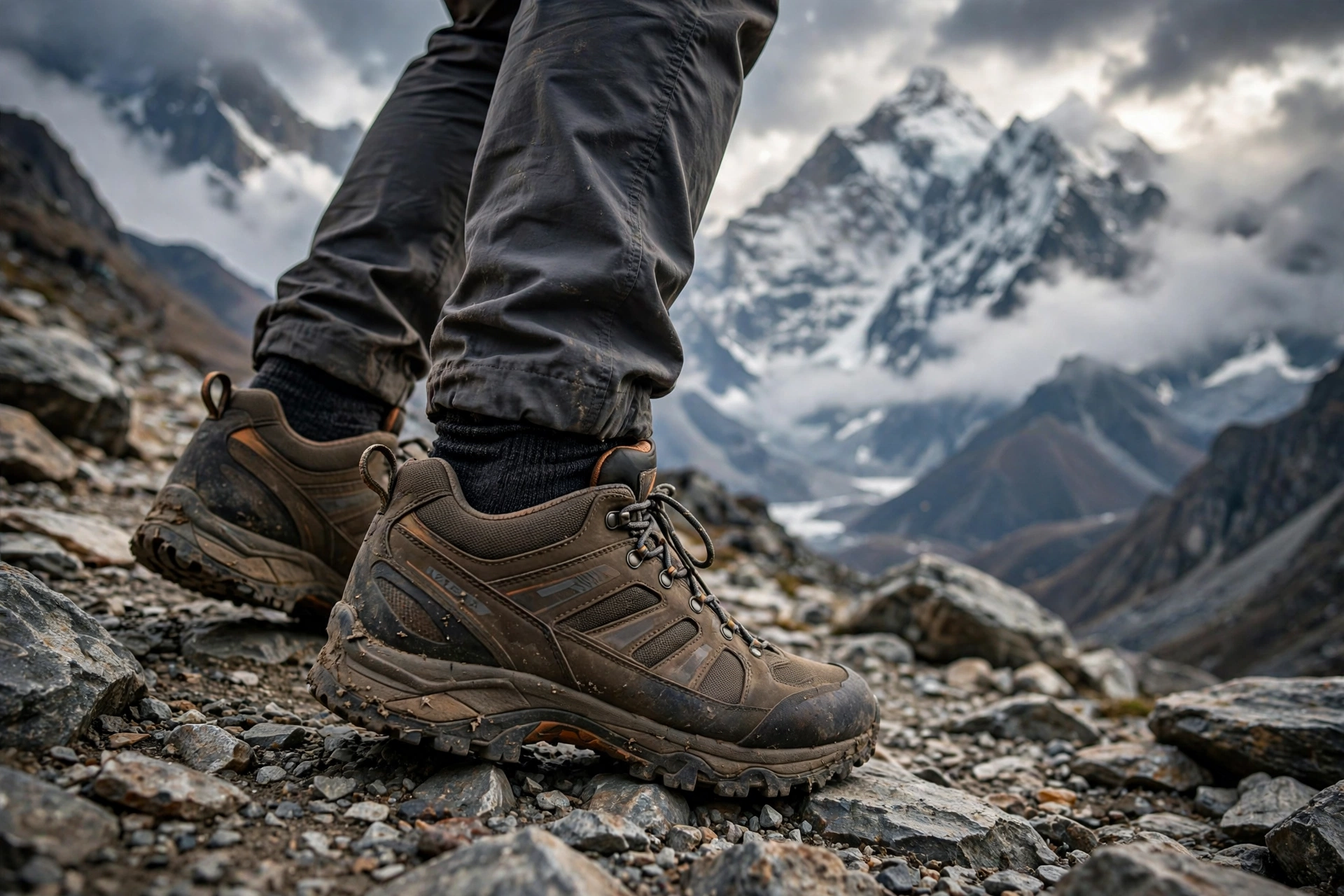
The honest starting point is what this shoe is for. It is a lace-up, hi-neck trekking and hiking shoe with a rubber outsole and a memory foam insole, sold for men and boys, and the listing positions it for trekking, hiking, walking and camping. That is a very different brief from a stiff, crampon-compatible mountaineering boot, and judging it against that standard would be unfair in both directions. For a first Kedarkantha, Dayara Bugyal or Brahmatal attempt, for a long weekend on a marked trail, or for muddy winter walks around a hill town, a light hi-neck shoe with a grippy sole is often exactly what a beginner actually needs, and the money saved can go towards a decent jacket, a sleeping bag or the trek fee itself.
What the hi-neck cut buys you is ankle coverage and a feeling of support on uneven ground, especially on descents where a low shoe lets the ankle roll more easily. It does not turn a soft shoe into a rigid boot, and it does not replace careful foot placement, but for someone who has only ever walked in sneakers, the extra collar height is reassuring on scree, wet stone steps and the loose gravel that covers so many Himalayan trailheads. The rubber outsole is the other part that matters, because winter trails are rarely dry: morning frost, melting snow on stone, and slush near camps all punish a smooth sole, and a lugged rubber sole is a genuine safety feature rather than a cosmetic detail.
What the Everest-21 actually is
Strip away the marketing and you get a straightforward budget trekking shoe. The listing describes a hi-neck design, a rubber outsole for grip, a memory foam insole for cushioning, and a lace-up closure that lets you tighten the midfoot and ankle separately. Memory foam feels soft in the shop and on the first kilometre, which is part of its appeal, but it is worth knowing that soft insoles compress over long days, so the shoe will feel different at kilometre twelve than it did at kilometre one. That is normal for this price class, not a defect, and it is one reason experienced trekkers carry the insole the shoe came with plus a spare pair of thick trekking socks.
Sizing deserves a paragraph of its own, because most budget-shoe complaints are really sizing complaints. Buy these with the socks you will trek in, leave a thumb-width of room in front of your toes when you stand on a slope, and walk around your home in them for several evenings before the trek. Feet swell during a long day, and a shoe that fits perfectly in the morning can pinch badly by the afternoon. If you are between sizes on this model, the safer choice for downhill comfort is usually the larger size, tightened with the laces, rather than a snug size that leaves your toes hammering the front on every descent. Break them in on stairs and uneven ground, not just on flat floors, so the collar softens where it meets your ankle.
There is also a winter-specific point that first-timers miss. A hi-neck shoe keeps out some snow and grit, but it is not a gaiter and it is not a snow boot. On a snowy Kedarkantha morning, snow will still find its way in from the top if you post-hole, and wet socks will chill you faster than cold air ever will. Pairing a budget shoe with proper trekking socks, and with gaiters on a genuinely snowy day, matters more than spending twice as much on the shoe alone. Think of the Everest-21 as one layer in a foot system, alongside socks, lacing technique and, when needed, the waterproof gaiters that keep debris out of the collar.
Honest pros
- Hi-neck lace-up design gives beginners ankle coverage and confidence on uneven, loose trails.
- Rubber outsole is built for grip on stone, gravel and wet winter paths, not just flat roads.
- Memory foam insole feels cushioned out of the box, which helps on long first-trek days.
- At Rs1,499 it leaves budget for socks, a jacket or the trek fee, which is the real first-timer maths.
- Lace-up closure lets you adjust midfoot and ankle fit separately, unlike slip-on walking shoes.
- Versatile enough for trekking, hiking, camping and daily winter walks, so it will not sit unused after one trip.
Cons
Honest cons
- It is a budget shoe, not a stiff mountaineering boot: do not expect crampon compatibility or heavy-load rigidity.
- Memory foam compresses over long days, so cushioning fades by the end of a hard descent.
- Water resistance is not stated as full waterproofing on the listing, so sustained rain and deep slush will eventually soak through.
- Durability over many hard seasons is unproven at this price; inspect the sole bonding and stitching before each trek.
- Fit varies by foot shape, so ordering without a break-in period before a trek is a real risk.
Who should buy it, and who should skip it
Buy it if you are doing your first one or two Himalayan treks, you walk mostly on marked trails, you want ankle coverage without a premium price, and you are willing to break the shoes in properly and pair them with good socks. It also makes sense as a second pair for winter hill-town travel, college field trips and camping weekends, where a heavy technical boot would be overkill. Skip it if you are carrying a heavy pack for many days, trekking on technical snow or ice, or you already know you need a stiff sole and a waterproof membrane, because no budget shoe will honestly deliver those things and pretending otherwise would only hurt your feet. In that case, save up and step into a higher class of boot instead of buying twice.
The verdict is deliberately boring, and that is a compliment. At Rs1,499 the Everest-21 is a sensible first-trek shoe, not a miracle and not a trap, provided you respect its limits: break it in, size it for descents, wear real trekking socks, and do not take it somewhere that needs a technical boot. If you do those four things, the shoe will do its job quietly, which is all a first pair needs to do. If you skip the break-in and walk straight onto a snowy summit day, no shoe at this price will save you from blisters, and that is a planning failure, not a product failure.
A first trekking shoe should be boring in the best sense: grippy, supportive enough, broken in, and forgotten by kilometre three.
Share this article