
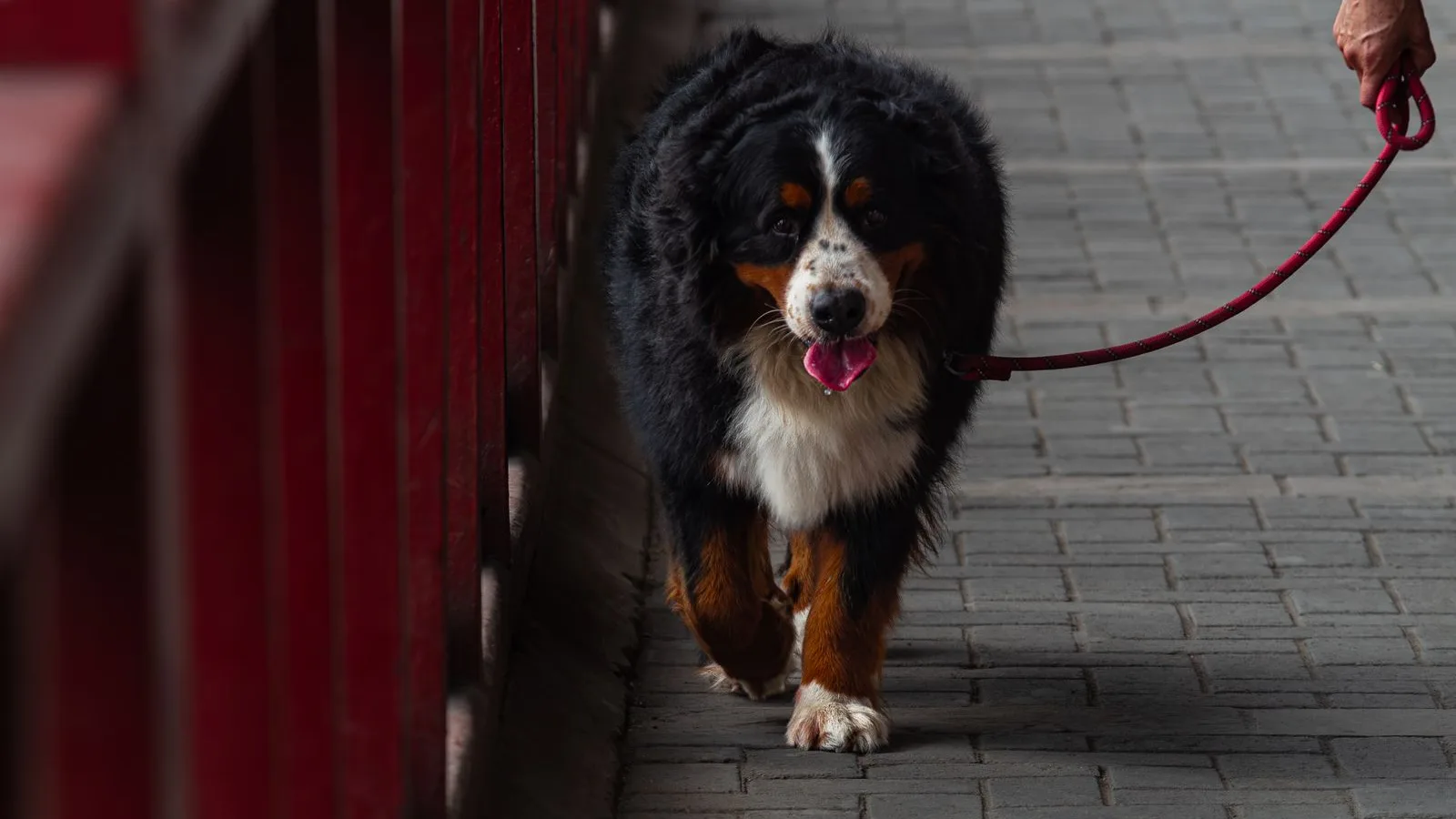
Best No-Pull Harness for Large Dogs: What to Look For
By MyQuickTrippers Editorial Team · 27 Nov 2026
7 min read · Mountains & Adventure
The best no-pull harness for large dogs is not a single product — it is a set of features matched to your dog's size, strength, and pulling style, plus the training that makes it work. This guide is criteria-first: how it works, how to choose the clip position, how to measure and fit it, and what to look for — with one worked example at the end, not a ranked list of rivals we never tested.
A no-pull harness works by changing what happens when the dog pulls. On a regular back-clip harness, pulling moves the dog forward — the dog leans in like a sled dog, and pulling feels rewarding. A front, or chest, clip changes the geometry: when the dog pulls, the leash turns the dog back toward the owner, so pulling stops paying. Wirecutter's testing states the limit plainly: no harness, even one labeled no-pull, eliminates pulling on its own. The harness gives you steering while you train; it does not do the training.
Recommended gear
PawHaven No-Pull Tactical Dog Harness
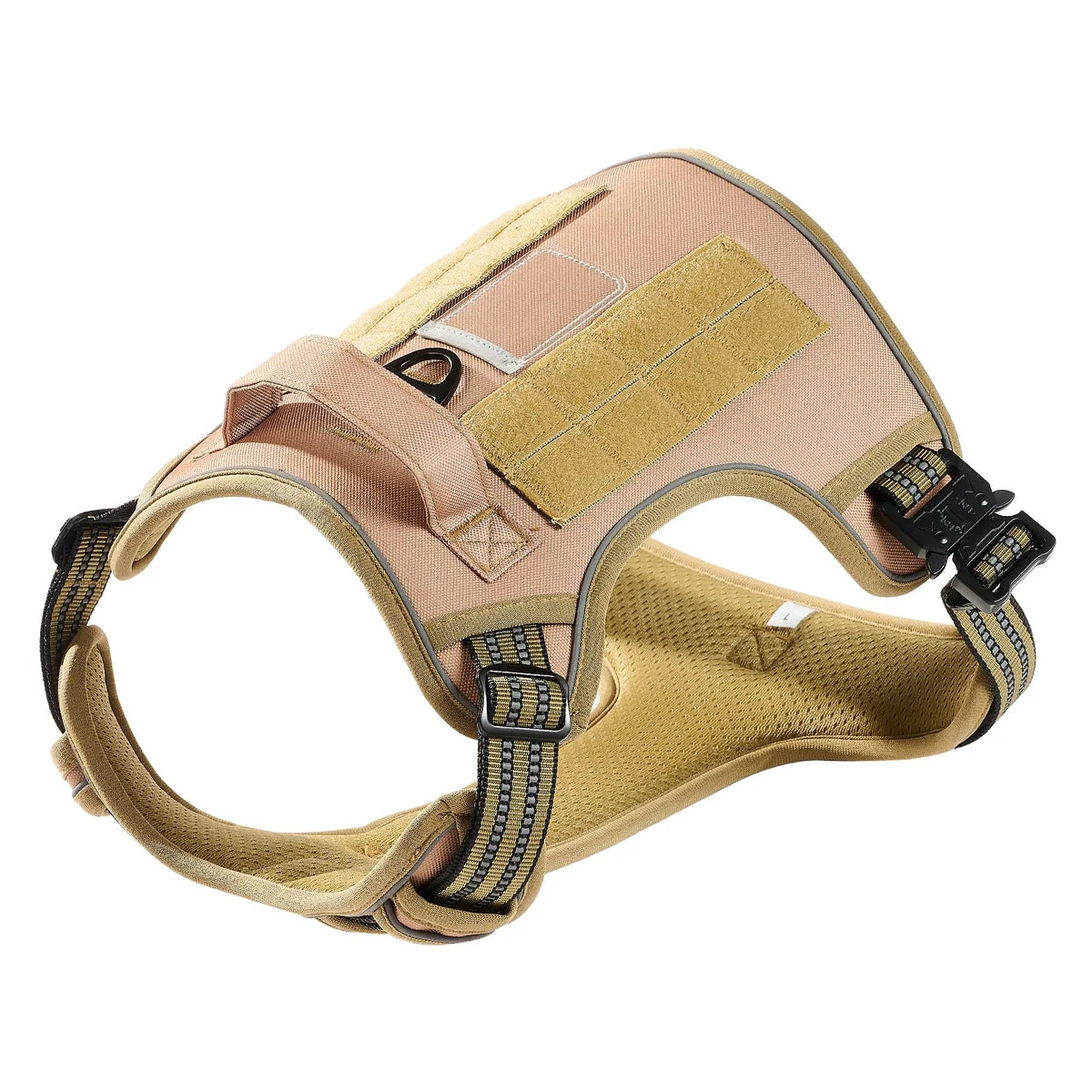
PawHaven is our own pet-supplies store — this link goes to our store, and we don't earn an affiliate commission on it. Use code PAW10 for 10% off your order. Prices checked 27 Nov 2026.
The clip position is the most important buying decision. A front clip gives the most steering — the right choice for a strong dog that pulls hard or lunges. A back clip suits a dog that already walks well, and it is better for running, but on its own it does little to stop pulling, and on dogs over 60 lbs it can amplify the sled-pulling posture. A dual-clip harness gives you both: front clip for training, back clip for relaxed walks. For a large strong dog, dual clip is the most flexible choice.
Size by chest girth, not by weight alone. Measure around the widest part of your dog's chest, just behind the front legs, with the dog standing normally, and write the number down. Weight ranges are estimates — one line's XL covers 32 to 39-inch girths for roughly 80 to 110 lb dogs, but another brand's XL may differ, so always measure and check the chart. Between sizes, size up for deep-chested breeds, down for barrel-chested ones.
Fit it snug, not tight: slide two fingers flat under every strap — the two-finger check. Check again after a ten-minute walk, because straps settle. Watch for a bad fit: chafing behind the front legs, the harness rotating, or your dog ducking away. No padding fixes a wrong size.
Run through this list before you buy. Padding matters where the harness takes the load: a padded chest and belly spread the force; unpadded straps cut in. Hardware should be metal, not plastic — a lunging 90 lb dog puts far more force on a buckle than its size suggests. Reflective trim makes your dog visible at dawn and dusk and pairs with an LED collar after dark — see our walking your dog at night safely guide. More adjustment points mean a better fit.
A tactical vest is a harness with a job: a sturdy top handle, MOLLE webbing for attaching pouches, and heavy-duty buckles. On a trail, the handle and rugged build give you control on steep or crowded sections and a vest that survives brush and rock. MOLLE is useful if you attach things to it, dead weight if you do not. For everyday walks, a lighter padded harness is usually better: cooler, easier to put on. Buy it for the trail, not the look.
Put the harness on, then train. Start on your street, not at the dog park, and reward a loose leash, even for a few steps. When the leash goes tight, stop; wait for slack, then move again. Change direction when your dog pulls ahead, so pulling never pays. Keep sessions to ten minutes and end on a success. Most owners see real change gradually over a few weeks. The harness makes training possible; the training eventually makes the harness unnecessary.
One worked example: PawHaven's no-pull tactical dog harness is a khaki adjustable vest at $42.66 with MOLLE webbing, a padded top handle, reflective trim, and a padded mesh lining, as shown in the product photos. The listing sells a single size — a product photo shows a size-L tag — with no size choice and no size chart, so confirm the fit before ordering. See the price on the PawHaven harness page. If pulling shows up most on the trail, our hiking with a dog essentials guide covers leash control.
- Buying by weight alone instead of measuring chest girth.
- Using a back-clip-only harness on a strong puller and expecting it to stop pulling.
- Leaving the harness on all day — it is walking gear, not clothing, and it will chafe.
- Expecting the harness to replace training.
Will a no-pull harness stop my dog from pulling completely?
No. A no-pull harness gives you steering and control, and it makes pulling less rewarding, but only training eliminates pulling. Expect real improvement over a few weeks of daily loose-leash practice, not an instant fix. Keep sessions short and daily, and end each one on a success.
Is a front clip or back clip better for a strong dog?
A front clip is better for a strong dog that pulls, because it turns the dog back toward you when it lunges. A back clip is fine for a dog that already walks well, but it can make a strong puller pull harder.
How do I measure my large dog for a no-pull harness?
Measure around the widest part of the chest, just behind the front legs, with the dog standing normally. Use that girth number against the manufacturer's size chart — do not buy by weight alone, because brands size differently. Write the number down before you shop.
How tight should a no-pull harness be on a big dog?
Snug enough that you can slide two fingers flat under every strap, and no tighter. Check the fit again after a ten-minute walk, because straps settle, and watch for chafing behind the front legs. If you cannot fit two fingers, loosen it; if it slides, tighten it.
Can a large dog back out of a no-pull harness?
Yes, if the fit is loose — a dog that backs up and ducks can slip most harnesses. A snug fit, a second belly strap where the design has one, and a martingale-style collar as a backup all reduce the risk.
- The Nested — Best No-Pull Dog Harness (2026): 6 Picks for Leash Pullers
- Get Dog Verdict — Best No Pull Dog Harness for Large Dogs: Ranked for Pullers
- The Pet Bench — Best No-Pull Dog Harness for Large Dogs: Ultimate Buying Guide
- ProPawPicks — No Pull Dog Harness For Large Dogs: Why Front Clip Matters
Share this article