
Walking Your Dog at Night Safety: Stay Safe and Seen
By MyQuickTrippers Editorial Team · 27 Nov 2026
6 min read · Travel Planning
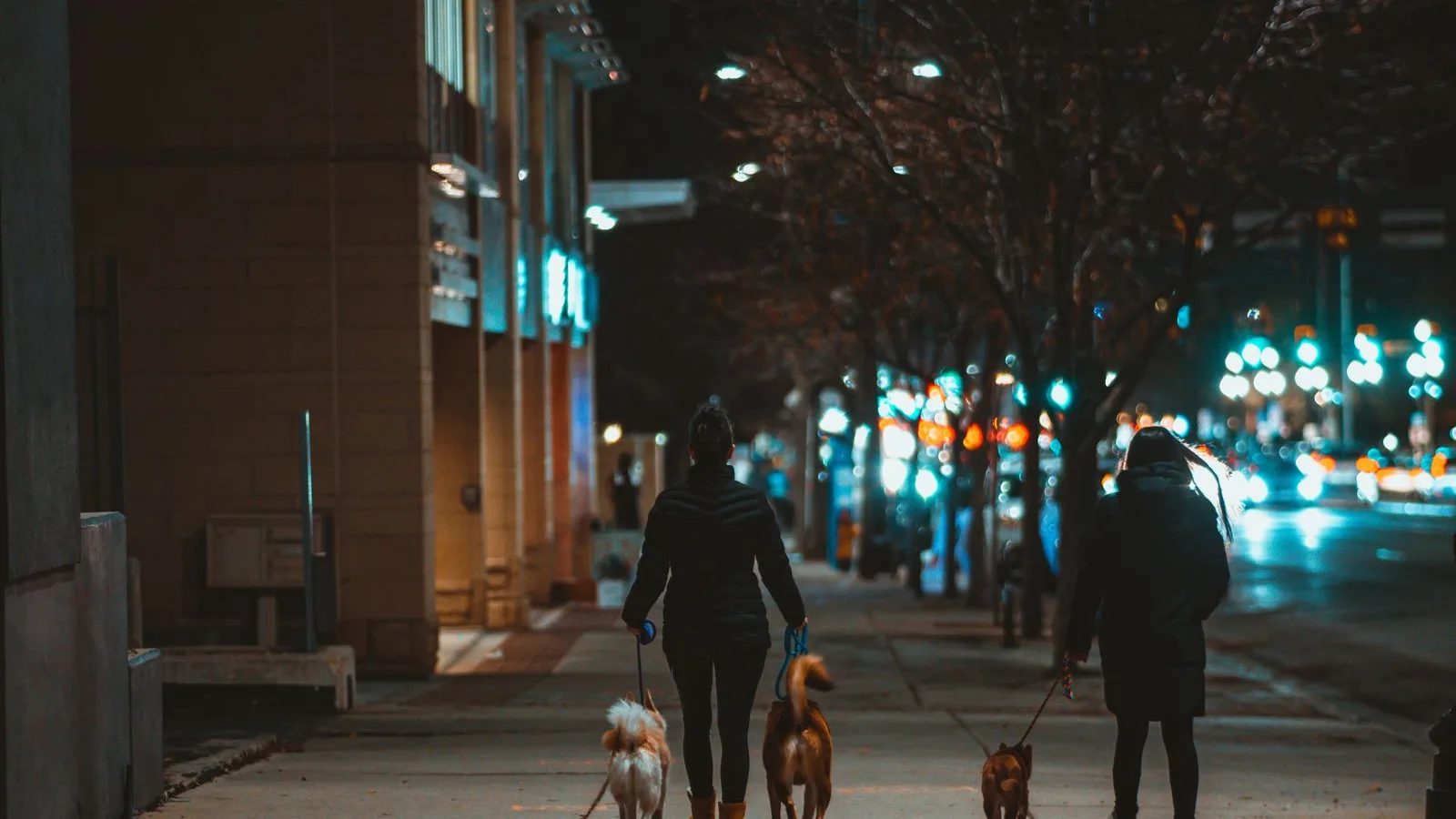
Walking dog at night safety starts with a simple fact: after dark, drivers cannot see you the way they can in daylight, and your dog cannot see hazards the way you can. A night walk is not a daytime walk with less light. Reaction times shrink, dogs behave differently in the dark, and wildlife is more active at dusk and dawn. This guide covers the visibility gear that works, the route and leash rules for after dark, and a pre-walk check that takes thirty seconds and prevents the mistakes behind most night-walk accidents.
The numbers explain the risk. NHTSA data cited by Zoetis Petcare puts three out of every four pedestrian fatalities at night, and visibility plays a critical role. Your dog is harder to see still: low to the ground, dark-coated in many breeds, moving unpredictably. In the dark, dogs lean on sound and scent, so they startle more easily and bolt at rustles in the bushes.
Recommended gear
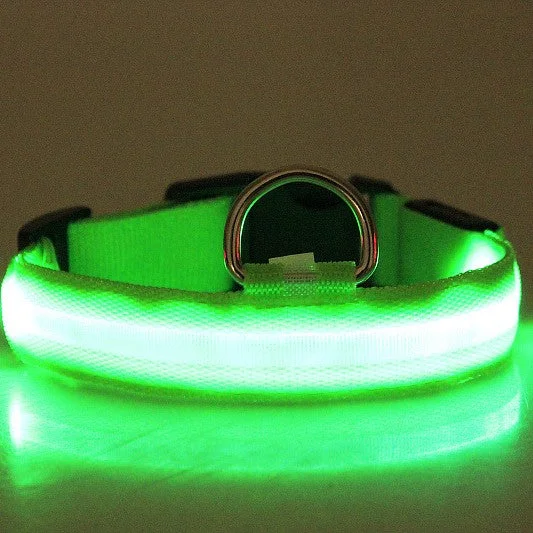
PawHaven LED Luminous Dog Collar
PawHaven is our own pet-supplies store — this link goes to our store, and we don't earn an affiliate commission on it. Use code PAW10 for 10% off your order. Prices checked 27 Nov 2026.
Visibility gear comes in two kinds. Reflective gear is passive: it only shines when a headlight falls on it, and only from that direction. An LED collar is active: it makes its own light, visible from every direction, even with no headlights on it. So use both — active light so drivers see your dog coming, reflective gear so they see you too.
PawHaven's LED luminous dog collar is a rechargeable light-up collar at $20.04, in sizes XXS to XL and colors including orange, red, white, blue, green, yellow, and pink. The rechargeable version needs no replacement batteries — measure your dog's neck first, because a loose collar slides and a tight one chafes. One honest limit: the listing states no waterproof rating, so do not assume it is waterproof. Some manufacturers claim visibility up to 1,000 feet; with no named test standard behind it, treat that as marketing.
Choose a collar by what fails first. Battery: a rechargeable collar that dies mid-walk is worse than none, because it gives false confidence — charge it after every walk and check the light before you leave. Modes: steady light is best for being seen, flashing best for catching attention at crossings; a collar with both lets you switch. Fit: a collar that slides will not stay where drivers expect to see it. Fur: on a long-haired dog a slim light strip can vanish into the coat, so pick a wide, bright band and check it is visible from the side.
Pick the route before you leave, and pick one you know. Well-lit sidewalks beat a dark shortcut, and a familiar route means you know the crossings, blind corners, and off-leash dogs. Where there is no sidewalk, NHTSA advises walking facing traffic, as far from vehicles as possible, with the dog on the side away from the road. Shorten the leash near traffic and at every crossing — six feet of leash is six feet of invisible dog. Cross at lit crossings, wait for a real gap, and never cross looking at your phone. If the walk runs long, the stop-and-rest logic from our road trip with a dog checklist applies.
Coyotes, raccoons, and other wildlife are more active at night and at dusk and dawn, and a small dog on a long leash is an easy target — keep the leash short, the dog close, and turn back if you hear or see wildlife ahead. Rain and fog cut visibility further; in fog, even a bright LED is hard to see, so keep the walk short and close to home. If your dog is scared of the dark, do not force it: start with short walks in well-lit areas, pair them with treats, and build up slowly. For dawn and dusk hikes, the same light rules apply — see our hiking with a dog essentials guide.
- Light on: the LED collar is charged, on, and visible from every side.
- Reflective gear on: your vest or jacket and the dog's leash or harness have reflective trim.
- Leash short: six feet or less, clipped on before the door opens.
- Route chosen: well-lit, familiar, with lit crossings.
- Phone charged and in a pocket, not in your hand.
Run the check at the door, every night, even on the route you have walked a hundred times. It takes thirty seconds. The nights that go wrong are almost never the nights you prepared for. If you want a second light, PawHaven's rechargeable LED collar is $20.04 — the cheapest visibility upgrade in this guide.
Is it safe to walk my dog at night?
Yes, with the right gear and route: an LED collar plus reflective gear, a well-lit familiar route, a short leash, and crossings at lit intersections. Night walks are riskier than daytime walks, so the preparation matters more. Tell someone your route on the first few nights out.
Are LED dog collars safe?
Yes, when they fit properly and are used as intended. The light is low-power and sits on the outside of the collar. Check the fit with the two-finger test, and take the collar off indoors so your dog is not wearing it all day.
Is a reflective collar or an LED collar better at night?
An LED collar is better for being seen, because it produces its own light in every direction, while a reflective collar only shines when light falls on it. Use both: the LED for the dog, reflective gear for you. The pair costs little and covers every angle.
How far away can drivers see an LED dog collar?
There is no published test standard behind the visibility distances manufacturers claim, including the often-quoted 1,000 feet. Treat that number as marketing. What matters is that the light is on, bright, and visible from every side on your street. Test it yourself on your own street at night.
Can my dog wear an LED collar in the rain?
It depends on the collar. Many LED collars are water-resistant, but the PawHaven collar's listing does not state a waterproof rating, so do not assume it is safe in heavy rain. Check the listing, and carry a backup light if the forecast is wet.
Share this article