Brahmatal Winter Trek Complete Guide: Lohajung, Frozen Lakes and the 12,200 ft Summit
By My Quick Trippers · 27 Oct 2026
9 min read · Mountains & Adventure
Brahmatal is the winter trek people choose when Kedarkantha feels too crowded and the big Himalayan passes feel too serious. It is a six-day journey from the road head at Lohajung in Uttarakhand, through oak and rhododendron forest, past two high lakes, to a summit ridge at about 12,200 feet where Trishul and Nanda Ghunti fill the horizon. In deep winter both lakes freeze, the trail runs on snow, and the camps sit in real cold. It is graded easy to moderate, which makes it genuinely suitable for a first winter trek — provided you arrive fit, dressed for sub-zero nights, and with a guide who knows the snow line that week.
Last verified: 27 October 2026. Route, altitude and season details below were checked against multiple 2026 trek guides on that date; operator itineraries differ slightly in daily distances and camp names, and the ranges below reflect that variation rather than hiding it. No trek price is quoted here: fees vary by operator and season, so confirm the current fee with your operator before booking.
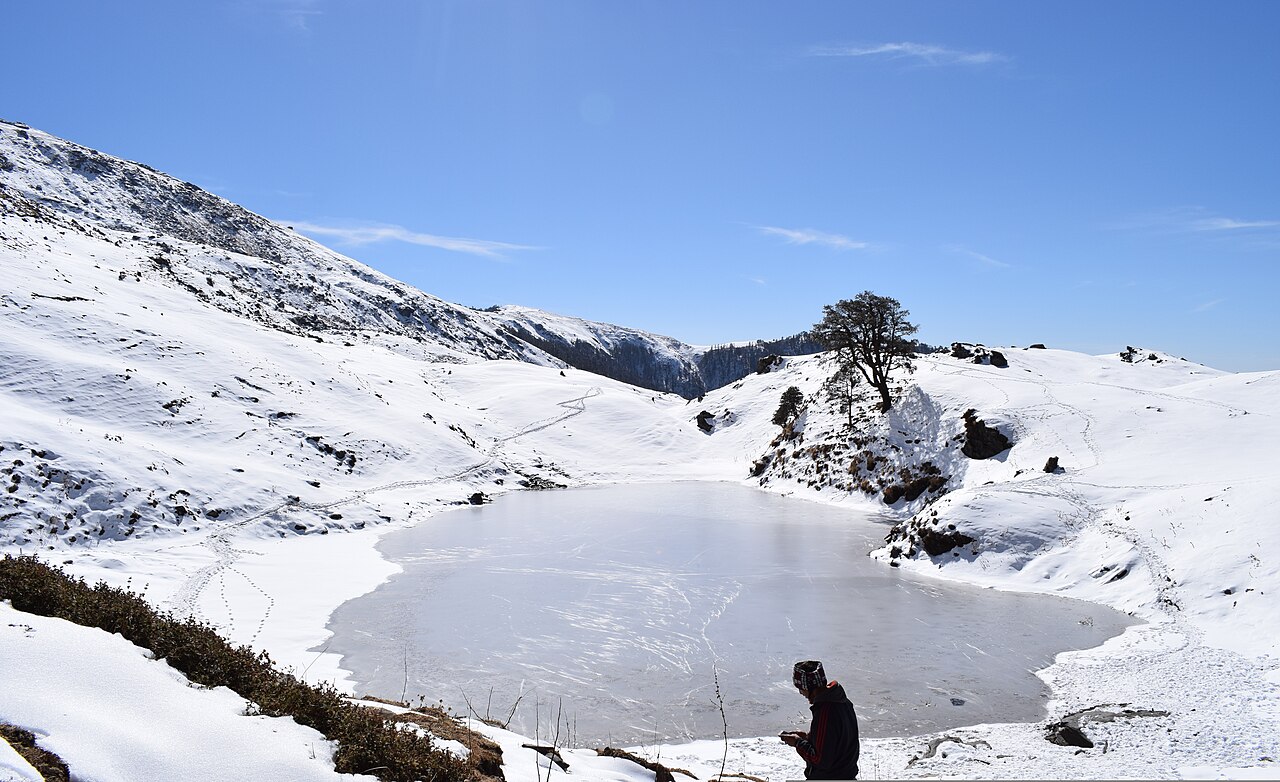
Hero photo: a frozen lake on the Brahmatal trail in winter — Arijit95jitu, CC BY-SA 4.0 (via Wikimedia Commons).
What the Brahmatal trek is
Brahmatal sits in the Chamoli district of Uttarakhand, in the Garhwal Himalaya. The name comes from the high lake near the top of the route, which local belief links to Brahma, said to have meditated here. Whether you follow the story or not, the shape of the trek is what matters: a gradual climb through forest, two lake camps, and one open summit day, with no technical climbing anywhere on the route.
The numbers that define it are consistent across operators. Lohajung, the base village, sits at about 7,600 feet. Bekaltal, the first lake camp, sits at roughly 9,000 to 9,800 feet depending on where the camp is pitched. The Brahmatal lake camp sits above 10,000 feet. Brahmatal Top, the summit, is about 12,200 feet (3,734 metres). Total walking distance is roughly 24 kilometres, spread over four walking days, with a long drive in and out at each end.
The route, day by day
Most operators run the same skeleton, with small variations in camp names and daily distances. Treat the days below as the standard shape, and check your operator's version before you travel.
Day 1
drive to Lohajung. From Rishikesh or Kathgodam this is a long mountain drive of roughly 8 to 10 hours, through Devprayag and Karnaprayag toward Dewal and Lohajung. Arrive, meet your trek leader, and sleep in a Lohajung guest house.
Day 2
Lohajung to Bekaltal, about 6 kilometres in 4 to 5 hours. The trail climbs through dense oak and pine forest to Bekaltal, a high lake that often freezes in winter and makes one of the prettiest campsites on any Indian winter trek.
Day 3
Bekaltal to Brahmatal base camp, about 6 to 7 kilometres in 5 to 7 hours, crossing Jhandi Top at around 11,800 feet on the way. This is the day the big peaks start to appear, and the night at base camp is the coldest before the summit.
Day 4
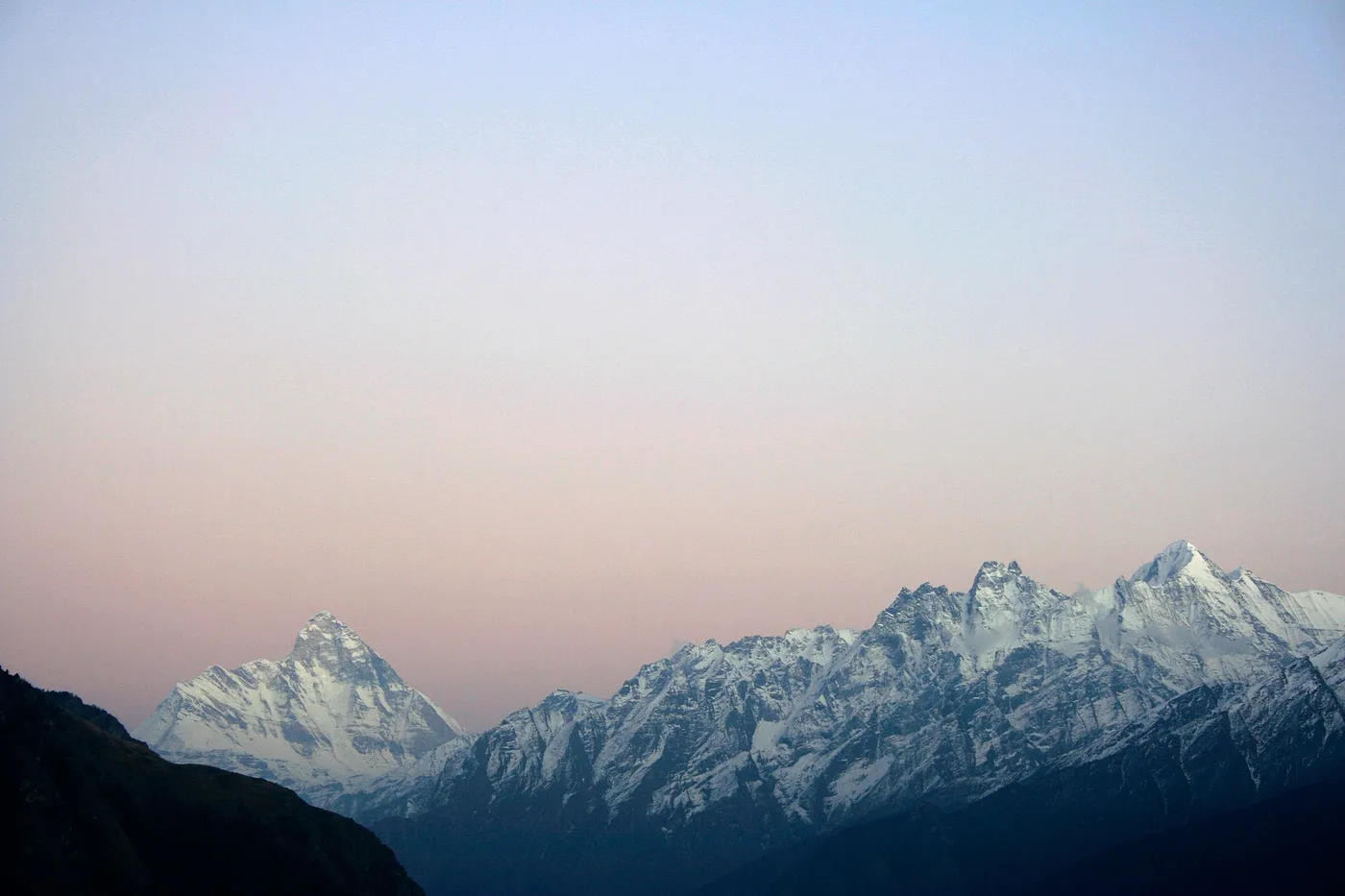
summit day. Climb from base camp to Brahmatal Top at about 12,200 feet and back, roughly 6 kilometres in 5 to 6 hours. On a clear day the panorama runs across Trishul, Nanda Ghunti, Chaukhamba and Neelkanth. Descend to camp the same day.
Day 5
return toward Lohajung, usually via Bekaltal and Jhandi Top, about 10 kilometres in 7 to 8 hours, or a shorter descent to a lower camp depending on your operator.
Day 6
drive back to Rishikesh or Kathgodam, another 8 to 10 hours. Do not book a same-evening flight or train after this drive; keep a buffer night if your onward connection matters.
Two practical notes follow from that shape. First, the driving days are as tiring as the walking days, so the honest duration is six days door to door, not four. Second, the summit day is the only long, cold, high day; everything before it is deliberately gradual, which is exactly why this trek works for beginners.
Month by month: December to April
Brahmatal is a December-to-March snow trek first, and a spring trek second. Pick your month by what you want most, not by a generic best-time label.
- December to January: deepest snow and hardest cold. Nights at base camp can run well below freezing, and the lakes are most likely to be frozen solid. This is the most dramatic window and the least forgiving one.
- February: the balance month. Snow is usually still full and settled, the cold is slightly less severe than January, and trails are well established. Many experienced trekkers call this the most reliable snow month.
- March to April: gentler winter. Snow remains on the upper trail, rhododendrons begin to bloom in the lower forest, and the days are longer and warmer. Choose this window if deep cold worries you more than maximum snow.
One honest warning applies to every month: snow is the norm in deep winter but it is never guaranteed for a specific week. A warm spell or a delayed snowfall can leave the lower trail patchy even in January. Any operator promising guaranteed snow on your dates is promising something the mountains do not promise.
When the snow is actually at its best: mid-December to February is the reliable snow window on this trail — December to March is the snow season, and February is the most reliable month. Early November is before the season, not the start of it, so do not book an early-November date expecting consistent snow. Operators list early-season batches from late October across the winter-trek circuit; if deep snow is the point of the trip, aim for mid-December to February.
Permits, fitness and gear
Forest permits and applicable entry permissions are required for this route, and they are normally arranged by your operator. Confirm before you leave that permits are included in your fee, and carry an identity document on the trail. Independent trekkers should sort permits at Lohajung before starting, not on the morning of day two.
- Fitness: you should be able to walk 5 to 6 kilometres a day on uphill trail for four consecutive days, carrying a day pack. A month of regular walking, stairs or jogging before the trek is enough for most beginners; no prior Himalayan experience is needed.
- Clothing: layers rated for sub-zero nights, a windproof outer shell, warm gloves, a cap that covers the ears, and insulated, broken-in footwear. Microspikes or crampon-compatible grip help on the summit slope when it is icy; ask your operator whether they are provided.
- Nights: expect guest-house beds at Lohajung and tents on the trail. Sleeping bags must be rated for the coldest night you will face, not the average night. Ask your operator for the bag rating rather than assuming it.
- Health: anyone with a serious heart, lung or altitude-related condition should take medical advice before booking. Altitude here is moderate by Himalayan standards, but the summit day is still above 12,000 feet, and cold plus exertion is a real combination.
What the trek is not
Brahmatal is not a technical climb, not a race, and not a sightseeing drive with a short walk attached. It is also not a trek to do with small children in tow or as a casual add-on to a family holiday: the cold, the camping and the summit day belong to walkers who have chosen a trek, not to a family looking for a gentle winter break. If your group includes children or non-walkers, pick a family winter trip instead — beaches, lakes and gentle hills, not a 12,000-foot summit day. And if you want the other classic beginner winter trek for comparison, our Kedarkantha complete guide covers it in the same depth, so you can compare the two honestly before choosing.
Brahmatal or Kedarkantha?
The two treks are often chosen between, and the honest difference is crowd and character rather than difficulty. Kedarkantha is the more famous first winter trek, with a summit at about 12,500 feet and a well-worn trail; Brahmatal is quieter, runs through deeper forest, and gives you two frozen lakes instead of one summit lake. Both need the same fitness, the same gear, and the same respect for winter cold. If you want the classic first-trek experience and do not mind company, read our Kedarkantha winter trek complete guide. If you want the quieter forest-and-lakes version, Brahmatal is the better pick. For the full field, see our winter treks in India list, and for the packing side, our Himalayan winter packing list covers what to carry and what to leave behind.
Frequently asked questions
When is the best time for the Brahmatal trek?
December to February for snow, with February the most settled snow month; March to April for gentler weather and rhododendron blooms. December to January is the most dramatic and the coldest.
Is Brahmatal suitable for beginners?
Yes, with reasonable fitness and preparation. It is graded easy to moderate, the ascents are gradual, and daily walking is 4 to 6 hours. No technical climbing is involved, but winter snow and sub-zero nights make it a serious walk, not a casual stroll.
Do I need a permit for Brahmatal?
Yes. Forest permits and applicable entry permissions are required, and operators normally arrange them. Confirm permits are included in your fee, and carry identity documents on the trail.
Is snow guaranteed on the Brahmatal trek?
No, never on a specific week. Snow is the norm in deep winter, and February is the most reliable month, but a warm spell can leave lower sections patchy even in January. Do not book with any operator that guarantees snow.
How do I reach Lohajung, the base village?
By road from Rishikesh or Kathgodam, roughly 8 to 10 hours via Karnaprayag and Dewal. Most operators start from Rishikesh. Keep the drive day free of onward connections at both ends.
Planning a Brahmatal winter trek and want your month, fitness plan and gear list checked? WhatsApp us on +91-8171158569 with your preferred month and group size, and we will confirm the season position before you commit — or request an itinerary and tell us whether you want deep snow or settled snow.
Share this article