Kedarkantha Winter Trek Complete Guide: December to April, Month by Month
By My Quick Trippers · 26 Oct 2026
9 min read · Mountains & Adventure
Kedarkantha is India's most popular winter trek for a reason: a genuine Himalayan summit at 3,810 metres (12,500 feet), reached from the village of Sankri in Uttarkashi district, with snow-covered pine forests, a frozen high lake, and a 360-degree sunrise panorama — all on a trail rated easy to moderate, with no technical climbing. The snow season runs from December to April, but those five months are not one season: December and January bring the heaviest snow, February and March bring settled snow and clear skies, and early April brings melting snow and the first rhododendron colour at lower elevations. This guide covers the full December-to-April arc, the route, the permits, the preparation and the honest risks, so you can pick your month for the trek you actually want.
Last verified: 26 October 2026. Altitudes, distances and season facts below are the figures repeated across multiple 2026 trek guides checked on 26 October 2026: summit 3,810 metres, Sankri 1,950 metres, Juda Ka Talab around 2,700 metres, base camp around 3,430 metres, roughly 20 kilometres round trip, five to six days including travel from Dehradun. Snow depth on any given week is never guaranteed, whatever the month: a warm week or a late storm changes the trail, and any guide promising exact snow on your dates is guessing.
A note on early-season expectations: the snow season on this trail runs December to April, and the best, most reliable snow falls from mid-December to February. Early November is before the snow season, not the start of it — trails are clear, not snow-covered — so do not book an early-November date expecting consistent snow. Operators list early-season batches from late October across the winter-trek circuit; if deep snow is the point of the trip, aim for mid-December to February.
The route: Sankri to summit in four walking stages
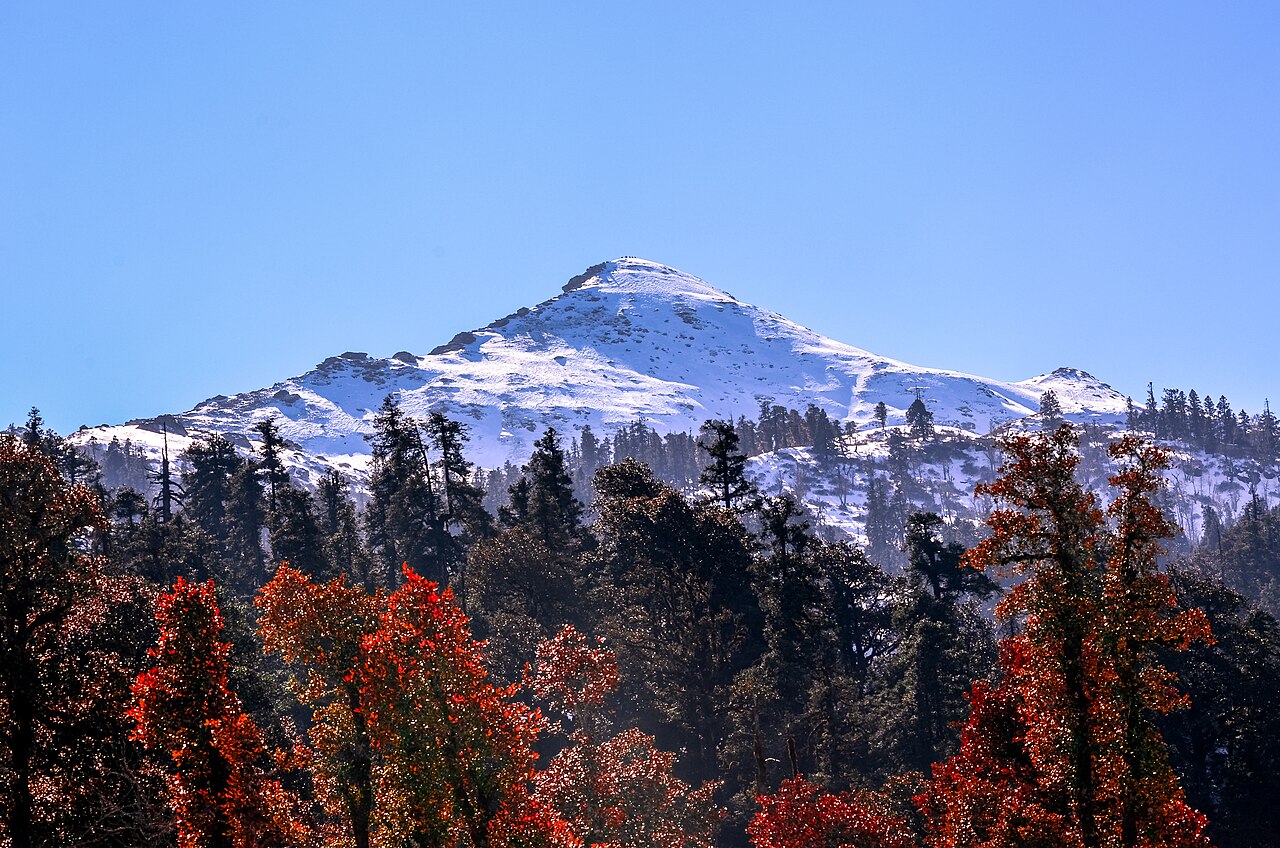
The trek starts at Sankri, a traditional Garhwali village at about 1,950 metres (6,400 feet), roughly 200 kilometres from Dehradun — an eight- to nine-hour road journey via Mussoorie, following the Yamuna and Tons rivers into the Garhwal Himalaya. Sankri is the gateway not just to Kedarkantha but to several Himalayan treks, and it is where permits are checked, gear is hired and guides are engaged. From Sankri the classic route climbs through protected oak and pine forest in the Govind Pashu Vihar National Park and Sanctuary to Juda Ka Talab, a high-altitude lake at around 2,700 metres that freezes solid in winter and makes one of the trek's great campsites. The trail continues to Kedarkantha Base Camp at around 3,430 metres (11,250 feet), a clearing with panoramic views, and from there the summit push climbs the cone itself to 3,810 metres. The final section is the only steep part of the trek, which is why the overall grade stays easy to moderate despite a genuine summit.
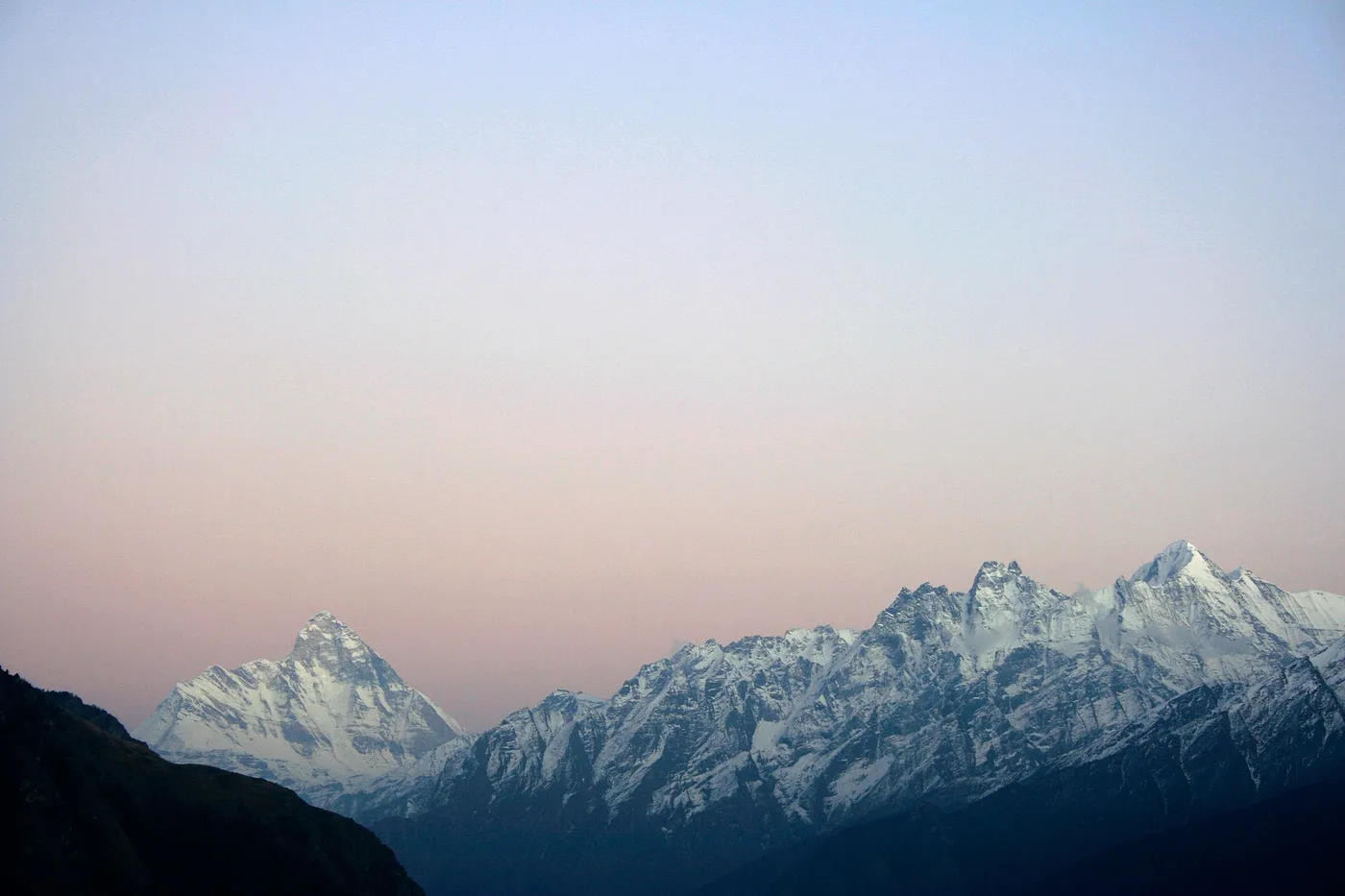
Total trekking distance is roughly 20 kilometres round trip, walked over four to six trekking days, or five to six days including the Dehradun transfers. Daily walking is typically four to six hours on a gradual ascent, which is exactly why Kedarkantha is so widely recommended as a first Himalayan winter trek: the altitude gain is spread out, the trail is well marked, and there is no glacier crossing, rope work or technical section. A less-travelled alternative route starts from Gaichwan Gaon near Netwar — longer and quieter, and better suited to repeat visitors than to first-timers. Whichever route you take, the summit reward is the same: a 360-degree panorama taking in Swargarohini, Bandarpoonch and Black Peak, with the Gangotri and Yamunotri ranges and the Har Ki Dun valley on clear mornings.
December to April, month by month
December to January: heaviest snow, hardest conditions
December and January bring the heaviest snowfall and the most dramatic conditions: the trail from Sankri becomes a snow path, Juda Ka Talab freezes solid, and the summit itself requires microspikes or crampons. Nights at higher camps can drop to minus 10 degrees or lower. This is the most photogenic window and the most demanding one, and it is the window where fitness, gear and a competent guide matter most. December batches from organised operators routinely fill by October, so late planners should expect limited availability rather than open choice.
February to March: settled snow, clear skies
February and March are the sweet spot for most trekkers. The snow has settled and consolidated, so it is easier underfoot than the fresh powder of December, while remaining deep and beautiful on the upper slopes; skies are often clearer, and summit conditions are at their most reliable. Nights remain sub-zero at higher camps, commonly around minus 5 to minus 15 degrees across the winter season, but the combination of settled snow and clear weather makes this the best-balanced window for first-timers who want real snow without the harshest storms.
Early April: melting snow, first colour
Early April still holds significant snow at higher elevations, but the melt has begun lower down, and rhododendron blooms appear at lower elevations while the upper trail stays white. It is a good window for trekkers who want snow plus colour, and for anyone who missed the deep-winter months, but it is also the window where conditions change fastest: a warm week can soften the upper trail considerably, and microspikes may still be needed on the summit slope even as the lower forest feels like spring. Beyond April, the May-to-June and September-to-November windows offer the same trail without snow, for trekkers who would rather walk green forest than a snow path.
Permits, fitness and gear: the non-negotiables
- Permit: the trail lies within Govind Pashu Vihar National Park and Sanctuary, so a forest entry permit is mandatory, collected at the checkpoint just outside Sankri village. Confirm the current fee and camping charges at Sankri rather than relying on a fee quoted in an older guide.
- Fitness: easy to moderate does not mean effortless. The summit day is a long, cold, early start at altitude, and winter snow makes every step harder. Prepare with cardio, leg strength and short hikes before the trek, and arrive in Sankri rested, not straight off an overnight journey.
- Footwear and traction: waterproof trekking shoes with good grip are essential, and microspikes or crampons for the summit slope in December and January are a safety item, not an accessory. Hire them at Sankri if you do not own them, and practise fitting them before summit day.
- Clothing: thermal base layers, a fleece, a down or insulated jacket, a waterproof outer, warm gloves, a wool cap and sunglasses for snow glare. Winter nights at higher camps are sub-zero, and the summit morning is the coldest hour of the whole trek.
- Health and altitude: the summit is 3,810 metres, high enough for altitude sickness to matter. Ascend gradually as the itinerary does, stay hydrated even in the cold, tell your trek leader immediately about headaches or nausea, and never push on alone if you feel unwell.
- Leave no trace: the trail runs through a protected sanctuary. Carry all litter back to Sankri, stay on the marked trail, and do not disturb wildlife — the sanctuary is home to Himalayan black bear, snow leopard, monal pheasant and Himalayan tahr.
What the trek is not
Three honest corrections to common Kedarkantha marketing. First, it is not a guaranteed snow experience on any particular week: snow is the norm from December to March, but depth varies with the year's snowfall and with storms, and a trek in a lean snow year will still be beautiful without being a snow wonderland. Second, it is not a luxury trek: nights are in guesthouses at Sankri and tents at higher camps, meals are simple and hot, and the cold is real even with good gear. Third, it is not a trek to improvise alone in deep winter without experience: the trail is well marked and popular, but winter conditions, early darkness and sub-zero nights reward a certified guide and a group, especially for first-timers. Our existing Kedarkantha winter trek guide covers the itinerary and costs angle in more detail; this guide is the season-by-season companion to it, and the Uttarakhand destination guide covers the state's wider trekking regions.
Frequently asked questions
What is the best month for the Kedarkantha winter trek?
December to April is the snow season. December and January bring the heaviest snow and hardest conditions, February and March bring settled snow and the most reliable summit weather, and early April adds rhododendron colour at lower elevations while the upper trail stays snowy.
Is Kedarkantha suitable for beginners?
Yes, it is widely recommended as the best beginner-friendly winter trek in the Indian Himalaya: a gradual ascent, a well-marked trail, no technical climbing, and roughly 20 kilometres over four to six trekking days. The summit day is still long and cold, so basic fitness preparation matters.
Do I need a permit for Kedarkantha?
Yes. The trail lies within Govind Pashu Vihar National Park and Sanctuary, so a forest entry permit is mandatory, collected at the checkpoint just outside Sankri. Confirm the current fee at Sankri rather than relying on older guides.
How cold does it get on the Kedarkantha trek?
Days are usually above freezing, but nights at higher camps are sub-zero, commonly around minus 5 to minus 15 degrees across the winter season, and December and January nights can drop to minus 10 or lower. The summit morning is the coldest part of the trek.
Is snow guaranteed on the Kedarkantha trek?
No, not on any particular week. Snow is the norm from December to March, but depth varies with the year's snowfall and storms. February and March give the most reliable combination of deep settled snow and clear skies.
Planning a Kedarkantha winter trek and want your month, fitness plan and gear list checked? WhatsApp us on +91-8171158569 with your preferred month and group size, and we will confirm the season position before you commit — or request an itinerary and tell us whether you want deep snow or settled snow.
Share this article