Gangtok and Tsomgo Lake in 3 Days: Itinerary, Permits and Food
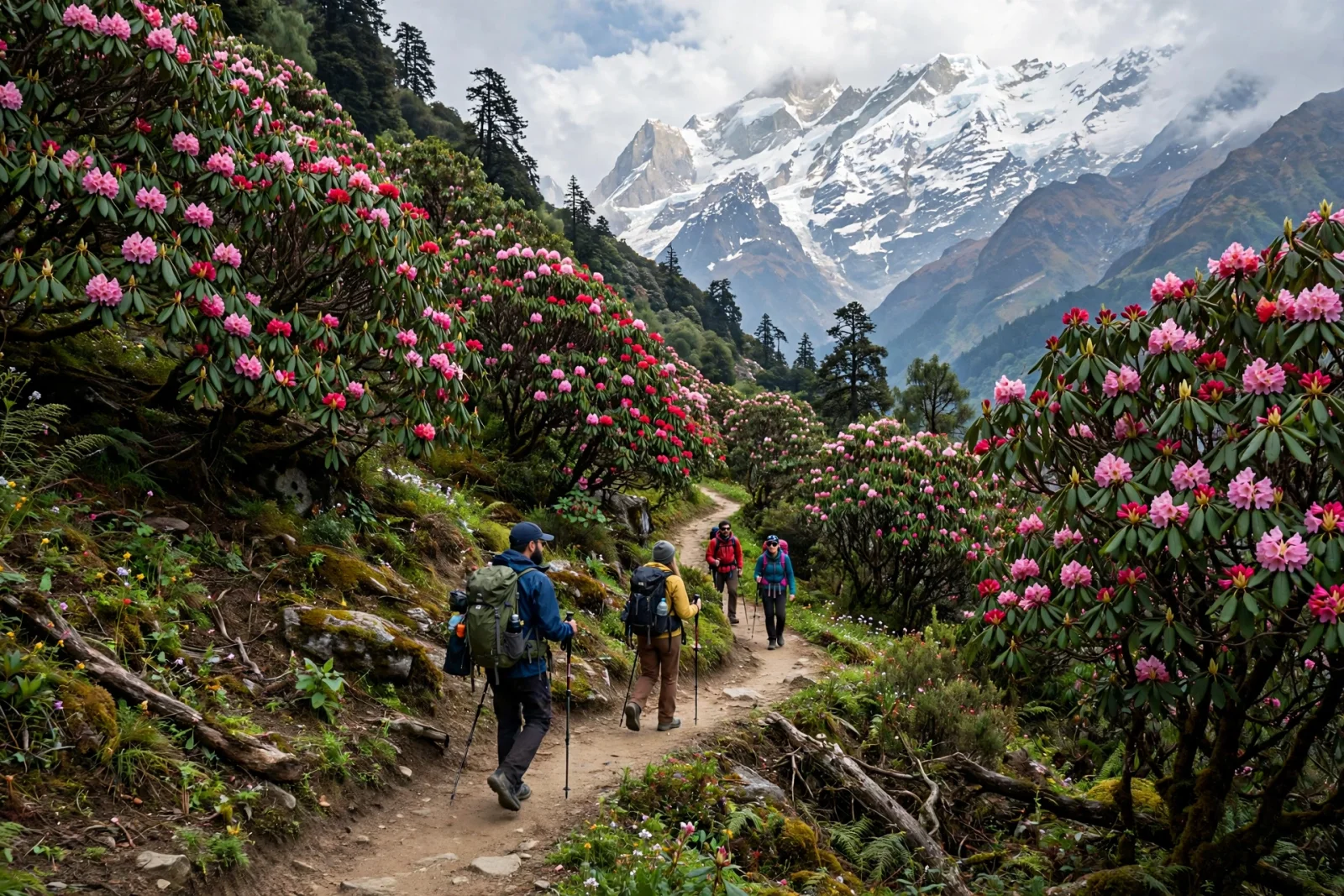
Gangtok in October is Sikkim at its sharpest: the monsoon has washed the air clean, Kanchenjunga dominates the northern skyline, and the road to Tsomgo Lake climbs through forests turning gold. But Gangtok is also the one Himalayan capital where paperwork shapes your itinerary as much as weather does. This Gangtok and Tsomgo Lake 3-day itinerary is built around the permit reality — what documents you need, what foreigners can and cannot do after the January 2026 rule change, and how to sequence the lake excursion, the monasteries and MG Marg without wasting a day on formalities.
Day 1: Arrive, Acclimatise, Walk MG Marg
Fly into Bagdogra or arrive at New Jalpaiguri, then drive 125 km (4–5 hours) up to Gangtok at 1,650 m. The single most important task on arrival: hand your permit documents to your hotel or a registered travel agent for the Tsomgo Lake excursion. Indian citizens need a valid photo ID — voter ID or passport — plus two passport-size photographs; note that Aadhaar and PAN cards are not accepted as identity proof for Sikkim permits.
Permits are arranged only through authorised agents, never applied for directly, and are typically processed a day ahead — which is why the lake trip sits on day two, not day one. Spend the evening on MG Marg, Gangtok's pedestrian-only main street, and visit Enchey Monastery if time allows. Eat light, hydrate, and sleep early: day two goes above 3,700 m.
Day 2: The Tsomgo Lake Excursion (and Nathula, If You're Lucky)
Tsomgo (Changu) Lake sits at about 3,780 m, 38 km and 90 minutes from Gangtok, and the drive itself — past the Kyongnosla Alpine Sanctuary — is half the experience. In October the lake is a deep blue mirror with fresh snow dusting the ridges above; by December it begins to freeze. The excursion is a half-day affair: permits are checked en route, and only Sikkim-registered vehicles with local drivers run this road. At the lake you'll find yak rides, a ropeway, and small stalls serving hot tea and momos — carry warm layers regardless of Gangtok's weather, because temperatures here run 5–15°C in October and the wind is biting.
Nathula Pass, 17 km beyond the lake at 14,140 m on the Indo-China border, is the optional extension — and the word 'optional' does heavy lifting. Only Indian citizens may visit; foreign nationals are restricted to Tsomgo Lake. Permits are capped daily, demand exceeds supply in October, and final access depends on weather and Army clearance on the morning itself.
Nathula is also typically closed on Mondays and Tuesdays. If your agent secures the permit, go — the border gates and the memorial are genuinely moving — but never build your trip around it. Baba Mandir, the shrine to Baba Harbhajan Singh between Tsomgo and Nathula, is usually included in the same excursion.
“Since January 2026, Sikkim has discontinued physical permits for foreign nationals in protected areas — online clearance is now mandatory, and foreigners may visit only Tsomgo Lake and Yumthang Valley.”
Day 3: Monasteries, Viewpoints and Sikkimese Food
Devote the last day to Gangtok's cultural core. Rumtek Monastery, 24 km from town, is the largest monastery in Sikkim and the seat of the Karmapa lineage — allow half a day including the drive. Back in town, visit the Namgyal Institute of Tibetology (one of the world's finest repositories of Tibetan Buddhist artefacts), the Banjhakri Falls and energy park, and Tashi View Point for a final Kanchenjunga panorama.
For food, work through the local canon: thukpa and thenthuk noodle soups, steamed momos, gundruk soup, and the traditional millet beer chhang at a Sikkimese kitchen. MG Marg's bakeries do excellent walnut cake for the road.
Permits: The Honest Fine Print
Two things changed recently enough to matter. First, in January 2026 Sikkim discontinued all physical permits for foreign nationals visiting protected areas — online clearance through the designated permit cell is now mandatory, and foreigners may visit only Tsomgo Lake in East Sikkim and Yumthang/Zero Point in North Sikkim. Second, permit quotas and closed days shift with security assessments, so treat any blog's permit advice — including this one's — as a starting point and reconfirm with your agent the week you travel.
The Mathrubhumi report on Sikkim's online permit system and East Himalaya's Nathula access notes are useful second references. Where the evidence is thin — exact daily vehicle caps, whether a specific Monday's Nathula will open — no honest guide can promise more than 'ask your agent the evening before.'
- Hand over permit documents on arrival day — the lake trip needs a day's lead time.
- Carry voter ID or passport; Aadhaar and PAN are not accepted for Sikkim permits.
- Foreign nationals: online permit clearance is mandatory since January 2026; Nathula is Indians-only.
- Nathula is typically closed Mondays and Tuesdays and always subject to Army clearance.
- Pack for 5°C at Tsomgo even when Gangtok feels like 18°C.
Packing for the Gangtok–Tsomgo Lake Altitude Jump
Gangtok at 1,650 m feels like a hill station; Tsomgo at 3,780 m feels like the high Himalaya, and you cross that gap in 90 minutes. Pack for both: a warm fleece or down layer, a windproof outer shell, gloves and a cap for the lake, plus sunscreen and sunglasses — the UV at that altitude is fierce even on cloudy days. Wear proper walking shoes; the lakeside paths are uneven and can be icy at the edges by late October.
Carry water and sip through the ascent: the altitude gain is fast enough to give some travellers a mild headache, and dehydration makes it worse. Diamox is a personal medical decision — consult your doctor, don't crowdsource it.
If You Have a Fourth Day: South Sikkim
The classic extension is Namchi and Ravangla in South Sikkim, 2–3 hours from Gangtok. Namchi's Char Dham complex — with its 108-foot Shiva statue overlooking the hills — and the Samdruptse Monastery's giant Guru Padmasambhava statue make a full, satisfying day. Ravangla's Buddha Park, centred on a 130-foot Buddha against the Kanchenjunga massif, is the most photogenic spot in the state that most tourists never see.
Both need a day each done properly, or one very long combined day with an early start. Permits for South Sikkim are straightforward compared to the Tsomgo–Nathula belt.
Frequently Asked Questions
How do I get the Tsomgo Lake permit?
Through a Sikkim-registered travel agent or your hotel — individuals cannot apply directly. Submit a valid photo ID (voter ID or passport; not Aadhaar/PAN) and two passport-size photos, ideally on your arrival day, for a next-day excursion.
Can foreign tourists visit Tsomgo Lake and Nathula?
Foreign nationals may visit Tsomgo Lake with a local guide, subject to mandatory online permit clearance (physical permits were discontinued in January 2026). Nathula Pass is open to Indian citizens only.
Is 3 days enough for Gangtok?
Yes for the core: arrival plus MG Marg, the Tsomgo Lake excursion, and a monastery-and-viewpoints day. Add two more days if you want North Sikkim (Lachung, Yumthang) — that needs separate permits and is a different trip entirely.
What is the weather like in Gangtok in October?
Gangtok itself is pleasant at 10–18°C with the year's clearest skies. Tsomgo Lake runs 5–15°C and is much windier; Nathula, if you go, can be near freezing. Layer for a 15-degree swing within a single day.
Is the drive from Bagdogra to Gangtok difficult?
It is 125 km of winding mountain road taking 4–5 hours. Book a private cab or shared sumo in advance, carry motion-sickness medication if you're prone, and avoid planning anything ambitious on arrival evening.
Sources
- Mathrubhumi English — Mathrubhumi report on Sikkim's online permit system
- East Himalaya — East Himalaya's Nathula access notes
- ETTravelWorld — Sikkim Mandates Online Permits for Foreign Tourists Amid Security Concerns
Share this article