HealthSense HM170 Massage Gun India Review: Post-Workout Relief?
By My Quick Trippers · 21 Oct 2026
7 min read · Travel Gear
Recommended gear
HealthSense HM170 Massage Gun — Worth It?
HealthSense HM170 percussion massage gun
Muscles only, never bones or joints; check heads and speeds
As an Amazon Associate, we earn from qualifying purchases. We may earn a commission if you buy through these links, at no extra cost to you.
Honest verdict
for gym-goers, runners, and anyone with recurring knots in the shoulders, back, or legs, this is a sensible buy at this price.
Check Price on AmazonThe HealthSense HM170 percussion massage gun is the recovery gadget for buyers who train hard and wake up stiff. At a price band of around ₹1,399, it is a festive-season personal-care pick that brings percussion massage — the rapid tapping therapy physios use — into a handheld device you can use on your own sofa. It was listed among personal-care deals in early October 2026, which tells you where it sits: not a medical device, not a physio replacement, but a practical tool for sore muscles after workouts, long desk days, and travel. My verdict: for gym-goers, runners, and anyone with recurring knots in the shoulders, back, or legs, this is a sensible buy at this price. For buyers with injuries, nerve pain, or medical conditions, and for anyone expecting it to fix chronic pain, it is the wrong purchase, and that boundary is the whole review. Pair it with activity tracking from our Mi Smart Band 8 review if you want to match recovery sessions to your actual training load.
What a percussion massage gun actually does
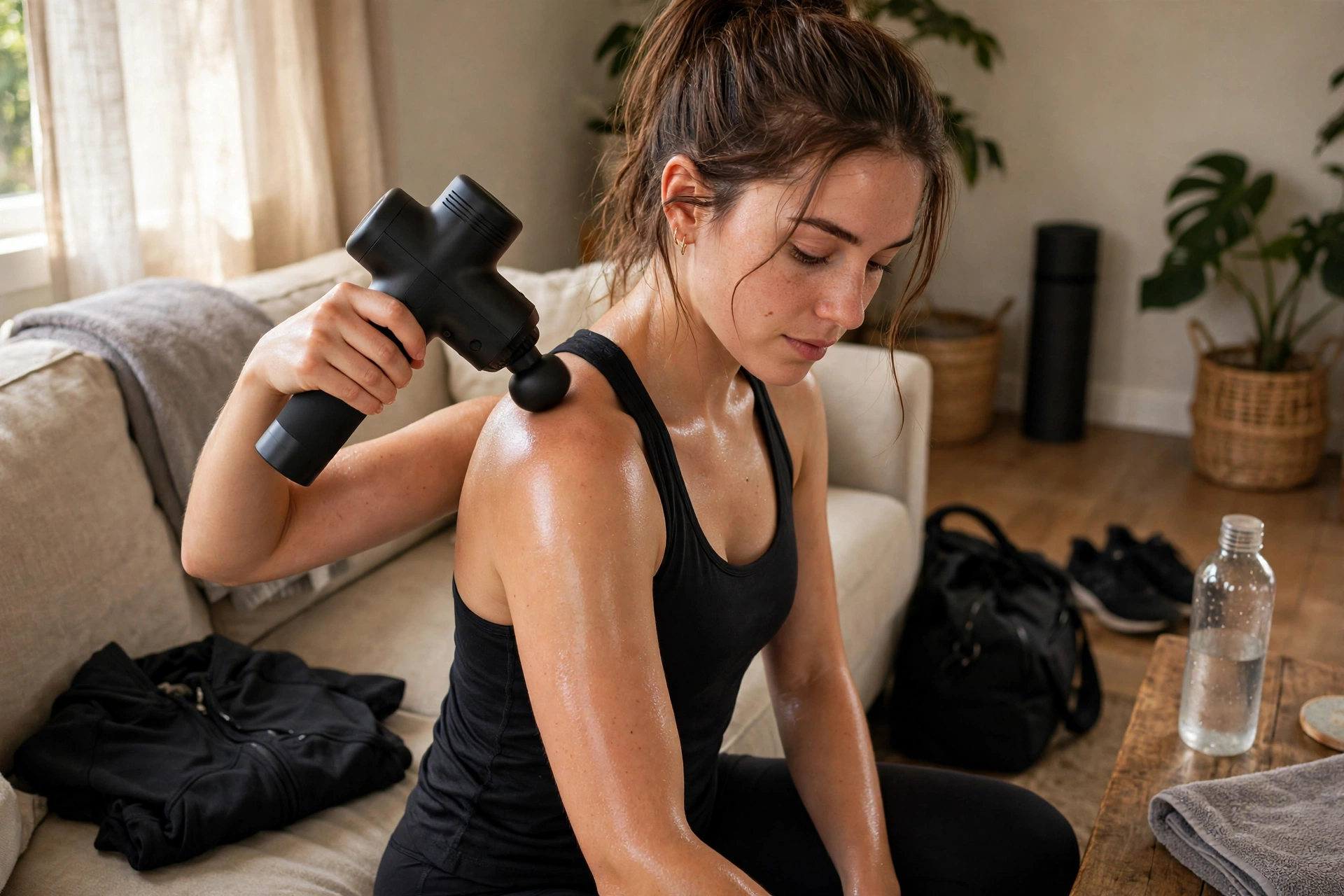
A massage gun works by rapid, short strokes — percussions — delivered into the muscle through an interchangeable head. The idea is simple: the tapping increases local blood flow, loosens tight muscle fibres, and gives the nervous system a strong sensory input that temporarily dulls soreness. Used for a few minutes per muscle group after a workout, it can make the next morning noticeably less stiff. Used on the wrong spot, too hard, or too long, it can bruise tissue or irritate nerves, which is why every honest guide starts with the same rule: muscles only, never bones, joints, the neck front, or the spine directly. The HM170 sits in the budget percussion class, which means it delivers the core tapping action without the app control, pressure sensors, or whisper-quiet motors of premium guns. For most buyers, that core action is the whole point, and the extras are nice-to-have rather than essential.
Pros
What it does well
The first win is the price band of around ₹1,399, which puts percussion therapy within impulse range for a device that replaces many paid massage sessions. The second win is self-sufficiency: you can reach your own shoulders, thighs, and calves without booking an appointment or asking someone else to help. The third win is speed: a focused two to three minutes per muscle group after a workout fits into a cooldown routine, while a massage appointment takes an hour plus travel. The fourth win is versatility across users in one home: the same device serves the gym-goer, the desk worker with a stiff neck, and the older parent with tired legs, as long as everyone respects the safety rules. Treat the price band of around ₹1,399 as approximate: marketplace prices move with sales and sellers, and the exact figure depends on the listing you land on.
Cons
Where it falls short — the honest cons
First, a massage gun is not a treatment for injury. Pulled muscles, joint pain, numbness, tingling, or pain that does not improve in a few days needs a doctor or physio, not percussions, and using a gun on an injured area can make it worse. Second, budget guns are louder and vibrate more in the hand than premium ones, so long sessions can tire your grip, and the noise makes late-night use inconsiderate in shared homes. Third, battery life and charging matter: a gun that dies mid-routine gets abandoned, so check the runtime and whether it charges over a standard cable before buying. Fourth, reach is a real limit: your own upper back and between the shoulder blades are hard to hit well without help, no matter how good the gun is. Finally, the heads matter more than the marketing: a hard ball head on a bony area hurts, a soft flat head is gentler for large muscles, and buyers who never swap heads get less from the device than they should.
Massage gun vs a foam roller
The honest comparison is with a foam roller, which costs a fraction of a massage gun and covers large muscle groups well. A roller wins on price, on silence, and on covering the whole back and legs in one motion. The massage gun wins on precision: it hits one knot, one calf, or one shoulder exactly where it hurts, without needing floor space or body weight, and it works for people who cannot get on the floor easily. The deciding question is how you recover. If you already roll daily and like it, a gun adds precision for stubborn spots rather than replacing the roller. If you never roll because it feels awkward or takes too long, a gun is the recovery tool you will actually use, and the best recovery tool is the one that gets used. Many serious trainers end up with both: the roller for broad work, the gun for targeted knots.
Who should buy it — and who should skip it
Buy it if you train regularly and wake up sore, if you sit at a desk all day and carry tension in your neck and shoulders, or if you want a shared family device for general muscle soreness. It is also a good gift for a gym-going friend, because it is useful from day one without a learning curve. Skip it if you have an injury, chronic pain, nerve symptoms, a pacemaker, or any condition where vibration is risky — in those cases a doctor's advice outranks any gadget review. Skip it too if you expect it to fix posture, back pain, or years of stiffness on its own, because a gun manages soreness while habits and exercise fix causes. Skip it if noise bothers you or your household, because budget percussion is audible, and a quiet premium gun is a different price class entirely.
Buying checklist before you order
Confirm the model: HM170 is the model this review covers, and other HealthSense guns at different prices are different products. Buy from a verified seller with a return window, and be suspicious of listings far below the price band of around ₹1,399. Check the included heads and speeds before ordering: you want at least a ball head for large muscles and a flat head for general use, plus more than one speed so you can start gentle. Check battery runtime and charging type, and plan the routine before ordering: two to three minutes per muscle group, muscles only, never bones or joints, and stop if anything feels sharp or numb. Check the warranty terms, and remember that the price band of around ₹1,399 is approximate and varies by seller and sale.
The bottom line
The HealthSense HM170 massage gun earns its place as a sensible budget recovery tool: real percussion therapy, a fair price, and a device you will actually use after workouts instead of booking appointments you keep postponing. It is not a medical treatment, not a physio, and not a fix for chronic pain, and buyers who respect those limits will get genuine value from it. For sore muscles on a budget, this is the recovery gadget to start with, and the reason it keeps showing up in festive deal lists is that it solves a real, recurring problem for people who train.
Share this article