Hornbill Festival Nagaland 2026 Guide: Dates, Permits, Stays and Kisama
By My Quick Trippers · 26 Oct 2026
9 min read · Culture & Heritage
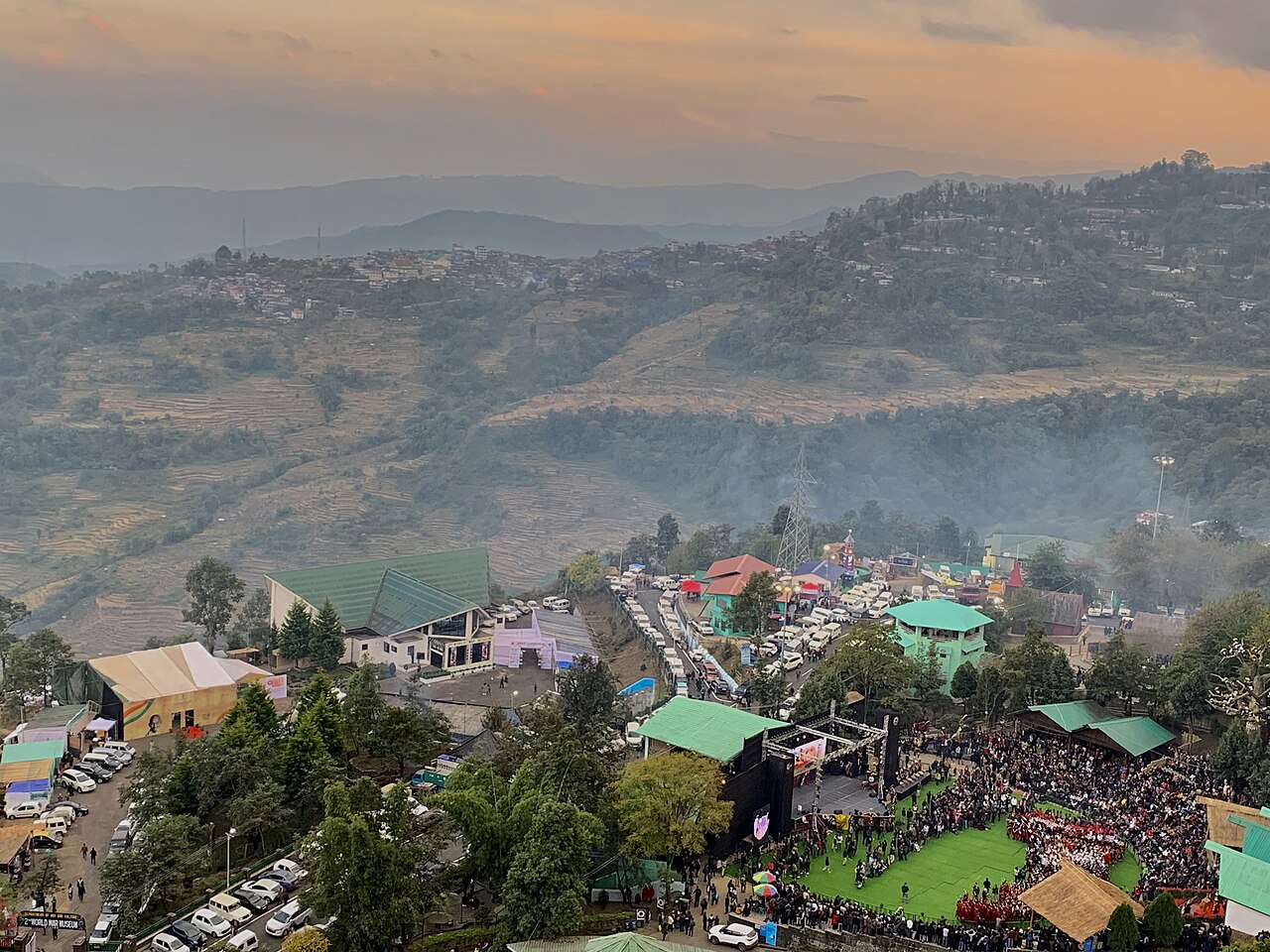
The Hornbill Festival 2026 runs from Tuesday 1 December to Thursday 10 December at the Naga Heritage Village, Kisama, about 12 kilometres south of Kohima, and it is the single best reason to plan a Nagaland trip: ten days in which the state's tribes gather in one heritage village with their dances, morungs, food, crafts and indigenous sports, alongside the Hornbill Music Festival and events across the state. This is the 27th edition of a festival that began in December 2000, and it opens on Nagaland's Statehood Day, 1 December. This guide gives you the verified dates, the permit you must sort before travel, where to stay, and how to shape a visit — plus the accommodation warning that matters more than any other planning detail.
Last verified: 26 October 2026. The 1 to 10 December 2026 dates and the Kisama venue are confirmed by the state government's October 2026 preparatory announcement, reported on 14 October 2026, and by the official festival listing carried in the 2026 festival calendar. No per-day programme, ticket price or entry fee is stated here, because the detailed 2026 programme is published closer to the festival; treat any day-by-day schedule found only on a reseller page as unverified.
What the Hornbill Festival is
The festival is called the Festival of Festivals for a precise reason: Nagaland's tribes each have their own festivals, mostly rooted in the agricultural year, and Hornbill gathers them into one ten-day event rather than asking visitors to chase sixteen separate village festivals across the state. It is organised by the Government of Nagaland, it is named after the hornbill, the great forest bird that appears in the folklore of most of the state's ethnic groups, and its home is the Naga Heritage Village at Kisama, a purpose-built village of tribal morungs — traditional communal houses — between the villages of Kigwema and Phesama. Each tribe's morung is decorated with its own tools, weapons, handicrafts and food, so walking the village is itself the experience, before any staged performance begins.
The scale has grown far beyond its beginnings. What started in 2000 as a three-day event, later extended to five days, now runs ten days with hundreds of events across dozens of venues through the state. The arena performances — massed tribal dances in full ceremonial dress — are the centrepiece, but the festival also carries indigenous sports including the international Hornbill Naga wrestling, contests such as the Naga King Chilli eating competition, craft exhibitions and sales, a World War II rally, fashion and literary events, and the Hornbill Music Festival, which brings Northeastern artists to evening stages. A single day at Kisama gives you the village, the arena and the food; three to four days let you see different tribes perform, catch the music nights, and add Kohima itself.
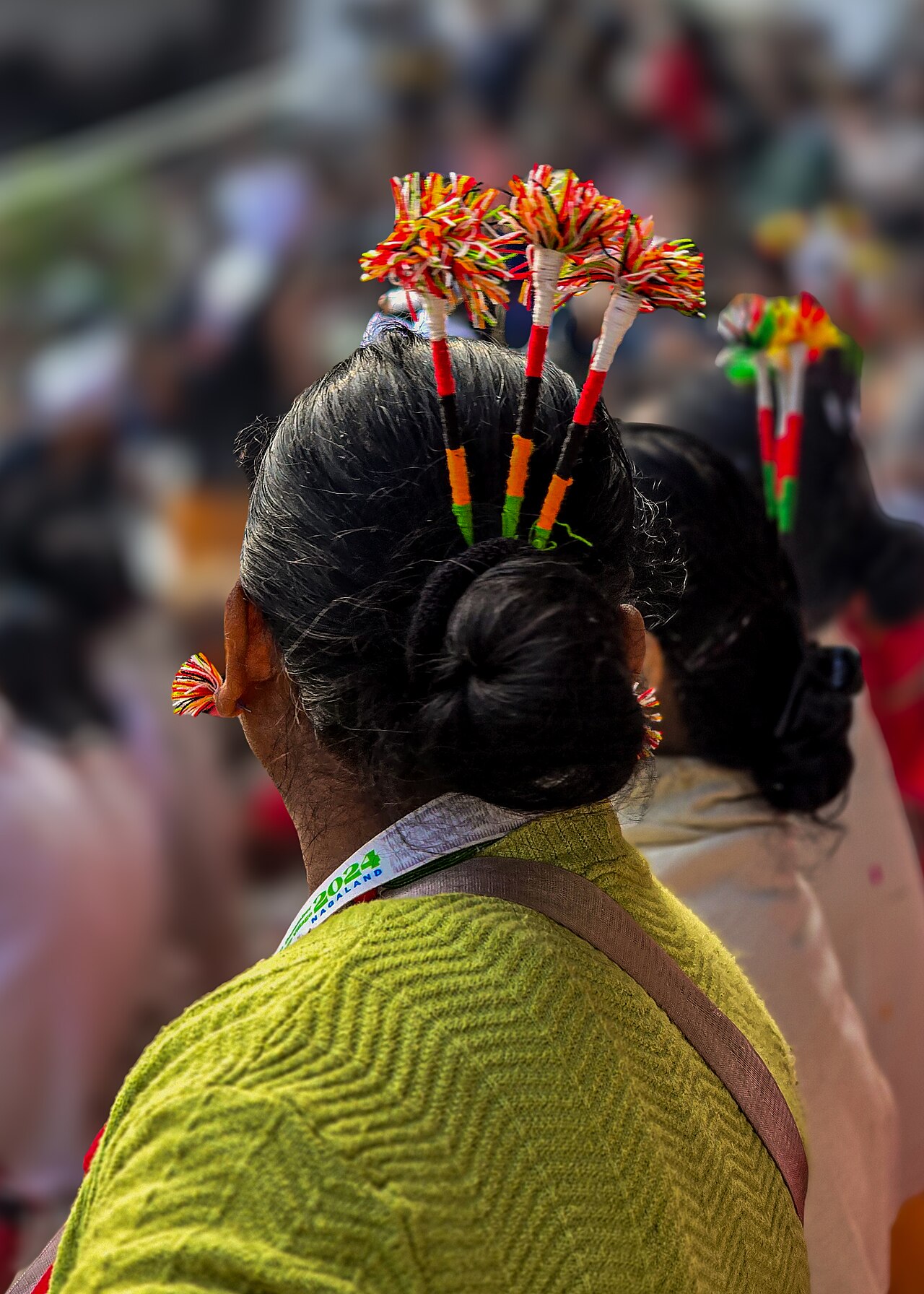
Photo above: festive hair ornaments worn at the Hornbill Festival, Kisama Heritage Village — JyotiPN, CC BY-SA 4.0 (via Wikimedia Commons). Ceremonial dress is not a costume for the festival: it is the tribes' own regalia, worn for their own dances.
The permit: sort this before anything else
Most visitors from outside Nagaland need an Inner Line Permit, and this is the one administrative step that can ruin a trip if left late. Indian visitors who are not indigenous inhabitants of Nagaland need an ILP, and foreign visitors need a Protected Area Permit arranged through the e-FRRO system. Apply only through the official channel — the state portal at ilp.nagaland.gov.in — and beware agents and lookalike sites charging for what is a government process. Carry the permit and a photo ID with you at Kisama and on the road: checks happen, and a missing permit is not something a festival-day fix can solve. Confirm the current ILP rules close to travel, because permit practice changes and a guide written for a previous year may be out of date. Meghalaya, by contrast, needs no Inner Line Permit — a useful distinction if you are combining the festival with a Meghalaya leg, where no ILP applies.
Where to stay: Kohima, the villages, or Dimapur
You have three bases, and the choice shapes the trip. Kohima town has the most rooms — hotels and around twenty homestays and paying-guest houses on the official tourism lists — and it is the practical base for most visitors, roughly 10 to 12 kilometres from Kisama. The villages beside the venue, mainly Kigwema and Phesama, offer homestays within reach of the festival ground itself, including a cluster at Kipfüzha in Kigwema village; these are the most atmospheric stays and the first to fill. Dimapur, the gateway town with the airport and railway station, about 70 to 74 kilometres from Kohima, is the fallback when Kohima and the villages are full — but it means a long road trip to Kisama each day, so treat it as a fallback, not a first choice.
The accommodation warning is blunt and comes from the state's own tourism leadership: a shortage of rooms during the festival remains a challenge, a point the Tourism Secretary made publicly during the 2025 festival. Book the moment your dates are firm, confirm directly with the host rather than trusting a listing alone, and do not assume you can improvise a room on arrival during the ten festival days. If your dates are flexible, the middle weekdays of the festival are calmer than the opening days around Statehood Day and the closing weekend.
Weather, clothing and the shape of a visit
December in Kohima is winter, and the evenings bite. Long-term averages put Kohima's December average minimum around 6.9 degrees Celsius, with January colder still, so pack a genuinely warm layer, not a token jacket: a warm coat, layers underneath, closed shoes for walking the village ground, and something windproof for the open arena in the evening. Days are usually clear and pleasant for walking, which is why the festival works as an outdoor event, but the temperature swing between a sunny afternoon and a night music performance is large, and visitors who dress only for the afternoon are cold by evening.
- Day one at Kisama: arrive early, walk every morung before the arena fills, eat at the tribal food stalls, and stay for an afternoon of arena dances.
- Evenings: the Hornbill Music Festival stages are the after-dark draw; keep one or two evenings free for them rather than filling every night with travel.
- Kohima itself: the state capital's markets, churches and the war cemetery area reward a half day, and they are the practical base for supplies, cash and transport.
- Beyond the festival: village homestays around Kigwema and Phesama give the quietest mornings, but confirm transport to and from Kisama before booking a village stay.
- Buffer days: mountain roads and winter weather make realistic travel buffers essential, especially if you are flying out of Dimapur after the festival.
How to reach Kisama
Dimapur is the gateway: it has the airport and the railway station, and the road from Dimapur to Kohima and on to Kisama is the standard approach. From Kohima town, Kisama is a short drive of roughly 10 to 12 kilometres, and festival days bring arranged transport and heavy local traffic, so leave generous time for the Kohima-to-Kisama leg on performance days. If you are combining the festival with the rest of the Northeast, Kohima also works as a stop on a longer circuit, but the festival itself deserves at least two full days at Kisama before you move on. For the wider state beyond the festival, our Nagaland destination guide covers the state's regions and routes.
Frequently asked questions
When is the Hornbill Festival in 2026?
1 to 10 December 2026, the 27th edition, at the Naga Heritage Village, Kisama, near Kohima. It opens on Nagaland's Statehood Day, 1 December.
Do I need a permit for the Hornbill Festival?
Most visitors from outside Nagaland do. Indian visitors who are not indigenous inhabitants of Nagaland need an Inner Line Permit, applied for through the official state portal, and foreign visitors need a Protected Area Permit through e-FRRO. Carry the permit and photo ID with you.
Where should I stay for the Hornbill Festival?
Kohima town has the most rooms and is the practical base, 10 to 12 kilometres from Kisama. Homestays in Kigwema and Phesama put you beside the venue but fill first. Dimapur, 70 to 74 kilometres away, is the fallback with the airport and railway station, but it means a long daily road trip.
How cold is Kisama in December?
Winter-cold in the evenings: Kohima's December average minimum is around 6.9 degrees Celsius, so bring a warm coat, layers and closed shoes, and expect a large swing between sunny afternoons and cold arena evenings.
How many days do I need at the Hornbill Festival?
One full day at Kisama covers the village, the arena and the food. Three to four days let you see different tribes perform, catch the music nights, and add Kohima itself without rushing.
Planning a Nagaland trip around Hornbill Festival 2026? WhatsApp us on +91-8171158569 with your dates and group size, and we will confirm permits, stays and the Kisama plan before you commit — or request an itinerary and tell us how many days you have.
Share this article