Hornbill Festival 2027: Dates, Kisama, Permits & Planning Guide
By My Quick Trippers · 20 Nov 2026
6 min read · Culture & Heritage
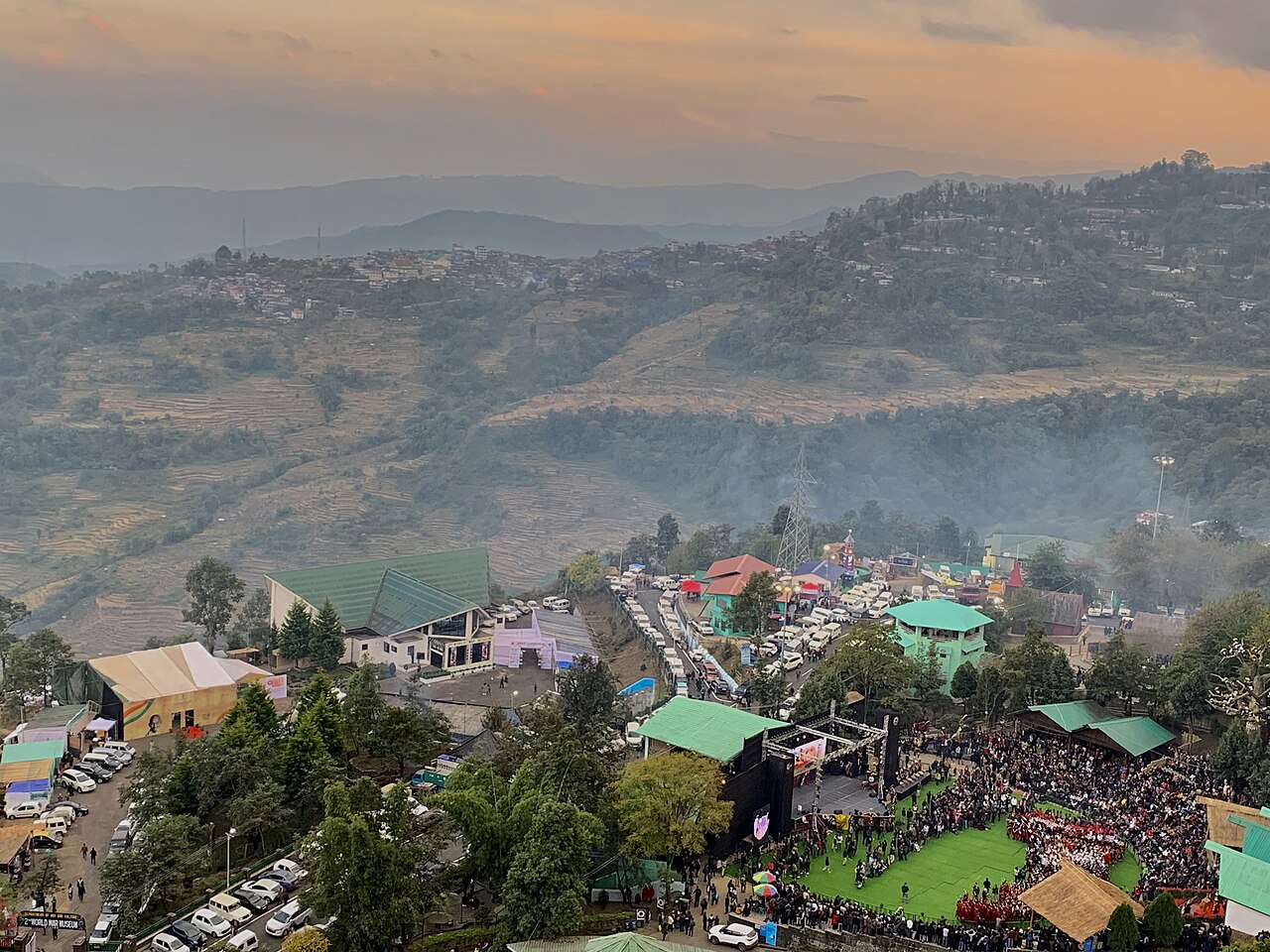
Hornbill Festival 2027 runs 1–10 December 2027 at Kisama Heritage Village, near Kohima in Nagaland. Ten days, sixteen major Naga tribes, one amphitheatre — it is India's biggest tribal festival and the anchor of any Northeast trip in December. The dates are the fixed window the festival uses every year, so unlike most 2027 events there is nothing to wait for: you can plan and book now.
The festival is named for the great hornbill, the bird that features in the folklore of most Naga tribes. What it actually is: a showcase of Naga culture — morungs (traditional youth halls) rebuilt at Kisama, folk dance and song from each tribe, the famous Naga food stalls, the Hornbill International Music Festival in the evenings, and the Naga wrestling and traditional sports that draw the biggest daytime crowds. This guide covers the dates, the permit, how to reach Kohima, where to stay, and what to book three to six months ahead.
Hornbill Festival 2027: the dates
- Dates: 1–10 December 2027 (fixed window every year)
- Venue: Kisama Heritage Village, about 12 km from Kohima, Nagaland
- What it is: ten days of Naga tribal culture — dance, music, food, craft, sport
- Evenings: Hornbill International Music Festival (rock and contemporary acts)
- 2026 was the 27th edition — the festival is well established, not an experiment
What actually happens at Kisama
Kisama is a permanent heritage village: each major tribe has its own morung, built in its traditional style, and during the festival each morung is staffed, decorated and performing. The daytime programme is the cultural performances — dance troupes in full regalia, folk songs, and the traditional games: Naga wrestling is the headline sport, and the chilli-eating contest is the one everyone photographs. The food stalls are a festival in themselves: smoked pork, bamboo shoot, axone (fermented soya), and the local rice beer, served by the tribes themselves.
Evenings belong to the music festival, which has grown into one of India's significant rock stages — national and international acts, a young crowd, and a very different energy from the daytime programme. If you are coming for the culture, the days are the point; if you are coming for the music, the nights are.
The permit: sort this first
Nagaland is a protected-area state: Indian citizens from outside Nagaland need an Inner Line Permit (ILP) to enter, and foreign nationals need a Protected Area Permit. Arrange the ILP well before travel — it is issued online through the Nagaland government's portal and through designated offices, and it is checked on arrival. Do not turn up at Dimapur airport without it and expect to sort it out there. The permit is the single most common reason Hornbill trips go wrong, and it is entirely avoidable.
How to reach Kohima
Fly into Dimapur Airport, Nagaland's only airport, with flights from Kolkata, Guwahati and Delhi (via connecting cities); or take the train to Dimapur railway station, which has direct trains from Kolkata, Guwahati and Delhi. From Dimapur, Kohima is a few hours by road through the Naga hills — shared taxis and private cars run the route, and the road is good by Northeast standards. Kisama is about 12 km from Kohima, served by shuttle buses during the festival.
December is dry and cold in the hills — daytime temperatures are pleasant, nights drop sharply. The drive from Dimapur climbs steadily, so if you are prone to motion sickness, take precautions. Book the Dimapur–Kohima transfer with your hotel; it is the one leg where a pre-arranged car beats improvising.
Where to stay
Kohima's hotels are limited and the festival fills them — book three to six months ahead, which for December 2027 means by June–September. The options are Kohima town hotels, homestays in and around Kohima, and the camps near Kisama itself, which trade comfort for proximity: you walk to the festival and back, which matters when the evening music runs late. Dimapur is the fallback base if Kohima is full, but it adds a few hours of driving each day and misses the point of staying in the hills.
What to eat at Hornbill
The food stalls are a festival in themselves, and the honest advice is to eat your way through them systematically. Smoked pork with bamboo shoot is the signature dish — every tribe does it differently, and the morung stalls will tell you whose version is best (theirs, always). Axone, the fermented soya bean dish, is an acquired taste that rewards the attempt. The local rice beer is served in bamboo mugs; it is mild, and the stalls pour it generously. Vegetarians are not left out — the Naga vegetarian spread of greens, bamboo shoot and sticky rice is substantial — but this is a meat-forward food culture, and the pork is the point.
Kohima beyond the festival
Kohima repays a day outside the festival. The Kohima War Cemetery, maintained by the Commonwealth War Graves Commission, is one of the most moving Second World War sites in Asia — the Battle of Kohima in 1944 was fought street by street here, and the cemetery's hillside terraces carry that history quietly. The Nagaland State Museum gives the context the morungs only hint at: the sixteen tribes, their crafts, their histories. And the Naga markets — Ima Market and the local bazaars — are where the festival's food and craft come from in the first place.
Planning tips
- Pick your days: the opening (1–2 December) and closing (9–10 December) are the biggest; the middle days are calmer and the performances are the same.
- Dress for cold nights: December in Kohima is cold after dark, and the evening music is outdoors.
- Carry cash: Kisama's stalls run on it, and the ATMs in Kohima empty during the festival.
- Respect the morungs: they are cultural spaces, not photo backdrops — ask before photographing people, and do not enter a morung uninvited.
- Pair the trip: the Hornbill week pairs naturally with the [Durga Puja, Dussehra and Diwali cluster](/blog/durga-puja-dussehra-diwali-2027-guide) as the year's closing festival, or with a Kaziranga–Shillong circuit before December.
- Book the ILP first, the flights second, the hotel third — in that order.
Frequently Asked Questions
When is Hornbill Festival 2027?
1–10 December 2027 at Kisama Heritage Village, near Kohima, Nagaland. The festival uses the same fixed window every year, so the dates are certain.
Do I need a permit to visit Nagaland for Hornbill?
Yes. Indian citizens from outside Nagaland need an Inner Line Permit (ILP), and foreign nationals need a Protected Area Permit. Arrange it well before travel through the Nagaland government's portal — it is checked on arrival.
How do I reach the Hornbill Festival?
Fly or take the train to Dimapur, then drive a few hours to Kohima. Kisama Heritage Village is about 12 km from Kohima, with shuttle buses during the festival.
How far ahead should I book for Hornbill 2027?
Three to six months ahead for Kohima hotels — by June–September 2027. The town's hotels are limited and the festival fills them; Dimapur is the fallback base.
What is there to do besides the festival?
Kohima itself — the war cemetery, the state museum, the Naga markets — plus the surrounding hills. Most visitors pair Hornbill with a wider Northeast circuit: Kaziranga in Assam and Shillong in Meghalaya are the natural add-ons.
Share this article