How to Buy Kuttu Flour: Choosing Stone-Ground Buckwheat Flour in Uttarakhand
By My Quick Trippers · 13 Nov 2026
10 min read · Food & Cuisine
Kuttu flour is a simple thing to buy and an easy thing to buy wrong. It is one ingredient — buckwheat, stone-ground into flour — and a good pack contains nothing else. But the shelf holds more than one kind of pack, and the differences between them are not written in large letters: stone-ground or mill-ground, pure buckwheat or mixed with something else, fresh or months old. Our earlier posts have covered what kuttu is, in the first post about the flour, and how to cook it, in the fasting recipes and the everyday parathas. This post is about the buying: how to read a pack, how to tell a good flour from a poor one, and how to keep it good once it is home.
One promise first, the same one this series has made from the start. There are no health claims here, no nutrition numbers, and no advice about what anyone should eat for their health, because none of that has been verified for this flour. What follows is about the buying — the label, the look, the smell, and the storage — the practical knowledge of a kitchen that buys flour by the kilo and cooks with it all year. And one fact to keep straight from the start: the Pahadi Store sells flour only — stone-ground buckwheat flour, one kilo. It does not sell whole groats, and no recipe in this post asks you to cook groats.
What kuttu flour is
Buckwheat is a pseudo-cereal, not a true cereal: the flour comes from the seed of a broadleaf plant, not from a grass grain like wheat or rice. That is why it behaves differently in the kitchen — it has no gluten, so it does not stretch the way wheat dough does, and a kuttu roti needs a different hand from a wheat roti. The store listing describes it as stone-ground buckwheat flour, suited to cool high-altitude conditions, and the classic fasting flour for kuttu ki roti, halwa, ladoo and cheela, chiefly eaten at Navratri. The stone-ground part matters: a stone mill grinds slowly and cool, and the flour that comes out of it keeps more of the seed's character than a fast, hot mill does.
The flour itself is grey-brown, speckled, and coarser than wheat flour — and that is how it should look. A kuttu flour that is pure white and silky-smooth is a flour to be suspicious of, because buckwheat is not white and its flour is not fine. The colour is the first check, before the label is even read: grey-brown, a little speckled, and a little coarse between the fingers. A flour that looks like wheat flour is either not buckwheat, or buckwheat that has been over-refined — and neither is what a hill kitchen wants.
Reading the label
The label is the second check, and it is the one that matters most. A good pack says one thing in its ingredients list: buckwheat. Nothing else. If the list runs to two or three flours, the pack is a mix, and a mix does not behave like pure kuttu — it rolls differently, it tastes different, and it is not the flour the fasting recipes on this site were written for. The pack should also say how it was ground: stone-ground is what the store listing promises, and it is what to look for. A pack that says nothing about its grinding has told you nothing, and a pack that hides its ingredients behind a brand name has told you less.
The pack date is the third check, and the one most buyers skip. Flour is not a food that improves with age: it goes stale, it picks up damp, and — because buckwheat flour carries the seed's natural oils — it can turn rancid if it sits too long in a warm shop. Check the milling or packing date, not just the expiry date, and buy the freshest pack on the shelf. A pack milled a month ago is a better buy than a pack milled six months ago, whatever the expiry date says. If the shop keeps its flour in a damp corner or in the sun, buy elsewhere — a good flour kept badly is a bad flour.
The look and the smell
If the flour is sold loose, or if you can open the pack, use your senses. Good kuttu flour smells faintly nutty and earthy — the smell of the seed itself. A flour that smells musty, sour, or of nothing at all has been stored badly or too long, and it will taste the way it smells. Rub a pinch between your fingers: it should feel a little coarse, a little gritty, not silky like wheat flour and not damp. Damp flour clumps, and clumped flour is flour that has picked up water — and water is what turns a flour that should keep for months into one that spoils in weeks.
The colour check works at home as well as in the shop. Tip a little flour onto a white plate and look at it in daylight: grey-brown, speckled, even in colour, with no dark spots and no white patches. Dark spots can mean damp or mould; white patches can mean the flour has been mixed with something whiter. Neither is a reason to argue with the shopkeeper — it is a reason to buy a different pack. A kilo of flour is a small purchase, and a bad kilo is a small loss; a bad kilo cooked into a fast-day meal is a larger one.
How much to buy
Buy by the kilo, and buy as much as the household will use in a few months — no more. Kuttu flour is not a flour to stockpile: it is a flour with a short life, and a five-kilo sack bought cheap is a false economy if half of it goes stale before it is cooked. A household that cooks kuttu once a week will use a kilo in a month or two, and that is the right rhythm: buy a kilo, use it, buy another. A household that cooks it only at Navratri should buy one kilo for the festival and no more — the flour that is left after the fast will not be the same flour by the next one.
The season matters too. Kuttu is the fasting flour, and the demand for it rises at Navratri — twice a year, in spring and autumn — when every shop stocks it fresh and the turnover is fast. That is the best time to buy: the flour is fresh, the packs are new, and the price is the honest one. Buying between festivals, from a pack that has sat on the shelf for months, is the worst time. If the flour is needed outside the season, buy the smallest pack available, check the date twice, and use it quickly.
Storing it at home
Once the flour is home, the rules are the same as for any flour with a short life: airtight, cool, dry, and dark. Tip the flour out of its paper pack into an airtight jar or tin as soon as it arrives — a paper pack breathes, and a breathing pack picks up damp from the kitchen air. Keep the jar in a cool, dry cupboard, away from the stove and out of direct sunlight, and keep the lid on between uses. A jar treated this way keeps the flour good for a few months; a jar left open on a damp shelf does not.
Do not store kuttu flour in the fridge unless the household always has. A jar that moves between cold and warm gathers condensation on its inside, and condensation is water — and water is what spoils flour. If the kitchen is very warm in summer, a cool, dark cupboard is better than a fridge that is opened a dozen times a day. And never pour fresh flour on top of old flour in the same jar: the old flour underneath goes stale first, and the fresh flour on top hides it until it is too late. Finish one jar before opening the next.
What not to do
The mistakes with buying kuttu flour are all mistakes of not looking. Do not buy a pack without reading its ingredients — a mix is not pure kuttu, and a mix does not cook like pure kuttu. Do not buy the cheapest pack on the shelf without checking its date — a stale flour is cheap for a reason. Do not buy five kilos to save a few rupees, and do not store the flour in its paper pack on a damp shelf. And do not cook with flour that smells musty or sour, whatever the date on the pack says: the nose knows a stale flour before the calendar does, and a stale flour will spoil a fast-day meal.
One honest note about the photograph
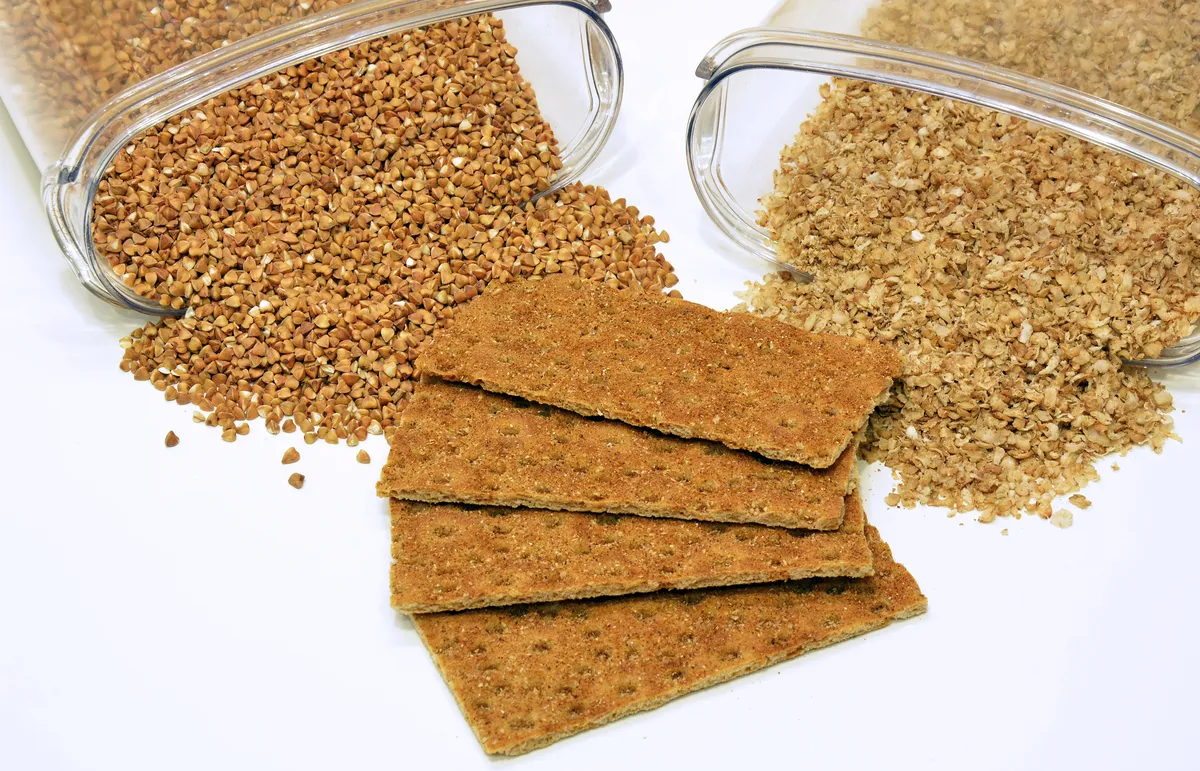
The photograph at the top of this post is buckwheat groats and crispbreads — Andrey Korzun, CC BY-SA 4.0 (via Wikimedia Commons). The pack sold is stone-ground flour, not the groats pictured.
Where to buy kuttu flour
Kuttu (Buckwheat Flour) is in the Pahadi Store at an indicative ₹250 for 1 kg, sold by Gauraaj via Aarogyamastu, checked 13 Nov 2026. The price is indicative, not fixed: it comes from that seller's live listing, not from our own supplier list, so check the store page for the current figure before ordering. The listing describes it as stone-ground buckwheat flour — a gluten-free pseudo-cereal, not a true cereal — and the classic fasting flour for kuttu ki roti, halwa, ladoo and cheela, chiefly eaten at Navratri. If you are buying one kilo, buy it here: the pack is the flour itself, stone-ground, one ingredient, and the listing says so plainly.
Frequently Asked Questions
How do I know kuttu flour is pure?
Read the ingredients list: it should say buckwheat and nothing else. The flour should look grey-brown and speckled, feel a little coarse between the fingers, and smell faintly nutty. A pure white, silky-smooth flour is not buckwheat, or not buckwheat alone.
Does stone-ground matter?
Yes. A stone mill grinds slowly and cool, and the flour keeps more of the seed's character than a fast, hot mill produces. The store listing promises stone-ground flour, and it is what to look for on any pack — a pack that says nothing about its grinding has told you nothing.
How long does kuttu flour keep?
A few months, in an airtight jar in a cool, dry, dark cupboard — not years, and not in its paper pack on a damp shelf. Buy a kilo at a time, use it within a few months, and finish one jar before opening the next. Never pour fresh flour on top of old flour.
When is the best time to buy?
At Navratri, in spring and autumn, when demand is high and shops stock it fresh with fast turnover. Buying between festivals, from a pack that has sat on the shelf for months, is the worst time — check the milling or packing date, not just the expiry date.
Can I store it in the fridge?
Better not, unless the household always has. A jar that moves between cold and warm gathers condensation inside, and condensation is water — and water is what spoils flour. A cool, dark cupboard is better than a fridge opened a dozen times a day.
Sources
- My Quick Trippers — Pahadi Store
- My Quick Trippers — Kuttu (buckwheat flour) of Uttarakhand
- My Quick Trippers — Kuttu buckwheat vrat recipes
- My Quick Trippers — Kuttu paratha and roti: everyday recipes
- My Quick Trippers — Chaulai (amaranth): the ramdana grain of Uttarakhand
Share this article