Kala Bhatt (Black Soybean): The Kumaoni Dal of Uttarakhand
By My Quick Trippers · 12 Nov 2026
7 min read · Food & Cuisine
Bhatt is the pulse most often mislabelled by outsiders, so this needs saying plainly, first: bhatt is black soybean, not black gram. It is a small black bean grown in the Uttarakhand hills, and its most famous dishes are bhatt ki churkani, a thick, slow-cooked preparation, and bhatt ke dubke, a ground-bean dish that is a fixture of Garhwali and Kumaoni meals. This post is about the bean itself: what kala bhatt is, how it is cooked, and why it is a hill staple rather than just another dark pulse on the shelf.
Kala bhatt is not a spice and it is not a garnish. It is a dal — a pulse, cooked as a meal in its own right, with rice, the way the hills have cooked it for generations. The confusion around it is understandable: it looks a little like urad from a distance, and it is dark like horse gram. But it is a soybean — a different plant, a different taste, and a different cooking time — and once you have eaten bhatt ki churkani, you do not mistake it for anything else.
What kala bhatt is
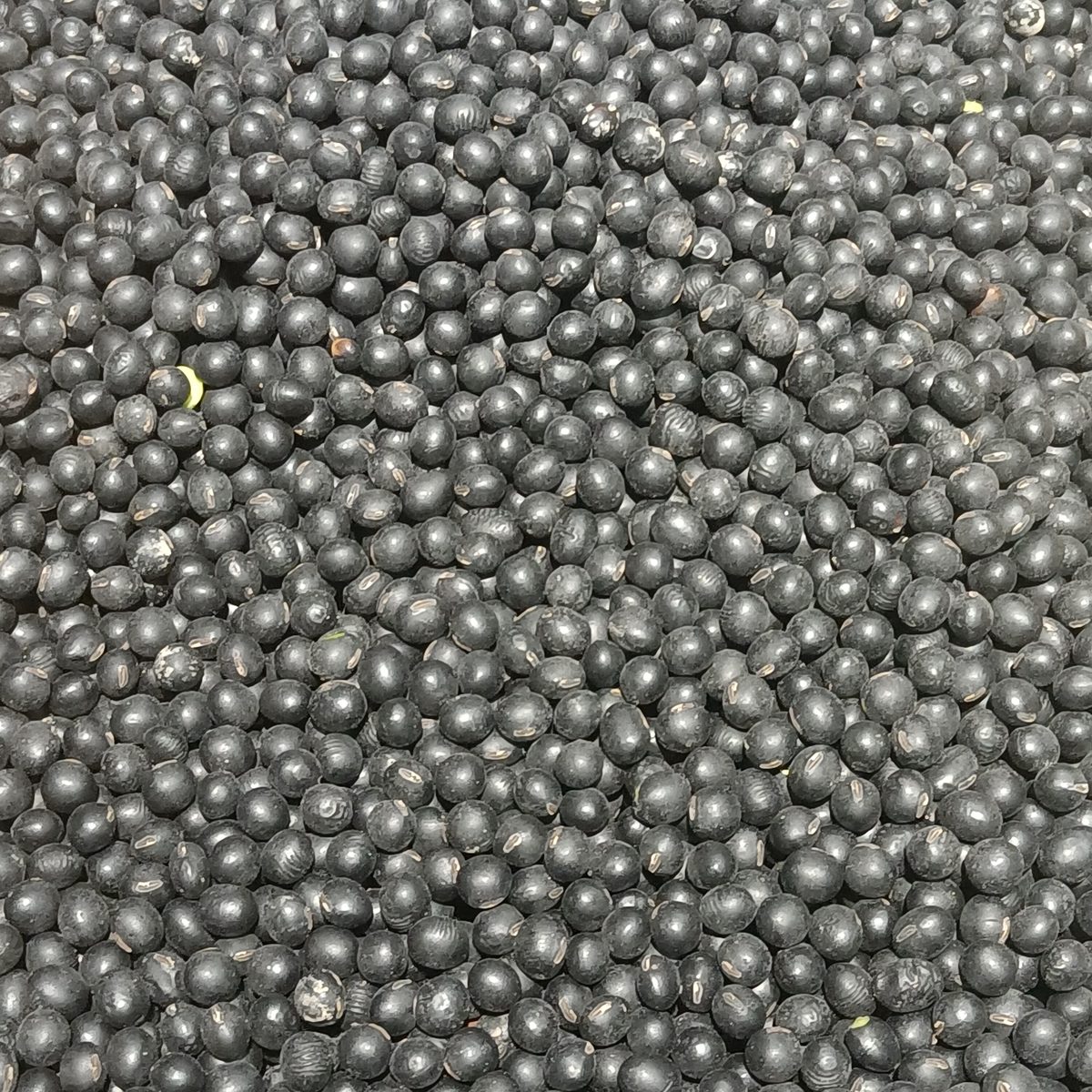
Kala bhatt is black soybean, Glycine max — the black-seeded form of the soybean, grown in the Uttarakhand hills. The beans are small, round and black, with a pale hilum — the small scar where the bean attached to the pod — that you can see in the photograph at the top of this post. The store describes it as dense in protein, iron and isoflavones, and sells it as 1 kg packs of the whole bean.
It is a hill pulse, not a plains commodity. Bhatt grows in the hills of Uttarakhand, where it is part of the traditional cropping of Kumaon and Garhwal, and it rarely reaches city shelves — which is why most Indians outside the hills have never cooked it. Our guide to the types of pulses in India places it among the pulses, with the lookalikes it is confused with, and this post is the closer look at the bean itself.
Not urad, not horse gram
Bhatt is not urad. Urad is black gram, Vigna mungo — a different plant. The two look a little alike from a distance, both dark and oval, but they taste different and cook differently, so they are not interchangeable. Urad is the pulse behind dal makhani and behind idli and dosa batter; bhatt is the pulse behind churkani and dubke. Cook one in the other's dish and you get the wrong meal.
Bhatt is not horse gram either. Horse gram is gahat, kulthi dal — another dark hill pulse, and another one the hills cook in winter — but it is a different plant again, with its own dishes. The hills have several dark pulses, and the names matter: gahat, bhatt and urad are three different beans, and a cook who knows them does not swap one for another. If a seller offers you bhatt as urad, or urad as bhatt, they are selling you the wrong pulse under the wrong name.
How hill kitchens cook it
The two classic dishes are bhatt ki churkani and bhatt ke dubke. Churkani is a thick, slow-cooked preparation of the whole bean — the black soybean rass of Kumaon, cooked until thick, and famously seasoned with a few pieces of gandrayani root boiled in the pot. Our guide to gandrayani covers that root spice in full, including the conservation line that governs it. Dubke is the ground-bean dish: the bean ground and cooked thick, a fixture of Garhwali and Kumaoni meals, served with rice.
Both dishes take time. Bhatt is a whole, dry bean, and like all whole pulses it needs soaking and slow cooking — this is not a quick dal. The reward for the time is a thick, dark, deeply savoury pot: the bean's own flavour, not a sauce laid over it. Cook it the way the hills cook it — whole beans, soaked, slow-cooked until thick — and do not try to hurry it into a fifteen-minute dal. The bean will not hurry.
Bhatt is a hill staple because it keeps and because it feeds. A dry bean stores for months in an airtight jar, and a kilo of it makes many meals. That is the logic of a hill staple: food that is grown nearby, stored dry, and cooked slowly into the meal of the day. It is not a festival dish and it is not a health product. It is the dal of ordinary hill days.
Soaking and slow cooking
Start with the whole bean, dry from the jar, and give it time. Bhatt is a whole, dry pulse, and like all whole pulses it needs soaking and slow cooking before it becomes a meal — there is no quick version of churkani or dubke, and the bean will not be hurried into a fifteen-minute dal. Soak the beans, then cook them slowly until the pot turns thick and dark, the way the hills cook it: whole beans, soaked, slow-cooked until thick, served with rice. A few pieces of gandrayani root go into the pot with the churkani — the root spice our gandrayani guide covers in full — and the dubke takes the same slow treatment in ground form. The reward for the time is the flavour of the bean itself, not a sauce laid over it: thick, dark, deeply savoury, the dal of ordinary hill days.
Buying the whole bean
Buy the whole bean, not a powder and not a pulse under another name. The store sells kala bhatt as 1 kg packs of the whole bean at a fixed ₹140 (MRP ₹180), checked 12 Nov 2026 — the store's own rate from its supplier list, not an indicative price from another seller's listing — so check the store page for the current figure before ordering. A kilo of dry bean makes many meals, and the dry bean stores for months in an airtight jar, which is the logic of a hill staple: food grown nearby, stored dry, cooked slowly into the meal of the day. If a seller offers you bhatt as urad, or urad as bhatt, they are selling you the wrong pulse under the wrong name.
One honest note about the photograph
The photograph at the top of this post is a pile of black soybeans, by Fumikas Sagisavas (CC0, via Wikimedia Commons). It shows the bean itself — small, round, black, with the pale hilum — which is what the store sells by the kilo. It is not a photograph of the Uttarakhand harvest and not a photograph of churkani: it is the dry bean, close up, so you can see what you are buying.
Where to buy kala bhatt
Kala bhatt is sold in our Pahadi Store at a fixed ₹140 for 1 kg (MRP ₹180), checked 12 Nov 2026. The price is fixed — it is the store's own rate from its supplier list, not an indicative price from another seller's listing — so check the store page for the current figure before ordering. Buy the whole bean, soak it, and cook it slow.
Frequently Asked Questions
Is kala bhatt the same as urad dal?
No. Kala bhatt is black soybean, a hill pulse from Uttarakhand cooked as bhatt ki churkani and bhatt ke dubke. Urad dal is black gram, a different plant. The two look a little alike from a distance, but they taste different and cook differently, so they are not interchangeable.
What is bhatt ki churkani?
Churkani is the thick, slow-cooked preparation of the whole black soybean — the black soybean rass of Kumaon. It is cooked until thick and served with rice, and a few pieces of gandrayani root are traditionally boiled in the pot with it.
What is bhatt ke dubke?
Dubke is the ground-bean dish: black soybean ground and cooked thick, a fixture of Garhwali and Kumaoni meals, served with rice. It is the second classic bhatt dish alongside churkani.
Is bhatt a spice?
No. Kala bhatt is black soybean — a pulse, not a spice. It is the Kumaoni dal used for bhatt ki churkani and dubke, and it belongs with the pulses, not with the seasonings.
What do I serve with bhatt ki churkani?
Rice. Churkani is the thick, slow-cooked whole-bean rass of Kumaon, cooked until thick and served with rice, and dubke is served with rice too. Both are the dal of the meal, not a side dish: the bean cooked slowly into the meal of the day, with rice.
Where can I buy kala bhatt?
In the Pahadi Store, at a fixed ₹140 for 1 kg (MRP ₹180), checked 12 Nov 2026. It is the store's own fixed-price stock, sold as 1 kg packs of the whole bean.
Sources
- My Quick Trippers — Pahadi Store
- My Quick Trippers — Types of pulses in India
- My Quick Trippers — Gandrayani (angelica root)
- Wikimedia Commons — Black soybeans, Fumikas Sagisavas, CC0
Share this article