Kashmir in November: The Last of the Chinar Gold and the First of the Cold
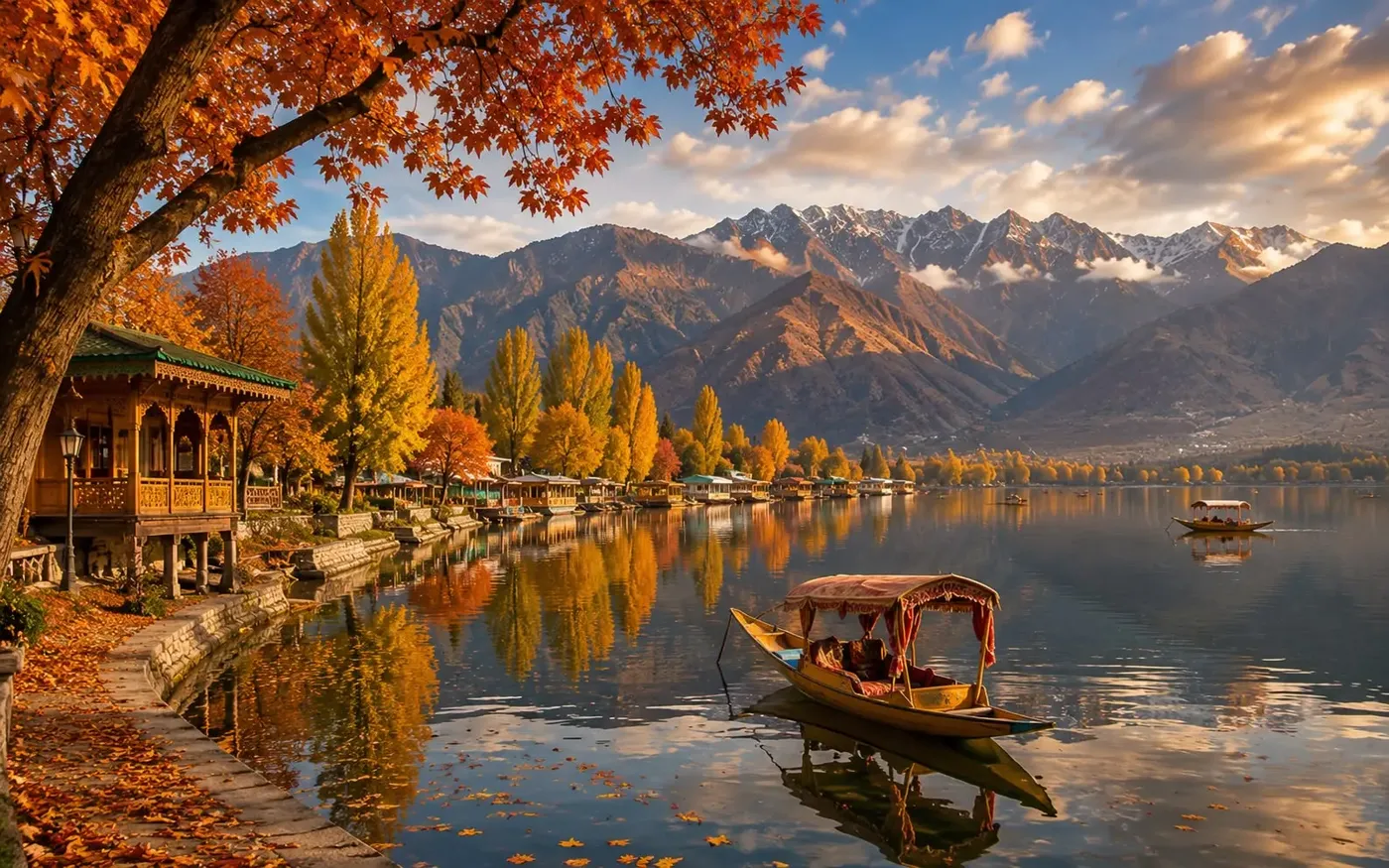
November is Kashmir's hinge month — the two weeks when autumn and winter share the valley. Come in the first half and you catch the end of Harud, the Kashmiri autumn: chinar trees at their deepest red and gold, the saffron harvest under way around Pampore, and mornings cold enough to make the kahwa taste earned. Come in the second half and the colour drains, the high roads begin to close, and the valley starts its long turn towards snow. Both trips are worth making. They are simply not the same trip, and this guide separates them honestly.
What November actually feels like in the valley
Srinagar in November is a city of woodsmoke and low light. Days are short and often bright — the post-monsoon clarity that makes October famous lingers — but the sun loses its warmth by mid-afternoon, and Dal Lake mornings arrive with mist sitting on water that has turned steel-grey and still. Houseboats light their bukharis (wood stoves), hotels switch on serious heating, and the famous floating life of the lake slows to a winter rhythm. Our explainer on what a shikara is will help you read the lake; in November, take your shikara ride at mid-morning, when the mist has lifted and the light on the Zabarwan hills is at its best.
Altitude changes everything, fast. Gulmarg, at roughly 2,650 metres, runs a full season ahead of Srinagar: its November averages are already sub-zero at night, the gondola's upper phase can close in bad weather, and the first real snow can arrive any time in the second half of the month. Pahalgam is colder than Srinagar too, with nights around freezing. Sonamarg is the trip's fragile element — the road beyond, over the Zoji La, is among the first in the region to close for winter, and in November you should treat any Sonamarg plan as weather-permitting and confirm locally the day before.
The chinar map: where the colour holds longest
The chinar — the great oriental plane tree, centuries old in Srinagar's gardens — is November's headline. The Mughal gardens on Dal Lake's eastern shore, Nishat Bagh above all, hold avenues of them; the university campus and the lanes around the lake's boulevard carry some of the oldest specimens; and Naseem Bagh, the garden of chinars on the lake's western shore, is the connoisseur's stop. Colour is a moving target — a warm spell holds it, a storm strip it in a night — but the pattern across years is consistent: the first ten days of November are the reliable window, and a trip booked for the month's final week is a winter trip with autumn memories, not an autumn trip.
“Harud is Kashmir's fifth season and its shortest. November is where it ends — beautifully, and without waiting for anyone.”
Pampore and the saffron fields
About 15 km south of Srinagar, the karewa plateau of Pampore grows most of India's saffron, and the harvest — picking the purple crocus flowers, then separating the crimson stigmas by hand — runs through the autumn into November. If your dates align, a morning in the fields is the most distinctive experience a November Kashmir trip offers: whole families working the rows, flowers gathered in baskets, and the spice that results sold in the town's shops at the source. Buy saffron here or from established Srinagar dealers, buy small quantities in sealed packaging, and be suspicious of any price that seems too good — the genuine article is among the most expensive spices on earth for a reason.
A five-day November shape
- Days 1–2, Srinagar: houseboat or lake-side stay, a mid-morning shikara circuit, Nishat Bagh and the chinar avenues while the colour lasts, and an old-city walk for the crafts — pashmina, papier-mâché and walnut wood all come from workshops you can visit.
- Day 3, Pampore and the south: saffron fields in harvest season, then continue to Pahalgam for a night by the Lidder, accepting the cold as part of the bargain.
- Day 4, Gulmarg: a day trip or overnight — meadow walks, the gondola's first phase, and the real possibility of early snow late in the month.
- Day 5, buffer: keep it unplanned. November weather in the mountains earns a spare day, and Srinagar repays a slow one.
Two planning notes close the guide. First, book heating, not just rooms: confirm your Srinagar stay and houseboat have reliable heating and hot water in November — it is the single biggest comfort variable of the month. Second, hold the comparison with the month that follows: our Kashmir in December snow guide covers the full-winter version, and the 5-day Kashmir trip planner works in any season. For a packaged route, see the Kashmir tour packages and browse Kashmir destinations for the wider picture.
Practicalities: heating, flights and the kangri
Three November specifics decide comfort more than any itinerary choice. The first is heating: insist on it in writing when you book, in hotels and houseboats alike, and expect the traditional supplement — the kangri, the earthenware fire pot carried under the pheran cloak, is still how Kashmir itself stays warm, and you will see it everywhere from shikaras to shops. The second is your flight out: Srinagar's winter mornings can bring fog and low cloud that delay departures, so book a late-morning or midday flight home rather than the first of the day, and never schedule a tight same-day connection after it. The third is daylight: November days are short, the valley's sights are spread out, and a plan that starts at nine and ends by five will feel unhurried where a fuller one feels rushed. Build the trip around the light and the cold, and November Kashmir rewards you with the valley at its most beautiful and least crowded.
A last word on pace: November Kashmir punishes the checklist. The gardens, the lake and one high excursion are a trip; add Sonamarg, Gurez and a second valley and the short days will spend you in vehicles. Choose three anchors, dress properly for the cold, and let the chinar leaves set the schedule — they have waited all year for these weeks, and they are in no hurry at all.
Share this article