What Is a Shikara? Dal Lake's Wooden Boat, Explained for First-Time Visitors
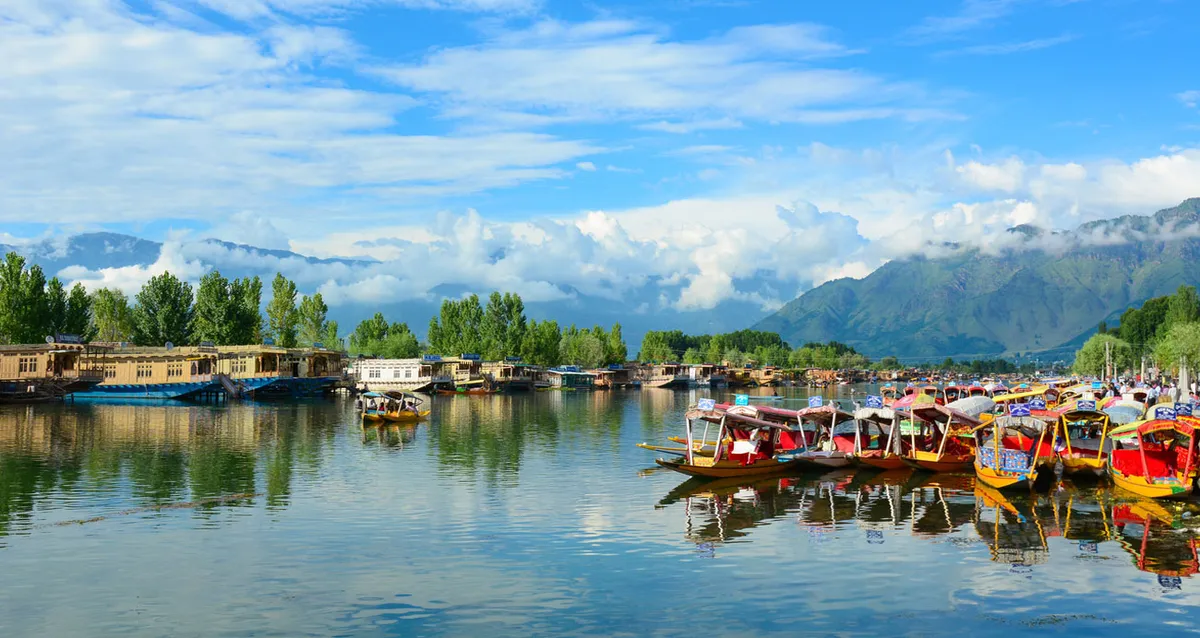
Ask anyone who has been to Srinagar what they remember first, and the answer is rarely a building. It is a boat: a low wooden shikara sliding across Dal Lake at dawn, its canopy bright, its boatman rowing with a heart-shaped paddle, houseboats mirrored in water so still it looks varnished. But what exactly is a shikara — and how is it different from the lake's houseboats and doongas? This explainer answers the question properly, because understanding the boat changes how you experience the lake.
The boat itself
A shikara is a long, shallow, flat-bottomed wooden boat with a distinctive spade-like silhouette, usually carrying a canopy and cushioned seats that let passengers recline at water level. Traditionally it is carved from deodar — Cedrus deodara, the Himalayan cedar — prized because it is durable and rot-resistant, takes a fine finish, and survives decades of daily immersion. A single boatman (or two) propels it with paddles from the stern. Everything about the design answers the lake's conditions: shallow water, floating vegetation, narrow channels between houseboats and gardens.
Shikara, houseboat, doonga: three boats, three jobs
Visitors constantly confuse the lake's craft, so here is the clean distinction. The houseboat is the famous one: a large, ornately carved, permanently moored floating house — a form that took shape in the British era, when outsiders were barred from owning land in Kashmir and took to the water instead — complete with bedrooms, drawing rooms and a houseboat family who cooks and cares for you. The doonga is its humbler ancestor: the long working boat on which the lake's Hanji boat-dwelling community has lived and travelled for centuries. The shikara is the runabout that connects them all — the water taxi of Srinagar. You will ride one to reach your houseboat, and then again for everything else.
A working boat, not just a joyride
It would be a mistake to file the shikara under 'tourist activity'. Long before visitors arrive each morning, shikaras are carrying children to school, farmers to their plots, and vendors between houseboats. The lake's floating gardens — called raed, beds of soil and vegetation built on the water — grow vegetables and flowers that reach Srinagar's tables by shikara. The dawn floating market, where wholesalers trade produce boat-to-boat in the lake's interior channels, runs entirely on them. When you hire a shikara, you are stepping into a working transport system that happens to be beautiful.
“The houseboat is where you sleep. The shikara is how Dal Lake lives.”
How to ride one well
- Go at dawn at least once: the floating market, the mist and the mirror-calm water are a different lake from the midday version.
- Agree the route and duration with the boatman before you set off — a classic circuit takes in the floating gardens, the market channels and the open lake towards the Mughal gardens.
- Combine the ride with the shore: Nishat Bagh, the terraced Mughal garden on the lake's eastern bank built in the 1630s, faces the water precisely so it can be admired from a boat.
- Carry small cash for the floating vendors who pull alongside — saffron, kahwa, handicrafts and flowers are all sold boat-to-boat; browse without pressure and buy what you genuinely like.
A shikara ride anchors most Kashmir itineraries: pair it with our Srinagar Dal Lake and Mughal gardens guide and the 5-day Kashmir trip planner, browse Kashmir destinations, or start from the ready-made Kashmir tour packages.
The seasons of the shikara
The boat changes with the year, and each season sells a different Dal. Spring brings the lake's gardens and the city its blossom; summer fills the water with lotus and the houseboats with holiday families; autumn — saffron season in nearby Pampore, chinar leaves turning over the banks — is the photographer's favourite, all gold light and still mornings; and winter, when mist sits on the water and the market boats move through it with lanterns and braziers, is the connoisseur's Dal, cold and unforgettable. The shikara works through all of it: it is how the lake's people have always moved, and the tourist ride is simply the newest layer on a very old working boat.
A note on riding responsibly
Dal Lake's ecology is fragile, and the shikara is the gentlest way to be on it — no engine wash, no noise, nothing left behind. Keep it that way: carry your litter off the lake, skip single-use plastic on board, and be thoughtful about photography of the lake families whose homes you are gliding past. Choose boatmen from the recognised ghats along the Boulevard, settle the route kindly and clearly, and tip for the unhurried extra loop past the lotus beds that most boatmen are quietly proud to show you. A shikara ride done well is not a transaction; it is an hour inside someone else's hometown, at walking pace, at water level.
Visitors also ask how the shikara relates to the lake's other famous sight, the floating post office and the houseboat postcards of the tourism brochures. The answer is that the shikara is the connective tissue of all of it: it ferries the post, the provisions, the wedding guests and the honeymooners; it is the school bus, the ambulance run and the delivery round of a community that lives on water. When a boatman slows without being asked so you can watch a kingfisher work the lotus stems, or points out which houseboat his grandfather carved, you are seeing the real product — not transport, but a guided entry into the lake's way of life, delivered at paddle pace.
However you ride it, give the shikara time: an hour is a taste, two hours is the beginning of understanding, and a dawn circuit of the inner lake is the memory most travellers carry home from Kashmir.
And that is the real answer to what a shikara is: not merely a boat to be photographed, but the living thread that has stitched Srinagar's water-world together for centuries — and still does, one paddle stroke at a time, every single morning.
- Ursula's Weekly Wanders — Water, Dreams, and Woodwork: On Dal Lake
- Footloose in Me — An Evening in Dal Lake, Srinagar
- The Tribune — Valley of Delights
Share this article