Manali vs Kasol: Which Himachal Base Fits Your Trip?
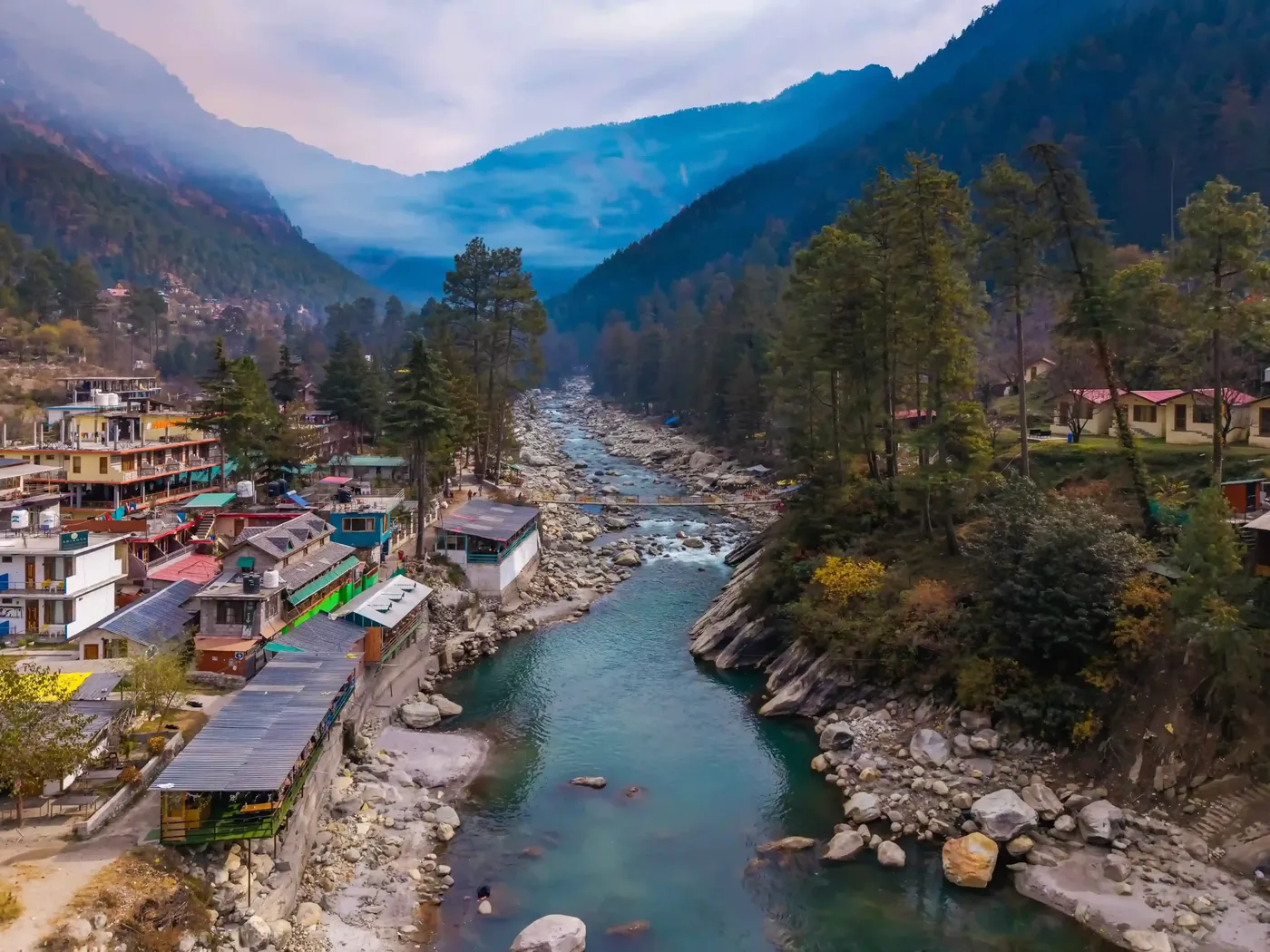
Manali and Kasol sit about 75 km apart in Himachal Pradesh, share the same Volvo routes out of Delhi and Chandigarh, and appear in the same itineraries so often that travellers treat them as interchangeable. They are not. Manali is a full-service mountain town at the head of the Kullu valley — hotels at every level, day trips in three directions, a mall road, hospitals, the works. Kasol is a one-street backpacker village in the Parvati valley whose entire programme is the river, the cafés and the trails. Choosing wrong does not ruin a trip, but choosing right makes it — so here is the honest comparison, category by category.
The feel of the two places
Manali runs on itineraries. Its days have structure — a snow point, a temple, a market — and its evenings have options, from Old Manali's café lanes across the Manalsu stream to the Mall Road's family bustle. It is lively, sometimes to a fault: in peak season its traffic and crowds are the worst in Himachal's tourist belt. Kasol runs on weather and appetite. The Parvati river is loud, green and constant; the day's plan is a walk to Chalal village across the bridge, a long café lunch, perhaps the hot springs at Manikaran, about 4–5 km away. Its crowd is younger, more international and more stationary — people arrive for two nights and stay for six. Neither is better. They are answers to different questions.
Stays, food and money
Manali offers the full ladder: hostels in Old Manali, family hotels along the main town, resorts up the valley — plus the widest food range in the region, from Himachali dham thalis and Tibetan kitchens to bakeries and multi-cuisine restaurants. Kasol's stays lean to hostels, guesthouses and riverside camps, and its food is café food: Israeli plates (the village's long-standing nickname reflects its traveller mix), wood-fired pizzas, pancakes and trout when the season allows. On pure logistics Kasol usually runs cheaper day to day — most of it is walkable, so the taxi meter that quietly taxes every Manali day barely exists — while Manali wins on comfort, choice and the ability to absorb a family with mixed needs. In both places, peak-season prices rise steeply; in Kasol, infrastructure is thinner, so carry cash and do not depend on flawless connectivity.
“Manali is a town you do things from. Kasol is a place you do fewer things in, more slowly. Pick the verb first.”
What each base does best
- From Manali: Solang Valley's activities, the Atal Tunnel into Lahaul and Sissu (in November, the first-snow run — see our [Manali in November guide](/blog/manali-in-november-snow-guide)), Hadimba's cedar temple, Naggar Castle down the valley, and the Rohtang road in its season.
- From Kasol: the Chalal riverside walk, Manikaran's gurudwara and hot springs, Tosh village above the valley, and the trekking ladder — Kheerganga's hot-spring summit from the Barshaini trailhead being the famous one, a full day's climb that needs fitness and a night to enjoy properly.
- Rain check, literally: in the monsoon both valleys demand respect for landslide advisories, but Kasol's single-valley road leaves fewer alternatives when the hills move.
The verdict by traveller
Families with elders or small children, first-time Himachal visitors, and anyone whose list includes snow points and the tunnel: Manali, without much debate — its facilities forgive mistakes. Solo travellers, backpackers, slow travellers and trekkers building days around the Parvati valley: Kasol, equally clearly. Couples split by taste: Manali for the resort version, Kasol for the riverside version. And the five-day answer remains the local favourite — two or three nights in Manali for the greatest hits, then the 75 km hop to Kasol to end the trip at river speed. Both towns are served by the Himachal tour packages, and the Atal Tunnel and Sissu day-trip guide shows the Manali day that Kasol simply cannot offer.
How the seasons change the answer
The comparison is not fixed, because the two towns change at different speeds through the year. In deep winter, Manali keeps its full machinery running — it is a snow destination with heated hotels and an administration geared to winter roads — while Kasol turns very quiet: many cafés and stays scale down or close for the coldest weeks, the river runs steel-grey, and the village belongs to the few who love it empty. In the summer peak the advantage flips on the crowd question: Manali's success makes its centre genuinely congested, while Kasol, though busy, still walks at village pace. For remote workers the deciding factor is usually infrastructure rather than scenery: Manali offers the deeper bench of cafés with reliable power and connectivity, while Kasol's charm includes connectivity that comes and goes with the valley's mood — fine for a writing week, risky for a calendar of video calls. Ask what the trip must deliver — snow access, silence, a desk, a trek — and the season usually answers the Manali-or-Kasol question for you.
The combined route, day by day
- Days 1–2, Manali: settle in, Hadimba and Old Manali on day one; Solang and, in season, the tunnel run to Sissu on day two.
- Day 3, the crossing: the ~75 km drive via Bhuntar into the Parvati valley is a sight in itself — take it slowly, with the Manikaran gurudwara and its hot springs as the evening's anchor in Kasol.
- Days 4–5, Kasol: the Chalal walk, a café day written off to the river, and Kheerganga only if the group has the legs and the nights to spare — otherwise Tosh and the valley's villages fill the time at the right speed.
Run in this order, the trip descends a gear each day: town, valley, village. Most travellers who try both bases in one journey never again ask which town is better — they ask why anyone makes them choose.
- NDTV Travel — Manali vs Kasol: Which Is Better for a Budget Hill Station Trip?
- The Route Atlas — Manali to Kasol and Rohtang Pass Trip Guide
- Desire4Travels — Manali vs Kasol: Where to Go When You Have Only One Weekend
Share this article