Mix Achar Through the Seasons: What Goes Into the Jar Across the Year
By My Quick Trippers · 13 Nov 2026
10 min read · Food & Cuisine
A mix achar is not one recipe but a habit: whatever the season gives, in one jar. That is what our post on what goes into a pahadi mixed pickle said, and it is the truest thing about this jar — because the mix changes through the year, and the jar you make in summer is not the jar you make in winter. The backbone stays the same — raw mango for tang, lemon for sharpness, green chilli for heat — but the vegetables around them change with the season, and the jar tastes of the time of year it was made in. Our first post about the jar told the story of how hill households make it, and our second post listed what goes in. This post is about the year: what the mix looks like in summer, in winter, and in the months between.
One promise first, the same one this series has made from the start. There are no health claims here, no nutrition numbers, and no advice about what anyone should eat for their health, because none of that has been verified for this jar. What follows is about the seasons and the jar — the practical knowledge of a hill kitchen: what goes in when, how to read a jar's season, and how the same jar serves the table all year.
A jar that changes with the year
Most pickles are made once a year, in the season of their fruit. Mango pickle is made in summer, when the raw mangoes are in, and amla pickle is made in winter, when the gooseberries are in — and each jar is the season, preserved. Mix achar is different: it is made whenever there is something to pickle, and it is made again and again through the year, so the jar on the shelf is never quite the same jar twice. A household that makes mix achar every year knows the balance it wants — enough mango for tang, enough lemon for sharpness, enough chilli for heat, and enough carrot and cauliflower to give the jar its body — but the balance is struck with whatever the season has given, and the season gives different things at different times.
The summer jar
The summer jar is the mango jar. Summer is when the raw mangoes come in from the lower valleys and the foothills — hard, green, and sour enough to make your mouth pucker — and the pickling happens while they are in season, because the raw fruit will not wait. A household that wants mix achar for the year makes its biggest batch then, and the mango is the backbone of it: cut into pieces, salted, sunned, spiced and oiled, with lemon for sharpness and green chilli for heat alongside. The summer jar is the tangiest of the year's jars, because the mango brings the tang, and it is the jar that is still being opened in winter, a spoonful at a time, beside dal and rice that would otherwise taste plain.
The winter jar
The winter jar is the amla jar. Winter is when the gooseberries come in — the winter fruit behind the pickle, as our amla post called them — and the mix made in winter has amla in it, cut into segments, softened first, pickled with the same salt, spice and oil. Amla brings something the summer jar does not have: a bitter edge, alongside the sourness, that no other jar in the store has. A winter mix is sharper and more complex than a summer mix, because the amla is sharper than the mango — tangy with a bite, as the amla post put it — and the jar tastes of the cold months it was made in.
The winter jar is also the jar that is eaten soonest, because winter is when the heavy food is on the table — slow-cooked dals, thick khichdi, saag from the winter fields — and a sharp, complex pickle is what a heavy plate needs beside it. A winter mix beside chainsoo, or beside a thick masoor khichdi, is a plate in balance: the dal is rich, the pickle is sharp, and the eater takes a little of the pickle with each mouthful. The summer jar is the jar that is kept; the winter jar is the jar that is eaten — and both are the same pickle, made in different seasons, from different fruit.
The in-between months
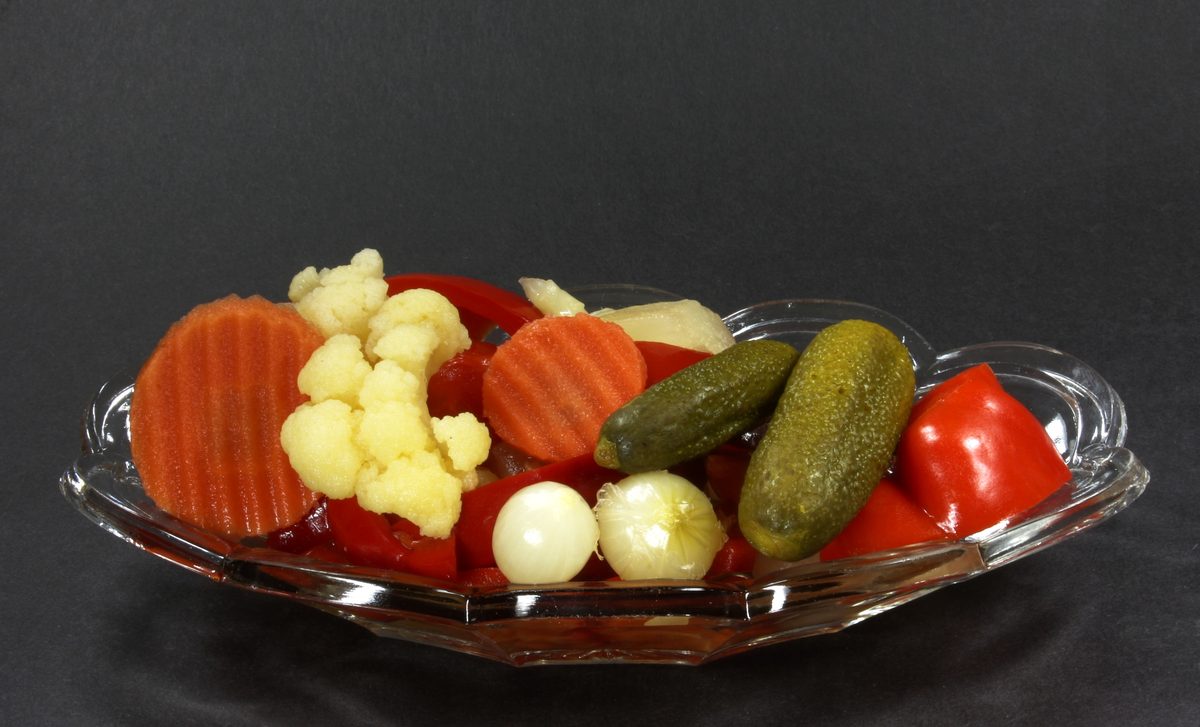
Between summer and winter there are the months when neither mango nor amla is in season, and the mix made then is the mix of what is there: lemon, green chilli, and the vegetables that hold their shape in oil — carrot, cut into batons, and cauliflower, broken into small florets, the two that are most common because they take the spice well and do not go soft in the jar. What else goes in depends on the household and the season: raw papaya, green peas, beans, or whatever the fields and the market have given that week. The in-between jar is the most variable of the year's jars, and it is the one that most shows the cook's hand — because there is no backbone fruit to carry it, and the balance has to be struck from the vegetables alone.
The in-between jar is also the jar that teaches the cook. A summer jar has mango to carry it, and a winter jar has amla, but an in-between jar has only the cook's judgement: enough lemon for sharpness, enough chilli for heat, enough carrot and cauliflower for body, and the salt and spice to hold it together. A household that can make a good in-between jar can make any jar, because the skill is the same skill — reading what is there, and putting it in the jar in the right proportion. And the in-between jar is the one that is most often shared, because it is made from what is at hand, and what is at hand is what the neighbours have too.
How to read a jar's season
You can tell a mix jar's season by looking at it, and the looking is part of the buying. A summer jar is golden and red, with pieces of mango visible among the vegetables — the mango is the biggest piece in the jar, and it is the piece that tells you the season. A winter jar is darker, with segments of amla among the vegetables — the amla is smaller and darker than the mango, and it is the piece that tells you the season. An in-between jar has no big fruit in it at all, only vegetables and lemon and chilli, and the absence tells you the season as clearly as the presence does.
The colour tells you as much as the pieces. A jar made with mango is tangy and golden; a jar made with amla is darker and sharper; a jar made without either is the colour of its spice and its oil. And the brine tells you the rest: a mature jar's brine is dark and concentrated, and a young jar's is brighter and thinner. None of this is on a label — a seller's jar is the seller's style, and the style is in the jar, not on the label. Open the jar, look at it, taste a little of it with rice, and you will know which season you are holding, and whether it is the one you wanted.
Making a seasonal mix at home
Making a seasonal mix at home follows the same shape as making any pickle in this series — cut, salt, sun, spice, oil, wait — and the shape does not change with the season, only the ingredients do. The pieces are cut to one size, more or less, so they pickle evenly: the fruit cut into pieces, the carrot into batons, the cauliflower into small florets. The pieces are salted and left, often in the sun, so the salt draws out the moisture and the pieces begin to soften. Then comes the spice mix — the household's own blend, ground at home — and mustard oil, poured over until it covers the pickle. The jar is left to mature, opened and stirred from time to time, until the pieces have taken the spice and the oil has taken the pieces.
The seasonal part is in the choosing, not the making. In summer, choose the mango: raw, hard, green and sour, from the lower valleys, while it is in season. In winter, choose the amla: the winter fruit, cut into segments, softened first before it goes into the jar. In between, choose what is there: lemon for sharpness, green chilli for heat, carrot and cauliflower for body, and whatever else the season has given. The making is the same every time; the choosing is what makes the jar seasonal. And the jar that results is the season, preserved — to be opened a spoonful at a time, beside dal and rice, for as long as it lasts.
Buying mix achar
Mix Achar is in the Pahadi Store at an indicative ₹379.99 for 500 g, sold by Kumauni Taste via SaSiAa, checked 13 Nov 2026. The price is indicative, not fixed: it comes from that seller's live listing, not from our own supplier list, so check the store page for the current figure before ordering. The listing describes it as handmade Kumaoni mixed pickle — locally farmed fruits and vegetables with traditional Pahadi spices — and that description is the honest one: the jar is the season, in pieces, pickled together. If you like the mix, the single jars are the way to find out which flavour in it was yours: the tang of the aam, the sharpness of the nimbu, or the fire of the hari mirch. Our roundup of the seven Pahadi achars describes all of them.
Frequently Asked Questions
What is the difference between the summer and winter mix achar?
The fruit. The summer jar is mango-led — raw mango for tang, with lemon and green chilli alongside — and it is the tangiest jar of the year. The winter jar is amla-led — gooseberry segments, softened first — and it is sharper and more complex, with a bitter edge the summer jar does not have. The method is the same; the season is what changes.
What goes into a pahadi mix achar?
The backbone is the fruit and vegetable pickles themselves — raw mango for tang, lemon for sharpness, green chilli for heat — cut and pickled together instead of apart. Around them go the vegetables of the season: carrot and cauliflower are the most common, because they hold their shape in oil and take the spice well. What else goes in depends on the household and the season.
How can I tell which season a mix jar was made in?
Look at the pieces. A summer jar has pieces of mango visible — the biggest piece in the jar. A winter jar has segments of amla — smaller and darker. A jar with no big fruit in it at all, only vegetables and lemon and chilli, was made in between. The colour helps too: mango makes a jar golden, amla makes it darker.
How long does mix achar keep?
For months, if it is stored right: keep the pickle covered with mustard oil, always use a clean, dry spoon, keep the jar in a cool, dry place out of direct sunlight once it has matured, and keep the lid on between servings. A 500 g jar lasts a household that eats a spoonful a day for weeks.
Is the store's mix achar handmade?
Yes — the listing describes it as handmade Kumaoni mixed pickle, sold by Kumauni Taste via SaSiAa in a 500 g pack at an indicative ₹379.99. The price is indicative, so check the store page for the current figure before ordering.
Sources
- My Quick Trippers — Pahadi Store
- My Quick Trippers — Mix achar: mixed pickle of Uttarakhand
- My Quick Trippers — Mix achar: what goes in a pahadi mixed pickle
- My Quick Trippers — Aam ka achar: mango pickle of Uttarakhand
- My Quick Trippers — Seven Pahadi achars
Share this article