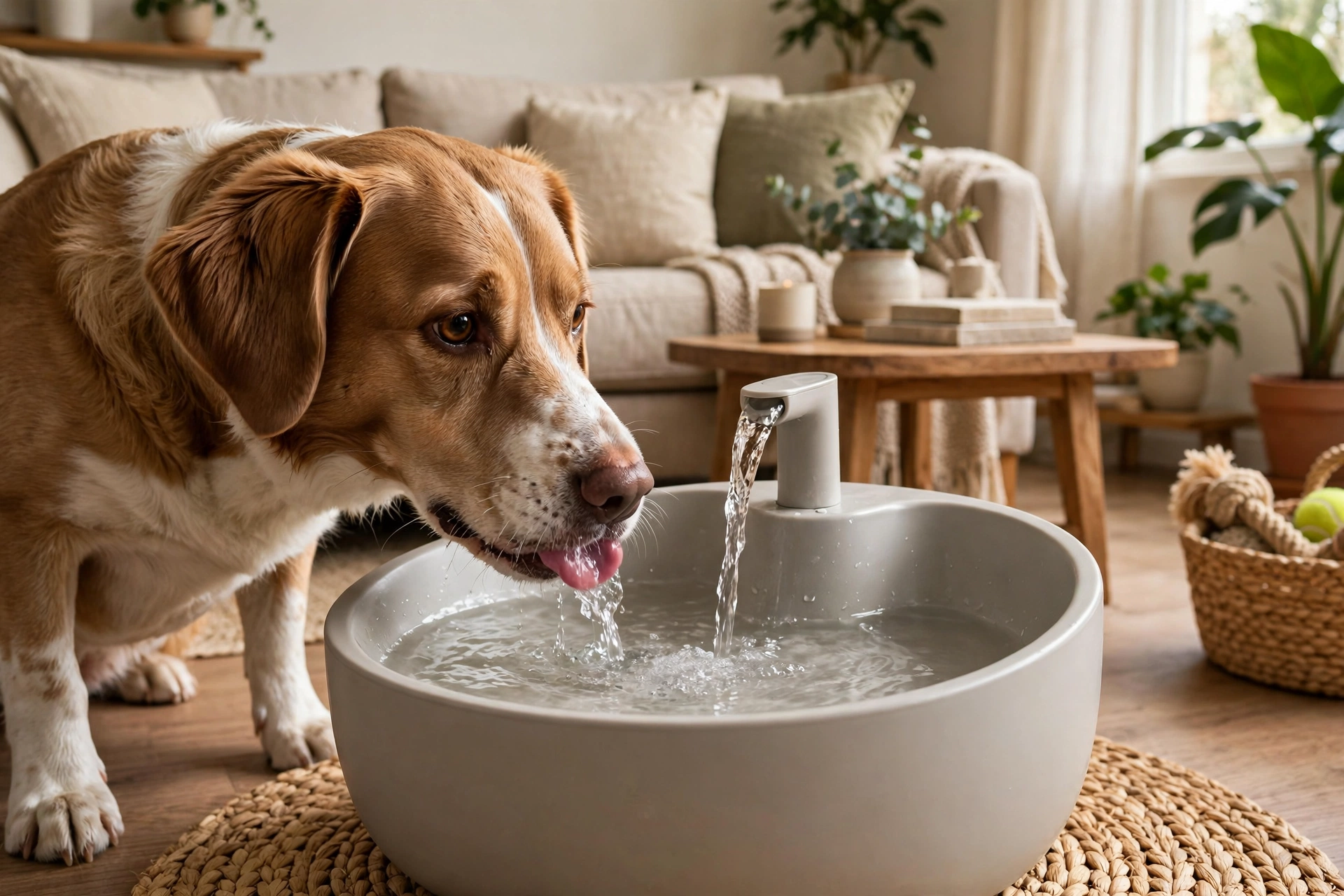
Pet Water Fountain India Review: Better Hydration?
By My Quick Trippers · 21 Oct 2026
7 min read · Travel Gear
Recommended gear
Pet Water Fountain — Worth It?
Pet water fountain
Check filter cost and noise level
As an Amazon Associate, we earn from qualifying purchases. We may earn a commission if you buy through these links, at no extra cost to you.
Honest verdict
for cat owners especially, and for dog owners whose pets ignore still bowls, a fountain is worth it.
Check Price on AmazonA pet water fountain is the device that answers a simple observation: pets prefer running water to a still bowl, and they drink more of it. At a price band of around ₹1,600, it costs less than a month of vet-adjacent worry about hydration, and it turns a bowl you refill and forget into a circulating supply your pet actually uses. Treat the price band of around ₹1,600 as approximate — sale prices and seller changes move it either way. My verdict: for cat owners especially, and for dog owners whose pets ignore still bowls, a fountain is worth it. For pets that already drink well from a bowl, it is a nice-to-have rather than a need. Pet water fountains are a rising search category, with 22,200 searches and growth of 83 percent over six months according to risingtrends data from October 2026, which tells you Indian pet owners are discovering what vets have said for years: moving water gets drunk.
Why pets prefer running water
In the wild, still water can be stagnant and unsafe, while running water is usually fresh, so many animals instinctively prefer it. Domestic cats carry that instinct most strongly: a cat that ignores a full bowl will often drink eagerly from a tap, a fountain, or a dripping source. Dogs are less picky but still drink more readily from moving water, especially in summer. The practical consequence is hydration: pets that drink more stay better hydrated, which supports kidney health, digestion, and energy, and matters most for cats, who are famously reluctant drinkers. A fountain does not force drinking, it invites it, by keeping water moving, oxygenated, and interesting. And because the water circulates through a filter, it stays cleaner than a bowl that collects dust, hair, and food bits all day, which is a second, quieter benefit.
Pros
What it does well
The first win is hydration: moving water encourages drinking, especially in cats, and better hydration is the whole point. The second win is freshness: circulation plus filtration keeps water cleaner than a still bowl, which collects dust and debris. The third win is capacity: a fountain holds more water than a bowl, so it needs refilling less often, which matters on long work days. The fourth win is the price band of around ₹1,600, which buys a usable filtered fountain rather than a luxury device. The fifth win is the sound: a well-designed fountain is quiet, and the gentle water sound is pleasant rather than annoying, unlike a cheap pump that hums. For a cat owner who has watched a pet ignore a bowl all day, that combination — more drinking, cleaner water, less refilling — is why fountains have become a standard recommendation.
Filters, pumps, and noise — what to check
Three specs decide whether a fountain works or annoys. Filtration matters first: most fountains use a carbon filter for taste and odour plus a foam pre-filter for hair and debris, and the filter is a running cost, so check its price and how often it needs changing. Pump matters second: a good pump runs quietly and lasts, while a cheap pump hums, vibrates, or burns out when the water runs low, so a low-water auto-shutoff is a feature worth having. Noise matters third: test the fountain in a quiet room, because a hum that is inaudible in a shop is audible at night in a bedroom. Also check capacity against your pet: a small fountain suits one cat, while a multi-pet home needs a larger reservoir. And check the material: stainless steel and ceramic resist biofilm better than plastic, which can develop a slimy layer if cleaning slips, so a plastic fountain needs more disciplined washing.
Cons
Where it falls short — the honest cons
The honest cons start with cleaning: a fountain is not a fit-and-forget device, and the pump, filters, and reservoir need regular washing, or the water quality falls below a simple bowl. The second con is running cost: filters need replacing every few weeks, and the cost adds up over a year, so factor it into the purchase. The third con is power: a fountain needs a socket and a cable, which must be routed safely away from chewing pets and splashing water. The fourth con is the price band itself: at around ₹1,600 you are getting a functional fountain, not a silent, steel, app-connected one, so expect some pump sound and plastic construction. The fifth con is pet preference: a minority of pets ignore fountains entirely, and no feature fixes a pet that simply prefers a bowl. None of these are deal-breakers, but they are the reasons to buy a fountain with washable parts, cheap filters, and a return window, and to test it for a week before committing.
Who should buy it — and who should skip it
Buy a pet water fountain if you own a cat, if your pet ignores still bowls, or if you worry about hydration, because those are the owners who see the benefit. Buy it if you work long hours and want water available and fresh all day without refilling a bowl twice. Buy it for multi-pet homes, where a larger reservoir saves daily refills. Skip it if your pet already drinks well from a bowl and you will not clean a fountain regularly, because a dirty fountain is worse than a clean bowl. Skip it if you cannot place it near a safe socket, or if your pet chews cables. Cat owners, long-hour workers, and multi-pet households are the core buyers, and for them the price band of around ₹1,600 buys hydration and peace of mind in one device.
Keeping a fountain clean
Clean the fountain weekly, fully, without shortcuts. Empty it, wash the reservoir with warm water and a soft brush, rinse the pump and remove trapped hair, and replace or rinse the filters on schedule. Never use soap residue: rinse thoroughly, because pets taste residue before owners notice it. Top up daily rather than letting the level fall, because a low level strains the pump and the water warms faster. Descale occasionally if your water is hard, because mineral buildup narrows the flow and stresses the pump. And watch the pet: if drinking drops after a cleaning, check for a new noise, a changed flow, or a filter smell, because pets notice fountain changes before owners do. A clean fountain is a used fountain; a neglected one is an expensive bowl.
Buying checklist before you order
Check five things before you pay. One, filter type and replacement cost, because that is the real running cost. Two, pump quality and low-water shutoff, so the pump survives a forgotten refill. Three, noise in a quiet room, not just in a shop. Four, capacity against your pets, so refills are weekly, not daily. Five, washable parts and a return window, so you can test whether your pet actually uses it. If all five check out, a pet water fountain at a price band of around ₹1,600 is a sensible purchase for any cat owner or hydration-conscious pet household. If any one fails — expensive filters, a noisy pump, a pet that ignores it — pick a different model or stick with a bowl, because a fountain only works when the pet drinks from it.
Share this article