Pigeon Hot Kettle India Review: 1.5L of Morning Chai, Faster?
By My Quick Trippers · 21 Oct 2026
7 min read · Travel Gear
Recommended gear
Pigeon Hot Kettle — Worth It?
Pigeon 1.5L stainless hot kettle
Fast boiling for chai and cooking water with auto shut-off; descale monthly in hard-water cities
As an Amazon Associate, we earn from qualifying purchases. We may earn a commission if you buy through these links, at no extra cost to you.
Honest verdict
for a busy Indian kitchen, a 1.5-litre stainless steel kettle is one of the most-used appliances per rupee you will ever buy.
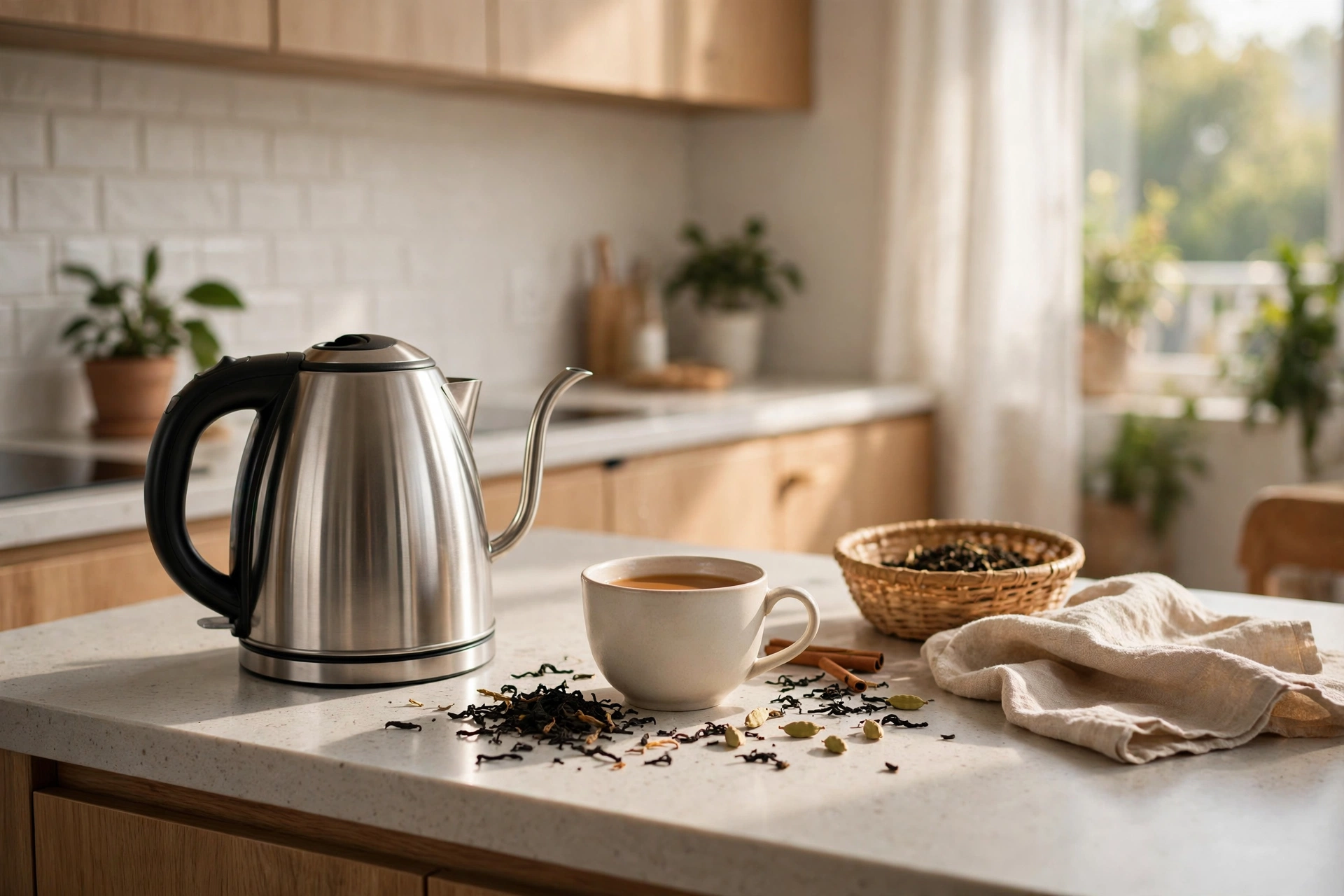
Check Price on AmazonMorning chai in an Indian home runs on a simple deadline: water has to boil before the milk, the ginger and the tea leaves are ready, and usually before someone has to leave for work. The Pigeon 1.5-litre stainless steel hot kettle became a quiet bestseller because it attacks that deadline directly. Fill it, switch it on, and in a few minutes you have rolling-boiled water for chai, coffee, Maggi, oats or a baby's bottle, without standing over a gas burner watching a vessel. Sale trackers in early October showed more than 3,000 bought in the previous month on Amazon India, which tells you this is not a novelty gadget but a daily-use appliance people actually reorder and recommend. After looking at how this kettle fits Indian kitchens, my verdict is that it is a genuinely useful upgrade for households that boil water several times a day — and a waste of counter space if you only boil water once in a while. It is a speed tool, not a lifestyle statement, and judged on that basis it earns its place.
Why boiling water is a daily bottleneck
Most Indian mornings involve more than one round of boiling. There is chai for the family, hot water for bathing in winter, water for cooking rice or dal, and often a second round of chai when guests drop in. On a gas stove, each round means a vessel, a burner, and someone standing nearby so the water does not boil over or the vessel does not run dry. An electric kettle removes the supervision: it heats fast because the element sits directly under the water, and it switches itself off when the water boils, so you can chop vegetables or pack a tiffin while it works. That is the real reason kettles sell in such volume. It is not about fancy features. It is about giving back five unsupervised minutes, several times a day, in kitchens where mornings are already rushed.
What a 1.5-litre steel kettle actually gives you
The 1.5-litre size is the sweet spot for Indian families. It is enough for four to five cups of chai in one boil, or one large pot of pasta water, without being so heavy that pouring becomes a strain. Stainless steel matters for two reasons: it does not stain or smell the way plastic bodies can after months of daily use, and it handles hard water better, though scale will still build up and needs descaling with vinegar every few weeks. A kettle in this class typically brings a concealed heating element, a stay-cool handle, a lid that opens with a button, and a base that lets the kettle lift off in any direction. None of that is glamorous. All of it is what you notice when it is missing. If your mornings already revolve around eggs and toast, pairing the kettle with our rapid egg cooker review covers the whole breakfast routine with two appliances that both switch themselves off.
Pros
What it does well
The first win is speed. An electric kettle brings a litre and a half to a boil noticeably faster than a vessel on a medium gas burner, and the difference grows when you are boiling a second or third time. The second win is safety. Auto shut-off means the kettle cannot boil dry if you forget it, and the cool-touch handle means you are not juggling a hot vessel with a cloth. The third win is versatility. The same kettle makes chai water, coffee, green tea, soup stock, instant noodles and sterilising water for bottles, so it replaces several small jobs rather than doing one. The fourth win is the price. Treat the price band of around ₹616 as approximate, but at that level this is one of the cheapest electric appliances that genuinely gets used every single day. A family that boils water four times a day will recover the cost in saved gas and saved time within weeks, not months.
Cons
Where it falls short — the honest cons
First, scale is unavoidable in hard-water cities. If your tap water leaves white deposits on steel vessels, it will leave them inside the kettle too, and the kettle will get slower and noisier unless you descale it regularly. Second, a 1.5-litre kettle is overkill for a single person who drinks one cup of tea a day; a smaller kettle or a simple vessel makes more sense there. Third, the kettle needs a power socket near the counter, which older kitchens sometimes lack, and it adds one more cord to a counter that may already have a mixer and a toaster. Fourth, the lid and spout design varies between models in this family, and some versions dribble when poured at an angle. Check the exact model's lid and spout reviews before ordering, because two kettles with similar names can pour very differently.
Who should buy it
Buy it if your household boils water three or more times a day, if mornings are rushed, if elderly parents or teenagers make their own chai, or if you want a safe way to make hot water in a hostel room or paying-guest setup where gas is not available. Skip it if you boil water rarely, if your kitchen has no free socket near the counter, or if you already own a working kettle and the only problem is scale, which a vinegar descale fixes for free. For students and young professionals setting up a first kitchen, this is one of the first three appliances worth buying, alongside a mixer and an induction plate, because it is cheap, safe and used daily.
Buying checklist
Check the capacity against your household: 1.5 litres suits three to five people, while one-litre versions suit singles and couples. Confirm the body is stainless steel inside and out, not steel-coated plastic, and that the handle stays cool in reviews. Look for a concealed element, which is easier to clean than an exposed coil. Check the warranty and service network in your city, because a kettle is a daily-use item and a one-year warranty with local service matters more than a fancy finish. Finally, confirm the exact model name before ordering. This kettle family has closely named variants, and the wrong variant can mean a different lid, a different spout or a different capacity, so match the model name character for character with the listing you researched.
Descaling: the one habit that decides how long it lasts
Hard water is the main reason kettles slow down and die early in Indian cities. The white scale that builds on the element and the inner walls insulates the heating surface, so the kettle takes longer to boil, gets noisier, and eventually starts spitting white flakes into the water. The fix is cheap and takes twenty minutes: fill the kettle with equal parts water and white vinegar, boil it, let it sit for half an hour, then rinse thoroughly and boil once with plain water. In hard-water cities, do this monthly; in soft-water cities, every two or three months is enough. Watch for the warning signs between descales: a kettle that used to boil in three minutes taking five, a rattling sound as scale flakes hit the element, or white specks in your chai. Never scrub the inside with steel wool, because scratches give scale more surface to grip. Wipe the outside with a damp cloth, keep the base dry, and descale on schedule, and a budget kettle will outlast kettles that cost three times as much but never get cleaned.
Verdict: for a busy Indian kitchen, a 1.5-litre stainless steel kettle is one of the most-used appliances per rupee you will ever buy. It boils faster than a stove vessel, switches itself off, and handles chai, coffee, noodles and baby bottles with the same button. At around ₹616, treated as an approximate band, it is an easy yes for households that boil water daily and an easy skip for everyone else. Buy the right model, descale it monthly in hard-water areas, and it will quietly save you time every single morning.
Share this article