Self-Adhesive Acrylic Shelf India Review: Storage Without Drilling?
By My Quick Trippers · 21 Oct 2026
7 min read · Travel Gear
Recommended gear
Self-Adhesive Acrylic Shelf — Worth It?
Self-adhesive acrylic shelf set (4)
No-drill storage for smooth tile walls; cure a full day before loading and keep loads light
As an Amazon Associate, we earn from qualifying purchases. We may earn a commission if you buy through these links, at no extra cost to you.
Honest verdict
the self-adhesive acrylic shelf set is a renter's storage hack that works within its limits.
Check Price on AmazonRenting in India comes with one universal rule: do not drill holes in the walls. That rule kills most bathroom and kitchen storage, because shelves need screws, and screws need holes, and holes cost you your deposit. The self-adhesive acrylic shelf set, four clear shelves that stick to a wall without drilling, became a viral festive-season storage pick because it breaks that deadlock. Stick it, load it, and when you move out, peel it off without a hole to fill. Featured in the same viral storage lists as the under-sink rack and the rotating organizer, it is a renter's storage hack first and a storage product second. After looking at how these shelves fit Indian homes, my verdict is that they are a genuinely useful buy for renters and for smooth-tile bathrooms and kitchens — and a bad idea for rough walls, heavy items, or anyone who expects them to hold like a drilled shelf. They are a no-hole compromise, not a replacement for real shelving, and judged on that basis they earn their place.
Why renters have a storage problem
Bathroom counters in Indian rentals are small, kitchen counters are crowded, and the walls are usually smooth tile or painted plaster that landlords protect fiercely. Shampoos, face washes, oils, spice jars and small bottles end up crowded around sinks and stoves, where they fall over, get wet, or get knocked into the sink. Drilling is forbidden, suction cups fail on anything but perfect glass, and standing racks eat counter space that does not exist. An adhesive shelf uses the wall itself, which is the one surface nobody is using, and it does so without a drill, a screw or a deposit deduction. That is why the format went viral: it solves a problem that millions of renters share.
What a self-adhesive acrylic shelf set actually does
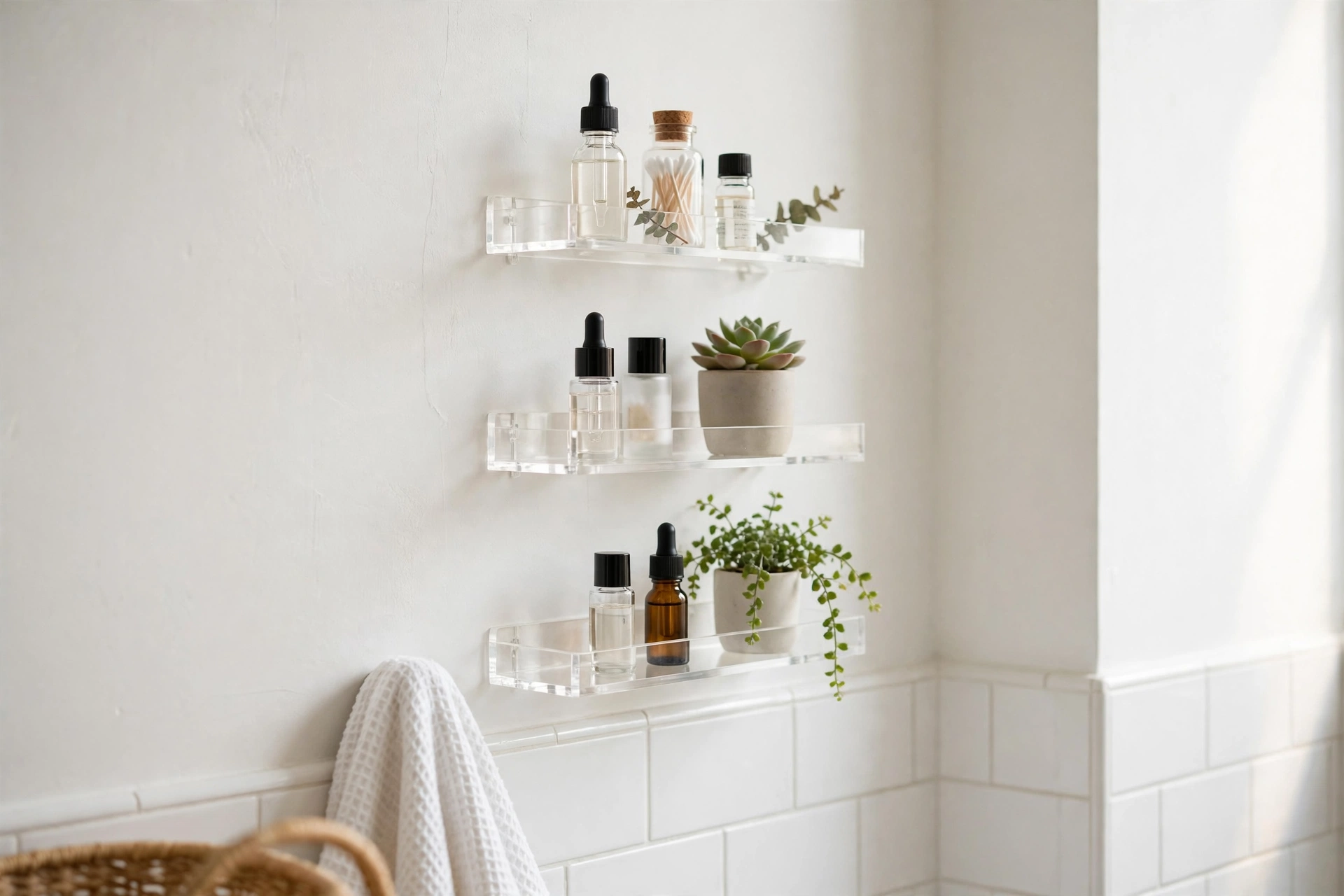
The set is four clear acrylic shelves, each with an adhesive backing or adhesive pads, that stick to a smooth wall in a bathroom, kitchen or bedroom. You clean the wall, peel the backing, press the shelf firmly, wait for the adhesive to set, and then load it with bottles and small items. Acrylic matters because it is transparent, so the shelf does not visually crowd a small bathroom the way a wooden or metal shelf would, and it wipes clean when shampoo or oil spills on it. Four shelves mean you can spread storage across a wall: one for daily face wash and toothpaste, one for hair oil and shampoo, one for kitchen spices near the stove, and one spare. If your home is getting organized room by room, this pairs with our silicone cooking utensil set review as another small upgrade that makes a rented kitchen feel like your own.
Pros
What it does well
The first win is zero drilling. No landlord permission, no drill machine, no wall plugs, and no deposit risk, which is the entire reason this product exists. The second win is transparency. Clear acrylic shelves disappear visually, so a small bathroom looks the same size after adding four shelves, which a wooden rack would not allow. The third win is placement freedom. Shelves go exactly where you use things: beside the mirror, above the sink, next to the stove, or inside a cabinet door, rather than where a standing rack happens to fit. The fourth win is the price for four shelves. Treat the price band of around ₹949 as approximate, but at that level four shelves cost less than one drilled wooden shelf installed by a carpenter, and you can take the lesson, if not always the shelves, to your next home.
Cons
Where it falls short — the honest cons
First, adhesive fails on rough, textured or damp walls. Smooth tile and smooth painted walls work; rough plaster, wallpaper and constantly wet shower walls do not, so test one shelf before committing all four. Second, weight limits are real. These shelves hold small bottles and jars, not a full litre of shampoo plus a heavy oil bottle plus a stack of creams, and overloading is how shelves fall at 2 a.m. Third, adhesive weakens in heat and steam. A shelf above a stove or inside a steamy bathroom without ventilation will loosen faster than one in a dry bedroom. Fourth, removal is not always clean. Good adhesive peels off tile cleanly, but on painted walls it can pull paint, so check your wall type and accept that a small paint touch-up may still be cheaper than a drilled hole.
Who should buy it
Buy it if you rent and cannot drill, if your bathroom or kitchen has smooth tile walls, or if you want small-bottle storage exactly where you use it. Buy it for hostels and paying-guest rooms, where wall rules are strictest and counter space is smallest. Skip it if your walls are rough or damp, if you need to store heavy items, or if you want permanent shelving in your own home, where a drilled shelf is stronger, cheaper per kilo, and better in every way. For renters with smooth walls and small bottles, this is the right compromise.
Buying checklist
Check your wall type first: smooth tile or smooth painted plaster works, rough plaster and wallpaper do not. Clean the wall with soap and water, dry it fully, and let the adhesive set for the full time the instructions state before loading, because early loading is the top cause of falls. Start with one shelf and a light load for a week before installing all four, so a wall problem shows up cheaply. Keep each shelf's load light and balanced, with heavier items at the bottom of the wall and lighter items higher up. Finally, photograph the wall before installing, so you have a record for your landlord, and keep the removal instructions, because the right removal method is what keeps your deposit safe.
Making adhesive actually last
Adhesive shelves fail for predictable reasons, and every one of them is preventable with preparation. The first rule is wall preparation: wash the wall with soap and water, rinse, dry it completely, and do not install on a dusty, oily or damp surface, because adhesive bonds to the dirt instead of the wall and peels off with it. The second rule is curing time: after pressing the shelf firmly for a full minute, wait the full curing time the instructions state, usually a day, before loading anything, because early loading is the single most common cause of falls. The third rule is weight discipline: each shelf holds small bottles and jars, so distribute weight across all four shelves rather than loading one shelf with everything, and keep the heaviest items on the lowest shelf.
The fourth rule is climate: steam and heat weaken adhesive, so a shelf above a stove or in a windowless steamy bathroom needs more frequent checks than one in a dry bedroom. Check each shelf monthly with a gentle tug, and if one starts peeling, remove it cleanly, clean the wall again, and reinstall with fresh adhesive pads rather than pressing a failed pad back down. For removal, warm the adhesive gently with a hair dryer and slide dental floss behind the pad, which releases most adhesives from tile without damage. Good preparation turns a shelf that falls in a week into a shelf that holds for a year.
Verdict: the self-adhesive acrylic shelf set is a renter's storage hack that works within its limits. Four clear shelves, no drilling, storage exactly where you need it, for around ₹949 as an approximate band. Test your wall first, load lightly, and it will turn wasted wall space into useful storage without costing you a deposit.
Share this article