Somnath Temple Guide: Darshan, Aarti Timings and How to Plan the First Jyotirlinga Visit
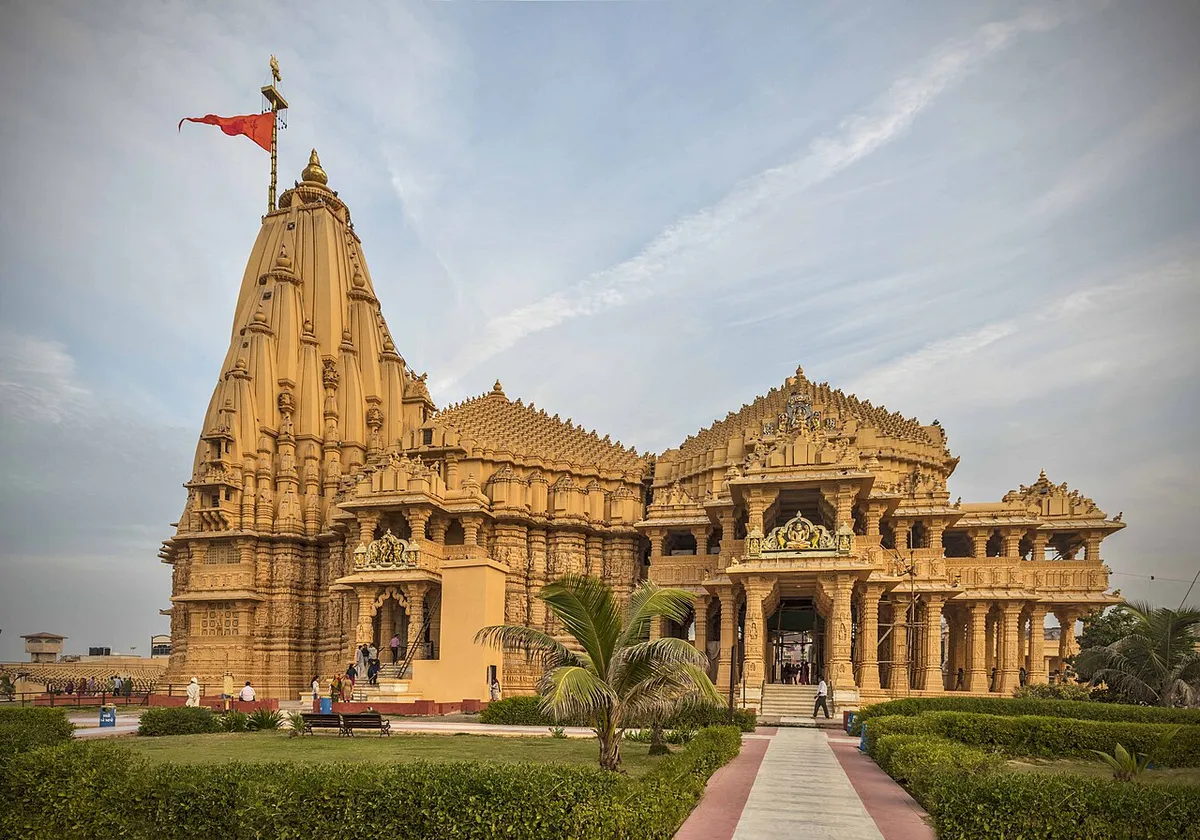
Somnath is where the Jyotirlinga pilgrimage begins. The temple at Prabhas Patan, near Veraval on Gujarat's Arabian Sea coast, is revered as the first of the twelve Jyotirlingas of Lord Shiva — the shrine where, tradition holds, Shiva manifested to free Chandra, the moon god, from a curse, which is why the deity is Somnath, Lord of the Moon. Few temples in India carry its emotional charge: destroyed and rebuilt repeatedly across the centuries, the present temple, raised after Independence and inaugurated in 1951 under the Shree Somnath Trust, has become a symbol of civilisational resilience as much as a place of worship.
It is also, happily, one of the most manageable of the great pilgrimages. The complex is orderly, the sea is a two-minute walk from the sanctum, and the town is small enough to cover on foot. This guide covers the darshan rhythm, the aartis worth planning around, the nearby sacred sites most visitors miss, and the practicalities that make the difference between a rushed halt and a proper visit.
The temple and its setting
The temple rises in the Maru-Gurjara (Solanki) style, all carved stone and a soaring shikhara, facing the sea it has watched for a thousand years. Just outside the complex, the Baan Stambh — the arrow pillar on the sea wall — points south across an uninterrupted stretch of ocean towards the South Pole, a detail that has fascinated visitors for generations. Darshan is continuous through the day from early morning to late evening, and the queue system is well organised; outside festival peaks such as Mahashivratri and the month of Shravan, waits are usually reasonable, and early morning is the calmest window of all.
Plan your clothing and bags before you arrive: security is strict, electronic items and leather goods stay outside, and free cloak-room facilities are available near the entrance. Dress modestly, carry your offerings simply, and keep an hour unhurried for the complex itself — the architecture rewards a slow circumambulation, and the sound of the sea is part of the darshan here.
Aarti, the light-and-sound show, and the rhythm of a Somnath day
If you have one evening in Somnath, build it around the 7 pm aarti. The sanctum glows, the conches sound against the sea wind, and afterwards the temple's light-and-sound show narrates the shrine's long history in the open air. Mornings begin with the 7 am aarti; the noon aarti suits those arriving on mid-day trains. Many pilgrims stay two nights without running out of temple time — Somnath repays repetition, and a second, quieter darshan on your last morning is often the one people remember.
“Destroyed and rebuilt across a thousand years, Somnath is less a monument than a habit of faith that refused to stop.”
Beyond the main temple: Sangam, Bhalka Tirth and the old shrines
- Triveni Sangam: the confluence of the Hiran, Kapila and Saraswati rivers, a short drive from the temple, where pilgrims take a ritual dip and priests perform ceremonies on the ghats.
- Bhalka Tirth: the site associated with the departure of Lord Krishna, marked by a temple and a peepal tree — an essential stop on the Somnath half-day circuit.
- Gita Mandir and the cluster of smaller shrines near the Sangam, easily combined with the main darshan in one unhurried morning.
- Somnath beach and the promenade by the temple for sunset, when the shikhara is lit and the fishing boats come in.
How to reach and where Somnath fits in a Gujarat trip
Veraval Junction, a few kilometres away, is the practical railhead, with Somnath's own station even closer; the nearest airports are at Diu and Rajkot, both connected by road. The classic Gujarat pilgrim circuit links Somnath with Dwarka — another of the Sapta Puri and home to the Dwarkadhish temple — with Gir's lion country between them. Our Dwarka–Somnath tour strings that coast together, and the 12 Jyotirlingas in India overview helps you place Somnath in the full twelve-shrine map. Start the trip with a night in the old city using our Ahmedabad heritage walk guide, and see Gujarat destinations for the wider state.
Best months are October to March, when the sea breeze keeps the coast pleasant; Mahashivratri and Shravan bring the deepest devotional atmosphere and the largest crowds, so book stays early if you travel then.
Festivals, and giving Somnath two days
Somnath's calendar peaks at Mahashivratri and through the month of Shravan, when the temple town fills with devotees and the aartis carry an intensity that ordinary weeks cannot match; Kartik Purnima is the other great gathering. If you come for a festival, book rooms well ahead, expect security and queues to run longer, and build your darshan around the earliest aarti of the day. If you come in a quiet month, use the gift of time: darshan at dawn, the Sangam and Bhalka Tirth circuit mid-morning, a slow afternoon, and then the evening aarti and light-and-sound show — that single unhurried day is the complete Somnath experience, and a second morning darshan before you leave is the version pilgrims describe years later.
Somnath also works as the gentle end of a longer Saurashtra loop. Many travellers arrive from Dwarka via Porbandar and the coastal highway, or break the journey in Gir — the only home of the Asiatic lion — making this corner of Gujarat a rare trip where a Jyotirlinga, a Char Dham and a lion safari sit within a few hours of each other. However you route it, keep the temple itself unhurried: Somnath has been waited for by centuries of pilgrims, and it does not reward rushing now.
Practicalities, briefly: keep your footwear and belongings in the designated areas outside the sanctum complex, expect a security check at entry, and choose accommodation in Somnath town itself rather than Veraval if you want to walk to the evening aarti — the temple area at night, lit against the sea, is half the experience. Prasad and offerings are available within the complex, the Trust runs guest facilities for pilgrims on modest budgets, and the promenade outside is at its best in the hour after the evening aarti, when local families take the sea air and the town feels entirely itself.
- Vedic Tithi — Somnath Temple: First Jyotirlinga Darshan & Travel Guide
- The Unstumbled — Somnath Temple Complete Visitor Guide
- Trip to Temples — Somnath Jyotirlinga
Share this article