Winter School Trip Planning Checklist for Chandigarh Schools: Permission, Packing and Safety
By My Quick Trippers · 23 Oct 2026
13 min read · Travel Planning
Planning a winter school trip from Chandigarh is mostly paperwork, weather-watching and headcounts — the fun parts come later. This winter school trip planning checklist for Chandigarh schools covers the three things that decide whether a trip runs smoothly: a complete permission and consent process, a short packing summary, and a safety plan that survives contact with Himalayan weather. It is written for trip coordinators, accompanying teachers and parents, and it is deliberately cautious: where a detail depends on the school, the operator or the weather on the day, this guide says so instead of filling the gap with a promise.
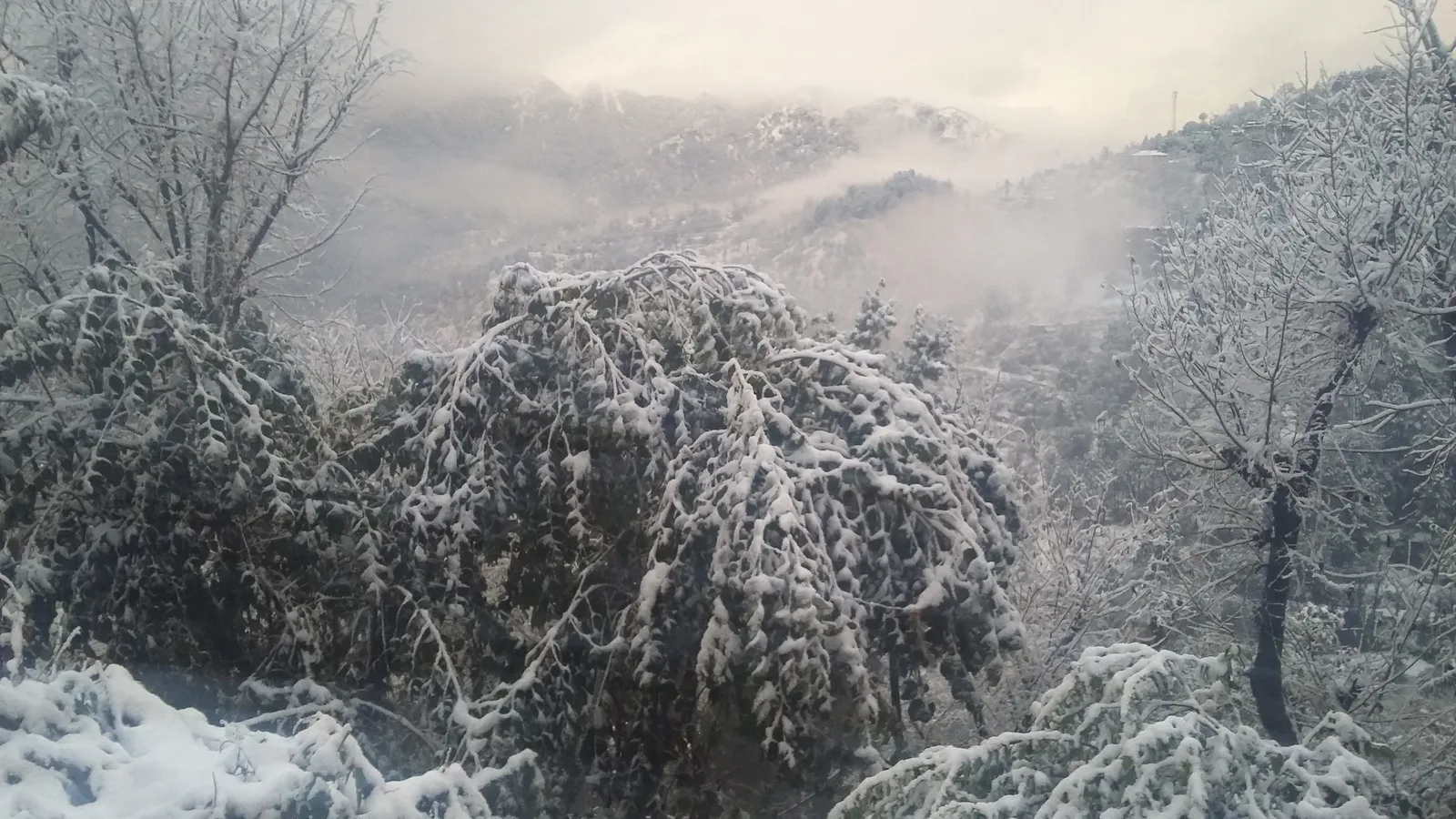
One note on the photo above before anything else: it is a historic winter shot of snow-covered trees in Shimla, used to show what a Himalayan winter can look like — not a forecast. Snowfall on any particular school trip is never guaranteed, and no itinerary in this guide depends on snow falling. The same honesty runs through the rest of this checklist: every commercial detail is subject to confirmation, and the way to turn this planning into a booking is to Request school quote.
Start with permission: the consent form checklist
The consent form is the document parents actually read, so it should answer their questions before they have to ask them. The CBSE study-tour circular Acad-40/2014 sets the shape of good practice here: parental written permission, a senior teacher in charge, a senior lady teacher when girls travel, emergency planning that covers weather and first aid, and a clear educational purpose for the trip. A school's own policy always prevails over any generic template, but a complete consent pack for a winter excursion normally covers the following.
- Destination, dates and day-wise outline, including which visits are confirmed and which are weather-dependent or subject to institutional approval.
- Transport plan: school-to-school coach travel, daytime mountain driving where possible, and what happens if a road closes.
- Accommodation arrangement: separate boys' and girls' rooms, supervised subgroups, and the school's safeguarding policy for night supervision.
- Supervision plan: one accompanying teacher per 10 students as the planned ratio, with the school appointing the accompanying teachers.
- Activity list with age conditions stated plainly, so parents can see exactly which activities their child is and is not eligible for.
- Medical and dietary needs, collected privately by the school only as necessary for the trip — never through a public form, and never published anywhere.
- Emergency contacts and communication plan: who calls parents, in what order, and how updates are shared if plans change mid-trip.
- Photography rule: no pupil photos are published without consent, and this guide contains no pupil names, faces or personal details.
- Costs and cancellation terms, stated as subject to confirmation until the school receives its written quote.
Keep the signed forms with the school, not with the travel operator's marketing. If a parent asks a question the form does not answer — most often about supervision at night or about what happens if a child falls ill — treat that as a gap in the form, not as a difficult parent, and close the gap before departure.
Write the risk assessment before you shortlist a destination
A school trip risk assessment for the Himalayas in winter is not a generic form with the destination name changed. It should name the actual hazards of the chosen route and season: cold mornings and evenings, icy or wet walking surfaces, possible road closures, long drives between stops, and the different risks of each activity. For every hazard, the assessment should say who owns the response — the school, the coach operator, the hotel or the activity provider — and what the fallback is if conditions change.
Age rules deserve their own line in the assessment, because they exclude some pupils from some activities and parents need to know that early. Under the Uttarakhand river-rafting provision reviewed for this guide, rafting carries a minimum age of 14 and kayaking a minimum age of 18. That means many schoolchildren cannot take part in those activities at all. Before any activity is offered to a group, recheck the current regulation, the provider's own conditions and the school's risk process — rules, operators and river conditions all change, and a brochure line is not a safety clearance.
The same discipline applies to everything else that is easy to over-promise. Institutional visits happen only if the institution approves them and is open on the day. Wildlife sightings are never guaranteed. Insurance cover is never guaranteed by a blog post or a brochure — the school should see the actual cover terms in writing before it tells parents what is covered. A risk assessment that admits these limits is more useful than one that pretends they do not exist.
Is Mussoorie safe for school trips in December?
This is the question parents ask most, and the honest answer has two parts. Mussoorie in December is a well-travelled school destination with a long history of educational visits — Chandigarh schools have run Dehradun, Mussoorie and Dhanaulti circuits before, including science and heritage stops — and a December trip there is a normal, workable plan. But no destination is safe in the abstract. Safety on a given week depends on the weather window, the state of the roads, the pace of the itinerary, and the supervision in place. A group that drives in daylight, keeps its walking routes supervised and low-risk, and has a fallback day will have a very different trip from a group on a rushed schedule in bad weather.
Three December specifics are worth planning around. First, cold is certain and snow is not: pack for cold, and treat any snowfall as a bonus rather than the point of the trip. Second, Dhanaulti sits higher than Mussoorie, so treat it as a weather-dependent extension and be ready to swap it for a lower-altitude day rather than pushing on through a closure. Third, keep evenings indoors and supervised, with warm rooms and a clear night routine, instead of adding late outdoor activities to an already long day. For a quieter take on the same hills, see our guide to Dhanaulti and Kanatal, the quiet escapes near Mussoorie.
Winter packing: the short summary checklist
Packing for a Himachal winter is mostly layers and grip: warm base layers, a fleece, a windproof outer jacket, a warm cap and gloves, and sturdy closed shoes with good grip for wet or icy paths. Add a small daypack, a reusable water bottle, sunscreen and lip balm, and personal medication handed over through the school's own process. That is the whole summary — the detailed clothing and gear guide, with age-wise notes and what to leave at home, lives in our companion post, the winter packing list for school trips to Himachal from Chandigarh. The school's own packing list prevails wherever it differs.
- Layers: base layer, fleece, windproof outer jacket.
- Warm cap, gloves and a spare pair of warm socks.
- Sturdy closed shoes with grip; no smooth-soled shoes on hill paths.
- Daypack, water bottle, sunscreen, lip balm and personal medication via the school's process.
Teacher checklist: supervision parents can actually check
Parents cannot inspect a supervision plan they cannot see, so make it visible. The planned ratio for school groups in this guide is one accompanying teacher per 10 students. Two points of honesty matter here. First, the ratio is a planned supervision arrangement, not a claim about any law. Second, the school appoints the accompanying teachers: My Quick Trippers does not employ or supply qualified schoolteachers, and any page that implied otherwise would be wrong. What the operator arranges is ground transport, accommodation, a coordinator and local operators, configured around the school's own staffing.
- Named senior teacher in charge, plus a senior lady teacher when girls travel, as the CBSE circular describes.
- Subgroups of ten with a named teacher each, buddy pairs within subgroups, and headcounts at every boarding, stop and return.
- Separate boys' and girls' accommodation and supervised subgroups, set under the school's safeguarding policy.
- A night supervision rota agreed before departure, with teachers' rooms placed by the school's policy, not by convenience.
- First-aid kit, nearest hospital location noted for each overnight stop, and a clear route for a child who falls ill.
- A behaviour briefing pupils actually hear: road rules, water rules, staying with the subgroup, and what to do if separated.
- A phone and charging plan so the lead teacher is contactable through the day, including on stretches with weak signal.
Winter road safety for school buses
Winter road safety for school buses is where a good itinerary earns its keep. Mountain roads in winter reward unhurried driving and punish tight schedules, so the plan should protect daylight hours for the hill sections, include real rest stops on long transfers, and refuse the temptation to make up lost time after dark. The coach should be checked for winter readiness before departure, the driver should be experienced on hill routes, and the group should know the simple rules that keep a bus safe: seated, seatbelts where fitted, bags stowed, and no moving around while the bus is moving.
Build the fallback into the schedule rather than improvising it. If a road closes or fog slows the climb, the plan should already say which visit drops, where the group waits, and how parents are told. A spare hour in the itinerary costs nothing; a missed connection with no plan costs a day. For longer routes, such as Nainital or Manali from Chandigarh, the same principle means adequate daytime transfer days and driver rest — never a rushed overnight mountain dash presented as an efficient itinerary.
Parents' checklist for Chandigarh families
Parents in Chandigarh do not need a second planning document; they need a short list of questions that reveal whether a trip is well run. Ask the school for the consent form early, check the planned teacher ratio and the accommodation arrangement, ask which activities have age conditions, and ask what is included and what is not — in writing, subject to confirmation, rather than from memory of an assembly announcement. Ask how the school will contact you if plans change, and how medication and dietary needs are handled on the trip.
One calendar warning matters for winter planning. A single school's winter break dates are not a city-wide holiday: for example, one Chandigarh school's 2026-27 calendar shows its winter break from 31 December 2026 to 11 January 2027, but that is one school's calendar, not a universal Chandigarh schedule. Every family should confirm its own school's term dates, exam schedule and trip window before assuming a departure date works. The same applies to trip pricing: if a figure is quoted anywhere without a date and a written quote behind it, treat it as unconfirmed.
Best winter destination for a school group from Chandigarh
There is no single best winter destination for a school group from Chandigarh, because the right choice depends on the group's age, the number of nights available and how much driving the school wants. Short-haul groups and younger classes suit Kasauli and Chail, where transfers are short and the programme can stay gentle. Shimla and Kufri suit heritage and winter-geography fieldwork over two or three nights, with the hill town's museums, ridge walks and, weather permitting, snow observation — never snow as a promise. Mussoorie, Dehradun and Dhanaulti suit a science and heritage programme, with the Forest Research Institute and science-centre style stops only where the institution approves the visit.
Dharamshala and McLeodganj suit a culture and heritage programme, with monastery etiquette and local crafts as the learning thread. Nainital, Bhimtal and Sattal suit a longer lakes and ecology programme, but only with enough nights to cover the long drive from Chandigarh without rushing. Manali and Solang suit older groups on a longer winter itinerary, with the same honesty applied throughout: winter activities there are weather-dependent, Rohtang Pass is not part of a winter school route, and no high trek in heavy snow belongs on a school itinerary. For the full Himachal picture, start with our Himachal Pradesh destination guide and our Uttarakhand destination guide, or look at the Shimla tour options and Mussoorie tour options to see how these routes are normally structured.
Best time for school trips to Mussoorie, Nainital and Shimla
For winter school trips, the November to February window is the working season, but each destination peaks differently. Mussoorie and Shimla are at their coldest and most wintry from December into January, which suits groups that want a genuine winter feel and can handle cold mornings; schools that prefer milder walking weather often choose November or February instead. Nainital runs colder by the lakes, and its longer drive means the best time is as much about the school calendar — term dates, exams and the winter break — as about the weather. In every case, the school's own calendar decides first: a perfect-weather week that clashes with exams is not a trip week at all.
From checklist to quote
Once the consent process, risk assessment, packing list and supervision plan are in place, the school needs only a short brief to get a proper quote: the number of students and the planning band (10, 20, 50 or more students), the class and age band, the number of accompanying teachers, the destination and number of nights, the dates or window, coach requirements and any dining or accessibility needs. Send that brief through the contact route and the response comes back as a written school quote, subject to confirmation — not as a price guessed from another school's trip or another season's brochure. Request school quote to start that conversation, and keep this checklist beside the reply: it is the quickest way to check whether the quote matches the supervision, safety and fallback standards this guide describes.
- CBSE circular Acad-40/2014 on standard safety measures for study tours: parental written permission, senior teacher, senior lady teacher when girls travel, emergency, weather and first-aid planning, and educational purpose. https://cbseacademic.nic.in/web_material/Circulars/2014/40_Standard_Safety_Measures.pdf
- Uttarakhand river rafting rule amendment reviewed for this guide: minimum rafting age 14 and minimum kayaking age 18 in the provision reviewed; recheck the current regulation, provider conditions and the school's risk process before offering any activity. https://uttarakhandtourism.gov.in/assets/pdf/River-Rafting-Rule-2018-Amendement-III-English.pdf
- Himachal Tourism, Shimla destination information. https://himachaltourism.gov.in/destination/shimla/
- Uttarakhand Tourism, Mussoorie destination information. https://www.uttarakhandtourism.gov.in/destination/mussoorie
- One Chandigarh school's 2026-27 calendar, cited only as that school's dates and not as a universal schedule. https://aksips45.aksips.in/webform2.aspx?sub_menu=176
Share this article