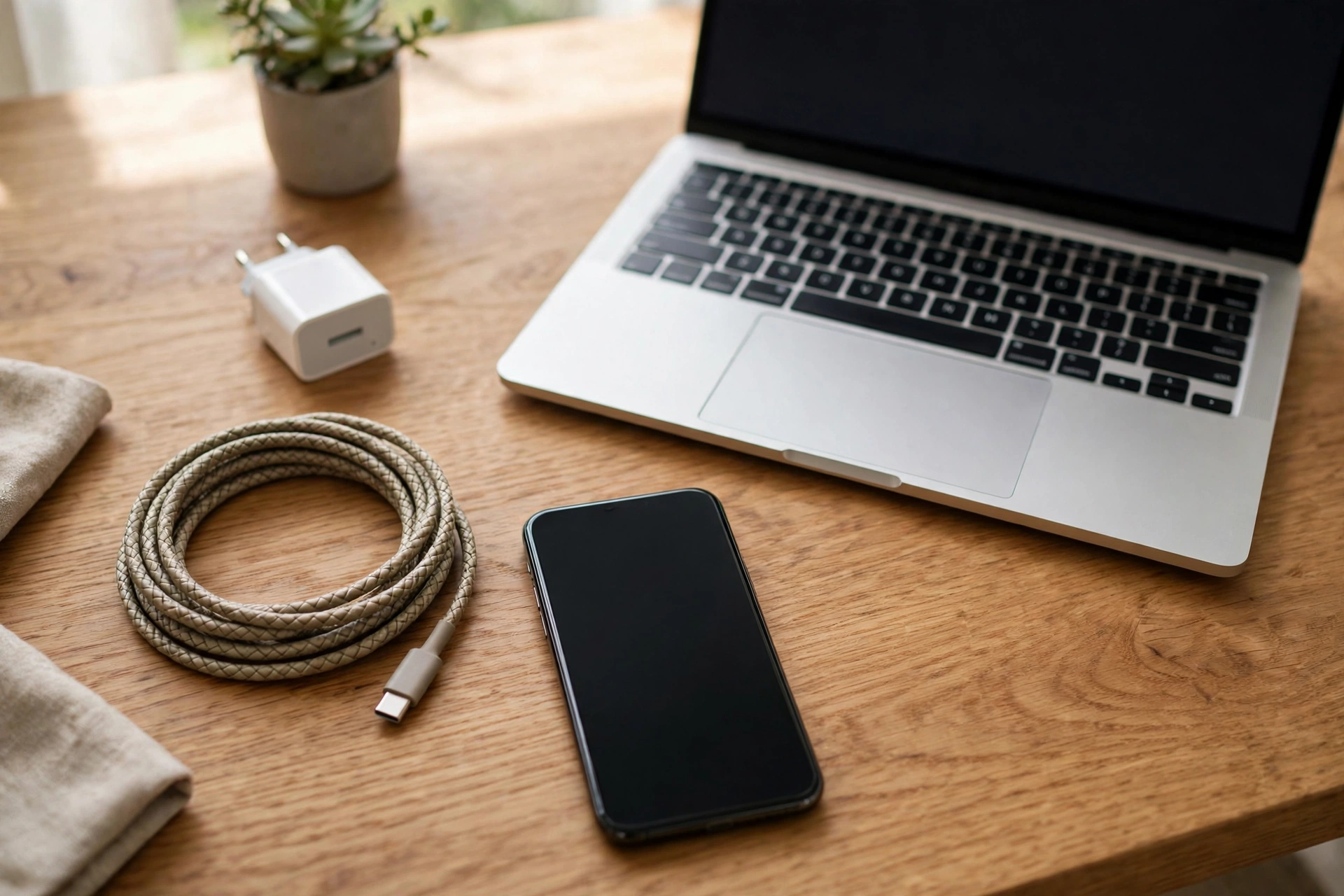
Ambrane 100W Braided Cable India Review: The Fix for Slow Charging?
By My Quick Trippers · 21 Oct 2026
8 min read · Travel Gear
Recommended gear
Ambrane 100W Braided Cable — Worth It?
Ambrane 100W braided Type-C cable
Rated cable removes the fast-charging bottleneck; match length to your use
As an Amazon Associate, we earn from qualifying purchases. We may earn a commission if you buy through these links, at no extra cost to you.
Honest verdict
this is the cheapest upgrade in the whole charging setup, and the one most people skip.
Check Price on AmazonHere is the most expensive mistake in modern charging, and it costs nothing to avoid: buying a powerful charger and connecting it with a cable that cannot carry the power. The Ambrane 100W braided Type-C cable exists to remove that bottleneck, recommended as a companion cable for 100W GaN chargers in India deal coverage by gogi.in in October 2026, at around ₹249. My verdict: this is the cheapest upgrade in the whole charging setup, and the one most people skip. If you own a 65W or 100W charger, a properly rated braided cable is not an accessory — it is the part that decides whether your expensive charger actually works at full speed.
Why the cable decides the charging speed
Charging speed is set by the weakest link in a chain of three: the charger, the cable and the device. A 100W charger connected through a cable rated for 60W delivers 60W, and a cable rated for 15W delivers 15W, no matter what the charger promises. That is the single most useful fact in this entire batch, because it explains why so many buyers feel cheated by a fast charger that charges slowly. The cable's rating is not printed on most cheap cables, which is why a known, rated cable matters. A braided cable adds a second benefit: the woven sheath resists the fraying and kinking that kills rubber cables at the connector ends, which is where almost every cable dies. Braiding does not make a cable faster by itself, but it makes a fast cable last longer, and for a cable that gets coiled, yanked and stuffed into bags daily, that durability is worth more than it sounds.
Pros
What it does well
The first win is the rating itself. A cable recommended for 100W GaN chargers is built to carry the current those chargers deliver, which removes the bottleneck problem entirely for 65W and 100W bricks. The second win is braided durability: woven sheaths survive bag life far better than smooth rubber, especially at the strain points near the connectors. The third win is the price band of around ₹249, which is a rounding error next to the charger it serves — there is no budget argument against the right cable once you have bought a fast charger. The fourth win is brand familiarity: Ambrane is a known Indian accessories brand, so the cable comes with a track record and a service channel rather than an anonymous listing and a hope.
Cons
Where it falls short — the honest cons
First, a 100W cable does nothing for a slow charger. If your brick delivers 20W, this cable delivers 20W, and the extra rating is wasted — match the cable to the charger you actually own. Second, braided cables are stiffer and slightly heavier than rubber ones, which some people dislike for pocket carry, and the braid can fray at the ends if the strain relief is poor, so check reviews for end-fraying complaints specifically. Third, length matters more than buyers expect: a cable that is too short is useless at a hotel socket, and a cable that is too long becomes a tangle, so choose the length for your real use — desk, bedside or bag — rather than defaulting to the longest option. Fourth, not every USB-C cable carries data at the same speed, and a charging-focused cable may be slower for data transfer; if you move large files over cable regularly, check the data spec separately rather than assuming it.
Cable vs charger: where to spend first
The honest ordering is charger first, cable second, and never cable instead of charger. A rated cable cannot make a slow charger fast, and a fast charger cannot overcome an unrated cable. The practical rule is simple: buy the charger for your fastest device, then spend the small extra amount on a cable rated at or above the charger's output. That is the entire philosophy of this post, and it applies to every charger in this batch, from the AILKIN brick to the Portronics bank. If you already own a fast charger and you are unsure about your cable, the cable is the first thing to replace — it is the cheapest experiment in charging, and the result shows up immediately in charging time.
Who should buy it — and who should skip it
Buy it if you own a 65W or 100W charger, if your current cable is fraying at the ends, or if you have ever wondered why a fast charger charges slowly. It is also a good spare for a travel bag, where one rated cable covers every device. Skip it if your charger delivers 20W or less, if you only charge overnight and speed does not matter, or if you need a very short cable for a pocket setup and the braided stiffness bothers you. Skip it too if you need high-speed data transfer as the priority — check the data rating separately before ordering.
Buying checklist before you order
Confirm the wattage rating in the listing and match it to your charger's output, and choose the length for your actual use. Check reviews for end-fraying and connector complaints, and confirm the connector types on both ends — USB-C to USB-C is the standard for fast charging, but some devices still need USB-A on one end. Check the return window, and treat the price band of around ₹249 as approximate: cable prices vary by length, and the cheapest unbranded cable is not the same purchase as a rated one. For the bank this cable most often serves, our Ambrane 10000mAh power bank review covers the everyday carry it pairs with.
How to tell your cable is the bottleneck
Most buyers discover a cable bottleneck by accident: a new fast charger that charges slowly, blamed on the charger, the phone, or the socket, when the cable is the actual limit. The symptoms are consistent. The phone charges, but slowly, and the charging indicator never shows the fast-charging label your phone normally displays. The charger stays cool while the phone charges slowly, which suggests power is not flowing at the rate the charger can deliver. Swapping in a different cable suddenly fixes the speed, which confirms the diagnosis. The test costs nothing: borrow a known rated cable, charge for ten minutes, and compare the battery percentage gained against the old cable. If the difference is large, the old cable was the bottleneck, and replacing it is the cheapest fix in charging.
The second test is the label test: check whether your phone shows its fast-charging indicator with the new cable, since that indicator reflects the negotiated charging mode rather than a marketing claim. The third test is heat: a cable that grows noticeably warm at the connectors during charging is struggling, and should be replaced regardless of speed. These three checks take minutes, and they save buyers from replacing a good charger or blaming a good phone for a bad cable's work.
Length deserves a final word, because it is the cable choice buyers regret most. A one-metre cable suits a desk or a power bank carried in the same pocket, where excess cable is clutter. A two-metre cable suits a bedside or a hotel room, where the socket is never where you want it. Longer than two metres, and the cable becomes a tangle that needs its own management, which defeats the tidiness a braided cable promises. The practical approach is to own two lengths: a short cable for the bag and a long cable for the bedside, rather than one compromise length that serves neither well. At the price band of around ₹249, that is an affordable pair, and it means the right cable is always where you need it instead of the wrong length being everywhere.
The bottom line
The Ambrane 100W braided Type-C cable earns its place as the cheapest meaningful upgrade in charging: it removes the bottleneck that silently slows fast chargers, survives bag life better than rubber, and costs less than a meal. It will not make a slow charger fast, and it should not be asked to. Pair it with a charger that deserves it, and it disappears into the background — which is exactly what a good cable should do.
Share this article