Yamunotri Dham: Trek Guide, Best Time & How to Reach
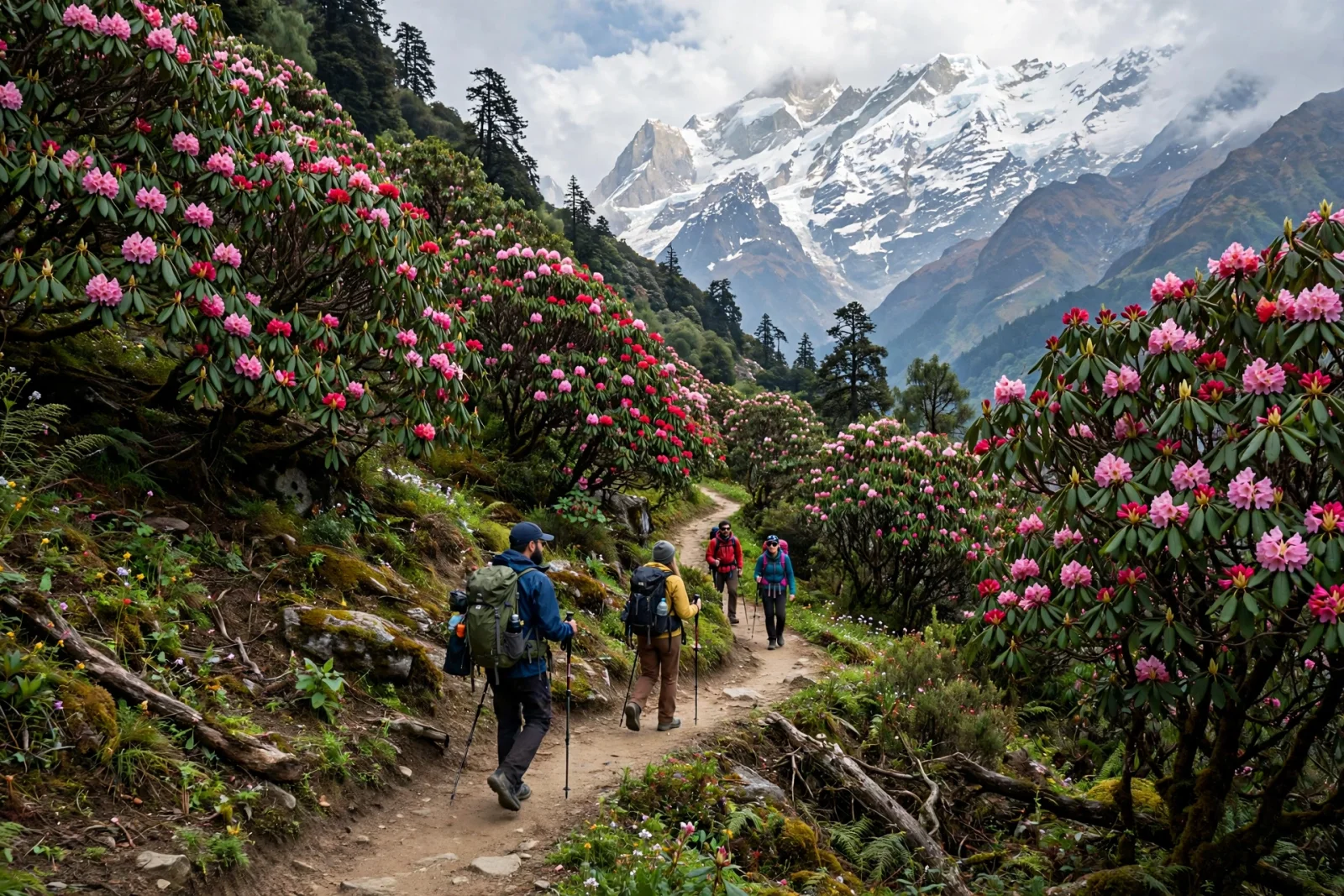
Yamunotri Dham, the source of the Yamuna river, is the westernmost shrine of the Char Dham circuit and traditionally the first dham pilgrims visit. The temple sits at about 3,290 metres in the Uttarkashi district of Uttarakhand, reached by a scenic 5 to 6-kilometre trek from the road-head at Janki Chatti through forests of pine and rhododendron.
This guide covers the Yamunotri trek in detail — distance, difficulty, timings — plus the best time to visit, how to reach Yamunotri from Delhi, Dehradun and Haridwar, what to expect at the temple, and a practical itinerary that pairs it with Gangotri. If Yamunotri is the start of your Char Dham Yatra, start here.
About Yamunotri Dham
Yamunotri is dedicated to Goddess Yamuna, and the actual source of the river lies a kilometre above the temple at Champasar Glacier — a trek most pilgrims skip in favour of the temple darshan. The shrine itself was built in the 19th century by Tehri Garhwal royalty and rebuilt after damage over the years. Its black marble idol of the goddess, flanked by shrines to Divya Shila, makes for an intimate darshan — the temple precinct is small and the atmosphere deeply peaceful compared to the bustle of Badrinath.
The hot springs of Surya Kund, beside the temple, are famous for a unique ritual: pilgrims tie rice and potatoes in cloth and cook them in the boiling spring water as prasad. The water is genuinely scalding — do not attempt to bathe in it. A short distance away, the cooler waters of Gauri Kund allow the customary dip before darshan.
The Yamunotri Trek: Distance, Route and Difficulty
The trek from Janki Chatti to Yamunotri is 5 to 6 kilometres one way, climbing roughly 600 metres. Fit walkers complete it in 2.5 to 3.5 hours up and about 2 hours down. The path is paved and well-maintained, lined with dhabas, tea stalls, resting benches and rain shelters — this is a pilgrim trail, not a wilderness trek, and it is busy through the season.
Start early, ideally by 6 or 7 AM, to finish darshan and return before afternoon weather builds up. Ponies and palkis are available at Janki Chatti for those who prefer not to walk, with regulated rates at official counters. Carry water, light snacks and a rain layer; the trail can be slippery after rain. The difficulty is moderate — most reasonably active people manage it comfortably, though the altitude makes it feel tougher than a plains walk of the same length.
Best Time to Visit Yamunotri
The temple typically opens in late April or May — the 2027 dates will be announced by the authorities closer to the season — and closes around Diwali. May to June offers the longest days and the liveliest trail, while September to October brings clear skies, autumn colours and thinner crowds. Many seasoned Char Dham travellers rate September as the finest month for Yamunotri.
The monsoon months of July and August make the trail slippery and the Barkot–Janki Chatti road vulnerable to landslides. If you travel then, start the trek at first light and keep a buffer day. Winter closes the shrine entirely; the goddess's winter seat is at Kharsali village near Janki Chatti, where worship continues through the snow months.
How to Reach Yamunotri
By air
Jolly Grant Airport near Dehradun is the nearest airport, about 210 kilometres from Janki Chatti via Barkot. Taxis run the full route in a long day's drive. There is no helicopter service to Yamunotri itself — the dham is reached only by the trek — though heli pilgrims on the Char Dham circuit typically visit Yamunotri and Gangotri by road as part of mixed itineraries.
By train
Dehradun is the nearest major railhead, well connected to Delhi by overnight and day trains. From Dehradun, the road to Barkot via Mussoorie takes about 5 to 6 hours. Haridwar is the alternative railhead for pilgrims combining Yamunotri with the full Char Dham from the plains.
By road
The standard route is Delhi – Dehradun – Mussoorie – Barkot – Janki Chatti, roughly 440 kilometres from Delhi. Barkot, about 45 kilometres short of Janki Chatti, is the base town with the best hotels and the registration counter. The final stretch from Barkot to Janki Chatti is narrow mountain road — leave Barkot by 6 AM to start the trek early. Private vehicles go up to Janki Chatti, where parking and the trek booking counters are located.
Suggested Yamunotri Itinerary
- Day 1: Drive Delhi to Barkot via Dehradun and Mussoorie (long day, 9-10 hours). Overnight Barkot.
- Day 2: Early drive to Janki Chatti, trek to Yamunotri, darshan and Surya Kund rituals, trek back. Overnight Barkot.
- Day 3: Drive Barkot to Uttarkashi (5-6 hours) to continue to Gangotri, or return toward Dehradun/Haridwar.
- Extension: Add a day in Barkot for the serene drive to Kharsali village, the winter seat of Goddess Yamuna.
- Pairing: Yamunotri and Gangotri combine naturally into a 4-5 day circuit from Dehradun or Haridwar.
Beyond the Temple: Kharsali and Village Life
Most pilgrims rush back to Barkot after darshan, but the Yamunotri region rewards a slower look. Kharsali village, near Janki Chatti, hosts the goddess's winter seat — a beautiful old wooden temple where worship continues through the snow months, and visiting it completes the Yamunotri story. The villages along the Barkot road are classic Garhwali hamlets: terraced fields, slate-roofed houses, and some of the warmest hospitality in the hills.
Food here is simple and satisfying — hot dal-chawal, mandua (finger millet) rotis, and the ubiquitous maggi at trail dhabas. If your itinerary allows, spend an unhurried evening at Barkot: the town's apple orchards, the views over the Yamuna valley, and the quiet are a gentle counterpoint to the trek day. Yamunotri is the first dham precisely so the yatra begins gently — honour that by not rushing it.
Can I visit Yamunotri in winter?
The temple is closed and the trail is under snow, but the goddess's winter seat at Kharsali remains accessible and active. A winter visit to Kharsali offers darshan without crowds — a serene alternative for the devout, though it is not the Yamunotri temple experience itself.
Frequently Asked Questions
Is the Yamunotri trek difficult for beginners?
It is a moderate trek that most beginners complete comfortably. The path is paved with plenty of rest stops, and ponies or palkis are available. The main challenge is the altitude — walk slowly, hydrate, and avoid the trek if you have serious cardiac or respiratory conditions without medical clearance.
Can senior citizens visit Yamunotri?
Yes. Many elderly pilgrims use palkis from Janki Chatti, which carry them the full 5-6 kilometres. Alternatively, seniors can wait at Janki Chatti while family members complete the darshan. There is no helicopter service to Yamunotri, so the palki is the standard assisted option.
What are the Yamunotri temple timings?
The temple generally opens early morning around 6 AM and closes in the evening after aarti, with a midday break. Aarti timings shift slightly through the season. Arrive before 9 AM for the calmest darshan and to complete the return trek in daylight.
Is accommodation available near Yamunotri?
Options at the temple itself are limited to basic dharamshalas and a few guesthouses — most pilgrims stay at Barkot or Janki Chatti, which have a wider range of hotels. Book Barkot in advance for May, June and long weekends.
What is cooked in Surya Kund?
Pilgrims tie raw rice and potatoes in muslin cloth and lower them into the boiling spring; the cooked offering is distributed as prasad. Vendors near the temple sell the cloth bundles and will guide first-timers through the ritual.
Yamunotri sets the tone for the entire Char Dham — begin here, walk the forest trail at dawn, and the rest of the circuit falls into place. Pair it with Gangotri for the classic two-dham opening of the yatra, or continue onward to Kedarnath and Badrinath for the full circuit. To arrange the route, stays and trek support around your dates, chat with our travel experts on WhatsApp to plan this trip.
Share this article