Gangotri Dham: Complete Pilgrim Guide
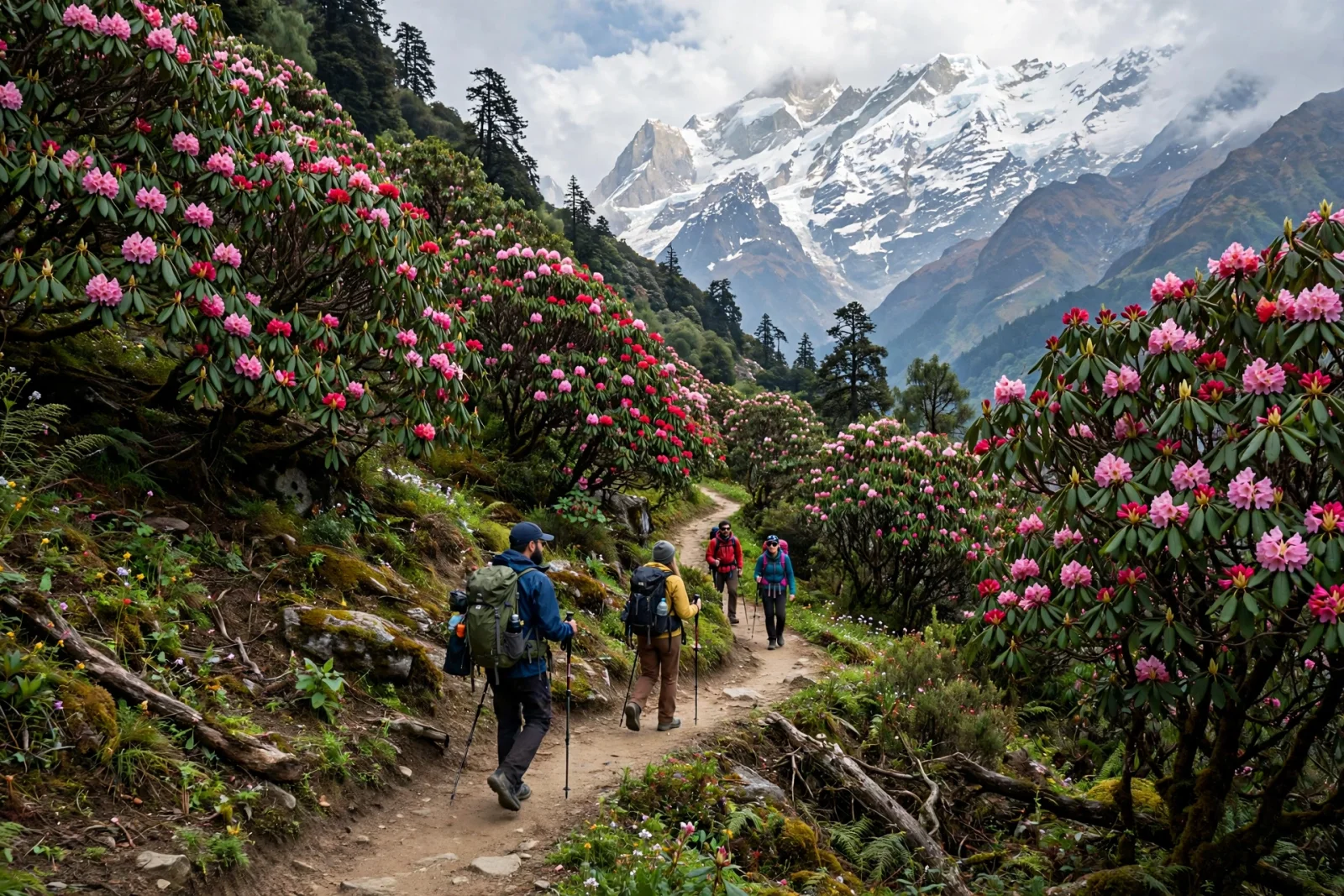
Gangotri Dham, the origin of the Bhagirathi — the principal stream of the Ganga — is the second shrine of the Char Dham circuit, set at about 3,100 metres in the Uttarkashi district of Uttarakhand. Unlike Kedarnath and Yamunotri, no long trek is needed: the road reaches the temple town, and the shrine stands a short walk from the riverbank where pilgrims perform evening aarti as the Bhagirathi rushes past.
This complete pilgrim guide covers the legend and significance of Gangotri, how to reach it from Delhi, Dehradun, Haridwar and Uttarkashi, the best months to visit, the famous Gaumukh trek to the actual glacier source, nearby places like Harsil, and a practical itinerary. Everything below is written for real trip planning, not brochure copy.
The Legend and Significance of Gangotri
Hindu tradition holds that King Bhagirath meditated here to bring the celestial Ganga down to earth to liberate his ancestors, and that Lord Shiva caught the river's force in his locks, releasing it gently — the spot where this happened is marked by the Shivling-shaped rock, the Bhagirath Shila, near the temple. The present temple was built in the early 18th century by a Gorkha general and rebuilt by the Jaipur royal family; its white granite structure gleams against the deodar forests and snow peaks.
The actual source of the Bhagirathi lies 19 kilometres upstream at Gaumukh, the snout of the Gangotri Glacier — one of the largest glaciers in the Himalayas. While the temple marks the spiritual origin most pilgrims visit, the Gaumukh trek draws serious trekkers and the devout alike, passing through the Gangotri National Park with its blue sheep, snow leopards and Himalayan monals.
Best Time to Visit Gangotri
The temple typically opens in late April or May on Akshaya Tritiya and closes around Diwali; the 2027 dates will be announced by the authorities closer to the season. May to June is the main yatra season with pleasant days and cold nights. September to October is arguably the finest window — post-monsoon skies, golden larch and birch forests, and far fewer pilgrims.
July and August bring monsoon rain and landslide risk on the Uttarkashi–Gangotri road, particularly around the unstable stretches near Bhatwari. Winter buries the town in snow; the goddess's winter seat is at Mukhba village near Harsil. For the Gaumukh trek, the practical window is May to June and September to October, when the trail is clear and the national park permits are routinely issued.
How to Reach Gangotri
By air
Jolly Grant Airport near Dehradun, about 250 kilometres away, is the nearest airport. The drive via Uttarkashi takes a full day and is best split with a night halt at Uttarkashi. Helicopter services to Gangotri operate from Dehradun as part of Char Dham helicopter circuits — see our Gangotri Yatra by Helicopter options for same-day darshan formats.
By train
Dehradun is the nearest major railhead with good Delhi connections. From Dehradun, shared and private vehicles run to Uttarkashi (about 5-6 hours) and onward to Gangotri. Haridwar serves as the railhead for pilgrims doing the full Char Dham from the plains.
By road
The route runs Delhi – Haridwar/Rishikesh – Uttarkashi – Gangotri, roughly 500 kilometres from Delhi. Uttarkashi, about 100 kilometres short of Gangotri, is the base town with the best accommodation and the Kashi Vishwanath temple worth an evening visit. The final 100-kilometre stretch follows the Bhagirathi upstream through Harsil's apple orchards and pine forests — leave Uttarkashi by 6 AM to reach Gangotri with the day in hand.
The Gaumukh Trek and Nearby Places
Gaumukh: trek to the source of the Ganga
The 19-kilometre trek from Gangotri to Gaumukh (3,890 metres) is typically done over two days with a night halt at Bhojbasa, 14 kilometres in. Permits are required from the forest department at Gangotri, with daily caps on trekkers to protect the fragile zone. The trail passes Chirbasa's birch forests and opens to the massive Gangotri Glacier snout — a wall of ice from which the Bhagirathi emerges. Only trekkers with reasonable fitness should attempt it, and a guide is strongly recommended.
Harsil: the hidden valley
Twenty-five kilometres before Gangotri, Harsil is a stunning valley of apple orchards, deodar forests and wooden Himalayan houses, set where the Bhagirathi meets the Jalandhari. It makes a superb one or two-night halt — quieter and in many ways more beautiful than Gangotri town itself. Wilson's cottage, a colonial-era relic, and the nearby Mukhba village (Ganga's winter seat) are worth the detour.
Pandava Gufa and Surya Kund
Near Gangotri town, Pandava Gufa is a serene meditation cave associated with the Pandavas' journey, reached by a short forest walk. Surya Kund, a thundering waterfall-pool on the Bhagirathi just above town, is where the river drops through a narrow gorge — visit at midday when the light fills the gorge. Both fit easily into a relaxed Gangotri halt.
Suggested Gangotri Itinerary
- Day 1: Drive Delhi to Uttarkashi via Haridwar and Rishikesh (long day). Evening at Kashi Vishwanath temple. Overnight Uttarkashi.
- Day 2: Drive Uttarkashi to Gangotri via Harsil, stopping for photographs. Evening Ganga aarti on the Bhagirathi. Overnight Gangotri.
- Day 3: Morning darshan, Pandava Gufa and Surya Kund. Afternoon drive back to Uttarkashi or onward to Harsil. Overnight halt.
- Day 4: Return to Haridwar/Dehradun, or continue the Char Dham circuit toward Kedarnath via Tehri and Guptkashi.
- Gaumukh extension: Add 2-3 days — Day 1 trek Gangotri to Bhojbasa, Day 2 to Gaumukh and back to Bhojbasa, Day 3 return to Gangotri.
What is the best time of day for darshan at Gangotri?
Dawn, without question — the mangala aarti as the first light hits the Bhagirathi, with thin crowds and the river at its most luminous. The evening Ganga aarti on the riverbank is the day's second high point. Midday darshan works but the light and atmosphere are flat by comparison.
Frequently Asked Questions
Is there a trek to reach the Gangotri temple?
No — the road reaches Gangotri town and the temple is a short walk from the parking area, much like Badrinath. The famous trek here is the optional 19-kilometre Gaumukh trek to the glacier source, which needs permits and 2-3 days.
What are the Gangotri temple timings?
The temple generally opens around 6 AM and closes after evening aarti, with a midday break. Mangala aarti at dawn and the evening Ganga aarti on the riverbank are the two high points of the day. Timings shift slightly through the season.
Do I need permits for Gangotri?
The temple town needs only the standard Char Dham registration. The Gaumukh trek requires a separate forest department permit issued at Gangotri, with a daily cap on numbers — arrange it a day in advance in peak season.
Can I combine Gangotri with Yamunotri?
Yes, and most pilgrims do — Yamunotri then Gangotri is the traditional order. The Barkot to Uttarkashi drive takes 5-6 hours, making a 4-5 day Yamunotri–Gangotri circuit from Dehradun or Haridwar very practical.
Is Gangotri cold in May?
Yes — expect daytime temperatures around 10-15°C and nights near freezing, especially early in the season. Carry proper woollens and a windproof layer regardless of the month; the wind off the river is biting in the evenings.
Gangotri is where the Ganga's story begins, and standing on the riverbank at evening aarti, you understand why millions make this journey. Visit as part of the Char Dham Yatra, pair it with Yamunotri for the classic opening circuit, or add the Gaumukh trek for the full source-to-shrine experience. To plan the route, halts and permits around your dates, chat with our travel experts on WhatsApp to plan this trip.
Share this article