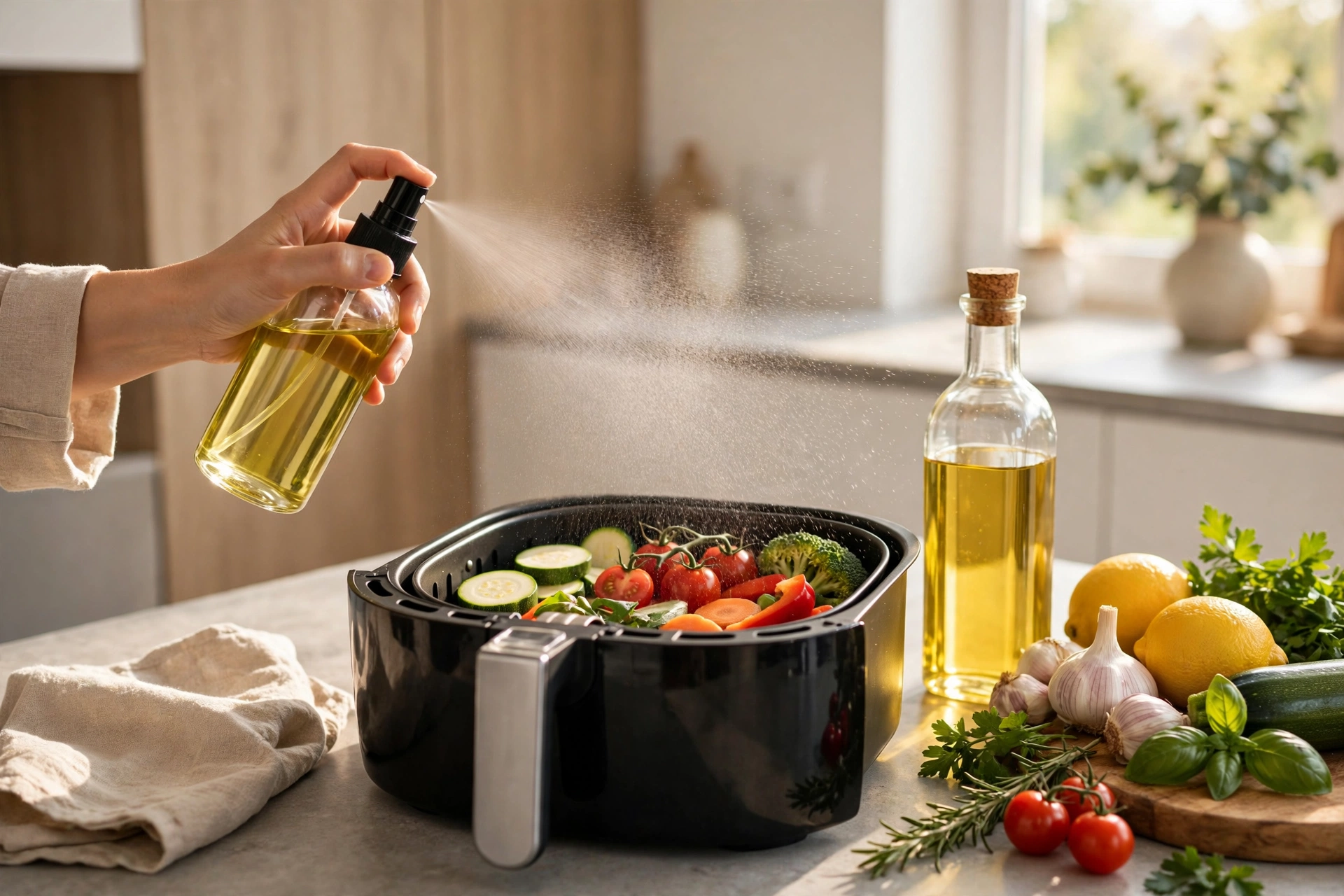
Glass Oil Spray Bottle India Review: Less Oil, Crispier Food?
By My Quick Trippers · 21 Oct 2026
7 min read · Travel Gear
Recommended gear
Glass Oil Spray Bottle — Worth It?
Glass oil spray bottle
Mist instead of pour for air frying and salads; thin oils spray best, thick oils can clog cheap nozzles
As an Amazon Associate, we earn from qualifying purchases. We may earn a commission if you buy through these links, at no extra cost to you.
Honest verdict
for air fryer owners and salad eaters, it is a genuine everyday win.
Check Price on AmazonIndian cooking has an oil problem, and it is not the one you think. It is not that we use oil — good tadka needs it — it is that pouring from a bottle gives you no control. A free pour dumps two tablespoons where one teaspoon would do, salads get soggy, air fryer food comes out greasy instead of crisp, and the bottle itself ends up sticky and dusty on the shelf. A glass oil spray bottle fixes the control problem with a very old idea: mist the oil instead of pouring it. A few sprays coat a pan, a salad or an air fryer basket evenly, using a fraction of the oil. At around ₹300, it is one of the cheapest kitchen upgrades available, and it shows up in tiny-kitchen bestseller guides for exactly that reason. My verdict: for air fryer owners and salad eaters, it is a genuine everyday win. For traditional kadhai cooking, it changes almost nothing.
Why spraying beats pouring
The math is simple and hard to argue with. A typical free pour for a salad or a pan is 15 to 20 millilitres of oil. A few sprays deliver 1 to 2 millilitres, spread evenly across the whole surface. Over a month of daily salads and air frying, that difference is hundreds of millilitres — real money for good olive oil, and real calories for anyone watching intake. But the benefit is not only quantity. Spraying coats evenly: every leaf of a salad gets a little oil instead of the bottom leaves drowning and the top leaves staying dry, and an air fryer basket gets a thin film that helps crisping without pooling. That even coating is something pouring simply cannot do, however careful you are. It is the same logic that makes spray bottles standard in professional kitchens, just sized for a home counter.
Pros
What it does well
The first win is the air fryer. Air fried food needs a little oil to crisp — completely dry food comes out pale and tough — but too much oil defeats the purpose of air frying. A spray bottle is the exact tool for that middle ground: a light mist before cooking, and the food crisps without swimming. The second win is salads, grilled vegetables and dosa tawas, where an even coat matters more than quantity. The third win is the bottle itself: glass does not absorb smells, does not stain, and does not leach anything into the oil the way cheap plastic can over months. A glass sprayer looks decent on the counter, survives daily use, and is easy to clean. And the fourth win is the price — at around ₹300, this is a try-it-and-see purchase, not a considered investment.
Cons
Where it falls short — the honest cons
First, not all sprayers spray well. The cheapest mechanisms produce a jet or a dribble instead of a mist, especially with thicker oils, and a clogged nozzle turns the whole thing into a pour bottle with extra steps. This is the biggest quality variance in the category, and it is why the listing and seller matter more than the headline price. Second, it is useless for tadka and deep frying, where you need a real quantity of hot oil fast — nobody mists oil into a kadhai for tempering. Third, glass breaks. In a busy kitchen with wet hands, a glass bottle dropped on a tile floor is gone, and the oil goes with it. Fourth, the bottle needs refilling and occasional cleaning; oil left in a sprayer for months can go stale or clog the mechanism, so it suits people who cook regularly, not people who will fill it once and forget it.
Who should buy it — and who should skip it
Buy it if you own an air fryer, if you eat salads or grilled vegetables regularly, or if you are trying to reduce oil without giving up crispiness. It is also useful for dosa and roti tawas where a thin, even coat beats a poured puddle. Skip it if your cooking is mostly tadka-based curries and deep frying — the sprayer will sit unused while the pour bottle does all the work. Skip it too if you want a single gadget for all oil tasks; this is a specialist tool, not a replacement for your oil bottle. If you like small kitchen upgrades that actually get used, our AGARO Delite chopper review covers another compact gadget that earns its place the same way.
Buying checklist before you order
Look for a sprayer with a fine-mist mechanism that reviewers confirm works with the oil you actually use — thin oils spray easily, thicker oils need a better pump. Check that the bottle is genuinely glass with a food-safe sprayer, that it holds enough for a week of use without constant refilling, and that the nozzle can be cleaned or unclogged. Read reviews specifically for spray quality complaints, not just star counts. Treat the price band of around ₹300 as approximate. Used for the jobs it suits — air frying, salads, grilling — a spray bottle turns oil from something you guess at into something you control.
Which oils work in a sprayer, and which do not
Not every oil sprays equally well, and knowing this before you buy saves disappointment. Thin, free-flowing oils — groundnut, sunflower, rice bran and light olive oil — mist beautifully through most sprayers and are the best match for air frying and salads. Thicker oils like cold-pressed mustard oil, sesame oil and extra-virgin olive oil at cool room temperature spray less evenly and can clog cheaper mechanisms, especially in winter when oils thicken. The practical fix is to use your thinnest everyday oil in the sprayer and keep thicker, flavourful oils for pouring where their taste matters — tadka and dressings where a spoonful is the point. If you only stock one thick oil, test the sprayer early in the return window rather than discovering the problem months later, and prefer a sprayer with a pump mechanism reviewers confirm works with thicker oils.
Maintenance decides whether a spray bottle stays useful or becomes a sticky relic. Rinse the nozzle occasionally with warm water to prevent oil residue from clogging the mechanism, and do not leave oil sitting in the sprayer for months — oil goes stale, and stale oil smells off even before it is unsafe. Refill from a fresh bottle, wipe the outside after filling, and store the sprayer upright so oil does not seep into the pump. If the spray weakens, the usual cause is a clogged nozzle or a worn pump, and a warm-water rinse fixes the first and a replacement fixes the second. Treat the sprayer like any other daily tool: a minute of care now and then keeps it misting evenly for a long time, and a neglected sprayer is the one that ends up in the back of a cupboard.
The sprayer also earns its keep in jobs beyond salads and air frying. A light mist on a baking tray stops cakes and cookies from sticking without pooling oil, a spray on a dosa tawa gives an even coat that a poured spoonful cannot match, and roasted makhana, paneer tikka and grilled vegetables all crisp better with a thin, even film than with a poured drizzle. One thing to avoid is filling the sprayer with ghee: ghee solidifies at room temperature and will clog the mechanism, so keep ghee in its traditional pour bottle and reserve the sprayer for liquid oils. If the spray ever weakens, a rinse of the pump with warm water usually restores it, and a second sprayer kept for water or vinegar is a handy cleaning companion for the kitchen. None of this is complicated, and together it means the sprayer stops being a single-trick gadget and becomes a daily tool for any cooking where a thin, even coat of oil is better than a poured puddle.
Share this article