Jamunesh Trekking Pole India Review: Rs585 for Knees That Survive the Descent?
By My Quick Trippers · 2 Nov 2026
7 min read · Travel Gear
Recommended gear
Jamunesh Trekking Pole (Pair)
Jamunesh trekking pole pair
Price checked 2 Nov 2026; verify live price before buying. Sold as a pair with carry bag; 2% coupon shown on the listing may change the final price.
As an Amazon Associate, we earn from qualifying purchases. We may earn a commission if you buy through these links, at no extra cost to you.
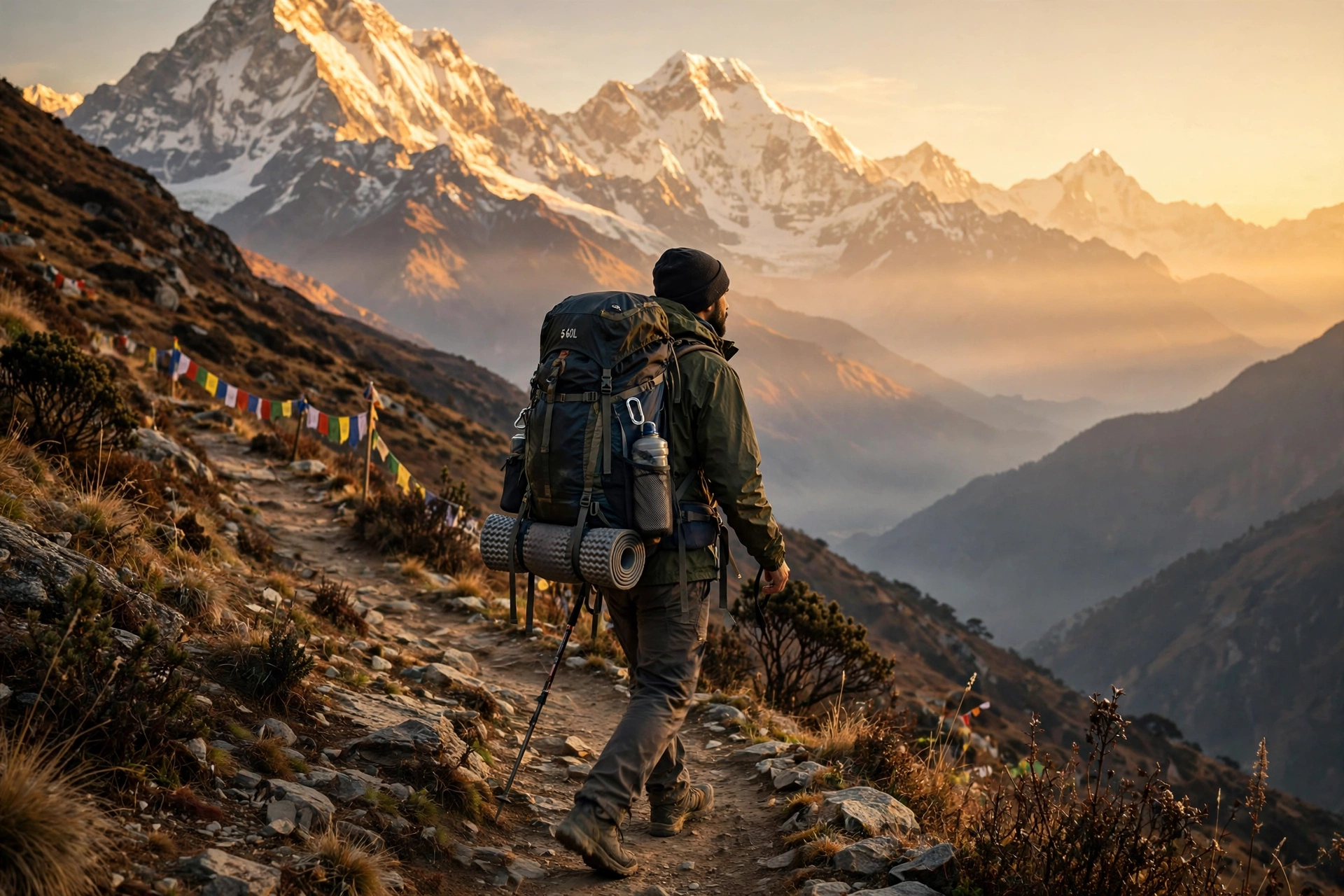
Ask any trek leader what ruins a first Himalayan trek and the answer is rarely fitness. It is knees on the way down. You climb happily for hours, then the descent turns every stone step into a small impact, and by the last kilometre your legs are shaking on ground you would have jogged across in the morning. A pair of trekking poles is the cheapest, most boring and most effective answer to that problem, which is why the Jamunesh trekking pole keeps appearing in budget packing lists. I checked the price on 2 November 2026 and found it at Rs585 on Amazon.in against a stated MRP of Rs1,299, with a small coupon also shown on the listing. Prices change, so verify the live price on Amazon before buying, and do not assume the coupon will still be there at checkout.
This is a collapsible, shock-absorbent hiking pole sold as a pair, with all-terrain accessories and a carry bag, and that bundle matters more than any single feature. A pole that does not collapse will not fit in your luggage for a Diwali or Christmas trip, and a pole without baskets will sink in mud and snow exactly when you need it most. The Jamunesh listing describes a shock-absorbent design, which in practice means a spring inside the shaft that takes a little of the sting out of each plant, plus the usual rubber tips for hard ground and baskets for soft ground. None of that is exotic technology, but it is the complete kit a beginner needs without having to buy accessories separately.
The real test of a pole is not how it looks in a product photo. It is whether it stays at the length you set it to, hour after hour, on a descent. A pole that slowly collapses under load is worse than no pole at all, because you start leaning on something that gives way. Before a trek, set both poles to your height, lean your full weight on them on a staircase, and check that the locks hold. Adjust them on the trail too: shorter for steep climbs, longer for descents, and roughly elbow-height on flat ground. Most beginners set poles once and never touch them again, which wastes half the benefit, so learn the adjustment on a practice walk and it will feel natural by summit day.
What you actually get in the box
The listing describes a pair of poles with all-terrain accessories and a carry bag, and the usual version of this kit includes rubber tip protectors, mud baskets and snow baskets. That sounds like clutter until you use it. Rubber tips stop the metal tip skittering on paved hill-town roads and stone steps, mud baskets stop the pole sinking into soft trail, and snow baskets do the same job on a snowy morning on Kedarkantha or Brahmatal. Swap them before you need them, not in the middle of a slope, and keep the spares in the carry bag rather than scattered at the bottom of your rucksack. A pole is a system, and the small plastic parts are part of that system, not optional extras.
Aluminium is the right material at this price, and it is worth saying why. Carbon poles are lighter and more expensive, and they can snap under a sideways load, while aluminium bends and is cheaper to replace. For a first-timer who will jam a pole between rocks, lean on it getting off a bus, and possibly lend it to a friend, aluminium is the forgiving choice. The weight penalty compared with carbon is real on a very long day, but at Rs585 the trade is obvious: you get two poles, baskets and a bag for less than the cost of a single branded carbon pole, and if one breaks on a trek you are not heartbroken about replacing it.
There is also a technique point that no product page will teach you. Poles help your knees only if you actually plant them and push, rather than carrying them like drumsticks. On a descent, plant the pole slightly ahead, let it take some weight as your foot lands, and keep your wrist straps adjusted so the pole stays with your hand even when you relax your grip. Used that way, poles spread the load across your arms and shoulders and turn a jarring descent into a steadier, four-point walk. Used badly, they are just extra weight, which is why a short practice walk matters more than any review you read, including this one.
Honest pros
- At Rs585 for a pair with accessories and a carry bag, it is the cheapest serious knee protection a beginner can buy.
- Collapsible design packs down for flights, buses and rucksacks on Diwali and Christmas trips.
- Shock absorption softens repeated impacts on long descents, where knees suffer most.
- Baskets for mud and snow plus rubber tips for hard ground cover the surfaces Indian winter trails actually present.
- Aluminium construction is forgiving: it bends rather than snapping under an awkward sideways load.
- A carry bag keeps poles, tips and baskets together instead of rattling loose in your pack.
Cons
Honest cons
- Budget locks and springs will not feel as precise as premium poles, and they need checking before every trek.
- Aluminium is heavier than carbon, so very long days will feel the difference in your arms.
- Tip and basket spares are small and easy to lose, so you need to store them deliberately.
- The shock spring can feel bouncy on hard flat ground, where some walkers prefer a locked, rigid pole.
- Fit and grip comfort vary by hand size, so test the grip and strap on a practice walk first.
Who should buy them, and who should skip them
Buy these if you are a first or second-time trekker, your knees already complain on stairs, you are heading for a descent-heavy route like Kedarkantha, or you want a spare pair to lend to a friend without worrying about the cost. They also make sense for older walkers and for anyone recovering from a knee niggle who still wants to trek, provided a doctor has cleared them to walk. Skip them if you are an ultralight trekker counting every gram, you already own a trusted premium pair, or you trek only on flat, paved paths where poles add little. In that last case, save the weight and spend the money elsewhere, perhaps on the trekking shoes that will matter more on easy ground.
The verdict is simple. Poles are not glamorous gear, and a Rs585 pair will not impress anyone at the trailhead, but your knees will notice the difference long after the photo opportunities are over. Check the locks, learn the length adjustment, carry the right baskets, and actually plant the poles on descents. Do that, and this budget pair delivers the core benefit of poles at a price that makes no sense to skip. Do not do that, and even a premium pair would be wasted, which is a useful reminder that technique, not price, is what protects knees.
On a long descent, a pole is not an accessory. It is a second pair of legs, and it costs less than dinner for two.
Share this article