Munsiyari: Himalayan Views & Trekking Guide
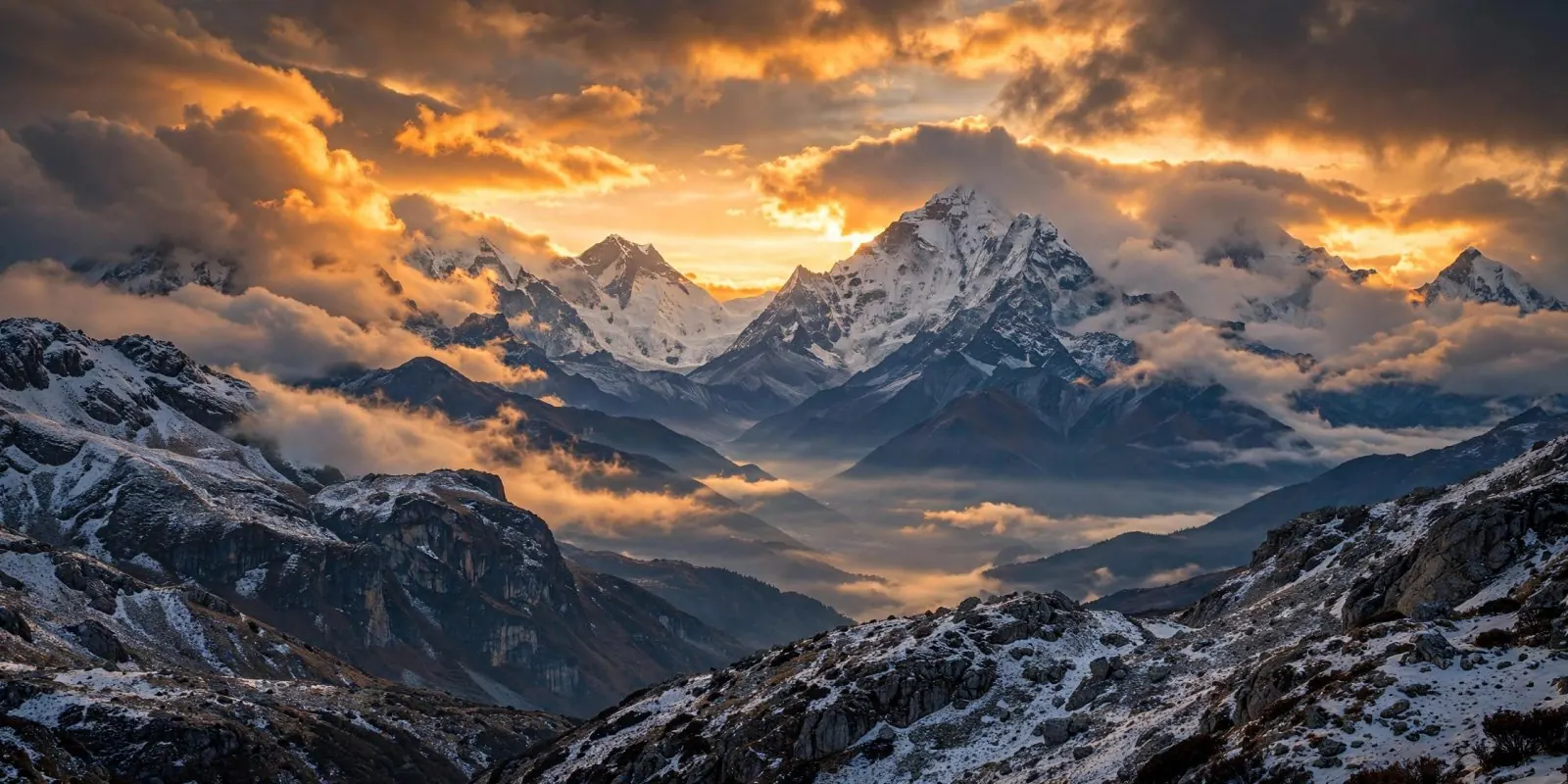
Munsiyari — a small market town at 2,200 metres in Uttarakhand's Pithoragarh district — sits beneath one of the great Himalayan panoramas in India: the five snow peaks of Panchachuli rising like a cathedral above the Johar valley. Trekkers know it as the base for the Milam and Ralam glacier expeditions; everyone else is slowly discovering it as Kumaon's finest viewpoint destination.
This Munsiyari guide covers the Panchachuli views, the Khaliya Top trek, Birthi Falls and other sights, the best time to visit, how to reach this remote corner from Delhi and Kathgodam, where to stay, and a practical itinerary for viewpoint travellers and trekkers alike.
The Panchachuli Panorama: Munsiyari's Crown
Munsiyari's reason for being is the view: the Panchachuli group (five peaks, the highest at 6,904 m) dominates the northern skyline, flanked by Nanda Devi, Nanda Kot and Rajrambha on clear days. The town's main market road is lined with viewpoints, and most hotels are oriented to frame the peaks — ask for a 'Panchachuli-facing' room when booking. Dawn is the magic hour: the peaks catch fire while the valley below still sleeps in shadow.
The best viewing months are March-June and September-November, when the air is clearest. Winter (December-February) brings snow to the town itself and the peaks at their most dramatic — Munsiyari in fresh snow, with Panchachuli blazing above, is a sight few tourists ever see.
Khaliya Top Trek: The Essential Day Walk
The Khaliya Top trek is Munsiyari's signature walk: 6-7 km from the town through oak and rhododendron forest to a high meadow top at 3,500 metres, with the entire Panchachuli range spread before you. The climb takes 3-4 hours up, 2 down; the meadow itself is perfect for a long picnic with the peaks. In spring, the trail passes through blooming rhododendrons; in winter, it becomes a snow trek for equipped groups.
Start by 7 AM to reach the top with the day in hand and descend before afternoon weather. A local guide is useful but not essential in season — the trail is clear and popular. Carry water, snacks, rain layer and warm clothing; the top is exposed and windy even in May.
Birthi Falls, Kalamuni and Other Sights
- Birthi Falls (35 km): a spectacular 125-metre waterfall plunging off the cliff near Tejam village, on the Munsiyari road — the viewpoint and the short walk to its base are unmissable en route.
- Kalamuni Pass: the high point of the approach road, with sweeping views back over the valleys — the drive itself is the attraction.
- Thamri Kund: a small high-altitude lake above town, a 2-3 hour walk through forest — quiet and lovely.
- Tribal Heritage Museum: Munsiyari's small but fascinating museum of Johari (Bhotia) culture — the trans-Himalayan traders who once walked these valleys to Tibet.
- Nanda Devi Temple: the town's revered temple with — you guessed it — Panchachuli views from its courtyard.
- Darkot village: a traditional Johari village 8 km away, known for its woollen weaving — buy authentic pashmina-style shawls directly from weavers.
Trekking Base: Milam, Ralam and Beyond
Serious trekkers know Munsiyari as the gateway to the Johar valley's great glacier treks: the Milam Glacier trek (one of India's longest, to the base of Hardeol and Trishuli) and the Ralam Glacier trek, both multi-day expeditions through stunning high valleys. These need 7-12 days, full expedition gear, permits and experienced local guides — Munsiyari's trekking agencies arrange the complete logistics.
Shorter options include the Namik Glacier trek and the village-to-village walks of the Johar valley. The trekking season here is May-June and September-October; the glaciers are at their most accessible then.
Best Time to Visit Munsiyari
March to June: clear views, pleasant weather, rhododendron blooms (March-April), the main tourist season. September to November: post-monsoon clarity, the sharpest Panchachuli views, autumn colours, thin crowds — the photographer's choice. December to February: snow, dramatic peaks, very quiet — for winter lovers with warm clothing.
Avoid July-August: monsoon brings heavy rain, landslide risk on the long approach road, and the peaks hide behind cloud for weeks. Munsiyari is remote — the approach from Kathgodam is 300+ km — so travel only when the weather cooperates.
How to Reach Munsiyari
The journey is long but spectacular: Kathgodam (nearest railhead, overnight trains from Delhi) to Munsiyari is about 300 km and 9-11 hours by road, via Almora, Bageshwar and Thal. Most travellers break it with a night at Chaukori or Bageshwar. The nearest airport is Pantnagar (about 330 km). Shared jeeps run from Pithoragarh and Thal; a private taxi from Kathgodam is the comfortable option.
The remoteness is the point — Munsiyari's distance from the plains is what has kept it pristine. Plan 5-6 days minimum from Delhi: 2 for travel, 2-3 in Munsiyari itself.
The Johari People: Culture of the High Valleys
Munsiyari's region was home to the Johari (Bhotia) community — trans-Himalayan traders who for centuries walked caravans over 5,000-metre passes to Tibet, returning with salt, wool and borax. The 1962 border closure ended the trade overnight, and the community adapted to farming, weaving and now tourism — but the heritage survives in the wooden architecture of villages like Darkot, the intricate weaving (buy directly from weavers), and the stories elders still tell.
The Tribal Heritage Museum in Munsiyari documents this remarkable culture — old trade documents, traditional dress, utensils from the caravan era — and deserves an hour. When trekking guides point out the old trade routes climbing toward the passes, you are looking at one of the Himalayas' great human stories, written in footprints across glaciers.
Are there ATMs and medical facilities in Munsiyari?
Basic — a couple of ATMs in town (carry cash from Pithoragarh or Kathgodam as backup; they run dry), pharmacies, and a government hospital for basic care. For anything serious, Pithoragarh (130 km) is the referral point. Carry a personal medical kit and any prescription medicines with spares — remote means self-reliant.
Is Munsiyari worth visiting in winter?
For the hardcore, absolutely — the Panchachuli in winter light, snow-covered meadows and empty trails are spectacular, and the town is hauntingly quiet. But it is genuinely cold (sub-zero nights), some hotels close, and the higher treks shut. Come prepared for a winter expedition, not a holiday — or choose October-November for the views without the hardship.
Frequently Asked Questions
Is Munsiyari worth the long journey?
Unequivocally yes for mountain lovers — the Panchachuli panorama rivals anything in the accessible Himalayas, and the town remains refreshingly uncommercialised. If you only want a quick hill break, choose somewhere closer; Munsiyari rewards those who commit the days.
Can I see Panchachuli year-round?
The peaks are visible on clear days in every season except the monsoon, when cloud cover can persist for weeks. March-June and September-February offer the most reliable views; winter views are the most dramatic.
Is Munsiyari good for a honeymoon?
Wonderfully — quiet, scenic, romantic, with cosy mountain hotels facing the peaks. It suits couples who want mountains over malls. Book a Panchachuli-facing room and plan unhurried days.
What is the mobile network like?
Basic connectivity in town (patchy data), limited to none on treks. Download offline maps and embrace the disconnection — it is part of Munsiyari's charm.
Can I combine Munsiyari with other Kumaon destinations?
Yes — the classic extended circuit is Nainital–Almora–Bageshwar–Chaukori–Munsiyari, or Pithoragarh–Munsiyari for those heading to the Nepal border region. Allow 8-10 days for the full Kumaon loop.
Munsiyari is the Himalayas for those who look up — five great peaks, one small town, and valleys that still feel like the edge of the map. Make the journey, wake for the dawn on Panchachuli, and walk the Khaliya meadows. To plan Munsiyari with stays, transfers and treks, chat with our travel experts on WhatsApp to plan this trip.
Share this article