Tungnath: Trek Guide to the World's Highest Shiva Temple
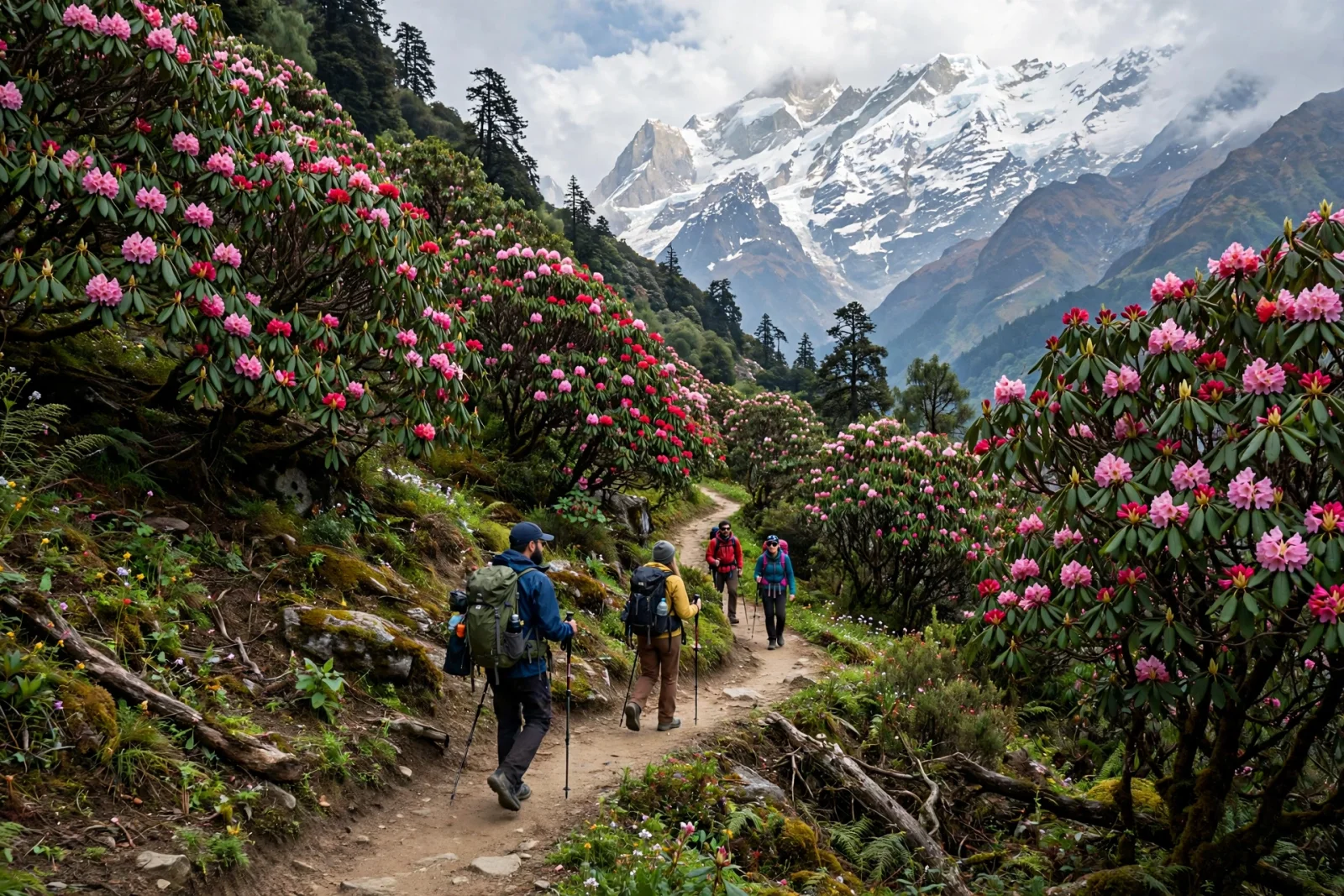
The Tungnath trek is one of the great short Himalayan walks: a 3.5 to 5-kilometre climb from Chopta to Tungnath, the highest Shiva temple in the world at about 3,680 metres — and for those with energy left, another 1.5 kilometres to the Chandrashila summit at roughly 4,000 metres, with a 360-degree sweep of Nanda Devi, Trishul, Chaukhamba and the Kedarnath peaks.
This guide covers the Tungnath trek route in detail, the best months, how to reach Chopta from Delhi, Haridwar and Rishikesh, where to stay, what the Chandrashila extension adds, and the practical tips that separate a great day on the mountain from a miserable one.
About Tungnath: The Highest Shiva Temple
Tungnath is one of the Panch Kedar — the five sacred Shiva temples of Uttarakhand — representing the arms of Lord Shiva in the Pandava legend. The temple itself is believed to be over a thousand years old, built in the North Indian style with a cluster of smaller shrines around it. Its altitude of roughly 3,680 metres makes it the highest Shiva temple in the world, a fact that draws both devotees and peak-baggers.
The temple is open roughly from May to October; in winter the deity is moved to Makkumath near Ukhimath. What makes Tungnath special is the combination: a genuinely significant ancient temple, a trek short enough for a fit day trip, and scenery — rhododendron forests giving way to alpine meadows — that rivals far longer Himalayan routes.
The Trek: Chopta to Tungnath to Chandrashila
The trail starts at Chopta (around 2,680 metres) and climbs steadily on a well-paved path — 3.5 to 5 kilometres depending on which marker you trust, taking 2 to 3.5 hours up. The first half winds through dense forest of rhododendron, oak and deodar; the second half breaks into open bugyal meadows with the temple suddenly appearing against the peaks. Tea stalls and resting points dot the route in season.
From Tungnath, the Chandrashila trail continues 1.5 kilometres up a steeper, rockier path to the summit at about 4,000 metres — another 45 to 75 minutes. The summit holds a small temple to Ganga and, on clear days, one of the finest panoramas in the Garhwal Himalayas: Nanda Devi, Trishul, Nanda Ghunti, Chaukhamba and the Kedarnath range in a single sweep. Start from Chopta by 6-7 AM to do both comfortably and descend before afternoon weather builds.
Best Time for the Tungnath Trek
May to June is the main season: the temple is open, the meadows are green, and rhododendrons bloom in late spring. September to November is superb for clear skies and mountain views, with golden autumn meadows and far fewer trekkers. December to March brings heavy snow — the trek becomes a serious snow expedition and the temple is closed, though the snow-covered Chopta meadows draw winter travellers for a different experience.
Avoid the monsoon core of July-August: the trail gets slippery, leeches appear in the forest section, and cloud cover hides the views that are half the point. For the classic Tungnath–Chandrashila day trek with the temple open, late May, June, September and October are the sweet spots.
How to Reach Chopta
By air and rail
Jolly Grant Airport near Dehradun is the nearest airport; Haridwar and Rishikesh are the nearest major railheads. From any of these, the road journey to Chopta runs via Devprayag, Srinagar, Rudraprayag and Ukhimath — a full day's drive that most travellers split with a night halt at Ukhimath or Guptkashi.
By road
From Delhi, the route is Delhi – Haridwar – Rishikesh – Devprayag – Srinagar – Rudraprayag – Ukhimath – Chopta, roughly 450 kilometres. Ukhimath, about 30 kilometres before Chopta, is the practical base with the widest choice of stays — it is also the winter seat of Kedarnath, worth a temple visit. The final Ukhimath–Chopta stretch is a beautiful, winding mountain road; reach Chopta the evening before your trek.
Where to Stay and What to Carry
- Stay at Ukhimath or Chopta: Ukhimath has hotels and guesthouses for all budgets; Chopta has camps, cottages and a few hotels right at the trailhead.
- Daypack essentials: water (1-2 litres), snacks, rain layer, warm fleece, cap, gloves, sunscreen and sunglasses.
- Footwear: trekking shoes with good grip; the paved path is slippery when wet and the Chandrashila section is rocky.
- Carry cash — ATMs are unreliable beyond Ukhimath — and a power bank; network is patchy at Chopta.
- Start early and carry a headlamp if attempting sunrise at Chandrashila (a 3-4 AM start from Chopta).
- Respect the temple: it is an active shrine, not just a trekking objective. Dress modestly and follow local customs.
Photography on the Tungnath Trail
The Chopta–Tungnath–Chandrashila route is one of the most photogenic short treks in India, and timing matters more than gear. The forest section glows in early morning light filtering through rhododendrons; the meadow section is best mid-morning when the peaks are still sharp; and Chandrashila summit at sunrise — for those who start at 3-4 AM — delivers the legendary 360-degree panorama in alpenglow. Carry a wide-angle for the meadows and a zoom for the peaks; even a phone captures stunning panoramas from the summit.
Practical notes: keep batteries warm (cold drains them fast — carry spares in an inner pocket), use a UV or polarising filter for the harsh high-altitude light, and protect gear from sudden weather changes with a dry bag. The temple photography rules apply — exteriors fine, sanctum not — and dawn at the temple, with the first bells and mountain light, is worth photographing even if you never share the pictures.
Is there snow on the Tungnath trek in May?
Patches are possible in early May after a heavy winter, especially on the shaded Chandrashila section — but the trail is generally clear and the temple accessible. By late May the route is fully open. For a proper snow trek, visit December-March with a guide and full winter equipment.
Are there washrooms on the trek?
Basic public toilets exist at Chopta and near the temple in season, but none on the trail itself — use facilities before starting and carry tissues and a waste bag. The dhabas along the route serve tea and simple meals.
Frequently Asked Questions
Is the Tungnath trek suitable for beginners?
Yes — it is one of the best beginner Himalayan treks. The path is paved and well-marked, the distance is short, and tea stalls line the route. Reasonable fitness is enough; the altitude makes it feel tougher than the distance suggests, so pace yourself.
Can I do Tungnath and Chandrashila in one day?
Absolutely — most trekkers do both in a single day, taking 6-8 hours round trip from Chopta. Start by 6-7 AM, spend time at the temple, summit Chandrashila, and descend by mid-afternoon.
Is Tungnath open in winter?
No — the temple closes around Diwali and the deity moves to Makkumath. The Chopta region gets heavy snow in winter; the trek then is a snow trek for experienced, equipped groups only.
Can I combine Tungnath with Kedarnath?
Yes, very naturally. Chopta and Guptkashi (the Kedarnath base) are connected via Ukhimath — a few hours apart. Many travellers do Tungnath–Chandrashila first as a warm-up, then the Kedarnath trek. Our Kedarnath and Do Dham itineraries can be extended to include it.
Are guides needed for the Tungnath trek?
Not for the standard trek in season — the trail is obvious and busy. For a winter snow trek or if you are unsure, hire a local guide at Chopta or Ukhimath. For sunrise at Chandrashila, going with a local is wise in the dark.
Tungnath packs a thousand-year-old temple, the world's highest Shiva shrine, and a 4,000-metre summit panorama into a single day's walk — there is no better return on effort in the Garhwal Himalayas. Walk it in the rhododendron spring or the crystal autumn, stand on Chandrashila, and you will understand the hype. To fold Tungnath into a Kedarnath, Chopta or Char Dham plan, chat with our travel experts on WhatsApp to plan this trip.
Share this article