Panch Kedar: The Five Sacred Shiva Temples of Uttarakhand
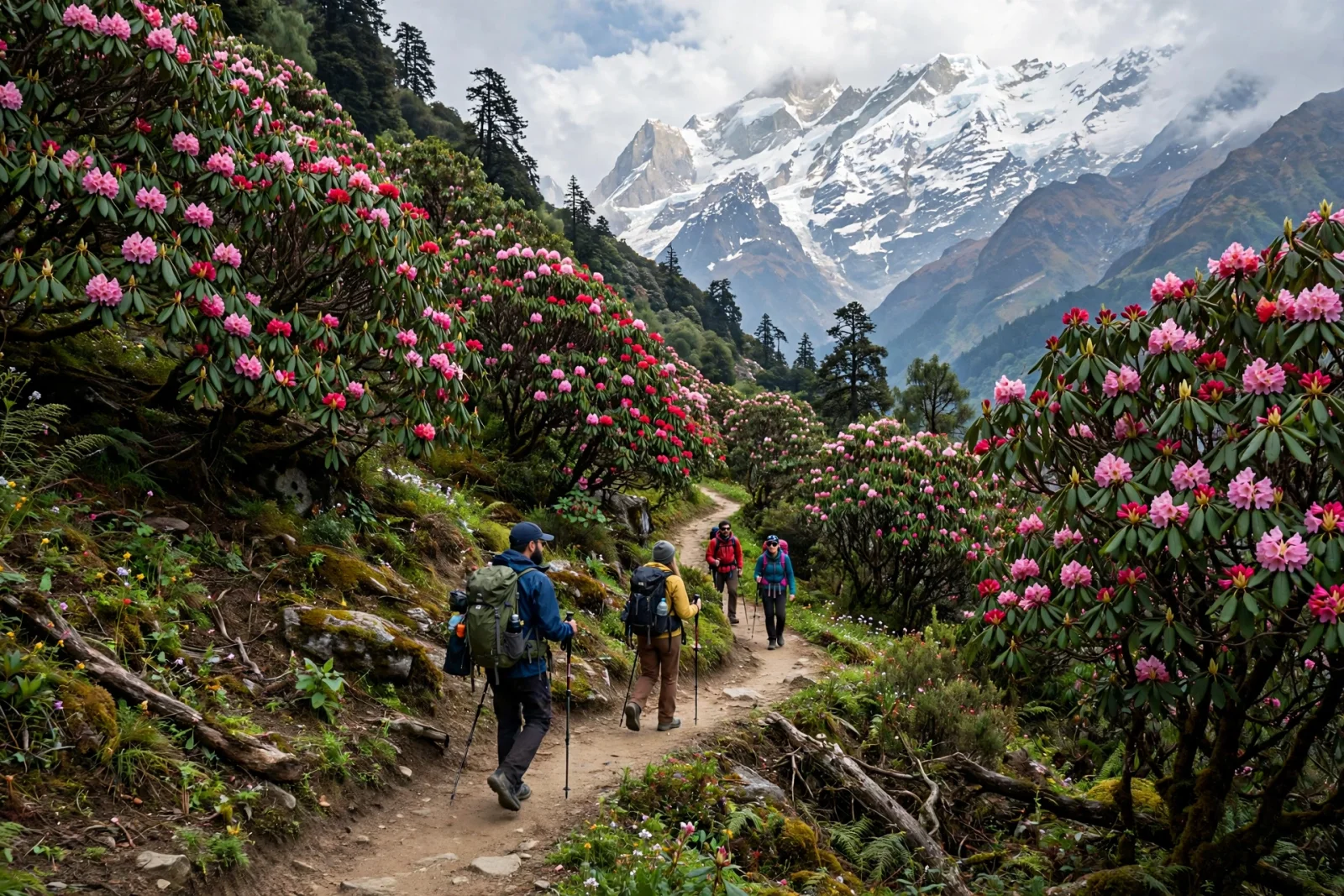
The Panch Kedar are five sacred Shiva temples scattered across the Garhwal Himalayas of Uttarakhand — Kedarnath, Tungnath, Rudranath, Madhyamaheshwar and Kalpeshwar — linked by the legend of the Pandavas' search for Lord Shiva after the Kurukshetra war. Together they form one of Hinduism's great pilgrimage circuits, and one of the Himalayas' great trekking challenges.
While Kedarnath draws lakhs of pilgrims annually, the other four Kedars remain blissfully quiet, reached only by mountain trails through some of the finest scenery in Uttarakhand. This guide covers the legend, each temple, the treks involved, the best season, and how to realistically plan the Panch Kedar circuit.
The Legend of the Panch Kedar
The story goes that after the Kurukshetra war, the Pandavas sought Shiva's forgiveness for the bloodshed. Shiva, unwilling to meet them, took the form of a bull and vanished into the ground at Guptakashi. When the Pandavas pursued him, different parts of the bull's body reappeared at five locations: the hump at Kedarnath, the arms at Tungnath, the face at Rudranath, the navel at Madhyamaheshwar, and the hair at Kalpeshwar. The Pandavas built temples at each site, and the circuit has been walked by devotees ever since.
The temples are traditionally visited in a specific order — Kedarnath, Tungnath, Rudranath, Madhyamaheshwar, Kalpeshwar — though modern trekkers often adapt the sequence to logistics. Four of the five are seasonal, opening in summer and closing for winter; Kalpeshwar, the lowest, remains open year-round.
The Five Temples
1. Kedarnath — the hump, 3,583 metres
The most famous of the five and one of the twelve Jyotirlingas, reached by the 16-kilometre trek from Gaurikund. The ancient stone temple on the Mandakini, backed by the Kedarnath peak, needs no introduction — see our complete Kedarnath Yatra guide and Kedarnath trek guide for the full details.
2. Tungnath — the arms, 3,680 metres
The highest Shiva temple in the world, reached by a 3.5 to 5-kilometre trek from Chopta through rhododendron forests and alpine meadows. Most trekkers continue another 1.5 kilometres to Chandrashila summit (around 4,000 metres) for a 360-degree panorama of Nanda Devi, Trishul and Chaukhamba. See our Tungnath trek guide for the complete breakdown.
3. Rudranath — the face, 3,600 metres
The toughest and most remote of the five, reached by an 18 to 20-kilometre trek from Sagar village (or the longer route via Mandal and Anusuya Devi). The trail climbs through dense forest and high bugyals to a temple set in a wildflower-strewn meadow. Rudranath sees a fraction of Kedarnath's crowds — this is the Panch Kedar at its most raw and rewarding, strictly for fit, experienced trekkers with a guide.
4. Madhyamaheshwar — the navel, 3,497 metres
Reached by a 16 to 18-kilometre trek from Ransi village via Gaundhar and Bantoli, following the Madhyamaheshwar Ganga upstream. The trail passes through some of the prettiest villages of the region, and the temple sits in a gorgeous high meadow ringed by peaks. The trek is long but the path is clear and well-used by shepherds; 3-4 days round trip from Ransi is typical.
5. Kalpeshwar — the hair, 2,200 metres
The gentlest of the five: a short 2 to 3-kilometre walk from Helang on the Badrinath road, through apple orchards and terraced fields. Kalpeshwar is the only Panch Kedar temple open through winter, when the deities of Rudranath and Madhyamaheshwar are brought here. It makes an easy add-on to any Badrinath or Auli trip.
Best Time for the Panch Kedar Circuit
Late May to June and September to October are the windows when all five temples are accessible. The full circuit takes 12 to 15 days of continuous trekking — realistically, most pilgrims do it in 2-3 trips: Kedarnath plus Tungnath (easily combined via Chopta), then Rudranath, then Madhyamaheshwar with Kalpeshwar. Attempting all five in one go demands excellent fitness, a knowledgeable local guide, and buffer days for weather.
The monsoon (July-August) makes the Rudranath and Madhyamaheshwar trails treacherous — swollen streams, leeches, slippery paths — and is best avoided for these two. Winter closes four of the five temples; only Kalpeshwar remains open.
Planning the Circuit: Practical Advice
- Do not attempt the full five in one trip unless you are an experienced high-altitude trekker; split it across seasons.
- Hire a local guide for Rudranath and Madhyamaheshwar — the trails are remote with limited signage and no facilities.
- Tungnath and Kedarnath combine naturally: Chopta (Tungnath base) and Guptkashi (Kedarnath base) are a few hours apart via Ukhimath.
- Kalpeshwar pairs with Badrinath or Auli — Helang lies on the Joshimath–Badrinath road.
- Carry the Char Dham registration for Kedarnath; the other Kedars need no formal registration but check local requirements.
- Pack for true mountain conditions: even in June, nights above 3,000 metres are near freezing.
- Villages like Sagar, Ransi and Mandal have basic homestays — book through local contacts, as online listings are thin.
The Winter Seats: Panch Kedar in the Off-Season
When snow closes the high temples, the deities descend to their winter seats — and a winter Panch Kedar pilgrimage to these seats is a beautiful, crowd-free alternative. Kedarnath's deity resides at Ukhimath's Omkareshwar temple, Tungnath's at Makkumath, Rudranath's at Gopeshwar's Gopinath temple, Madhyamaheshwar's also at Ukhimath, while Kalpeshwar stays open year-round at its original site. Each winter seat is an ancient temple in its own right, set in villages that welcome the few winter pilgrims warmly.
A 4-5 day winter circuit — Ukhimath, Makkumath, Gopeshwar, Helang (Kalpeshwar) — offers darshan of all five deities without a single high-altitude trek. The roads are open, the villages are quiet, and the experience has an intimacy the summer crowds cannot match. For elderly devotees or winter travellers, this is the Panch Kedar's best-kept secret.
Which Panch Kedar should a beginner attempt first?
Tungnath — short, clear, busy trail from Chopta with the immense reward of the world's highest Shiva temple plus the Chandrashila summit option. Next, Kedarnath for the Jyotirlinga experience. Attempt Rudranath and Madhyamaheshwar only after you have mountain legs and a guide.
Frequently Asked Questions
Can all five Kedars be done in one trip?
Physically possible for very fit trekkers in 12-15 days, but rarely advisable for first-timers. The standard advice is to split the circuit: Kedarnath and Tungnath together, then Rudranath, then Madhyamaheshwar with Kalpeshwar. Each leg deserves unhurried days.
Which Panch Kedar is the toughest?
Rudranath — the longest, steepest and most remote trek of the five, with minimal facilities en route. Madhyamaheshwar is a close second for distance. Tungnath is the easiest of the seasonal four; Kalpeshwar is the easiest overall.
Is a guide necessary?
For Kedarnath and Tungnath, no — the trails are busy and well-marked. For Rudranath and Madhyamaheshwar, a local guide is strongly recommended for route-finding, stream crossings and emergency support.
What is the winter arrangement for the Kedars?
Kedarnath's deity moves to Ukhimath, Tungnath's to Makkumath, Rudranath's and Madhyamaheshwar's to Gopeshwar and Ukhimath respectively, and Kalpeshwar stays open year-round. Winter darshan at these seats is a serene, crowd-free experience.
How is Panch Kedar different from Char Dham?
Char Dham (Yamunotri, Gangotri, Kedarnath, Badrinath) is the mainstream pilgrimage circuit, mostly road-accessible. Panch Kedar is a Shiva-specific circuit where four of the five temples require real treks — it is as much a trekking challenge as a pilgrimage, attracting a different, more adventurous devotee.
The Panch Kedar is the Himalayas at their most demanding and most generous — five temples, five valleys, five very different journeys. Start with Tungnath and Kedarnath, earn your mountain legs, and let Rudranath and Madhyamaheshwar wait for the season you are ready. To plan any leg of the circuit with guides, stays and logistics, chat with our travel experts on WhatsApp to plan this trip.
Share this article