Pune Street Food Trail: A Morning-to-Night Eating Route Through the Old City, Camp and FC Road
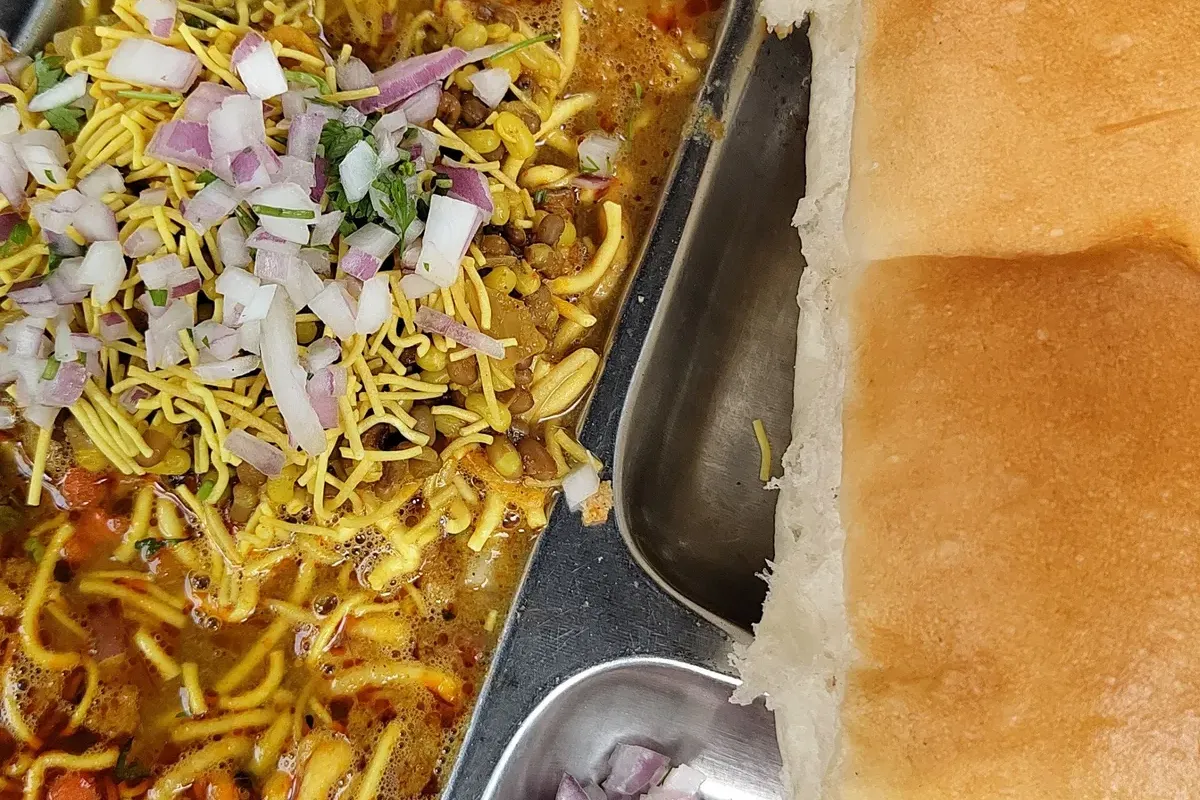
Pune does not announce its food the way Mumbai does. There is no single famous chowpatty and no one dish on every poster. Instead, the city eats in a rhythm built over decades: poha and chai early, a fiery misal by mid-morning, vada pav whenever the queue looks short enough, and a thick mastani to finish the night. This Pune street food trail follows that rhythm across three neighbourhoods — the old Peths, Camp, and the FC Road–JM Road student belt — so you can eat the city in the order Punekars actually do.
A word on how to use this guide: distances between the three clusters are short, but each cluster deserves its own half-day. Start hungry, carry small cash for the oldest stalls, and remember that in Pune the busiest stall is almost always the right stall. High turnover means the vada is fresh out of the kadhai and the misal kat — the spicy, oily gravy that gives the dish its heat — has not been sitting around.
Morning in the Peths: poha, chai and the first misal
Begin in the old city, where Pune's food institutions are measured in generations rather than years. Breakfast here means poha — flattened rice tossed with turmeric, mustard seeds, curry leaves and peanuts — or a sabudana khichdi on fasting days, washed down with amruttulya chai, the strong, sweet, ginger-laced tea sold from small glass-fronted stalls across the Peths. Eat standing up, the way everyone else does, and do not rush: the morning round is as much a social ritual as a meal.
By ten, it is time for the dish Pune argues about most: misal. A Puneri misal layers a curry of sprouted moth beans or mixed usal with farsan, chopped onion, coriander and a squeeze of lemon, flooded with kat. What surprises first-timers is the bread: traditional Pune misal comes with sliced bread, not the pav served in Mumbai and Kolhapur. Food writers who have traced the city's misal history note that the oldest houses — Bedekar in Narayan Peth, serving since the 1950s, and Shri Krishna Bhuvan near Tulsi Baug, which traces back to a puri-bhaaji stall from 1941 — built their reputations on this bread-and-kat combination, with potato bhaaji and pohe folded into the mix.
Order it the local way: ask for medium heat first, because Puneri 'medium' already carries a kick, and you can always ask for extra kat on the side. If you want the fiery end of the spectrum, the Sadashiv Peth counters around Tilak Road are where regulars go to test themselves. Between stops, wander Tulsi Baug's lanes — the temple, the market and the snack stalls all sit within a few minutes of each other, and the old city rewards slow walking.
Afternoon in Camp: vada pav, Irani cafes and Marz-O-Rin
Cross over to Camp, Pune's cantonment quarter, for the second shift. The headline act here is Garden Vada Pav, the stall near MG Road that regulars have queued at for decades. Its vada is deliberately un-Mumbai: flatter and more oblong than the round Mumbai fritter, shaped so the potato covers the whole surface of the pav and you get batata in every bite, with a signature chutney doing the rest of the work. Expect a queue at office-closing time; it moves fast.
Camp is also where Pune's Irani cafe culture survives. These old cafes serve bun maska with milky Irani chai, keema pav and berry pulao in rooms that have barely changed in decades — high ceilings, bentwood chairs, and rules about loitering printed on the wall. Afterwards, walk to Marz-O-Rin on MG Road, a Camp institution loved for its chutney sandwiches and old-school ice creams, the kind of place three generations of the same family have visited in one lifetime.
“In Pune, the busiest stall is almost always the right stall — high turnover means the vada is fresh and the kat has not been sitting around.”
Evening on FC Road and JM Road: the student belt
As the light softens, head to Fergusson College Road and Jangli Maharaj Road, the twin spines of Pune's student city. This is snacking territory: chaat counters, dosa and South Indian institutions where sabudana vada is the sleeper hit, sandwich stalls, juice centres and endless cutting chai. The FC Road stretch from Deccan towards the college is one continuous food trail, and the crowd — students, young office-goers, families out for a walk — keeps every counter honest.
Save your finale for here. A mastani is Pune's signature dessert-drink: a milkshake so thick it is eaten with a spoon, blended with ice cream and fruit, and named — local lore insists — after Mastani, the consort of Peshwa Bajirao I. Mango is the classic order when the fruit is in season. Sujata Mastani on FC Road is the name most Punekars will give you first, and a mango mastani there is the correct full stop to this trail.
What to carry home, and how to plan the day
- Carry home bhakarwadi — the spicy, spiral, deep-fried snack Pune ships across the world — and Shrewsbury biscuits from the city's old bakeries; both travel well and keep for weeks.
- Do the Peths on foot in the morning before the heat builds; Camp and FC Road are short auto or cab rides apart, so you never need to backtrack.
- Eat where turnover is high and order small: this trail works because every stop is a tasting, not a full meal.
- Most heritage stalls are cash-friendly and close by mid-evening; the FC Road counters run latest.
One last piece of trail craft: Pune's heritage eateries reward the early eater. Queues are shortest before the office and college rushes, the misal kat is freshest in the first half of the day, and several old-city institutions sell out of signature items by evening — plan the famous names first and keep the flexible snacking for later.
Pune pairs naturally with a wider Maharashtra circuit. Use this trail as day one, then head north with our Trimbakeshwar temple guide and the Nashik Kumbh Mela 2027 explainer, or browse Maharashtra destinations and the Chardham yatra package from Pune if the mountains are calling next.
- Zingbus — Pune Street Food Guide: Vada Pav, Misal & Local Trails
- Times of India — Once Upon a Time in Pune
- Puneri Pages — Top 10 Street Foods to Try in Pune
Share this article