Trimbakeshwar Temple Guide: The Jyotirlinga of Three Gods at the Source of the Godavari
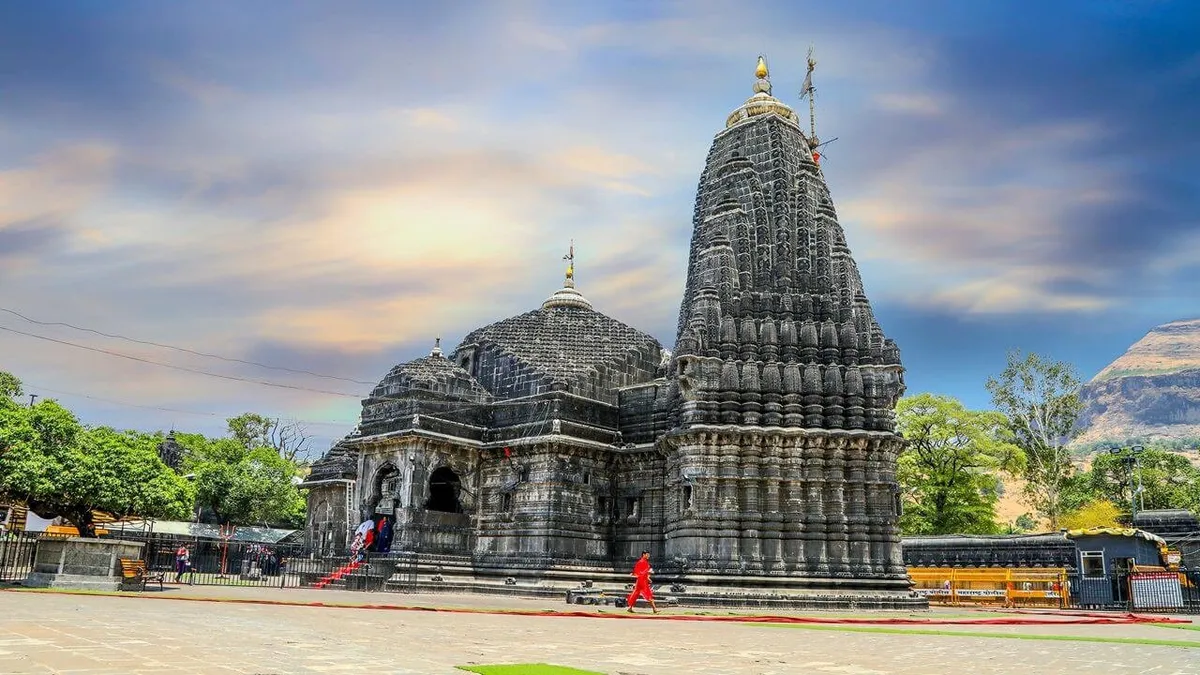
Every Jyotirlinga is a form of Shiva, but Trimbakeshwar is three gods at once. The lingam in this black-stone temple at Trimbak, a small town in the Sahyadri foothills about 28 kilometres from Nashik, carries three faces — Brahma, Vishnu and Shiva — set into a single hollowed lingam, a form found nowhere else among the twelve. Add the setting — the temple stands at the source of the Godavari, India's second-longest river and the Ganga of the South — and Trimbakeshwar becomes one of the most layered pilgrimages in Maharashtra.
Pilgrims come here for darshan, and also for the rituals Trimbak is famous for: the town's Vedic gurukuls and hereditary priests conduct ceremonies such as Kaal Sarp and Pitra Dosh pujas, and the Hindu genealogy registers — family records maintained here for centuries — draw descendants tracing their lineages. Nashik–Trimbak is also one of the four Kumbh Mela cities, which tells you how deep the sacred geography runs.
The temple, the three-faced lingam and Kushavarta
The temple rises between three hills — Brahmagiri, Nilagiri and Kalagiri — in dark basalt, its shikhara carved and comparatively unadorned next to the marble shrines of the north. Inside, the three-faced lingam sits in a depression and is usually covered; on special occasions a crown is placed over it. Because the lingam is recessed, darshan here feels intimate and close in a way the great open shrines cannot match, though queues on Mondays and through the holy month of Shravan can be long — arrive early, especially on weekends.
Before or after darshan, walk to the Kushavarta Kund, the large sacred tank a few minutes from the temple. Tradition holds the Godavari — which Sage Gautama is said to have brought down through his penance, earning it the name Gautami Ganga — manifests here, and the kund is the ceremonial heart of the Nashik Kumbh, when the royal bath processions come down to its steps. Even on an ordinary day, the tank's ghats, shrines and bathers give you the clearest picture of Trimbak as a living tirtha rather than a single temple.
Brahmagiri, Anjaneri and the hills around Trimbak
Behind the temple, a climb of roughly 750 stone steps ascends Brahmagiri hill to the shrines at the Godavari's origin, passing Gangadwar, where the river is said to first emerge from the mountain. Fit pilgrims should allow half a day: the views back over Trimbak and across the Sahyadris are the reward, and the path is at its best just after the monsoon when the hills run green. A few kilometres away, Anjaneri hill is revered as the birthplace of Hanuman and makes a gentler second excursion, with caves and wide plateau views.
“At Trimbak, you do not just visit a temple — you stand at the first step of a river that waters half of peninsular India.”
How to plan the trip
- Base yourself in Nashik for the widest choice of stays, or in Trimbak town itself for dawn darshan and a slower temple-town pace.
- Nashik Road station is the main railhead; Trimbak is a straightforward road journey of under an hour from the city.
- Expect the heaviest crowds on Mondays, in Shravan, and at Mahashivratri; the post-monsoon months are the most scenic for the Brahmagiri climb.
- If you are booking a specific puja, arrange it through established local channels and agree the details in advance rather than at the temple gate.
Trimbakeshwar combines naturally with Nashik's other sacred geography — read our Nashik Kumbh Mela 2027 guide for the festival context, then continue south with the Pune street food trail. It also earns a place on the full circuit in our 12 Jyotirlinga tour package, and Maharashtra destinations covers the rest of the state.
The rituals Trimbak is known for
Ask in Trimbak why pilgrims have travelled from the far side of India, and half the answers will name a ritual rather than the darshan itself. The town is one of India's recognised centres for Kaal Sarp Dosh puja, performed for the astrological alignment devotees believe brings recurring obstacles, and for Pitra Dosh and Narayan Nagbali rites honouring ancestors. These are conducted by the town's hereditary priest families and Vedic gurukul-trained pandits, usually in the morning hours around the temple and Kushavarta. If a ritual is the purpose of your trip, plan an extra day, carry the family details the priests will ask for, and treat the arrangements — dakshina, materials, duration — as a conversation to settle clearly before the day itself.
Pairing Trimbak with Nashik city
Do not leave the district without a few hours in Nashik itself. The old city along the Godavari — the Panchavati quarter, the Ramkund ghats where Kumbh pilgrims bathe, and the lanes of temples and wadas — is the urban half of the same sacred geography, and it explains why this city hosts one of the four Kumbhs. Nashik is also, in its modern avatar, India's wine capital, and the vineyards in the countryside around the city make an unexpectedly pleasant late-afternoon contrast after temple mornings. Together, Trimbak and Nashik give you the rare pilgrimage that satisfies both the devotee and the traveller in the same group: one day for the Jyotirlinga and the kund, one for the ghats, the old city and the hills.
A note on expectations for first-time visitors: Trimbak is a working pilgrim town, not a polished tourist enclave, and that is much of its character. The lanes around the temple are lined with puja-material shops, flower sellers and small eateries serving simple Maharashtrian meals; accommodation ranges from pilgrim lodges to comfortable hotels on the Nashik road. Temple protocols are traditional — modest dress, no photography inside the sanctum, and offerings made through the temple's own counters. Come with a pilgrim's patience rather than a tourist's timetable, arrive the night before if you can, and let the town set its own unhurried pace; Trimbakeshwar has been receiving travellers for a very long time, and it receives the patient ones best.
Carry a small bottle to take Godavari water home, as generations of pilgrims have done from this source of the great river. Trimbakeshwar is also the natural first stop on the five-shrine Maharashtra circuit — our Jyotirlingas in Maharashtra guide maps the full route, the order to visit the shrines in and the distances between them.
- Wikipedia — Trimbakeshwar Shiva Temple
- Mahakal Times — Trimbakeshwar Jyotirlinga: Source of Godavari & Home to Three Lingams
- Trimbakeshwar Temple — Temple Story & History
Share this article