Pure Pahadi Taxi Service: Mountain Drivers Who Know Every Ghat
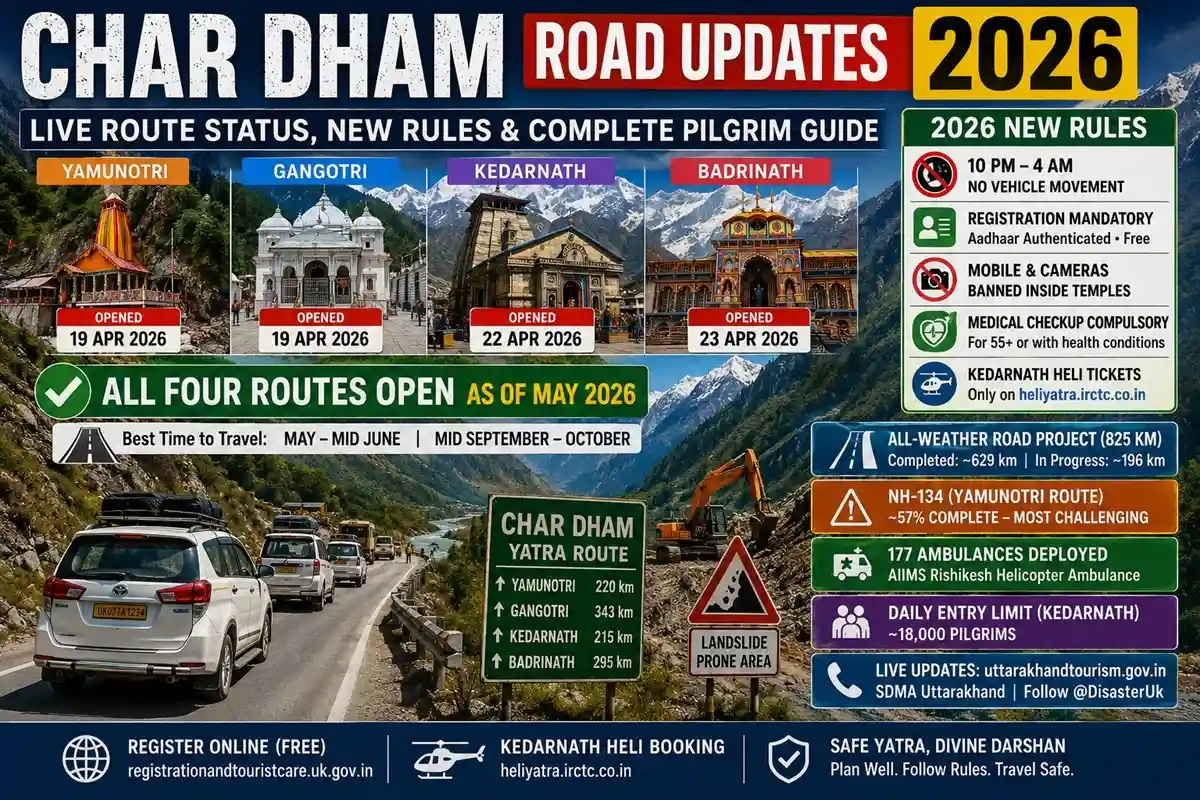
A pure Pahadi taxi service is not a branding slogan — it is a description of who is driving your car. Pahadi means of the mountains, and in Uttarakhand's taxi trade it means drivers who were born in these hills, learned to drive on these ghat roads, and carry a lifetime of mountain knowledge that no navigation app can replicate. When you book a taxi in the Himalayas, the driver's origins are not trivia. They are the single biggest factor in how safe, smooth and genuinely enjoyable your journey will be.
This guide explains what local mountain expertise actually consists of: the route knowledge, the terrain reading, the dhaba and fuel-stop intelligence, the languages and the hospitality culture that come standard with a born-and-raised hill driver. It is written from our daily work running taxi services across Uttarakhand — and it is deliberately about culture and craft, not just about getting from A to B.
If you are comparing taxi options for a hill trip, read this first. Then ask every operator the same question: are your drivers Pahadi? The quality of the answer will tell you most of what you need to know.
What a Pure Pahadi Taxi Service Really Means
Anyone with a commercial licence can legally drive a taxi in the hills. A Pahadi driver brings something a licence cannot confer: thousands of hours on mountain roads before they ever carried a paying passenger. Most learned driving from a father or uncle on these same routes, often starting as helpers on trucks or jeeps in their teens. By the time they are driving tourists, the ghats are not a challenge to be managed — they are home turf.
This shows up in ways passengers feel immediately. The car holds its lane on blind curves without drama. Speeds drop before the hazard, not at it. The driver knows which ten-kilometre stretch always has loose gravel after rain, which bridge ices in December, and where the landslide debris from last monsoon is still being cleared. None of this appears on a map. All of it matters on a mountain road, which is why our Char Dham road updates read so differently from a generic route guide — they are written from this lived knowledge.
More than driving: a local guide behind the wheel
A Pahadi driver doubles as an informal local guide without you asking. They will tell you which temple is worth the extra twenty minutes, where the river viewpoint actually is (not where the signboard claims), and which town to skip because the market is closed on Tuesdays. This running commentary — offered naturally, never performed — is one of the great underrated pleasures of hill travel, and it only comes from someone who grew up in the landscape you are passing through.
Route Knowledge You Cannot Google
Navigation apps are excellent on highways and increasingly unreliable the moment you leave them. In the hills, a Pahadi driver's mental map outperforms the app in at least four ways that directly affect your trip.
Shortcuts and timing intelligence
Every hill route has alternates the apps do not know: the link road that bypasses a market town's morning jam, the riverside stretch that is faster before 10 am and slower after, the pass to avoid on a festival day. Pahadi drivers also carry timing intelligence — they know the Rishikesh–Devprayag stretch takes meaningfully longer in yatra season, and they plan departures around it rather than discovering it. Our comparison of Google Maps estimates versus actual Char Dham travel time quantifies exactly the gap that local knowledge closes.
Dhabas, fuel stops and the geography of comfort
Ask a Pahadi driver where to eat on any route and you will get a specific answer with a reason: the dhaba with the clean kitchen at the top of the ghat, the tea stall with the view, the place to avoid because the food sits too long. They know where fuel stations actually are on remote stretches — critical on routes like the higher Char Dham approaches, where the next pump may be an hour away — and where clean washrooms exist, which matters enormously to families and elderly travellers. This is the geography of comfort, and it is entirely oral tradition.
- Specific dhaba recommendations per route, with honest notes on hygiene and freshness.
- Knowledge of real fuel-stop spacing on remote stretches — never let the tank drop below half on unfamiliar ghats.
- Clean washroom locations mapped from experience, a genuine concern for families and senior travellers.
- Timing intelligence: which stretches to drive early, which towns to bypass, when yatra-season congestion bites.
Reading the Mountain: Weather, Landslides and Timing
The most valuable Pahadi skill is also the hardest to describe: reading the mountain. A hill driver continuously processes signals a plains driver would not notice — the particular grey of a cloud building over a ridge, the smell of rain before it arrives, the sound of a stream running heavier than it should, fresh scree on a road cut that was clean yesterday. Each signal feeds a decision: press on, wait it out, or take the alternate route.
During monsoon, this skill is the difference between a delayed trip and a dangerous one. Pahadi drivers know the chronically landslide-prone stretches on every major route, they check conditions through the driver network before setting out, and they have the authority — cultural as well as practical — to tell passengers that waiting two hours is not optional. Travellers sometimes experience this as over-caution. It is not caution; it is calibration, earned over decades.
Language, Culture and Pahadi Hospitality
Uttarakhand's hills speak Garhwali in the west and Kumaoni in the east, with Hindi as the bridge language. A Pahadi driver speaking the local dialect can unlock things no outsider can: directions from a shepherd when the road forks without signboards, help from a village shop during a breakdown, fair prices at remote stalls, and a night's shelter in a genuine emergency. On remote routes, language is infrastructure.
Then there is the hospitality culture, which visitors consistently remark on. Pahadi drivers take a quiet personal responsibility for their passengers that goes beyond the job description — making sure elderly travellers are comfortable, keeping children entertained with stories of the mountains, refusing to let you overpay at a tourist trap. It is not servility; it is pahadi tehzeeb, the mountain code of looking after guests. When travellers say their driver made the trip, this is usually what they mean.
Fares and Booking: What a Fair Quote Looks Like
Local expertise should not mean mysterious pricing — in fact, the most professional Pahadi operators are the most transparent, because they have nothing to hide. A fair quote names the vehicle, states whether billing is per day or per kilometre, and itemises driver allowance, tolls, parking and state taxes as included or at actuals. Be suspicious of quotes far below market: they are subsidised by overworked drivers, unmaintained vehicles or surprise add-ons later.
For reference, typical one-way ranges in our operating area are: Jolly Grant Airport to Dehradun city about ₹1,100–1,700 by sedan, ₹1,800–2,600 by SUV and ₹2,500–3,600 by Innova; Jolly Grant to Mussoorie roughly ₹1,850–2,500 by sedan and ₹3,000–3,200 by SUV; Jolly Grant to Rishikesh about ₹1,150–2,000 by sedan; and Delhi to Dehradun around ₹2,750–3,650 by sedan or ₹5,400–7,000 by Innova. Fares are typical market ranges observed in October 2026 and vary by season, operator, vehicle condition and exact pickup/drop points. Confirm a fixed all-inclusive quote before booking. For longer multi-day itineraries such as the Char Dham circuit, our Haridwar to Char Dham taxi fare guide explains how hill-tour billing works in detail.
“The map shows you the road. A Pahadi driver knows the mountain the road is cut into.”
Frequently Asked Questions
How do I verify that a taxi service actually uses Pahadi drivers?
Ask directly and ask for specifics: where is the driver from, how many years has he driven hill routes, and can you have his name and number before the trip. Genuine operators answer immediately and proudly. Evasive answers — we assign drivers on the day, all our drivers are experienced — usually mean the drivers are whoever was available.
Are Pahadi taxi services more expensive?
Not necessarily. Because local drivers know the efficient routes and honest dhabas, the total trip cost often works out lower even when the daily rate is similar — you save on fuel, wasted detours and tourist-trap meals. What you should not expect is the cheapest quote in the market; expertise has a fair price, and it is worth paying.
Do Pahadi drivers speak Hindi and English?
Hindi, almost universally — it is the working language of Uttarakhand tourism. English varies: many drivers handling regular tourist routes speak functional English, while those on remote village routes may speak little. If English communication matters to you, say so when booking and the operator can assign accordingly.
Is a local driver really safer on mountain roads?
Overwhelmingly, yes. Hill driving is a distinct skill — engine braking on descents, positioning on blind curves, reading weather and road surfaces — and it is learned through years on these specific roads. A driver who grew up driving ghats reacts to hazards before a plains driver even perceives them. For pilgrimage routes, our Kedarnath guide notes how much of the journey's safety rests on the driver's hill craft.
Can I book a Pahadi driver for a full Char Dham yatra?
Yes, and for a multi-day circuit like Char Dham it matters more than on any single transfer — the same driver learns your family's pace, preferences and needs over the days. Book the full circuit with one operator rather than piecing together local taxis per town; continuity of driver is one of the biggest comfort upgrades available on a long hill itinerary.
Book with MQT India
Every MQT India trip is driven by experienced Pahadi drivers who know these mountains as home — the routes, the dhabas, the weather signs and the shortcuts no app knows. Tell us your route and dates for a fixed, itemised, all-inclusive quote with the driver's details shared before your trip. WhatsApp us at +91 81711 58569 or visit myquicktrippers.com.
Sources
Share this article